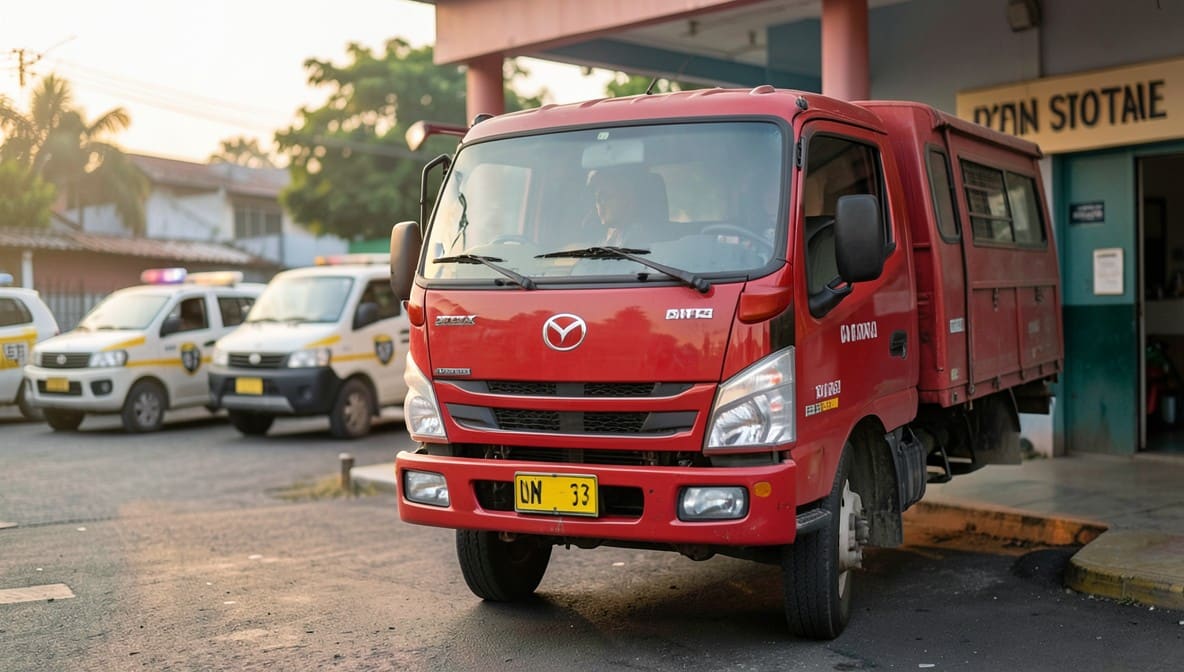
The Karnataka High Court has clarified that a vehicle seized in a criminal case may be released to its owner on bond during pendency of investigation, even if alleged to be purchased with proceeds of fraud, provided it is not essential for identification or evidence. This ruling reinforces the principle that prolonged detention of assets without necessity causes irreparable loss and serves no public interest.
Background & Facts
The Dispute
The petitioner, Sri Suman N.P., is accused No.1 in Crime No.116/2024 registered at Jayanagar Police Station, Bengaluru, for offences under Sections 419, 420, 467, 468, 471 read with Section 34 of the IPC. The complainant alleges that the petitioner, along with others, impersonated a property owner named Zakaria and fraudulently sold a house in Jayanagar, Bengaluru, receiving Rs.75,00,000. The petitioner is alleged to have used part of this amount to purchase a Maxi Cab Urbana car bearing registration KA-05-AN-3469, chassis MC1M4CKA8RP000194, and engine D71041197.
Key Facts
- The vehicle was seized by police under Property File No.73/2024 on 26.03.2024, the date of FIR registration.
- The petitioner claims he purchased the vehicle on 22.11.2023 for Rs.32,48,000, paying stamp duty and registration charges, and produced bank statements and sale deed as proof.
- The vehicle has remained in police custody for over 18 months without being used or inspected.
- The petitioner submitted documents showing payment for the vehicle was made from his personal funds, not from the complainant’s money.
- The investigation remains incomplete, and no charge sheet has been filed.
Procedural History
- 26.03.2024: FIR registered against petitioner and others for cheating and forgery.
- 26.03.2024: Vehicle seized and kept in police custody under PF No.73/2024.
- 15.08.2024: Petitioner filed application under Sections 451 and 457 CrPC for release of vehicle.
- 18.12.2024: Metropolitan Magistrate dismissed the application, holding vehicle was purchased with proceeds of crime and required for identification.
- 05.01.2025: Petitioner filed Criminal Revision Petition No.610/2024 before the Additional City Civil and Sessions Judge.
- 19.04.2025: Revisional Court dismissed the petition, affirming the Magistrate’s order, stating investigation was ongoing and vehicle’s origin was under scrutiny.
- 25.11.2025: Petitioner filed Writ Petition No.13337/2025 before the Karnataka High Court.
- 09.06.2026: Hearing concluded and judgment delivered.
The Parties' Positions
For the Petitioner:
- The vehicle is his personal asset, purchased with his own funds, not proceeds of fraud.
- It has been lying idle for 18 months, leading to depreciation and mechanical deterioration.
- He is willing to provide a bond and surety, and undertake not to alter or transfer the vehicle.
- He is ready to produce the vehicle before the court whenever required.
- Relied on Perichi Gounder v. State of Tamil Nadu (2024) to argue that prolonged detention without necessity is unjust.
For the Respondent:
- The vehicle is alleged to have been purchased with money obtained by cheating the complainant.
- Its origin is central to the prosecution’s case and may be required for identification or forensic examination.
- Investigation is ongoing; premature release may prejudice the case.
- The revisional court’s order was based on proper appreciation of evidence.
Relief Sought
The petitioner sought:
- Quashing of the order dated 19.04.2025 in Crl.R.P.No.610/2024.
- Release of the vehicle KA-05-AN-3469 into his interim custody.
- Directions to the police to permit use of the vehicle subject to conditions.
The Legal Issue
The central question was whether a vehicle seized in a criminal case, alleged to have been purchased with proceeds of fraud, can be released to the accused on bond pending investigation, under Sections 451 and 457 of the CrPC, when it is not essential for evidence and its prolonged detention causes irreversible depreciation.
Arguments Presented
For the Petitioner
The petitioner’s counsel relied on Sections 451 and 457 CrPC, which empower courts to order release of seized property if it is not required for evidence or if its continued retention causes undue hardship. He cited Perichi Gounder v. State of Tamil Nadu (2024) where the Supreme Court held that keeping a vehicle idle for over a year serves no purpose and causes loss to both owner and state. He emphasized that the petitioner had produced documentary proof of purchase, and the prosecution had not established a direct link between the vehicle and the fraud proceeds. He offered to furnish a bond equivalent to the vehicle’s estimated value and to comply with strict conditions.
For the Respondent
The Additional State Public Prosecutor argued that the vehicle’s origin was a material fact under investigation. He contended that since the petitioner was accused No.1 and the complainant’s money was allegedly used to buy the vehicle, its retention was necessary to establish the chain of criminal proceeds. He submitted that the revisional court had correctly applied the principle that interim release should not be granted when the property’s connection to the offence is still under inquiry. He opposed release until the final report was filed.
The Court's Analysis
The Court acknowledged that the investigation was incomplete and no charge sheet had been filed. It noted that the revisional court had dismissed the petition on the ground that the vehicle’s purchase source was still under scrutiny. However, the Court emphasized that Sections 451 and 457 CrPC are designed to prevent unnecessary detention of property, especially when its continued custody causes depreciation.
"Keeping a vehicle like a Tipper Lorry idle is not serving anybody's interest. It is resulting in damage to the stationary vehicle which is kept within the Magistrate Court complex. Public space is also occupied."
The Court quoted the Supreme Court’s observation in Perichi Gounder to underscore that prolonged seizure of vehicles, even in serious cases, cannot be justified merely on suspicion. The Court held that the prosecution’s allegation of the vehicle being purchased with illicit funds does not, by itself, justify indefinite detention without a prima facie finding that the vehicle is proceeds of crime.
The Court further observed that the petitioner had submitted bank statements and sale deeds to substantiate his claim of independent purchase. The prosecution had not produced any forensic or financial evidence conclusively linking the vehicle’s purchase to the complainant’s payment. The Court held that the burden of proving the vehicle’s connection to the offence lies with the state, and mere allegation is insufficient to override the owner’s right to use his property.
The Court also noted that the vehicle’s utility was vanishing daily due to non-use, and its value was depreciating. The state’s interest in preserving evidence could be safeguarded through conditions, not total denial of custody.
The Verdict
The petition was allowed. The order dated 19.04.2025 in Crl.R.P.No.610/2024 was set aside. The Maxi Cab Urbana car bearing registration KA-05-AN-3469 shall be released into the interim custody of the petitioner within one week from the date of receipt of a copy of this order, subject to the following conditions:
- The petitioner shall execute an indemnity bond for the value estimated under the Property File, and furnish one surety for the same amount to the satisfaction of the concerned Court.
- The petitioner shall not change the colour or registration number of the vehicle.
- A colour photograph of the vehicle from multiple angles shall be taken and submitted to the Court.
- The petitioner shall not transfer the vehicle to any third party until conclusion of the proceedings.
- The petitioner shall produce the vehicle before the Court or confiscation authority whenever directed.
What This Means For Similar Cases
Interim Release Is Not a Right, But a Recognized Discretion
- Practitioners must now argue for release under Sections 451 and 457 CrPC even in fraud cases, provided the property is not integral to proof.
- Documentary proof of independent acquisition, even if contested, shifts the burden to the prosecution to disprove ownership.
- Courts must weigh depreciation and public interest against speculative claims of illicit origin.
Conditions Can Replace Total Detention
- Courts may impose binding conditions - bonds, sureties, photographs, non-transfer clauses - to safeguard state interests without denying custody.
- Failure to comply with conditions can lead to immediate re-seizure, making this a practical middle path.
- This precedent applies equally to vehicles, machinery, or other movable assets seized in white-collar crimes.
Investigation Status Does Not Automatically Justify Seizure
- Pendency of investigation alone cannot be a ground to deny release under Sections 451 and 457 CrPC.
- Courts must conduct a case-specific assessment: Is the property needed for forensic, identification, or evidentiary purposes? If not, release is warranted.
- Delayed investigations cannot be used to justify indefinite detention of private property.