The Bombay High Court at Aurangabad has granted bail to two accused persons despite serious allegations under the Scheduled Castes and Scheduled Tribes (Prevention of Atrocities) Act, 1989, emphasizing that completion of investigation and absence of criminal antecedents are decisive factors in bail jurisprudence. The judgment underscores that gravity of allegations alone cannot override the presumption of innocence when procedural and factual conditions favor release.
Background & Facts
The Dispute
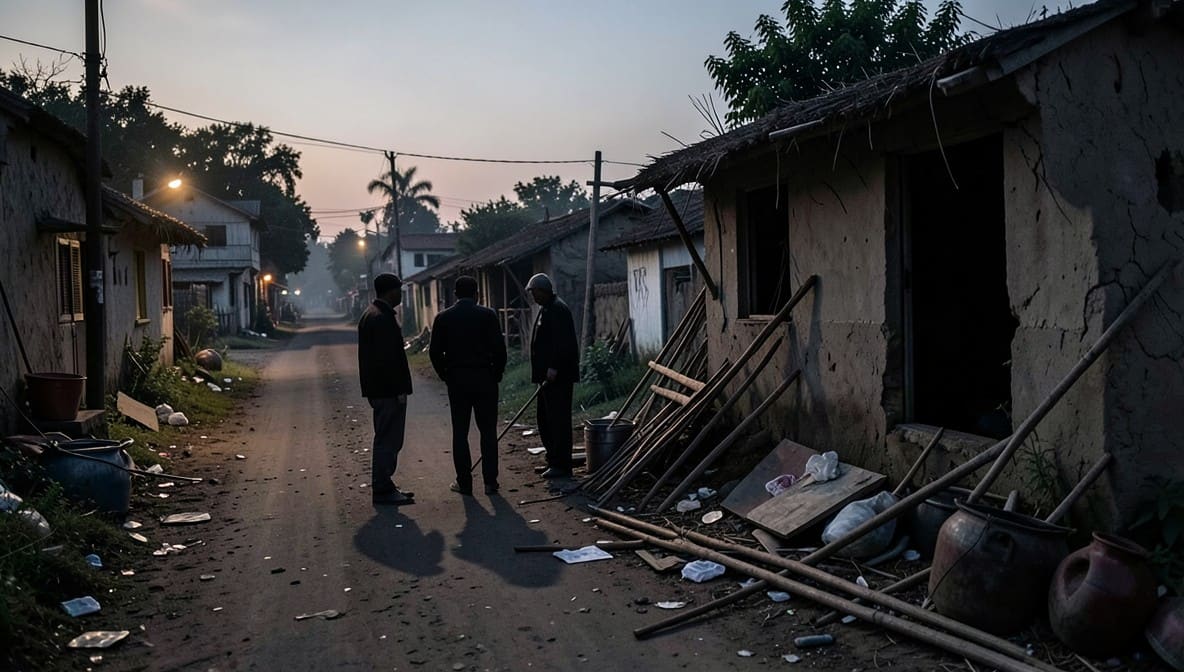
The appellants, Umesh Ashok Mali and Parag Rajesh Raghuvanshi, were arrested in connection with Crime No. 378 of 2026 registered at Nandurbar City Police Station. The case arises from a violent altercation on 16.03.2026 at approximately 10:30 pm, triggered by an ego-driven dispute over serving food. Accused No. 1, Parag, allegedly called associates to the scene, leading to a quarrel with the complainant and others. The incident resulted in injuries to the complainant and two others.
Key Facts
- The altercation occurred on 16.03.2026 at around 10:30 pm in Nandurbar, Maharashtra
- The complainant sustained two swelling injuries: one on the left forearm and one on the parietal region, both classified as simple
- Injured person Manoj sustained four injuries: three simple abrasions and one grievous fracture to the right hand
- According to Manoj’s statement, Accused No. 4, Umesh, assaulted him with an iron rod
- Accused No. 1, Parag, is alleged to have instigated the violence by summoning associates
- Six other accused persons were granted bail by the Additional Sessions Judge, Nandurbar
- The appellants have been in judicial custody since 17.03.2026 and 19.03.2026 respectively
- No prior criminal record or antecedents are recorded against either appellant
- The Investigating Officer confirmed that the investigation is complete and the charge-sheet will be filed within one week
- No evidence remains to be recovered from the appellants
Procedural History
- 16.03.2026: Incident occurred
- 17.03.2026: Accused No. 4, Umesh Ashok Mali, taken into custody
- 19.03.2026: Accused No. 1, Parag Rajesh Raghuvanshi, taken into custody
- 31.03.2026: Additional Sessions Judge, Nandurbar, rejected bail applications of both appellants (Criminal Bail Application Nos. 124 of 2026 and 119 of 2026)
- 04.05.2026: Criminal Appeals No. 233 of 2026 and 239 of 2026 heard before the Bombay High Court, Aurangabad Bench
The Parties' Positions
The appellants contended that their prolonged detention was unjustified given the completion of investigation, absence of criminal history, and the fact that co-accused had already been released on bail. They emphasized that the injuries were not life-threatening and that they posed no risk of tampering with evidence.
The State, through the Additional Public Prosecutor, conceded that the investigation was complete and that the charge-sheet would be filed within a week. It did not oppose bail outright but had not formally supported it.
The respondent No. 2, Akshay Atmaram Gavali, was represented by counsel appointed by the Court on 30.04.2026, but did not oppose bail.
Relief Sought
The appellants sought release on bail pending trial, with conditions to ensure cooperation with the judicial process. They requested that the bail conditions be reasonable and not unduly restrictive.
The Legal Issue
The central question was whether bail can be granted to accused persons facing serious charges under the Scheduled Castes and Scheduled Tribes (Prevention of Atrocities) Act, 1989 and the Bharatiya Nyaya Sanhita, 2023, where the investigation is complete, no criminal antecedents exist, and the injuries sustained are predominantly simple.
Arguments Presented
For the Appellant
Learned counsel for both appellants argued that the allegations, while serious, do not justify continued incarceration given the completion of investigation and absence of any prior record. They relied on Arnesh Kumar v. State of Bihar to assert that bail should be the rule and jail the exception, particularly where the accused are not flight risks or likely to tamper with evidence. They emphasized that the co-accused had already been released, and differential treatment was unjustified.
For the Respondent
The State did not oppose bail outright and conceded that the investigation was complete and no evidence remained to be recovered. The Additional Public Prosecutor acknowledged that the appellants had no history of criminal conduct and that the charge-sheet would be filed shortly. The counsel for respondent No. 2, appointed by the Court, also did not oppose the grant of bail.
The Court's Analysis
The Court acknowledged the seriousness of the charges under the SC & ST Act and BNS, particularly the allegation of assault with an iron rod and the involvement of multiple accused. However, it emphasized that the nature of the injuries, as documented in the injury certificates, were largely simple, with only one grievous injury reported. The Court noted that the complainant’s injuries were not life-threatening and did not indicate extreme brutality.
"Considering that the investigation is complete and I. O. is going to file the charge in the Court in a week, and that no criminal antecedents appear against the Appellants, in my view, it would not be appropriate to detain the Appellants behind bars; however, stringent conditions can be imposed on them while releasing them on bail."
The Court distinguished this case from those involving ongoing investigations, threats to witnesses, or repeated offences. It held that the mere invocation of the SC & ST Act does not automatically disqualify an accused from bail, especially when the factual matrix supports release. The Court also observed that the co-accused had been granted bail, and there was no rational basis to deny the same to these appellants.
The Court further noted that the appellants had been in custody since mid-March 2026, and continued detention without a charge-sheet being filed would amount to undue hardship. The Court rejected the notion that the gravity of the offence alone should override the principles of personal liberty under Article 21 of the Constitution.
The Verdict
The appeals were allowed. The appellants, Umesh Ashok Mali and Parag Rajesh Raghuvanshi, were granted bail in connection with Crime No. 378 of 2026. They are required to furnish personal bond and surety bond of Rs. 1,00,000 each, with one or two solvent sureties in the same amount. The conditions imposed are: (i) they shall not tamper with prosecution evidence until conclusion of trial; and (ii) they shall not leave India without prior permission of the Court. The charge-sheet is to be filed within one week as conceded by the State.
What This Means For Similar Cases
Bail Is Not Automatically Denied Under SC & ST Act
- Practitioners must argue that invocation of the SC & ST Act does not create a per se bar to bail
- Courts must examine the factual gravity of the incident, not merely the label of the offence
- Completion of investigation and absence of antecedents are strong mitigating factors
Injury Classification Matters in Bail Decisions
- Simple injuries, even in cases involving weapons, may support bail if there is no evidence of intent to cause grievous harm
- Injury certificates and medical reports must be scrutinized to assess actual severity
- A single grievous injury does not automatically negate bail if other factors favor release
Differential Treatment of Co-Accused Is Unjustified
- If co-accused are granted bail on similar facts, denial to others violates the principle of equality
- Courts must provide reasoned justification for disparate treatment
- Bail orders must be consistent across accused persons in the same case unless distinct risk factors exist