The Bombay High Court's recent order in Karankumar Vinod Gautam v. State of Maharashtra underscores a critical principle in bail jurisprudence: the prosecution must establish a prima facie connection between the accused and the crime, failing which bail cannot be denied solely on the gravity of the offence or delay in arrest.
Background & Facts
The Dispute
The applicant, Karankumar Vinod Gautam, sought bail in connection with CR No. 555 of 2021, registered at Mahatma Phule Chowk Police Station, for offences punishable under Sections 302 (murder), 364 (kidnapping), 379 (theft), 201 (causing disappearance of evidence), 34 (common intention), and 120B (criminal conspiracy) of the Indian Penal Code, 1860. The case revolves around the disappearance and alleged murder of a deceased Uber driver on 1st August, 2021.
Key Facts
- The deceased, an Uber driver, informed the car owner on 1st August, 2021 that he was traveling to Dhule for a booked ride. He subsequently went missing.
- A missing person report was lodged by the car owner.
- During investigation, it was discovered that the deceased’s car passed through Shivaji Chowk, Kalyan, at approximately 11:00 p.m. on 1st August, 2021, with the applicant and co-accused allegedly occupying the vehicle.
- The prosecution alleged that the applicant and co-accused murdered the deceased and fled with the car.
- The offence was registered in August 2021, but the applicant was arrested only on 23rd June, 2024.
- The investigation against the applicant was completed, and a supplementary charge-sheet was filed.
Procedural History
- 10th August, 2021: FIR registered under the aforementioned sections.
- 23rd June, 2024: Applicant arrested after a delay of nearly three years.
- Post-June 2024: Investigation completed, and supplementary charge-sheet filed.
- 2026: Bail application (BA No. 226 of 2026) filed before the Bombay High Court.
The Parties' Positions
For the Applicant
- Argued that there was no evidence linking the applicant to the crime.
- Contended that the sole reliance on the co-accused’s statement under Section 27 of the Evidence Act was inadmissible except to the extent of discovery of facts.
- Highlighted the absence of criminal history and the applicant’s willingness to cooperate with the investigation.
For the Respondent-State
- Opposed the bail application, citing the serious nature of the crime.
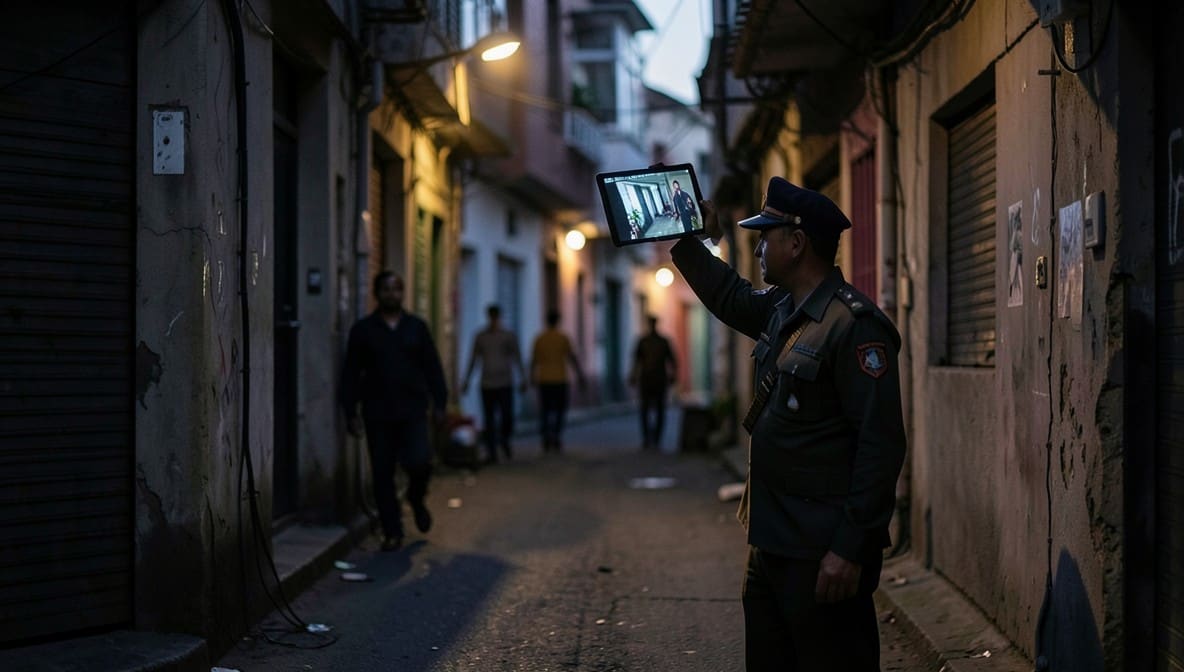
- Relied on the co-accused’s statement under Section 27 of the Evidence Act and CCTV footage showing five persons in the deceased’s car.
- Argued that the applicant’s delay in arrest (three years) demonstrated absconding, justifying denial of bail.
Relief Sought
The applicant sought enlargement on bail, arguing that the prosecution failed to establish a prima facie case against him.
The Legal Issue
The central question before the Court was: Whether the prosecution’s reliance on CCTV footage and a co-accused’s statement under Section 27 of the Evidence Act, without further identification or corroborative evidence, is sufficient to deny bail under Sections 302, 364, 379, 201, 34, and 120B of the IPC?
Arguments Presented
For the Applicant
- Inadmissibility of Co-Accused’s Statement: The applicant’s counsel argued that the co-accused’s statement under Section 27 of the Evidence Act is admissible only to the extent of discovery of facts and cannot be relied upon to establish complicity in the crime.
- Lack of Evidence: Emphasized that there was no material evidence connecting the applicant to the crime, rendering the prosecution’s case weak.
- No Criminal History: Highlighted that the applicant had no prior criminal record and was not a flight risk.
For the Respondent-State
- Gravity of Offence: The prosecution contended that the offence involved murder, kidnapping, and theft, justifying denial of bail.
- CCTV Footage: Relied on CCTV footage showing five persons in the deceased’s car, arguing that this implicated the applicant.
- Absconding: Submitted that the applicant’s delay in arrest (three years) indicated an attempt to evade justice, warranting denial of bail.
The Court's Analysis
The Court conducted a prima facie assessment of the evidence to determine whether the applicant’s involvement in the crime was established. The analysis hinged on two key pieces of evidence:
-
Co-Accused’s Statement under Section 27 of the Evidence Act:
"As rightly argued by learned counsel for the Applicant that the statement of the co-accused except to the extent of discovery of the fact, the same is not admissible in law. As such the said statement involving present Applicant cannot be relied upon."
The Court held that the co-accused’s statement could not be used to establish the applicant’s complicity in the crime, as it is admissible only to the extent of discovery of facts under Section 27 of the Evidence Act. This aligns with the established legal principle that extra-judicial confessions or statements implicating a co-accused are not admissible unless they lead to the discovery of incriminating material.
-
CCTV Footage:
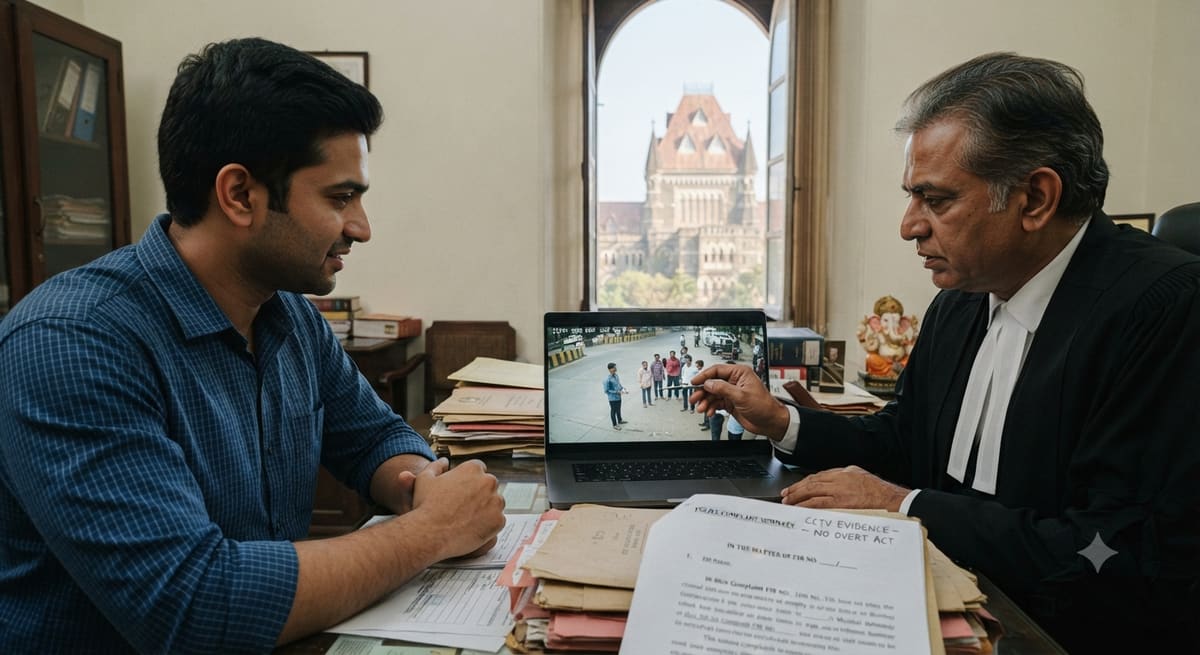
"Though learned APP drew attention of the Court to the Panchanama indicating seizure of the CCTV footage which shows five persons having occupied car with the deceased, there is no further investigation and identification of the Applicant to be one of those five persons."
The Court noted that while the CCTV footage showed five persons in the deceased’s car, there was no further investigation or identification linking the applicant to any of those individuals. The prosecution failed to establish a prima facie connection between the applicant and the crime, rendering the footage insufficient to deny bail.
The Court emphasized that bail cannot be denied solely on the gravity of the offence or the delay in arrest. Instead, the prosecution must demonstrate sufficient evidence to establish a prima facie case against the accused. In this instance, the Court found that the prosecution’s reliance on inadmissible statements and uncorroborated CCTV footage did not meet this threshold.
The Verdict
The Bombay High Court allowed the bail application and directed the applicant’s release on the following terms:
- The applicant was to be enlarged on bail upon furnishing a personal recognizance (PR) bond of Rs. 30,000 with one or two local sureties of the like amount, to the satisfaction of the Trial Court.
- The applicant was directed not to tamper with or interfere with the prosecution evidence in any manner.
- The applicant was required to attend all hearings before the Trial Court, unless exempted.
The Court clarified that its observations were prima facie and confined to the bail application, and that the Trial Court must decide the case on its own merits, uninfluenced by these observations.
What This Means For Similar Cases
Prima Facie Evidence Is Non-Negotiable
This judgment reinforces that bail cannot be denied in the absence of prima facie evidence connecting the accused to the crime. Practitioners should note:
- Section 27 of the Evidence Act is limited to the discovery of facts and cannot be used to establish complicity. Any reliance on co-accused statements must be scrutinized for admissibility.
- CCTV footage alone is insufficient unless it is corroborated by further investigation or identification linking the accused to the crime.
- Courts are unlikely to deny bail solely on the gravity of the offence or delay in arrest if the prosecution fails to establish a prima facie case.
The Burden on the Prosecution
- The prosecution must actively investigate and corroborate evidence such as CCTV footage to establish a connection between the accused and the crime.
- Delay in arrest does not automatically justify denial of bail if the prosecution’s case is weak.
Practical Takeaways for Defense Counsel
- Challenge inadmissible evidence: Defense counsel should vigorously challenge the admissibility of co-accused statements under Section 27 of the Evidence Act if they are used to implicate the accused.
- Highlight gaps in investigation: Emphasize the prosecution’s failure to identify or corroborate evidence such as CCTV footage.
- Argue absence of criminal history: Stress the accused’s lack of criminal antecedents and willingness to cooperate with the investigation to counter allegations of flight risk.