The Bombay High Court has reaffirmed that genuine family hardship, particularly medical emergencies involving close relatives, constitutes sufficient cause for condonation of delay in filing appeals under the Maharashtra Co-operative Societies Act, 1960. The judgment underscores that technical rejections of appeals on procedural grounds must yield to substantive justice when the delay arises from unavoidable personal circumstances.
Background & Facts
The Dispute
The dispute arose from a recovery suit filed by the respondent society, Pawan Sahakari Patpedhi Maryadit, against the petitioner, Komal Devidas Pol, under Section 91 of the Maharashtra Co-operative Societies Act, 1960. The society claimed that the petitioner had defaulted on a loan amount of Rs. 3,61,832 and sought recovery with interest at 19% per annum. The Co-operative Court allowed the society’s claim and passed a decree on 31 March 2022.
Key Facts
- The decree was passed by the Co-operative Court on 31 March 2022
- The petitioner did not file an appeal within the statutory period of 60 days
- The petitioner applied for a certified copy of the decree on 20 June 2022, nearly two and a half months after the decree
- The petitioner filed the appeal on 28 October 2022, which was 190 days after the decree
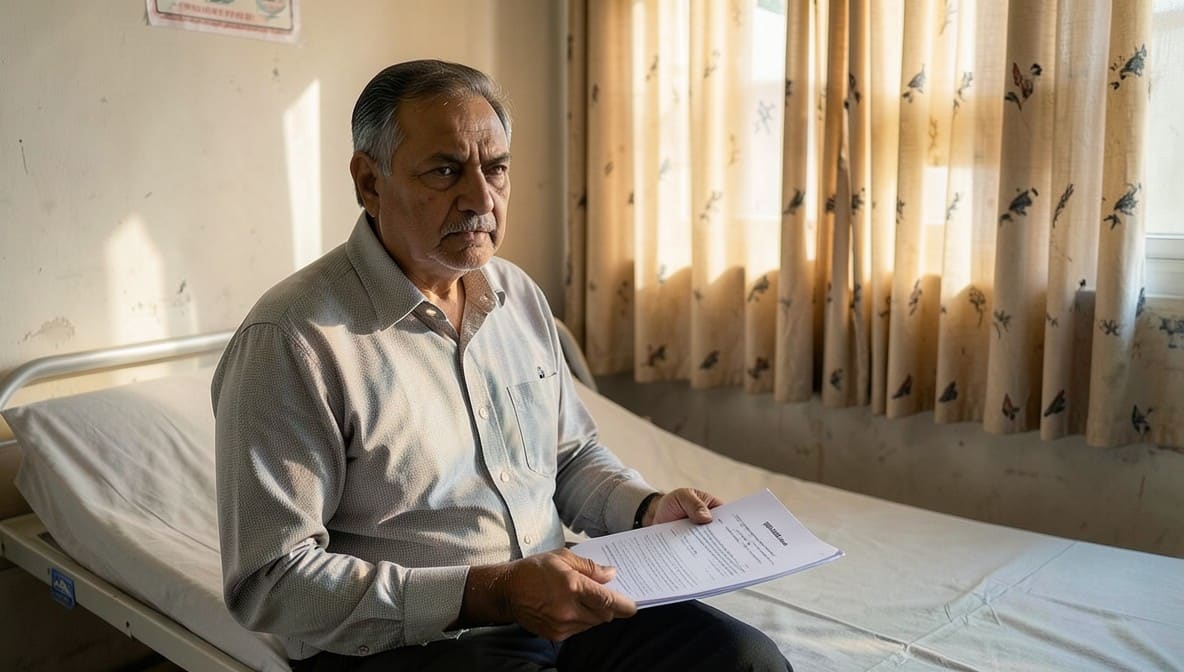
- The petitioner’s father was admitted to Wockhardt Hospital in late 2022 due to age-related illness and passed away on 31 October 2022
- The petitioner claimed he was solely responsible for his father’s care, with no other family member available to assist
- The petitioner’s delay application was rejected by the Co-operative Appellate Court on the ground that the period between the decree and the certified copy request remained unexplained
Procedural History
- 31 March 2022: Co-operative Court passed decree in favor of the society
- 20 June 2022: Petitioner obtained certified copy of the decree
- 28 October 2022: Petitioner filed appeal before the Co-operative Appellate Court
- 05 November 2022: Application for condonation of delay (190 days) filed
- 12 January 2023: Co-operative Appellate Court rejected condonation application
- 28 March 2023: Writ Petition No. 985 of 2026 filed before Bombay High Court
- 04 May 2026: Judgment delivered by Justice Amit Borkar
Relief Sought
The petitioner sought setting aside of the Appellate Court’s order rejecting condonation of delay, and permission to file the appeal on merits. The petitioner also requested that no prejudice be caused to the respondents by imposing a nominal cost.
The Legal Issue
The central question was whether family hardship arising from the terminal illness and death of a primary caregiver constitutes sufficient cause for condonation of delay under Section 91 of the Maharashtra Co-operative Societies Act, 1960, particularly when the delay is not mala fide and the appeal raises a substantial dispute over liability.
Arguments Presented
For the Petitioner
The petitioner argued that the delay was not due to negligence or laches but was caused by unavoidable personal circumstances. He submitted that his father, who was entirely dependent on him, was critically ill for months and required constant care. The petitioner was unable to attend to legal formalities during this period. He relied on State of U.P. v. Mohammad Noor and Smt. Sushila Devi v. Smt. Kamla Devi to argue that courts must adopt a liberal approach to delay condonation when hardship is genuine. He emphasized that the underlying dispute involved a substantial financial liability and that denying the appeal would result in irreparable injustice.
For the Respondent
The respondent contended that the petitioner failed to explain the delay between the date of the decree (31 March 2022) and the date of obtaining the certified copy (20 June 2022). The respondent argued that obtaining a certified copy is a routine procedural step and cannot be used as an excuse for delay. The respondent relied on Rajendra Singh v. State of Maharashtra to assert that courts must not condone delay unless the explanation is satisfactory and the delay is not attributable to the petitioner’s own conduct.
The Court's Analysis
The Court observed that while the Appellate Court correctly noted the delay in obtaining the certified copy, it erred in treating this segment in isolation. The Court held that the entire period of delay must be viewed holistically, taking into account the petitioner’s personal circumstances. The Court emphasized that the law does not require perfection in procedural compliance when human suffering is involved.
"When a person is occupied in attending to a terminally ill parent with no other family support, it is neither unnatural nor unreasonable that legal proceedings take a backseat. The explanation is not fanciful but grounded in common human experience."
The Court distinguished the present case from those involving mere negligence or indifference. It noted that the petitioner’s explanation was consistent, unchallenged on affidavit, and corroborated by the timing of his father’s hospitalization and death. The Court further held that the nature of the dispute - recovery of a substantial sum with high interest - warranted a hearing on merits. Denial of appeal on a technical ground would violate the principle of natural justice.
The Court also rejected the notion that delay must be excused only if every day is accounted for. Instead, it adopted a pragmatic approach: if the overall cause is genuine and the delay is not prejudicial to the opposite party, justice demands that the appeal be permitted.
The Verdict
The writ petition was allowed. The Bombay High Court set aside the Co-operative Appellate Court’s order dated 12 January 2023 rejecting condonation of delay. The petitioner was granted leave to file the appeal on merits within four weeks from the date of this judgment. The petitioner was directed to pay a cost of Rs. 2,000 to the respondents within four weeks. The Court held that this cost would adequately compensate the respondents for the inconvenience caused by the delay.
What This Means For Similar Cases
Family Hardship Is a Valid Ground for Delay Condonation
- Practitioners must now explicitly document medical emergencies, caregiving responsibilities, and absence of alternative support when seeking condonation
- Courts must evaluate the totality of circumstances, not isolate procedural lapses
- A single caregiver’s obligation to a terminally ill relative is recognized as a legitimate impediment to legal action
Substantive Justice Overrides Technical Compliance
- In co-operative disputes involving significant financial liability, courts must prioritize hearing on merits over rigid adherence to limitation periods
- Delay condonation applications must be assessed with empathy, not mechanical scrutiny
- The burden shifts to the respondent to prove actual prejudice from delay, not merely the existence of delay
Cost as a Balanced Remedy
- Nominal costs (e.g., Rs. 2,000) are an effective tool to balance fairness between parties
- Courts may impose costs to deter frivolous delays without denying access to justice
- This approach prevents abuse while preserving the right to appeal in meritorious cases