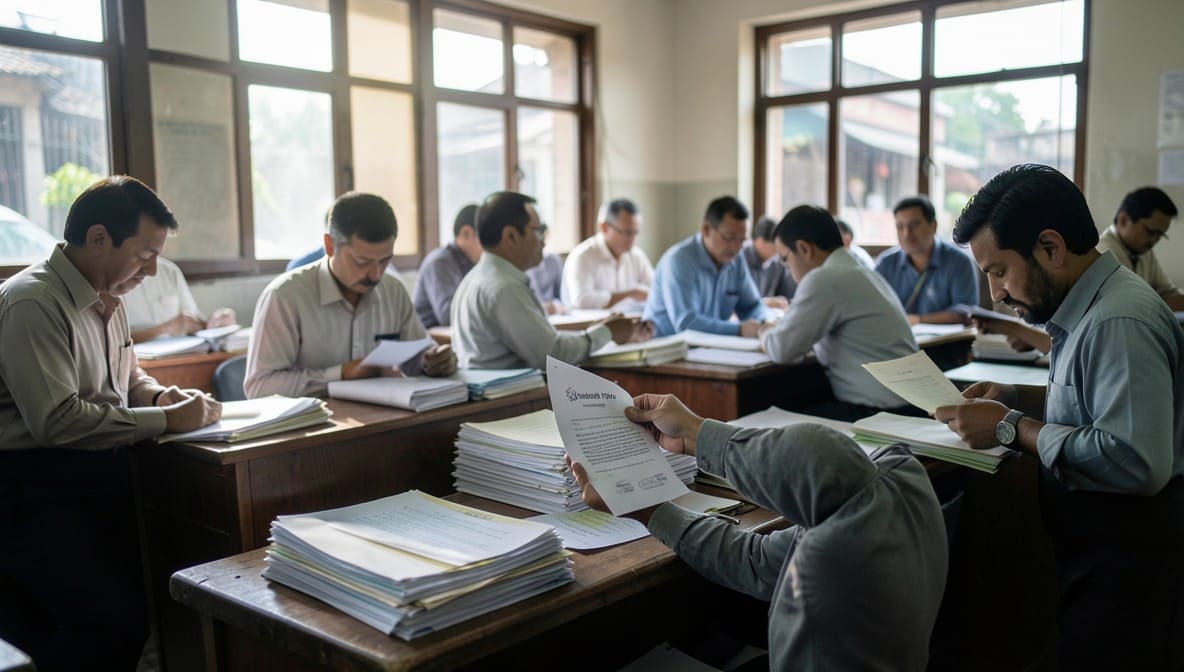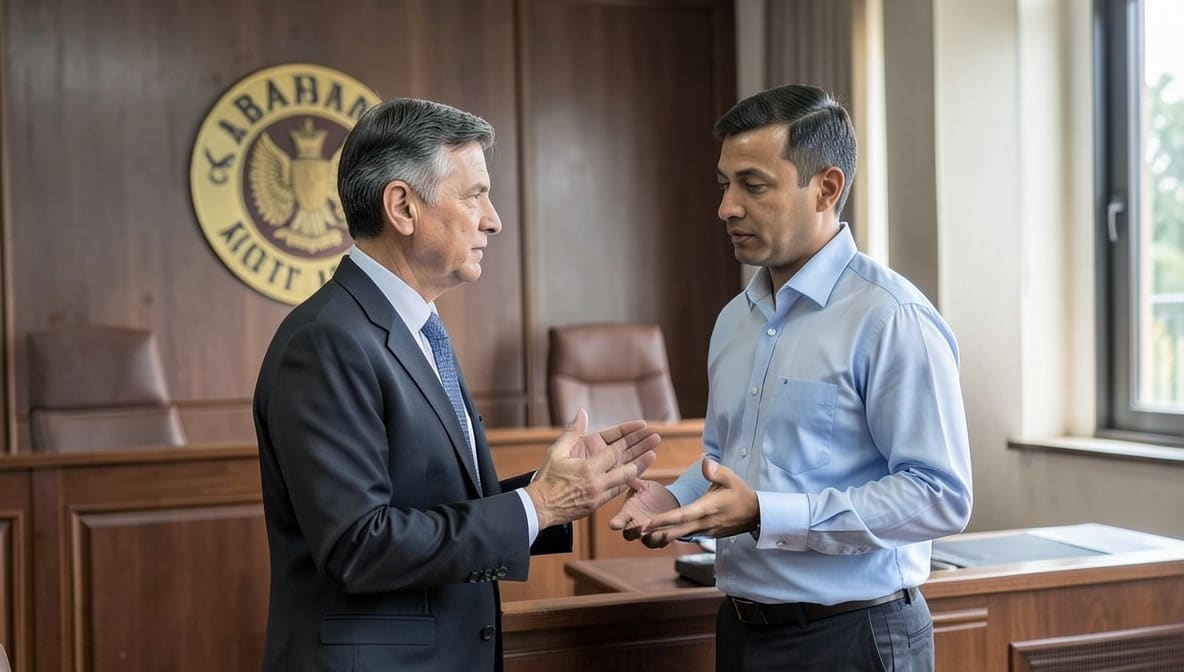
The Bombay High Court has clarified that a litigant cannot be penalized for the abandonment or negligence of their legal counsel, especially when no communication is received regarding withdrawal of representation. In a significant ruling on procedural fairness, the Court condoned a delay of one year and seven months in filing a first appeal, holding that the fault lay solely with the advocate, not the client.
Background & Facts
The Dispute
The dispute arose from a suit for specific performance of an agreement to sell dated 27.04.2010, concerning commercial property located on the first floor of Shewalkar Gardens, Nagpur, with a built-up area of 1208 sq. ft. and an undivided share in the land. The plaintiffs, Rameshprasad Mishra (deceased), Smt. Pramila, and Rohit Mishra, filed Special Civil Suit No.1184/2010 on 22.10.2010 seeking a decree for specific performance. The defendants, Richa Leasing and Properties Pvt. Ltd. and its director Umesh Kambli, appeared through Advocate Ms. Shabana Karim and filed a written statement on 15.07.2011.
Key Facts
- The agreement to sell was executed on 27.04.2010.
- The plaintiffs filed the suit on 22.10.2010.
- The defendants filed their written statement on 15.07.2011 through Advocate Ms. Shabana Karim.
- After filing the written statement, Advocate Ms. Shabana Karim ceased practicing law without informing the defendants or the Court.
- No written notice was issued to the defendants regarding her withdrawal or discontinuation of practice.
- The defendants did not receive any communication from their counsel regarding the trial proceedings.
- The plaintiffs examined four witnesses (PW-1 to PW-4) through affidavits, but the defendants did not cross-examine any witness due to absence of counsel.
- The trial court passed an ex parte judgment and decree on 05.10.2016.
- The plaintiffs initiated execution proceedings (S.D. No.21/2017) on 15.01.2017.
- A notice in execution was sent via speed post on 27.11.2017, but no bailiff report or proof of personal service exists.
- The defendants claim they only became aware of the ex parte decree in March 2018.
- They applied for a certified copy of the decree on 21.03.2018 and received it on 21.05.2018.
- The application for condonation of delay (M.C.A. No.610/2018) was filed on 30.07.2018, resulting in a delay of one year and seven months.
Procedural History
- 27.04.2010: Agreement to sell executed.
- 22.10.2010: Special Civil Suit No.1184/2010 filed by plaintiffs.
- 15.07.2011: Defendants file written statement through Advocate Ms. Shabana Karim.
- 05.10.2016: Trial Court passes ex parte judgment and decree.
- 15.01.2017: Plaintiffs initiate execution proceedings (S.D. No.21/2017).
- 27.11.2017: Notice issued in execution via speed post (no personal service proven).
- 21.03.2018: Defendants apply for certified copy of decree.
- 21.05.2018: Certified copy received by defendants.
- 30.07.2018: Application for condonation of delay (M.C.A. No.610/2018) filed.
- 20.10.2022: First Appellate Court refuses to condone delay.
- 21.04.2023: Second Appeal No.154/2023 filed before Bombay High Court.
- 18.09.2024: High Court frames substantial question of law.
- 30.04.2026: Judgment pronounced.
The Parties' Positions
The appellants (defendants) contended that their counsel’s unannounced withdrawal deprived them of any opportunity to defend the suit, and they acted promptly upon learning of the decree. The respondents (plaintiffs) argued that the defendants had constructive knowledge of the decree from the execution notice dated 27.11.2017 and failed to act diligently.
Relief Sought
The appellants sought condonation of delay of one year and seven months in filing the first appeal against the ex parte decree dated 05.10.2016, and restoration of the appeal for hearing on merits.
The Legal Issue
The central question was whether a delay in filing a first appeal under Section 96 of the CPC, caused solely by the abandonment of counsel without notice to the client or the Court, constitutes a sufficient cause for condonation under Section 5 of the Limitation Act, 1963, and whether the First Appellate Court erred in refusing condonation without considering the client’s innocence.
Arguments Presented
For the Appellant/Petitioner
The appellants relied on Rule 658 and Rule 660 of Chapter XXXIII of the Civil Manual of the Bombay High Court, which mandate that an advocate cannot withdraw without leave of the Court and must notify the client in writing at least seven days in advance. They cited Govinda Bhagoji Kamble v. Sadu Bapu Kamble (2005) to affirm that vakalatnama remains in force until formally withdrawn. They further relied on Secretary, Department of Horticulture, Chandigarh v. Raghu Raj (2008) 13 SCC 395, where the Supreme Court held that clients are entitled to assume their counsel will appear, and courts must not penalize innocent litigants for counsel’s default. They emphasized that no communication was received from counsel, and the defendants acted promptly upon learning of the decree.
For the Respondent/State
The respondents argued that the defendants had constructive knowledge of the decree from the execution notice dated 27.11.2017, and the delay from that date until filing the application on 30.07.2018 was unexplained. They relied on Salil Dutta v. T.M. & M.C. Private Ltd. (1993) 2 SCC 185, where the Supreme Court held that a corporate defendant cannot disown its counsel’s negligence as a blanket defense. They also cited Kanta alias Shanti v. Manjulabai (2020) to argue that litigants must remain actively engaged in their litigation and cannot passively rely on counsel.
The Court's Analysis
The Court undertook a detailed analysis of the obligations of advocates under the Civil Manual and the principles of justice to innocent litigants. It acknowledged that while the general rule is that a party is bound by the acts of its counsel, exceptions exist where the client is blameless and the counsel’s conduct is egregious.
"It is keeping in view these principles that the Court does not proceed to hear the matter in absence of the counsel."
The Court emphasized that the Supreme Court in Secretary, Department of Horticulture had explicitly held that courts must not apply a rigid standard that penalizes clients for the misconduct of their advocates, particularly when the client has no knowledge of the counsel’s withdrawal.
The Court distinguished Salil Dutta, noting that the appellant in that case was a corporate entity with educated management, whereas the present appellants were private individuals who had no reason to suspect their counsel had abandoned the case. The Court also rejected the respondents’ reliance on Kanta, where the litigant had failed to contact her counsel at all, whereas here, the defendants had no opportunity to do so because no notice was given.
The Court further held that the execution notice sent by speed post, without a bailiff’s report or proof of personal service, could not be treated as conclusive evidence of knowledge. The absence of any formal service rendered the respondents’ claim of constructive knowledge speculative.
The Court concluded that the delay was not due to laches or negligence on the part of the appellants, but was entirely attributable to the unprofessional conduct of their advocate, who violated mandatory rules under the Civil Manual. The First Appellate Court’s refusal to condone the delay was therefore legally unsustainable.
The Verdict
The appellants succeeded. The Court set aside the order dated 20.10.2022 of the First Appellate Court, condoned the delay of one year and seven months in filing the first appeal, and directed the First Appellate Court to register the appeal and decide it on merits. The appellants were directed to pay costs of Rs.50,000 to respondents 2 and 3 within 15 days of receipt of the certified copy of this order. Upon compliance, the appeal shall proceed on its merits.
What This Means For Similar Cases
Counsel’s Abandonment Cannot Be Imputed to the Client
- Practitioners must argue that if an advocate withdraws without notice or leave of court, the client’s subsequent delay in filing an appeal must be excused under Section 5 of the Limitation Act.
- The burden shifts to the opposite party to prove actual knowledge of the decree, not mere constructive notice via postal service.
Vakalatnama Remains Valid Until Formal Withdrawal
- Any advocate who files a vakalatnama remains on record until they obtain leave of court to withdraw.
- Courts must not accept "no instruction pursis" as valid withdrawal; the Civil Manual mandates written notice to the client and court.
Procedural Fairness Over Technicality
-
Courts must prioritize substantive justice over procedural technicalities when the litigant is innocent.
-
Delay caused by counsel’s misconduct is a sufficient cause for condonation, even if lengthy, provided the client acted promptly upon learning of the adverse order.
-
Always verify whether counsel has formally withdrawn from the record before assuming a case is abandoned.
-
In cases of ex parte decrees, immediately apply for certified copies and document all steps taken to ascertain the status of the case.
-
When opposing condonation, provide concrete proof of personal service or actual knowledge - mere postal notices are insufficient.