Andhra Pradesh High Court judgments

392 Andhra Pradesh High Court judgments explained in plain English: what was decided, the law applied and why it matters. Page 4 of 17.

Section 50(3) & 74 CGST Act | No Interest or Penalty Due if Ineligible ITC Was Not Utilized: Andhra Pradesh HC
Case Law Analysis
|Andhra Pradesh High Court

Section 50(3) & 74 CGST Act | No Interest or Penalty Due if Ineligible ITC Was Not Utilized: Andhra Pradesh HC

The Andhra Pradesh High Court has ruled that where ineligible Input Tax Credit was availed but not utilized, the tax authorities cannot impose interest under Section 50(3) or penalty under Section 74 of the CGST Act. This clarifies that mere availing of ineligible ITC, without actual benefit or misuse, does not trigger punitive liability - a critical safeguard for businesses facing retrospective tax demands.

Section 118 NI Act | Plaintiff Must Prove Consideration Once Defendant Challenges Genuineness of Promissory Note: AP HC
Case Law Analysis
|Andhra Pradesh High Court

Section 118 NI Act | Plaintiff Must Prove Consideration Once Defendant Challenges Genuineness of Promissory Note: AP HC

The Andhra Pradesh High Court has ruled that when a defendant raises plausible doubt about the authenticity of a promissory note, the burden shifts entirely to the plaintiff to establish actual consideration under Section 118 of the Negotiable Instruments Act. Failure to do so renders the suit unsustainable, reinforcing that a mere document is not enough-proof of value exchanged is mandatory for recovery.

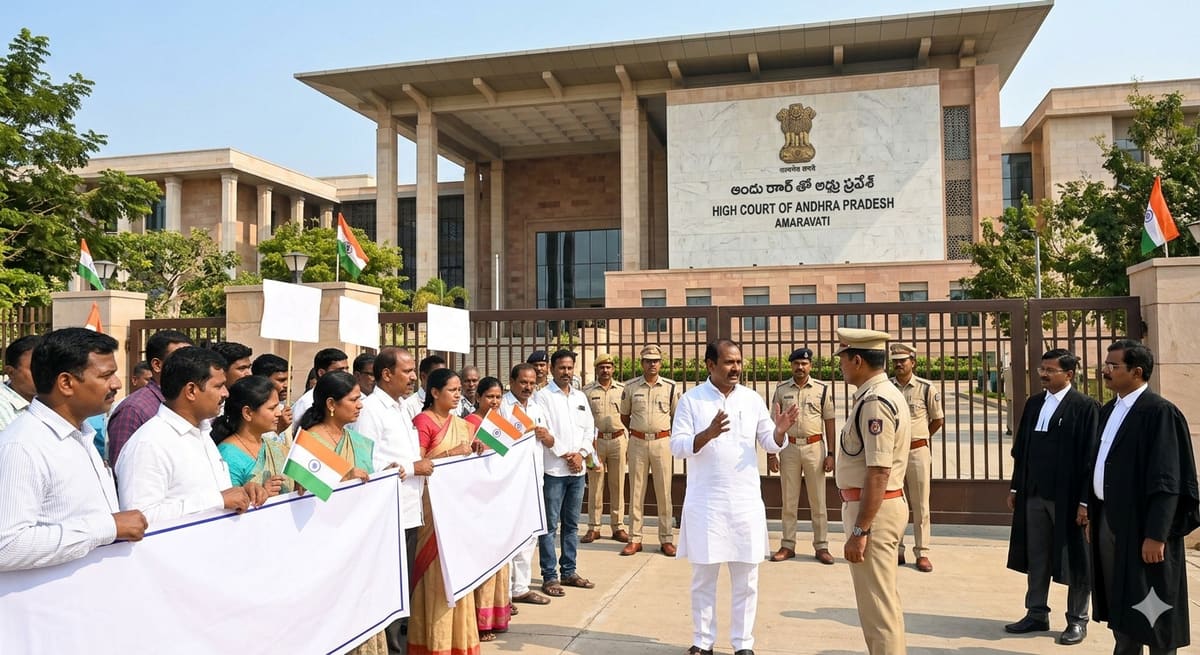
Article 19(1)(b) & Writ of Mandamus | AP HC Directs Disposal of Assembly Permission Request Within 2 Days to Uphold Right to Peaceful Assembly : AP HC
Case Law Analysis
|Andhra Pradesh High Court

Article 19(1)(b) & Writ of Mandamus | AP HC Directs Disposal of Assembly Permission Request Within 2 Days to Uphold Right to Peaceful Assembly : AP HC

The Andhra Pradesh High Court ruled that authorities must dispose of requests for public assembly permissions within two days, emphasizing that undue delays violate constitutional rights under Articles 14, 19(1)(a), 19(1)(b), and 21. The judgment reinforces the state's obligation to facilitate, not obstruct, democratic dissent through timely administrative action.

Article 14, 21 & 300-A | Municipal Survey Without Title Document Verification Violates Property Rights : Andhra Pradesh HC
Case Law Analysis
|Andhra Pradesh High Court

Article 14, 21 & 300-A | Municipal Survey Without Title Document Verification Violates Property Rights : Andhra Pradesh HC

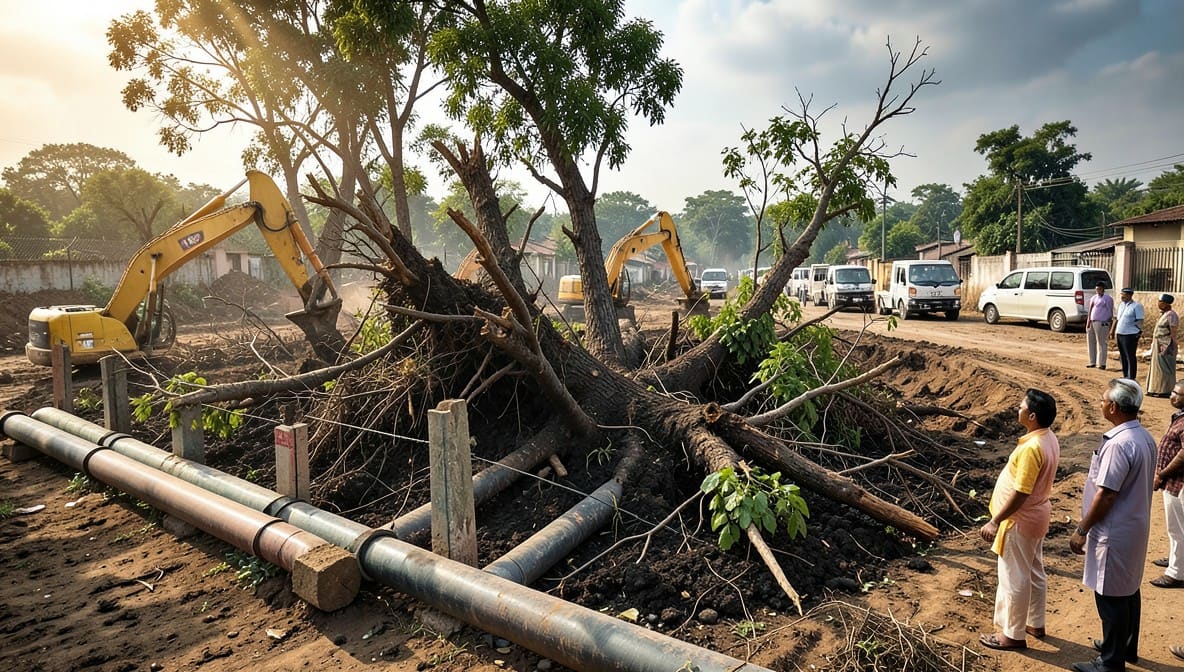
Andhra Pradesh High Court rules that municipal authorities must conduct surveys based on title documents before initiating public works on private land. The judgment mandates due process under Articles 14, 21, and 300-A, ensuring property owners are protected from arbitrary encroachment without statutory acquisition or notice.

Natural Justice in Urban Development | Third-Party Objections Mandatory Before Final Layout Permission Under AP Metropolitan Act : AP HC
Case Law Analysis
|Andhra Pradesh High Court

Natural Justice in Urban Development | Third-Party Objections Mandatory Before Final Layout Permission Under AP Metropolitan Act : AP HC

Andhra Pradesh High Court rules that the Visakhapatnam Metropolitan Region Development Authority (VMRDA) must consider third-party objections before granting final layout permission, reinforcing compliance with natural justice and statutory provisions under the Andhra Pradesh Metropolitan Region and Urban Development Authorities Act, 2016. The ruling sets a precedent for due process in urban development approvals, impacting developers, local authorities, and affected stakeholders.

Due Process Under Andhra Pradesh Municipal Corporation Act | Eviction Without Show-Cause Notice Violates Natural Justice: AP HC
Case Law Analysis
|Andhra Pradesh High Court

Due Process Under Andhra Pradesh Municipal Corporation Act | Eviction Without Show-Cause Notice Violates Natural Justice: AP HC

The Andhra Pradesh High Court ruled that municipal corporations must adhere to principles of natural justice, including issuing show-cause notices and conducting hearings, before evicting alleged encroachers. The Court directed the Kakinada Municipal Corporation to consider evidence of title and possession, reinforcing that procedural fairness is mandatory under the Andhra Pradesh Municipal Corporation Act, 1994.

UGC Faculty Ratio Guidelines | Directory, Not Mandatory: AP HC Upholds Rationalisation of Teaching Posts
Case Law Analysis
|Andhra Pradesh High Court

UGC Faculty Ratio Guidelines | Directory, Not Mandatory: AP HC Upholds Rationalisation of Teaching Posts

The Andhra Pradesh High Court ruled that UGC's pyramidal faculty ratio guidelines are directory, not mandatory, dismissing petitions challenging rationalisation of teaching posts. The judgment clarifies that candidates have no vested right to insist on specific posts, reinforcing the state's discretion in higher education policy implementation.

Article 226 | Mandamus Issued for Timely AICTE NOC Processing to Prevent Prejudice to Institutions and Students : AP HC
Case Law Analysis
|Andhra Pradesh High Court

Article 226 | Mandamus Issued for Timely AICTE NOC Processing to Prevent Prejudice to Institutions and Students : AP HC

Andhra Pradesh High Court directs the state to provisionally include AICTE-approved diploma courses in 2026-27 admissions counseling, pending final NOC decision. The ruling underscores administrative delays violate constitutional rights under Articles 14 and 19(1)(g), mandating expeditious processing to protect educational institutions and students from irreparable harm.

Article 19(1)(g) | Due Process Mandatory Before Evicting Street Vendors: AP High Court Upholds Constitutional Right to Livelihood
Case Law Analysis
|Andhra Pradesh High Court

Article 19(1)(g) | Due Process Mandatory Before Evicting Street Vendors: AP High Court Upholds Constitutional Right to Livelihood

The Andhra Pradesh High Court ruled that municipal authorities cannot evict street vendors without following due process, reinforcing the constitutional right to livelihood under Article 19(1)(g). The judgment mandates compliance with the National Urban Street Vendors Policy, ensuring vendors are not arbitrarily displaced without notice or hearing, impacting thousands of informal workers across India.

Article 14, 21 & 300-A | PMAY Scheme Eviction Without Notice Violates Natural Justice: AP HC
|Andhra Pradesh High Court

Article 14, 21 & 300-A | PMAY Scheme Eviction Without Notice Violates Natural Justice: AP HC

The Andhra Pradesh High Court ruled that beneficiaries under the Pradhan Mantri Awas Yojana (PMAY) cannot be evicted or dispossessed without prior notice and inquiry, as it violates constitutional rights under Articles 14, 21, and 300-A. The judgment reinforces that administrative actions under welfare schemes must adhere to principles of natural justice, ensuring procedural fairness for property holders.

Disciplinary Proceedings Stayed Pending Criminal Trial | Same Charges & Evidence Prejudice Employee Rights: AP HC
Case Law Analysis
|Andhra Pradesh High Court

Disciplinary Proceedings Stayed Pending Criminal Trial | Same Charges & Evidence Prejudice Employee Rights: AP HC

Andhra Pradesh High Court halts disciplinary proceedings against a police constable where criminal trial involves identical charges and evidence, emphasizing prejudice to the employee's right to fair trial. The ruling mandates expedited disposal of the criminal case within one year, reinforcing Supreme Court precedents on parallel proceedings.

Article 226 & Writ of Mandamus | State Barred from Encroaching on TUDA-Approved Layout Without Due Process : AP HC
Case Law Analysis
|Andhra Pradesh High Court

Article 226 & Writ of Mandamus | State Barred from Encroaching on TUDA-Approved Layout Without Due Process : AP HC

Andhra Pradesh High Court restrains state authorities from forcibly taking over a developer’s TUDA-approved residential layout for public project construction without prior notice or hearing. The ruling reinforces that layout approvals under planning laws create enforceable rights, and any encroachment must comply with principles of natural justice and Article 21.

Section 23 Maintenance and Welfare of Parents and Senior Citizens Act | Tribunal Must Dispose Senior Citizen's Gift Deed Cancellation Application Within One Month : Andhra Pradesh HC
Case Law Analysis
|Andhra Pradesh High Court

Section 23 Maintenance and Welfare of Parents and Senior Citizens Act | Tribunal Must Dispose Senior Citizen's Gift Deed Cancellation Application Within One Month : Andhra Pradesh HC

The Andhra Pradesh High Court reinforced the statutory timeline under Section 23 of the Maintenance and Welfare of Parents and Senior Citizens Act, 2007, directing the Maintenance Tribunal to dispose of a senior citizen's application for gift deed cancellation within one month. The ruling underscores the urgency of protecting elderly rights and sets a precedent for strict adherence to procedural timelines in tribunal proceedings.

Motor Vehicles Act Section 147 | Insurer Liable for Compensation Even If Deceased Was Gratuitous Passenger in Goods Vehicle: Andhra Pradesh HC
Case Law Analysis
|Andhra Pradesh High Court

Motor Vehicles Act Section 147 | Insurer Liable for Compensation Even If Deceased Was Gratuitous Passenger in Goods Vehicle: Andhra Pradesh HC

The Andhra Pradesh High Court ruled that insurers cannot evade liability under Section 147 of the Motor Vehicles Act merely because the deceased was a gratuitous passenger traveling with goods in an insured vehicle. The judgment clarifies that ownership of the consignment is irrelevant for compensation claims, impacting accident victims and insurers alike.

Automatic Advancement Scheme | Qualification Not Required for SAPP Scales Under G.O. Ms. No. 96 : AP HC
Case Law Analysis
|Andhra Pradesh High Court

Automatic Advancement Scheme | Qualification Not Required for SAPP Scales Under G.O. Ms. No. 96 : AP HC

The Andhra Pradesh High Court ruled that under the Automatic Advancement Scheme, qualification is not a prerequisite for granting Special Adhoc Promotion Post (SAPP) scales, directing the grant of SAPP-II benefits to a retired employee with 24 years of service. The judgment reinforces that financial upgradation under G.O. Ms. No. 96 and G.O. Ms. No. 68 is a statutory entitlement, not a promotional post requiring qualifications.

Section 125 CrPC | Financially Independent Wife Barred from Maintenance: Andhra Pradesh High Court
|Andhra Pradesh High Court

Section 125 CrPC | Financially Independent Wife Barred from Maintenance: Andhra Pradesh High Court

The Andhra Pradesh High Court ruled that a wife earning Rs. 40,000/month as a government employee cannot claim maintenance under Section 125 CrPC, emphasizing that financial independence negates the husband's obligation. The decision reinforces the provision's limited scope to cases of genuine need, impacting matrimonial disputes where spouses are self-sufficient.

Section 25 Evidence Act | Confessional Statement of Co-Accused Inadmissible to Implicate Another Accused : AP HC Grants Pre-Arrest Bail Under BNSS Section 482
|Andhra Pradesh High Court

Section 25 Evidence Act | Confessional Statement of Co-Accused Inadmissible to Implicate Another Accused : AP HC Grants Pre-Arrest Bail Under BNSS Section 482

Andhra Pradesh High Court reinforces the inadmissibility of a co-accused’s confessional statement under Section 25 of the Evidence Act to implicate another accused, granting pre-arrest bail. The ruling underscores that reliance on such statements violates the presumption of innocence and due process, offering critical protection to accused persons facing implication based solely on co-accused testimony.

Article 226 | Mandamus Issued for School Upgradation Approval After Statutory Delay Violates Right to Education : AP HC
Case Law Analysis
|Andhra Pradesh High Court

Article 226 | Mandamus Issued for School Upgradation Approval After Statutory Delay Violates Right to Education : AP HC

Andhra Pradesh High Court holds that administrative inaction on school upgradation proposals, despite compliance with statutory requirements, warrants judicial intervention under Article 226. The ruling reinforces that delays violating the Right to Education (Article 21-A) and procedural fairness justify a writ of mandamus directing immediate approval.

Natural Justice | Non-Speaking Orders in Service Matters Violate Principles of Natural Justice: AP HC Sets Aside CAT Order
Case Law Analysis
|Andhra Pradesh High Court

Natural Justice | Non-Speaking Orders in Service Matters Violate Principles of Natural Justice: AP HC Sets Aside CAT Order

The Andhra Pradesh High Court ruled that orders rejecting interim relief in service matters must provide reasons, as non-speaking orders violate natural justice. The court set aside a Central Administrative Tribunal order, reinforcing that disciplinary proceedings under CCS (CCA) Rules, 1965, require reasoned decisions to ensure fairness and transparency for government employees.

Natural Justice in Disciplinary Proceedings | Undue Delay and Lack of Evidence Vitiate Pension Cut; Notional Promotion Not Automatic: AP HC
Case Law Analysis
|Andhra Pradesh High Court

Natural Justice in Disciplinary Proceedings | Undue Delay and Lack of Evidence Vitiate Pension Cut; Notional Promotion Not Automatic: AP HC

The Andhra Pradesh High Court ruled that disciplinary proceedings marred by undue delay and insufficient evidence cannot sustain punitive actions like pension cuts. The Court also clarified that notional promotion is not an automatic entitlement, even if the punishment order is set aside, reinforcing principles of natural justice in service law.