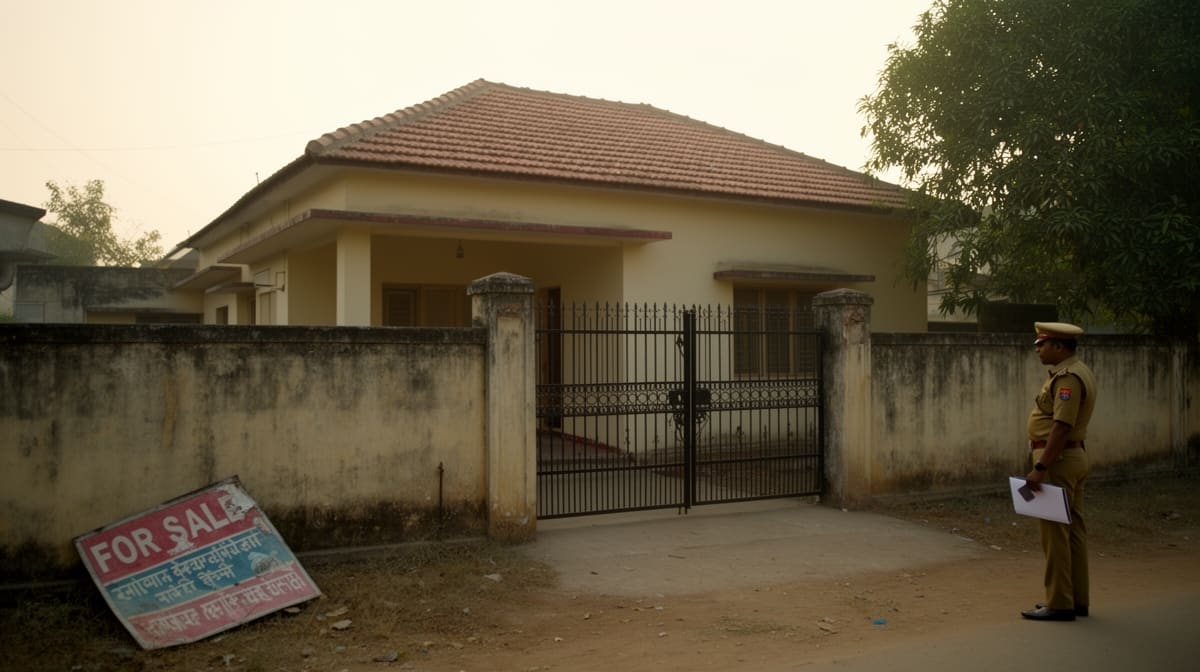
The Andhra Pradesh High Court has reaffirmed that municipal authorities cannot arbitrarily threaten or demolish street vendors' shops without following due process of law. This judgment underscores the constitutional protection under Article 19(1)(g) and aligns with the National Policy on Urban Street Vendors, 2004, mandating procedural fairness before any eviction.
Background & Facts
The Dispute
Twelve street vendors from Visakhapatnam filed a writ petition under Article 226 challenging the Greater Visakhapatnam Municipal Corporation (GVMC)'s threat to demolish their shops near Marripalem Bus Stand. The petitioners, engaged in occupations such as coconut vending, barber services, and juice stalls, alleged that the GVMC's actions were arbitrary and violated their right to carry on trade or business under Article 19(1)(g) of the Constitution. They further contended that the eviction threats disregarded the National Policy on Urban Street Vendors, 2004, which mandates registration and licensing for street vendors.
Key Facts
- The petitioners operate small businesses near Marripalem Bus Stand, Visakhapatnam
- GVMC threatened to demolish their shops without prior notice or due process
- The petitioners sought protection under Article 19(1)(g) and the National Policy on Urban Street Vendors, 2004
- The shops in question include coconut stalls, barber shops, juice vendors, and waste paper sellers
Procedural History
- 2014: Writ Petition (WP No. 4156/2014) filed before the Andhra Pradesh High Court
- 14.02.2014: High Court granted interim relief, directing GVMC not to evict the petitioners pending disposal of the writ petition
- 23.06.2026: Final disposal of the writ petition with directions to GVMC
Relief Sought
The petitioners sought:
- A writ of mandamus declaring GVMC's threatened demolition as unconstitutional and arbitrary
- Directions to GVMC to regularize their shops through registration and licensing
- Protection from eviction until due process is followed
The Legal Issue
The central question was whether municipal authorities can threaten or demolish street vendors' shops without following due process of law, and whether such actions violate Article 19(1)(g) of the Constitution and the National Policy on Urban Street Vendors, 2004.
Arguments Presented
For the Petitioners
- Contended that GVMC's actions were arbitrary and unconstitutional, violating Article 19(1)(g)
- Argued that the National Policy on Urban Street Vendors, 2004 mandates registration and licensing, not eviction
- Submitted that the petitioners were continuing their business under the protection of the High Court's interim orders
For the Respondents
- The Standing Counsel for GVMC submitted that the petitioners were encroaching on road margins
- Assured the Court that any action against the petitioners would be taken only after following due process of law
The Court's Analysis
The High Court observed that the petitioners had been operating their businesses under the protection of its interim orders. The Court emphasized the importance of due process and procedural fairness before any eviction or demolition. While the Court did not delve into the merits of the National Policy on Urban Street Vendors, 2004, it implicitly recognized the constitutional protection afforded to street vendors under Article 19(1)(g).
The Court noted:
"Recording the same, the writ petition stands disposed of. It is made clear that the 1st respondent shall follow due process of law before taking any action against the petitioners."
This holding reinforces that municipal authorities cannot act arbitrarily and must adhere to legal procedures before evicting street vendors.
The Verdict
The High Court disposed of the writ petition with the following directions:
- GVMC must follow due process of law before taking any action against the petitioners
- No costs were awarded
- All pending miscellaneous petitions were closed
What This Means For Similar Cases
Due Process Is Non-Negotiable
- Municipal authorities must strictly adhere to procedural fairness before evicting street vendors
- Threatening or demolishing shops without notice or legal process is unconstitutional
- Practitioners can rely on Article 19(1)(g) to challenge arbitrary evictions
Protection Under Interim Orders
- Street vendors operating under interim court orders are entitled to continue their business until final disposal
- Authorities cannot bypass judicial orders by threatening eviction
Implications for Urban Street Vendors Policy
- The judgment aligns with the National Policy on Urban Street Vendors, 2004, which mandates registration and licensing
- Municipalities must regularize street vendors rather than resort to eviction
- Vendors can seek legal recourse if authorities fail to follow policy guidelines