The Andhra Pradesh High Court recently delivered a significant ruling on maintenance claims under Section 125 of the Code of Criminal Procedure (CrPC), reinforcing that a wife capable of self-maintenance cannot claim maintenance from her husband. The Court set aside a Family Court order awarding Rs. 15,000 per month to the wife, emphasizing that the statutory provision is intended for dependents unable to sustain themselves, not for those with independent income.
Background & Facts
The Dispute
The case involves a matrimonial dispute between Kakaravada Ismail (petitioner/husband) and Shaik Herutunnisa (respondent/wife). The wife filed a maintenance petition under Section 125 CrPC before the Additional Family Court, Vijayawada, seeking financial support from the husband. The Family Court allowed the petition, directing the husband to pay Rs. 15,000 per month as maintenance. Aggrieved by this order, the husband filed a Criminal Revision Case before the Andhra Pradesh High Court.
Key Facts
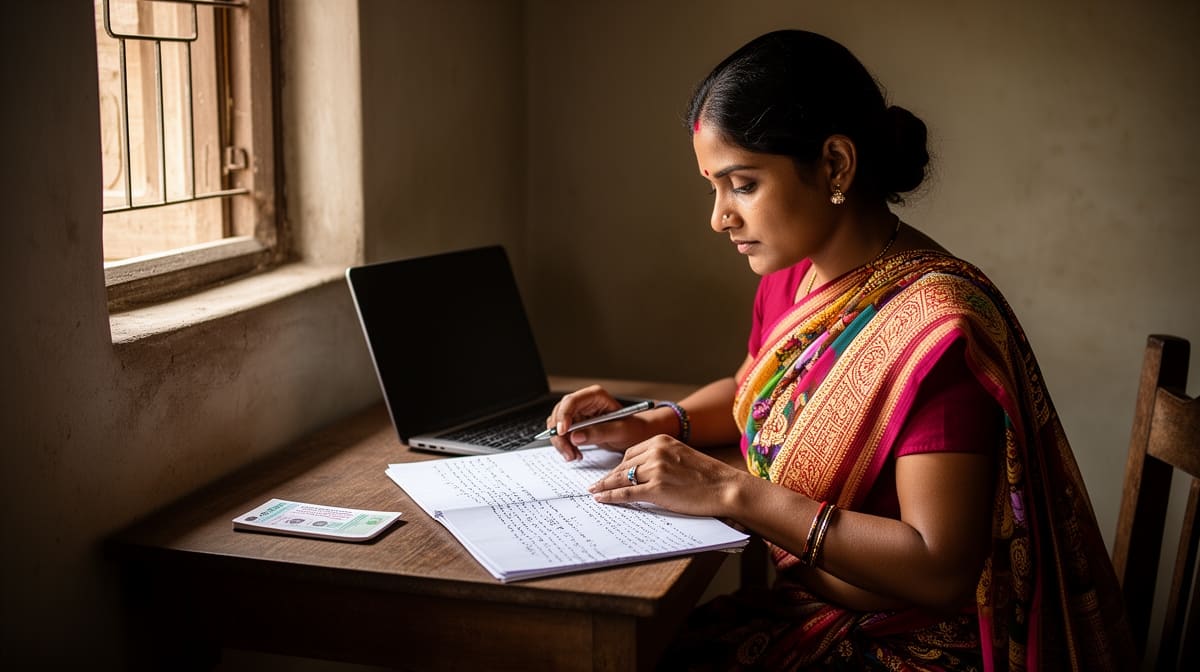
- The respondent/wife is a Government employee, working as an Engineering Assistant in the Sachivalayam at Veeranki, drawing a salary of Rs. 40,000 per month.
- The petitioner/husband is employed as an Assistant Professor in an Engineering College, with a stipend of Rs. 15,000 per month during his tenure as a Research Scholar.
- The husband contended that he has no permanent job and is responsible for maintaining his dependent mother.
- The wife admitted in her testimony (P.W.1) that she was employed at the time of filing the petition and produced Ex.R.1, her appointment letter, confirming her employment.
- The husband (R.W.1) testified that he was willing to take the wife back to the matrimonial home and that his income was insufficient to support both his mother and the wife.
Procedural History
- 15.06.2022: Wife filed F.C.O.P (MC) No. 473 of 2022 before the XIV Additional District Judge cum Judge, Additional Family Court, Vijayawada, seeking maintenance.
- 20.01.2026: The Family Court allowed the petition, awarding Rs. 10,000 per month to the wife and Rs. 5,000 per month each to the children.
- 24.06.2026: The husband filed Criminal Revision Case No. 339 of 2026 before the Andhra Pradesh High Court, challenging the Family Court’s order.
Relief Sought
The petitioner/husband sought setting aside of the Family Court’s order dated 20.01.2026, contending that the wife, being a government employee with a substantial income, was not entitled to maintenance under Section 125 CrPC.
The Legal Issue
The central question before the High Court was whether a wife, who is gainfully employed and capable of maintaining herself, can claim maintenance from her husband under Section 125 CrPC, which is intended for dependents unable to sustain themselves.
Arguments Presented
For the Petitioner/Husband
- The wife is a Government employee earning Rs. 40,000 per month, which is sufficient for her maintenance.
- The petitioner has no permanent job and earns only Rs. 15,000 per month, which is inadequate to support both his dependent mother and the wife.
- The Family Court mechanically granted maintenance without considering the financial status and earning capacity of the wife.
- The wife did not disclose her actual salary at the time of filing the petition, which is a misrepresentation of her financial independence.
For the Respondent/Wife
- The petitioner, being an Assistant Professor in an Engineering College, has sufficient income to maintain the wife.
- The Family Court elaborately considered the material on record and rightly awarded maintenance.
- The impugned order does not warrant interference in revisional jurisdiction, as the Trial Court applied its mind properly.
The Court's Analysis
The High Court meticulously examined the statutory framework of Section 125 CrPC, which empowers courts to award maintenance to a wife unable to maintain herself. The Court observed:
"The statutory language of Section 125 Cr.P.C. clearly postulates that maintenance may be awarded where a person having sufficient means neglects or refuses to maintain his wife who is unable to maintain herself. In the present case, as discussed above, the respondent/wife was admittedly earning a considerable income as a Government employee even as on the date of filing of the petition. Despite the same, she did not disclose her actual and current salary and sought maintenance from the petitioner."
The Court further noted that the wife’s admission in her testimony (P.W.1) and the production of Ex.R.1 (appointment letter) conclusively proved her financial independence. The husband’s testimony (R.W.1) revealed that he was not permanently employed and had the additional responsibility of maintaining his dependent mother. The Court emphasized that the wife did not suffer from any chronic illness requiring substantial financial assistance, which could have justified her claim.
The Court relied on established precedents, reiterating that Section 125 CrPC is not a tool for enrichment but a social welfare provision to prevent destitution. It held that the Family Court failed to apply its mind to the material aspects of the case, particularly the wife’s financial independence, and mechanically granted maintenance. Such an order, the Court observed, warrants interference in revisional jurisdiction.
The Verdict
The Andhra Pradesh High Court allowed the Criminal Revision Case, setting aside the Order dated 20.01.2026 passed in F.C.O.P (MC) No. 473 of 2022 by the Additional Family Court, Vijayawada. The Court held that the wife, being a Government employee earning Rs. 40,000 per month, was not entitled to maintenance under Section 125 CrPC. All pending interlocutory applications, if any, were closed.
What This Means For Similar Cases
Maintenance Claims Require Proof of Inability to Self-Sustain
- Practitioners must ensure that claimants under Section 125 CrPC demonstrate genuine inability to maintain themselves. Courts will scrutinize the financial independence of the claimant, including employment status and income.
- Government employees or individuals with stable income will face higher burden of proof to establish entitlement to maintenance. Mere allegations of neglect without evidence of financial hardship are insufficient.
Full Disclosure of Financial Status Is Mandatory
- Claimants must disclose their actual income at the time of filing the petition. Non-disclosure or misrepresentation of financial status can lead to dismissal of the claim, as seen in this case.
- Courts may rely on documentary evidence (e.g., appointment letters, salary slips) to ascertain the claimant’s financial capacity. Oral testimony alone may not suffice.
Revisional Jurisdiction Can Correct Mechanical Orders
- Family Courts must apply their mind to the financial status of both parties before granting maintenance. Mechanical orders that ignore material facts are liable to be set aside in revision.
- Husbands burdened with dependents (e.g., elderly parents) can argue inability to pay maintenance, provided they substantiate their claims with evidence.
Precedents Reinforce Limited Scope of Section 125 CrPC
- The judgment aligns with Supreme Court and High Court precedents, which consistently hold that Section 125 CrPC is not a maintenance tool for financially independent spouses. It is a social welfare measure to prevent destitution, not to create financial obligations where none exist.
- Practitioners should cite this judgment to challenge maintenance claims by spouses with independent income sources.