Allahabad High Court judgments

902 Allahabad High Court judgments explained in plain English: what was decided, the law applied and why it matters. Page 23 of 38.

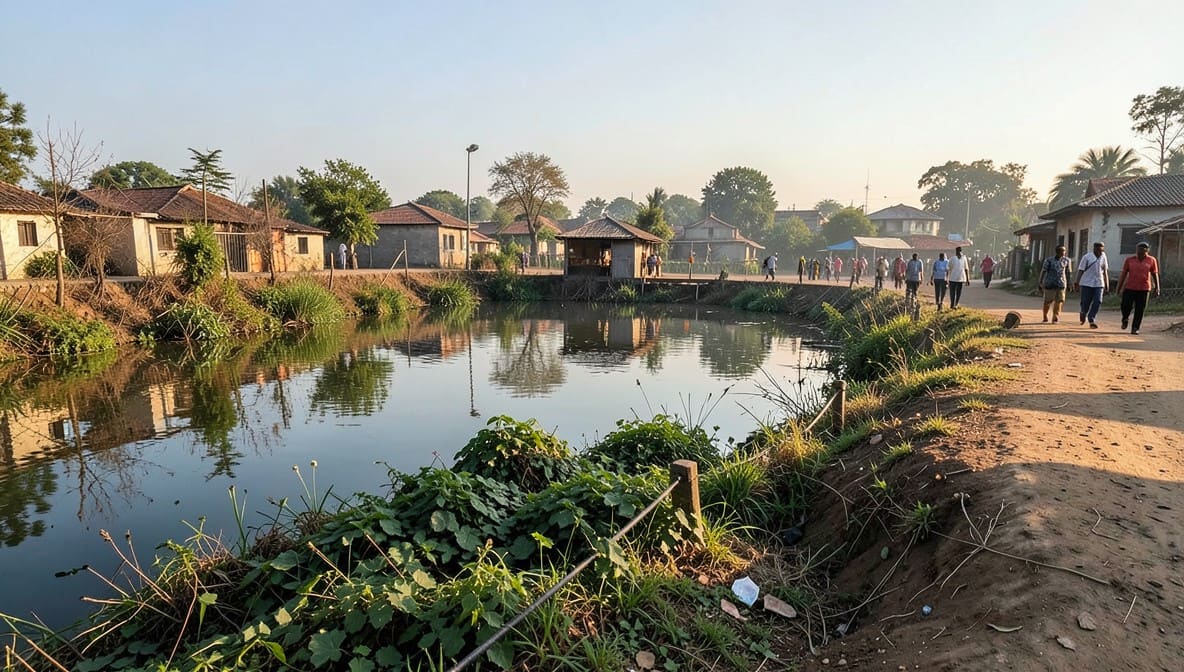
Section 67 U.P. Revenue Code, 2006 | Tehsildar Must Decide Gaon Sabha Encroachment Case Within 3 Months: Allahabad HC
Case Law Analysis
|Allahabad High Court

Section 67 U.P. Revenue Code, 2006 | Tehsildar Must Decide Gaon Sabha Encroachment Case Within 3 Months: Allahabad HC

The Allahabad High Court has mandated that the Tehsildar of Salempur decide the pending encroachment case on Gaon Sabha land within three months, reinforcing that statutory duties under the U.P. Revenue Code cannot be delayed by administrative inertia. This ruling strengthens accountability for revenue officers tasked with protecting community land and ensures timely justice for villagers facing illegal occupation.


Motor Accident Compensation | Minimum Wage as Default Income Baseline for Unskilled Deceased Without Proof : Allahabad HC
|Allahabad High Court

Motor Accident Compensation | Minimum Wage as Default Income Baseline for Unskilled Deceased Without Proof : Allahabad HC

The Allahabad High Court has ruled that in the absence of income documentation, the minimum wage for unskilled labor must serve as the baseline for calculating compensation in motor accident claims. This sets a nationally relevant precedent for claimants from informal sectors, ensuring fairer outcomes for families of deceased earners with no formal records, while mandating structured payments with 7% interest to prevent delayed justice.

Section 483 BNSS | Bail Granted When Accused Absent from FIR and No Corroborative Evidence Exists: Allahabad HC
Case Law Analysis
|Allahabad High Court

Section 483 BNSS | Bail Granted When Accused Absent from FIR and No Corroborative Evidence Exists: Allahabad HC

The Allahabad High Court granted bail to an accused not named in the FIR and lacking any forensic or eyewitness linkage to the crime, reinforcing that absence of prima facie evidence and investigative gaps override the gravity of the charge. This sets a critical precedent for pre-trial liberty where prosecution fails to establish even a minimal nexus between the accused and the offence.

Substantive Appointment Date Governs Seniority | Transfer Does Not Reset Seniority Under U.P. Ministerial Service Rules, 1980 : Allahabad HC
Case Law Analysis
|Allahabad High Court

Substantive Appointment Date Governs Seniority | Transfer Does Not Reset Seniority Under U.P. Ministerial Service Rules, 1980 : Allahabad HC

The Allahabad High Court has ruled that seniority for ministerial staff must be calculated from the date of substantive appointment, not the date of transfer, even when relocation is requested for family reasons. This decision invalidates seniority lists based on transfer dates and entitles affected employees to all consequential benefits, including promotions and pay scales retroactively.

NDPS Act Section 37 | Bail Granted Despite Criminal Antecedents When Contraband Is Below Commercial Quantity and Trial Is Unduly Delayed : Allahabad HC
Case Law Analysis
|Allahabad High Court

NDPS Act Section 37 | Bail Granted Despite Criminal Antecedents When Contraband Is Below Commercial Quantity and Trial Is Unduly Delayed : Allahabad HC

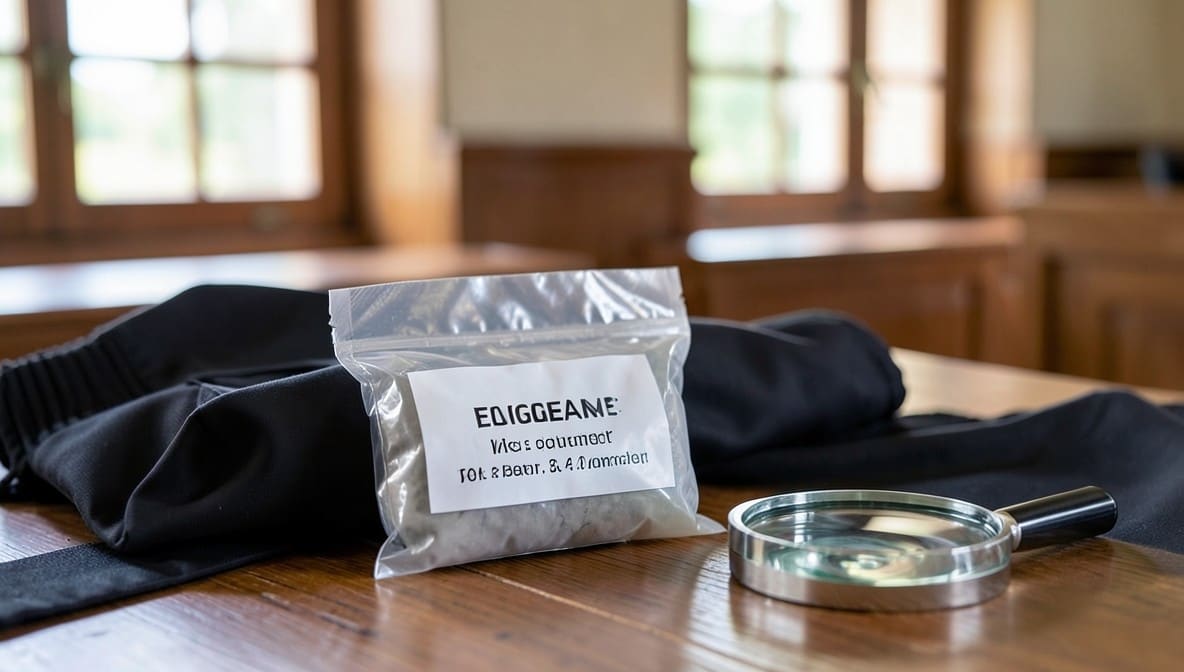
The Allahabad High Court granted bail under the NDPS Act to an accused with prior convictions, holding that possession of 1.240kg ganja - well below commercial quantity - combined with prolonged trial delay, outweighs criminal history in bail considerations. This reinforces that proportionality and Article 21 rights can override prior record when statutory thresholds are met and justice is delayed.

Section 92 CPC | Constructive Trust Recognized for Ancient Temple Without Formal Deed, Affirming Public Interest Over Proprietary Claims : Allahabad HC
Case Law Analysis
|Allahabad High Court

Section 92 CPC | Constructive Trust Recognized for Ancient Temple Without Formal Deed, Affirming Public Interest Over Proprietary Claims : Allahabad HC

The Allahabad High Court held that a centuries-old public temple, though lacking formal trust deeds, qualifies as a public religious trust under Section 92 CPC, with constructive trust established through long-standing public use and revenue records. This ruling empowers community custodians to seek judicial protection against private encroachment, reinforcing that public religious property cannot be claimed through mere possession or familial succession.

Public Drain as Revenue-Recorded Asset | Encroachment Must Be Removed to Preserve Drainage Flow and Prevent Urban Flooding: Allahabad HC
|Allahabad High Court

Public Drain as Revenue-Recorded Asset | Encroachment Must Be Removed to Preserve Drainage Flow and Prevent Urban Flooding: Allahabad HC

The Allahabad High Court has ordered the District Magistrate of Azamgarh to demarcate and clear all encroachments on a revenue-recorded public drain, affirming that such drains cannot terminate abruptly due to private construction. This ruling reinforces that revenue records confer public easement rights, and obstructing natural water flow violates public safety and environmental integrity under Article 21.

Article 21 | Sibling Visitation Rights for Persons with Mental Disabilities Recognized as Integral to Human Dignity: Allahabad HC
|Allahabad High Court

Article 21 | Sibling Visitation Rights for Persons with Mental Disabilities Recognized as Integral to Human Dignity: Allahabad HC

The Allahabad High Court has ruled that biweekly visitation rights for a petitioner to meet his mentally challenged sisters are protected under Article 21, affirming that emotional bonds between siblings are not mere social comforts but fundamental to human dignity. This sets a precedent for recognizing familial ties beyond parent-child relationships in disability and guardianship cases, impacting caregivers, welfare institutions, and family courts nationwide.

Character Verification in Public Employment | Mere Registration of Criminal Case Without Independent Assessment Violates Natural Justice: Allahabad HC
|Allahabad High Court

Character Verification in Public Employment | Mere Registration of Criminal Case Without Independent Assessment Violates Natural Justice: Allahabad HC

The Allahabad High Court has ruled that rejecting a candidate for public employment based solely on the registration of a criminal case-without applying independent judgment under Government Order 1958-violates the principles of natural justice. This sets a critical precedent for all state departments conducting character verification, ensuring that mere allegations cannot override merit-based selection without due process.

Section 180 & 183 BNSS | Bail Granted in POCSO Case When Victim’s Statement Contains No Accusation: Allahabad HC
Case Law Analysis
|Allahabad High Court

Section 180 & 183 BNSS | Bail Granted in POCSO Case When Victim’s Statement Contains No Accusation: Allahabad HC

The Allahabad High Court granted bail in a POCSO case after finding the victim’s recorded statement under Sections 180 and 183 of the BNSS contained no accusation against the applicant, rendering the prosecution’s case critically weak. This sets a precedent that silence in statutorily mandated victim statements can undermine the prima facie case, even in serious child sexual offense allegations, and reinforces bail as a default where evidence is absent.

Section 11(2) U.P. Ceiling Act | Third-Party Claims Based on Will Cannot Be Dismissed for Technical Defects Without Merits-Based Adjudication : Allahabad HC
|Allahabad High Court

Section 11(2) U.P. Ceiling Act | Third-Party Claims Based on Will Cannot Be Dismissed for Technical Defects Without Merits-Based Adjudication : Allahabad HC

The Allahabad High Court has ruled that authorities under the U.P. Ceiling Act must examine third-party claims arising from registered Wills on their substantive merits, not dismiss them for procedural irregularities like mutation delays. This reinforces natural justice in land ceiling proceedings and protects inheritors from arbitrary deprivation of property rights based on technicalities.

Section 9 U.P. Zamindari Abolition Act | Pond Land in Revenue Records Cannot Be Privatized as Appurtenant Property: Allahabad HC
Case Law Analysis
|Allahabad High Court

Section 9 U.P. Zamindari Abolition Act | Pond Land in Revenue Records Cannot Be Privatized as Appurtenant Property: Allahabad HC

The Allahabad High Court has ruled that even if a private party claims ownership under Section 9 of the U.P. Zamindari Abolition Act, they cannot acquire rights over pond land officially recorded in revenue records. This reinforces the Public Trust Doctrine, ensuring such water bodies remain protected for community use and cannot be lawfully converted into private property through adverse possession or litigation.

Mandamus for Expeditious Police Investigation | Delay Beyond 12 Months Triggers Judicial Intervention Under Sakiri Vasu Doctrine : Allahabad HC
Case Law Analysis
|Allahabad High Court

Mandamus for Expeditious Police Investigation | Delay Beyond 12 Months Triggers Judicial Intervention Under Sakiri Vasu Doctrine : Allahabad HC

The Allahabad High Court has directed the Sitapur police to conclude the 14-month-old FIR investigation without further delay, affirming that prolonged inaction violates the right to speedy justice under Article 21. Petitioners now have an explicit liberty to approach the Magistrate for relief under Sakiri Vasu if the probe remains stalled, reinforcing judicial oversight over investigative apathy.

Motor Accident Compensation | Allahabad HC Sets 40% Future Prospects for Injured, 10% for Housewives; Mandates 5-Year Prosthetic Cost Review : Allahabad HC
|Allahabad High Court

Motor Accident Compensation | Allahabad HC Sets 40% Future Prospects for Injured, 10% for Housewives; Mandates 5-Year Prosthetic Cost Review : Allahabad HC

The Allahabad High Court ruled that future prospects in motor accident compensation must be calculated at 40% for injured victims and 10% for housewives, while also directing a reevaluation of prosthetic limb costs every five years. The judgment standardizes compensation calculations under the Motor Vehicles Act, ensuring periodic adjustments for inflation and medical advancements, impacting personal injury claims across Uttar Pradesh.

CPC Order 1 Rule 10(2) | Impleadment Mandatory for Parties with Substantial Interest in Disputed Property: Allahabad HC
|Allahabad High Court

CPC Order 1 Rule 10(2) | Impleadment Mandatory for Parties with Substantial Interest in Disputed Property: Allahabad HC

Allahabad HC rules that impleadment under CPC Order 1 Rule 10(2) is not discretionary but mandatory when a party demonstrates substantial interest in disputed property, particularly where possession and allotment are contested. The judgment reinforces judicial economy by preventing multiplicity of proceedings and ensuring all affected parties are heard.

Section 34 IPC | Conviction Under Common Intention Requires Proof of Pre-Meeting of Minds: Allahabad HC Acquits Accused
Case Law Analysis
|Allahabad High Court

Section 34 IPC | Conviction Under Common Intention Requires Proof of Pre-Meeting of Minds: Allahabad HC Acquits Accused

The Allahabad High Court ruled that mere presence or post-facto assistance is insufficient to sustain a conviction under Section 34 IPC without establishing prior concert or pre-meditation. The court emphasized that forensic contradictions and lack of corroborative evidence vitiate the prosecution's case, reinforcing the need for strict proof of shared criminal intent.

Section 12 & 23 DV Act | Ex Parte Interim Maintenance Permissible Despite Parallel CrPC 125 Order: Allahabad HC
Case Law Analysis
|Allahabad High Court

Section 12 & 23 DV Act | Ex Parte Interim Maintenance Permissible Despite Parallel CrPC 125 Order: Allahabad HC

The Allahabad High Court has affirmed that a Magistrate under the Protection of Women from Domestic Violence Act may grant ex parte interim maintenance even when a parallel maintenance order exists under Section 125 CrPC. This reinforces the DV Act’s independent remedial purpose and ensures women are not denied urgent financial relief due to procedural overlaps in civil and criminal forums.

NDPS Act | Bail Granted Due to Non-Compliance with Sampling Rules Under Rules 9-11 & Section 52-A : Allahabad HC
Case Law Analysis
|Allahabad High Court

NDPS Act | Bail Granted Due to Non-Compliance with Sampling Rules Under Rules 9-11 & Section 52-A : Allahabad HC

Allahabad HC rules that procedural violations in drug sampling-including failure to comply with Rules 9-11 and Section 52-A of the NDPS Act-undermine prosecution's case, justifying bail even for commercial quantities. The court emphasized that fairness in evidence collection is non-negotiable, setting a precedent for strict adherence to procedural safeguards in drug offences.

Section 138 NI Act | Complainant’s Non-Appearance Due to Unintimated Court Transfer Justifies Setting Aside Dismissal: Allahabad HC
|Allahabad High Court

Section 138 NI Act | Complainant’s Non-Appearance Due to Unintimated Court Transfer Justifies Setting Aside Dismissal: Allahabad HC

The Allahabad High Court has ruled that a complainant’s failure to appear in a cheque dishonour case, when unaware of the case’s transfer to a new court, cannot justify automatic dismissal. This sets a critical precedent for procedural fairness in NI Act prosecutions, ensuring complainants are not penalized for administrative failures beyond their control, and reinforces the right to a meaningful opportunity to prosecute legitimate debt claims.

Best Interest of Child | Maternal Custody Upheld Despite Pending Murder Allegations: Allahabad HC
Case Law Analysis
|Allahabad High Court

Best Interest of Child | Maternal Custody Upheld Despite Pending Murder Allegations: Allahabad HC

The Allahabad High Court awarded custody of a 2.5-year-old child to his mother despite her involvement in a pending murder case, emphasizing that tender age and maternal care outweigh unproven criminal allegations. This reinforces that custody decisions must prioritize the child’s welfare over speculative charges, setting a critical precedent for mothers facing similar legal scrutiny.

Section 204 CrPC | Mechanical Cognizance Orders on Proforma Invalid Without Judicial Reasoning : Allahabad HC
Case Law Analysis
|Allahabad High Court

Section 204 CrPC | Mechanical Cognizance Orders on Proforma Invalid Without Judicial Reasoning : Allahabad HC

The Allahabad High Court has held that magistrates cannot issue summoning or cognizance orders by merely filling blanks on printed proformas. The law demands a reasoned application of judicial mind to establish a prima facie case, ensuring procedural fairness and preventing arbitrary prosecution. This ruling binds all trial courts in Uttar Pradesh and reinforces the constitutional right to a fair hearing at the earliest stage of criminal proceedings.