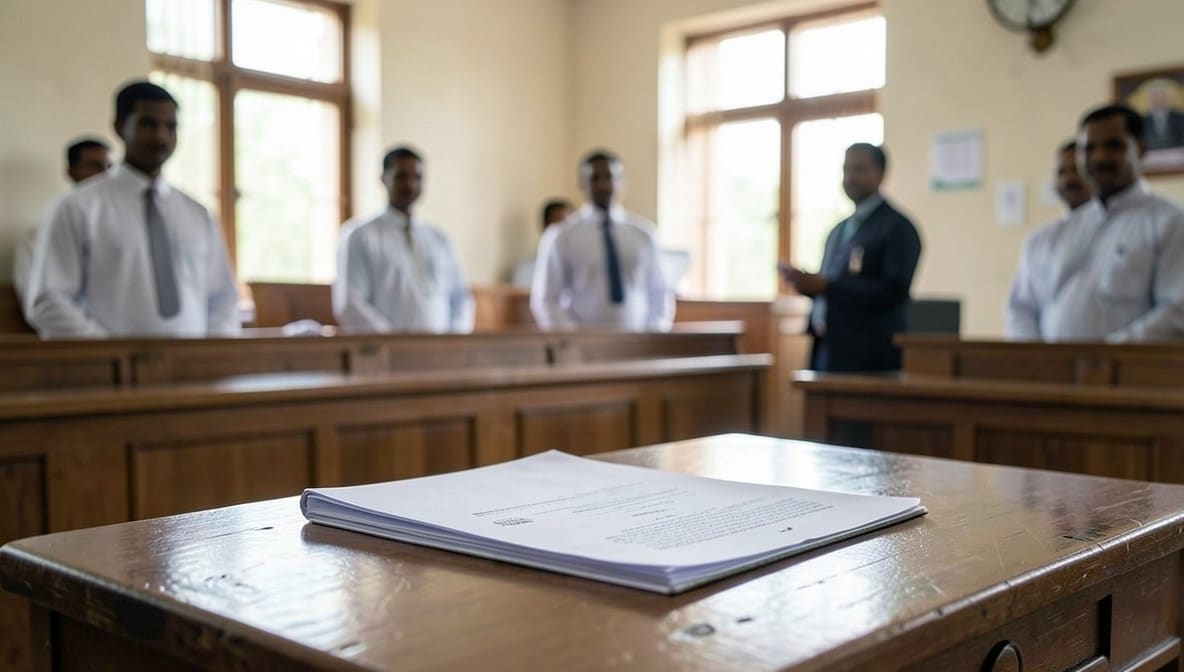
The Allahabad High Court has granted bail to an accused in a POCSO case despite the gravity of the allegations, emphasizing that the absence of any incriminating statement from the victim, coupled with no prior criminal history and prolonged trial delays, makes the case suitable for interim release. This ruling reinforces that bail under the BNSS must be assessed on procedural fairness and evidentiary vacuum, not merely on the nature of the offence.
Background & Facts
The Dispute
The applicant, Jitendra Chauhan, is accused in Case Crime No. 30 of 2026, registered at Police Station Dudhara, District Sant Kabir Nagar, under Sections 137(2), 87, 115(2), 151(3), 352 of the Bharatiya Nagarik Suraksha Sanhita, 2023, and Sections 7 and 8 of the Protection of Children from Sexual Offences Act, 2012. The allegations allege that the applicant and co-accused enticed away the daughter of the first informant, who is 16 years old.
Key Facts
- The victim, a minor girl aged approximately 16 years, was reported missing and later recovered.
- The victim’s statement recorded under Sections 180 and 183 of the Bharatiya Nagarik Suraksha Sanhita, 2023, contains no reference to the applicant as a perpetrator or participant.
- The applicant has no prior criminal record.
- The applicant has been in judicial custody since 08.02.2026.
- The trial is pending and is unlikely to conclude in the near future due to heavy pendency in the trial court.
- The applicant has not been charged with any offence under the POCSO Act in the charge sheet as of the date of the bail order.
Procedural History
- 08.02.2026: Applicant arrested and taken into custody.
- 14.03.2026: First Information Report (FIR) registered at Police Station Dudhara.
- 10.04.2026: Chargesheet filed by police, naming applicant under multiple provisions including POCSO.
- 12.05.2026: Bail application filed under Section 483 of the Bharatiya Nagarik Suraksha Sanhita, 2023.
- 14.05.2026: Hearing before the High Court; arguments concluded.
- 14.05.2026: Order passed granting bail.
The Parties' Positions
For the Applicant
- Counsel for the applicant argued that the applicant is falsely implicated due to personal vendetta.
- Emphasized that the victim’s statement under Sections 180 and 183 BNSS does not name or implicate the applicant.
- Highlighted the applicant’s clean criminal record and lack of any prior misconduct.
- Submitted that the applicant will not interfere with the investigation or witnesses.
- Noted the prolonged nature of criminal trials and the likelihood of continued incarceration without timely trial conclusion.
For the Respondent
- Counsel for the State and the first informant opposed bail, citing the seriousness of offences under POCSO and the potential for witness tampering.
- Argued that the nature of the allegations, even without direct victim testimony, warrants continued custody.
- Contended that the applicant’s release might undermine public confidence in the justice system.
Relief Sought
The applicant sought release on bail pending trial, with conditions to ensure non-interference with the judicial process.
The Legal Issue
The central question was whether bail can be granted under Section 483 of the Bharatiya Nagarik Suraksha Sanhita, 2023 in a case involving allegations under the POCSO Act, where the victim’s statement contains no incriminating reference to the applicant, the accused has no criminal history, and the trial is likely to be unduly delayed.
Arguments Presented
For the Appellant/Petitioner
The applicant’s counsel relied on the principle that bail is the rule and jail is the exception, particularly where the evidence against the accused is weak or absent. He cited Arnesh Kumar v. State of Bihar to argue that arrest and continued custody must be justified by necessity, not merely by the nature of the accusation. He emphasized that the victim’s silence in her recorded statement under Sections 180 and 183 BNSS is a material fact undermining the prosecution’s case. He further submitted that the applicant’s clean record and willingness to comply with bail conditions demonstrate low flight risk and no threat to the investigation.
For the Respondent/State
The State and first informant’s counsel contended that offences under the POCSO Act are non-bailable by nature and require strict scrutiny. They argued that even if the victim did not name the applicant, the FIR and charge sheet indicate his involvement in the conspiracy to entice a minor. They warned that granting bail might embolden accused persons to exploit procedural gaps and undermine the protection intended for children under the POCSO Act.
The Court's Analysis
The Court examined the record with particular attention to the victim’s statement under Sections 180 and 183 of the BNSS, which are statutory provisions for recording the statement of a victim in sexual offence cases. The Court noted that the victim, despite being examined under these provisions, made no mention of the applicant as a participant in the alleged offence. The Court observed that the absence of any direct or indirect accusation from the victim, who is the primary witness, significantly weakens the prosecution’s case at this stage.
"The absence of any reference to the applicant in the victim’s statement recorded under Sections 180 and 183 BNSS is a material circumstance that cannot be ignored in the consideration of bail."
The Court further noted that the applicant has been in custody since 08.02.2026, a period of over three months, with no indication of an early trial date. The Court acknowledged the pendency of cases in the trial court and the likelihood of further delays. It held that prolonged incarceration without a realistic prospect of trial violates the principle of personal liberty under Article 21 of the Constitution.
The Court also considered the applicant’s clean record and his undertaking to comply with strict bail conditions. It rejected the argument that the mere invocation of the POCSO Act automatically negates bail, stating that the law requires a balanced assessment of evidence, not automatic denial based on the label of the offence.
The Court emphasized that its order is strictly limited to the bail stage and does not prejudge the merits of the case. It explicitly stated that the trial court remains free to evaluate evidence independently.
The Verdict
The applicant succeeded. The Court granted bail to Jitendra Chauhan on the following conditions: (i) personal bond of Rs. 50,000 with two sureties each of Rs. 50,000; (ii) no contact or inducement to witnesses; (iii) no intimidation of prosecution witnesses; (iv) personal appearance before the trial court on dates for opening of case, framing of charge, and recording of statement under Section 351 BNSS; (v) undertaking not to seek adjournments when witnesses are present; and (vi) presence before the trial court on all fixed dates, personally or through counsel. Breach of any condition shall lead to cancellation of bail. The Court clarified that this order does not affect the trial court’s independent evaluation of evidence.
What This Means For Similar Cases
Victim’s Silence Is a Material Factor in Bail Decisions
- Practitioners must highlight the absence of victim statements implicating the accused under Sections 180 and 183 BNSS as a decisive factor in bail applications.
- Even in POCSO cases, if the victim’s recorded statement is neutral or exculpatory, courts may grant bail despite the seriousness of the charge.
- This shifts the burden to the prosecution to demonstrate why custody is necessary beyond the mere invocation of a stringent statute.
Pre-Trial Custody Must Be Justified by Evidence, Not Allegation Alone
- Courts will no longer treat POCSO allegations as per se grounds for denial of bail.
- Clean criminal record and absence of prior misconduct are now recognized as strong mitigating factors.
- Pendency of trial and duration of custody must be factored into bail decisions under Section 483 BNSS.
- Applications must include affidavits detailing the absence of victim testimony and the likelihood of prolonged trial.
Bail Conditions Must Be Specific and Enforceable
- The Court’s conditions are a model for future bail orders in sensitive cases: clear, measurable, and tied to trial milestones.
- Conditions such as no adjournment requests when witnesses are present are novel and enforceable.
- Practitioners should draft similar undertakings in bail applications to demonstrate compliance readiness.