The Uttarakhand State Consumer Disputes Redressal Commission has clarified that in consumer complaints alleging underweight packaged goods, the complainant bears the burden of proving the defect through proper scientific testing. Absent such evidence and failure to follow mandatory procedural safeguards under the Consumer Protection Act, 1986, claims cannot be sustained even if the product value is minimal.
Background & Facts
The Dispute
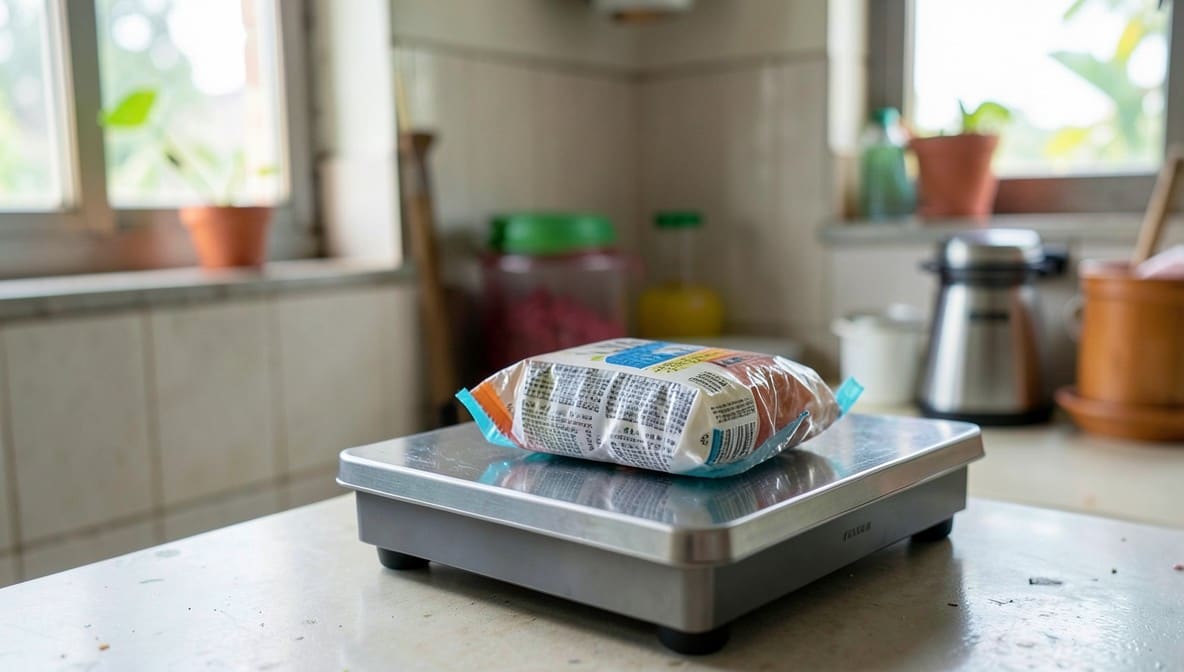
The dispute arose from a purchase of a sealed Lipton Green Tea packet (100 gms) by respondent No. 1, Sh. Arun Bhadauria, an advocate, from respondent No. 2, Gopal Provision Store, on 29.03.2019 for Rs. 115. The complainant alleged that upon returning home, he weighed the sealed packet on an electronic scale and found its weight to be only 48 grams, indicating a significant shortfall. He claimed this constituted deficiency in service and unfair trade practice by both the retailer and manufacturer, Hindustan Unilever Limited.
Key Facts
- The tea packet was purchased on 29.03.2019 from Gopal Provision Store, Jagjeetpur, Haridwar
- The complainant alleged the product weighed only 48 grams, as per his personal weighing
- He issued a legal notice on 30.03.2019, which Hindustan Unilever responded to on 03.06.2019
- Hindustan Unilever’s reply stated that internal quality checks on batch FB-16 (produced 19.11.2018) showed no deviation from approved weight standards
- The complainant did not produce the actual product, photographs of the packet, or any independent lab report
- The cash memo (Paper No. 21) only listed "Green Tea 100 g" without mentioning the brand, store name, or whether it was packaged or loose tea
- No application was filed before the District Commission seeking laboratory testing of the product
Procedural History
- 29.03.2019: Purchase of Lipton Green Tea packet
- 30.03.2019: Legal notice issued by complainant
- 03.06.2019: Hindustan Unilever’s written reply to notice
- 29.05.2019: Consumer complaint filed before District Consumer Disputes Redressal Commission, Haridwar (Complaint No. 154 of 2019)
- 12.02.2020: District Commission closed opportunity for respondent No. 2 to file written statement due to non-appearance
- 13.10.2021: District Commission allowed complaint, ordered refund of Rs. 115 with 6% interest from 29.05.2019, and awarded Rs. 2,50,000 as compensation and litigation expenses
- 03.01.2022: Appeal filed before State Commission under Section 41 of Consumer Protection Act, 2019
- 27.05.2025: State Commission directed proceeding ex-parte against respondents for non-appearance
- 04.05.2026: Final hearing held
- 11.05.2026: Judgment pronounced
The Parties' Positions
For the Complainant (Respondent No. 1): Alleged the product was underweight by over 50%, causing financial and mental distress. Relied on personal weighing and the fact that the product was sealed.
For the Appellant (Hindustan Unilever Limited): Denied the product was purchased from them or that it was their product. Argued the cash memo lacked brand identification, no product was produced for inspection, and internal quality logs confirmed batch compliance.
Relief Sought
The complainant sought: refund of Rs. 115 with 6% interest from 29.05.2019, compensation of Rs. 2,50,000 for mental agony and litigation expenses, and costs. The appellant sought dismissal of the complaint and release of the deposit made with the State Commission.
The Legal Issue
The central question was whether a consumer complaint alleging underweight packaged goods can be sustained without compliance with the mandatory laboratory testing procedure under Section 13(1)(c) of the Consumer Protection Act, 1986, and whether personal weighing alone, without documentary or scientific corroboration, suffices to discharge the burden of proof.
Arguments Presented
For the Appellant
The appellant argued that the complainant failed to establish the product was either theirs or defective. The cash memo did not identify the brand or seller, no product was produced for inspection, and no application was made under Section 13(1)(c) for laboratory testing. The internal quality logs of batch FB-16 confirmed compliance with weight standards. The District Commission’s award of Rs. 2,50,000 was arbitrary and disproportionate to the product value of Rs. 115.
For the Respondent
No arguments were presented by the respondents, as they did not appear before either the District Commission or the State Commission.
The Court's Analysis
The State Commission conducted a rigorous review of the District Commission’s order and found multiple procedural and evidentiary failures. It emphasized that Section 13(1)(c) of the Consumer Protection Act, 1986, mandates that when a defect in goods cannot be determined without analysis, the District Commission must obtain a sample, seal it, and refer it to a laboratory for testing. This is not a discretionary step but a statutory obligation.
"The onus to prove that the product was underweight was on the complainant and he was obliged to discharge the said burden, by adducing cogent and reliable evidence in that regard, which is missing in the instant case."
The Commission noted that the complainant’s sole evidence was his own assertion of weight measurement, unsupported by any photograph, product submission, or independent verification. The cash memo’s vagueness - listing only "Green Tea 100 g" without brand or store name - further undermined the claim’s credibility.
The Commission also rejected the District Commission’s award of Rs. 2,50,000 as wholly arbitrary. It cited Surendra Kumar Tyagi v. M/s Jagat Nursing Home & Hospital and R.K. Malik v. Kiran Pal to affirm that compensation must be reasonable, proportionate, and tied to actual loss. Awarding over 2,000 times the product value without any reasoning violated the principle of restitutio in integrum.
The State Commission concluded that the District Commission acted without application of mind, ignored statutory procedure, and exercised jurisdiction not vested in it. The failure to follow Section 13(1)(c) rendered the entire adjudication legally infirm.
The Verdict
The appeal was allowed. The impugned order dated 13.10.2021 of the District Commission was set aside. Consumer complaint No. 154 of 2019 was dismissed. The amount deposited by Hindustan Unilever Limited with the State Commission was ordered to be released in its favor. No costs were awarded. The Commission directed that a copy of the order be provided free of cost to all parties and uploaded on its website.
What This Means For Similar Cases
Laboratory Testing Is Mandatory for Weight or Quality Claims
- Practitioners must file an application under Section 13(1)(c) of the Consumer Protection Act, 1986, whenever alleging a defect requiring scientific analysis (e.g., underweight, adulteration, contamination)
- Failure to request or conduct lab testing renders the complaint legally unsustainable, regardless of the complainant’s assertion
- Courts will not accept personal weighing or anecdotal evidence as sufficient proof
Documentation Must Be Specific and Traceable
- Cash memos must clearly identify the product brand, seller, and date
- Vague entries like "Green Tea 100 g" without brand or store name are insufficient to establish the transaction
- Consumers must preserve the product and its packaging for inspection or testing
Compensation Must Be Proportionate
- Awards exceeding the product value by orders of magnitude require detailed justification
- Arbitrary compensation under the guise of "mental agony" will be struck down unless supported by medical or psychological evidence
- The principle of restitutio in integrum governs all consumer compensation awards