The Uttarakhand State Consumer Disputes Redressal Commission overturned a district forum’s ex-parte award after finding that the lower body had ignored the mandatory expert-analysis requirement under Section 13(c) of the Consumer Protection Act, 1986. The decision underscores the necessity of procedural fairness and technical verification in consumer disputes involving alleged defects in goods.
Background & Facts
The Dispute
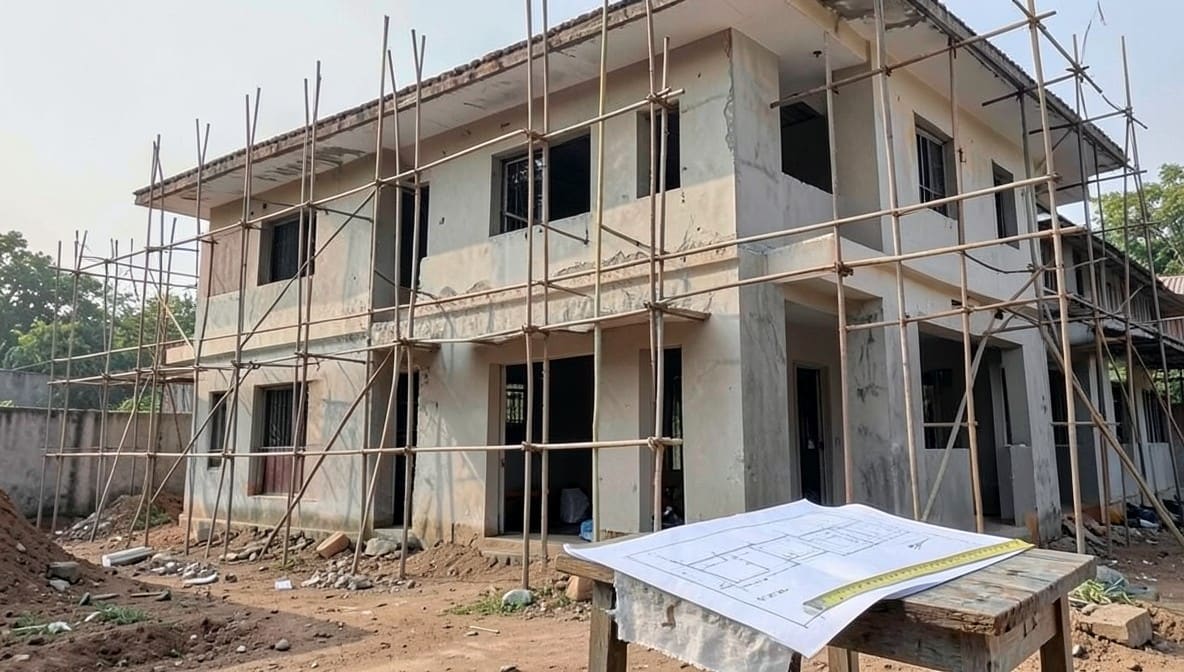
The appellant, Sh. Rajeev Dhar, began constructing his house on 14 January 2014. He approached the respondent, Sh. Prithvipal Singh Rawat, to purchase building material. Dhar bought ACC blocks worth Rs. 2,00,000 and 30 bags of bond for Rs. 35,000, along with wood for an almirah and doors. After 16 months the installed blocks developed cracks. Dhar contacted the respondent, who sent an engineer in May 2015 to repair the blocks. The repair was costly, and the defects re-appeared, preventing Dhar from holding his ‘Grah Pravesh’. Dhar alleged that the blocks were of inferior quality and claimed damages of Rs. 10,00,000 plus mental agony and litigation costs.
Key Facts
- Construction commenced: 14-01-2014
- Purchase of ACC blocks: Rs. 2,00,000; bond bags: Rs. 35,000
- Defects manifested after 16 months from fixation
- Engineer sent by respondent: May 2015
- Original consumer complaint (No. 193 of 2015) sought Rs. 25,000 claim amount, Rs. 5,000 for mental agony, and interest at 9% p.a. from filing date
- Respondent claimed to be a sales agent of Billtech Building Elements Ltd and alleged Dhar owed Rs. 1,10,000 in arrears
Procedural History
- 07-06-2019: District Consumer Disputes Redressal Forum, Dehradun, allowed the complaint and ordered the respondent to pay the claimed amounts within 30 days, with interest clause
- 2nd week of October 2019: Dhar received notice of execution (Case No. 39 of 2019) and learned of the ex-parte order
- 16-12-2020: Appeal admitted before the State Consumer Disputes Redressal Commission, Uttarakhand
- 14-08-2026: Final hearing of the appeal
- 24-08-2026: Judgment pronounced
Parties' Positions
- Appellant (Dhar): argued that the district forum decided ex-parte, violated natural justice, and failed to comply with Section 13(c) which mandates expert testing of alleged defects in goods.
- Respondent (Rawat): contended that photographs showed inferior quality of the blocks and that the appellant was liable for the defects; asserted that Dhar had an outstanding arrear of Rs. 1,10,000.
Relief Sought
- The appellant sought setting aside of the district forum’s order dated 07-06-2019, restoration of the case to its original number, and a fresh hearing on merits.
- The respondent sought upholding the award of Rs. 25,000 plus Rs. 5,000 for mental agony and interest.
The Legal Issue
What is the correct procedural requirement under Section 13(c) of the Consumer Protection Act, 1986 when a complaint alleges a defect in goods that cannot be determined without expert analysis, and does a decision rendered ex-parte, without giving the parties an opportunity to present evidence, violate the principles of natural justice?
Arguments Presented
For the Appellant
- The appellant relied on the plain language of Section 13(c), emphasizing that the district forum must obtain a sample, seal it, and refer it to an appropriate laboratory for analysis when the defect cannot be ascertained without testing.
- Cited M/s. XYZ v. Consumer (a prior consumer-forum decision) that non-compliance with the statutory test renders the order liable to be set aside.
- Asserted that the ex-parte nature of the order breached the audi alteram partem rule, rendering the award unsustainable.
For the Respondent
- The respondent argued that the photographs submitted demonstrated the inferior quality of the blocks, satisfying the forum’s factual inquiry.
- Relied on State of U.P. v. Mahesh to claim that visual evidence can be sufficient where the defect is apparent.
- Maintained that the appellant’s claim of non-payment of Rs. 1,10,000 justified the award and that the ex-parte order was justified because the appellant failed to appear.
The Court's Analysis
The Commission first examined the statutory mandate of Section 13(c). It observed that the provision is mandatory where the alleged defect cannot be determined without a proper test or analysis. The Commission noted that the district forum had neither obtained a sample of the ACC blocks nor referred them to a laboratory, thereby breaching the procedural safeguard intended to ensure an objective determination of the defect.
"As per above provision of Section 13(c) of Consumer Protection Act, 1986, where the complainant shows defect in the goods purchased by the respondent and such defect cannot be determined without proper analysis or test, then the District Commission shall obtain a sample of goods from the respondent and seal it and refer the sample to the appropriate laboratory… The above procedure was not followed by the Commission below."
The Court further addressed the issue of natural justice. It held that an ex-parte order, where the appellant neither appeared nor was represented, contravenes the audi alteram partem principle. The Commission stressed that the appellant, being a layman, was under the impression that the matter was being contested, and only learned of the judgment through an execution notice. This, the Court said, amounted to a denial of a fair hearing.
Distinguishing the respondent’s reliance on photographs, the Court observed that visual evidence alone cannot substitute for a scientific test when the statute expressly requires one. The Court cited M/s. XYZ v. Consumer to reinforce that procedural lapses cannot be cured by post-hoc justification.
Consequently, the Commission concluded that the district forum’s award was unsustainable both on procedural and substantive grounds. It set aside the impugned order, imposed costs on the appellant for filing the appeal, and remanded the matter for a fresh hearing, directing the district forum to comply with Section 13(c) and to give both parties a proper opportunity to present evidence.
The Verdict
The appeal is allowed. The order dated 07-06-2019 passed by the District Consumer Disputes Redressal Forum is set aside. The appellant is directed to pay Rs. 25,000 costs to the respondent. The matter is remanded to the District Commission, Dehradun, to be heard afresh within six months and both parties must appear on 21 September 2026. Any statutory amount deposited by the appellant shall be returned to him.
What This Means For Similar Cases
Mandatory Expert Analysis Under Section 13(c)
- Practitioners must ensure that when a complaint alleges a defect that cannot be ascertained by visual inspection, the forum obtains a sample, seals it, and refers it to an accredited laboratory as per Section 13(c).
- Failure to do so renders any award vulnerable to being set aside on procedural grounds.
Avoiding Ex-Parte Judgments
- Counsel should verify that the opposite party has been duly served and given an opportunity to be heard before any award is pronounced.
- If a party is absent, the bench must record the reason and, where appropriate, adjourn the matter rather than pass an ex-parte decree.
Evidentiary Weight of Photographs
- Photographs may support a claim but cannot replace a statutory laboratory test when the law mandates one.
- Parties should be prepared to produce expert reports to substantiate claims of product defect.