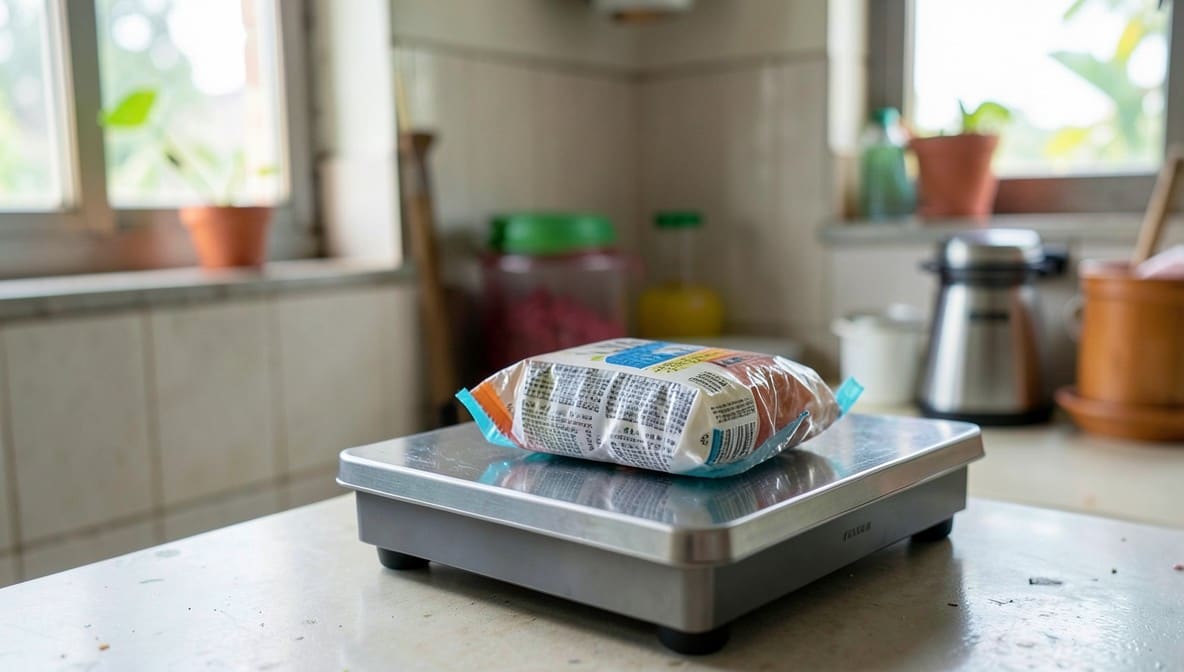
The Uttarakhand State Consumer Disputes Redressal Commission has clarified that selling packaged goods with a declared weight significantly higher than the actual content constitutes an unfair trade practice under the Consumer Protection Act, 2019. This judgment reinforces the consumer’s right to accurate product information and establishes that physical verification of goods in court can conclusively establish weight discrepancies, even without laboratory testing.
Background & Facts
The Dispute
The dispute arose from the sale of a packet of H.U. Surf Excel EW 10/- detergent by respondent No. 3 (Firm Satish Chand Manoj Kumar) to respondent No. 1 (Sh. Gyan Chandra Garg) on 22.09.2020. The packet was labeled as containing 90 grams of powder, but upon measurement by the complainant, it was found to weigh only 70 grams. The complainant alleged this was a deliberate misrepresentation intended to deceive consumers, amounting to an unfair trade practice under Section 2(47) of the Consumer Protection Act, 2019.
Key Facts
- The complainant purchased the detergent packet on 22.09.2020 for Rs. 512/- including GST, as per Invoice No. 1631 dated 22.09.2020
- The packet bore the branding of Hindustan Unilever Limited (Appellants)
- The declared net weight on the packet was 90 grams
- On independent measurement, the actual weight was found to be 70 grams
- The complainant sent a legal notice dated 25.09.2020 to the appellants and respondents
- The appellants replied via email and registered post on 12.10.2020, denying liability and requesting batch details
- The complainant sent a second registered notice dated 10.11.2020 to the appellants and distributor (respondent No. 2)
- Respondent No. 2 (distributor) did not respond to the notice
- Respondent No. 3 (retailer) admitted in its written statement that it purchased the packets from respondent No. 2 on 30.06.2019
- The complainant filed the consumer complaint before the District Commission on 15.01.2021 (Complaint No. 26 of 2021)
- The complainant submitted the sealed packet as evidence (Paper No. 19/2)
- On 08.12.2022, the District Commission conducted a physical weighing of the sealed packet in the presence of all counsel
- The weight was confirmed as 70 grams by all parties present, including counsel for the appellants
Procedural History
- 15.01.2021: Consumer complaint filed before District Consumer Disputes Redressal Commission, Nainital (Complaint No. 26 of 2021)
- 25.09.2020: First legal notice sent by complainant’s counsel
- 12.10.2020: Appellants’ reply to notice via email and registered post
- 10.11.2020: Second registered notice sent to appellants and distributor
- 30.05.2022: District Commission closed respondent No. 2’s opportunity to file written statement due to non-appearance
- 08.12.2022: Physical weighing of sealed packet conducted before District Commission; weight confirmed as 70 grams by all parties
- 29.08.2023: District Commission allowed complaint, awarded Rs. 50,000 as compensation, Rs. 10,000 as litigation expenses, Rs. 50,000 penalty, and directed complainant to approach CCPA
- 30.10.2023: Appeal filed before State Commission (SC/5/A/102/2023)
- 08.07.2026: Final hearing held; respondents No. 1, 2, and 3 did not appear
- 15.07.2026: Judgment pronounced by State Commission
The Parties' Positions
Appellants (Hindustan Unilever Limited): Argued that the complainant failed to prove he was a consumer under the Act, did not provide batch numbers, and did not follow procedures under the Legal Metrology Act, 2009. Claimed the matter was exclusively under the jurisdiction of Legal Metrology authorities and that counterfeiting was rampant in the region.
Respondent No. 1 (Complainant): Maintained that the packet was purchased from a retail outlet, the weight discrepancy was evident, and the physical verification before the District Commission conclusively proved the short weight.
Respondent No. 3 (Retailer): Admitted to selling the packet on 22.09.2020 and confirmed purchase from respondent No. 2 on 30.06.2019.
Relief Sought
The complainant sought:
- Compensation of Rs. 1,00,000/- for mental agony and financial loss
- Interest at 18% per annum
- Costs of litigation
The District Commission awarded Rs. 50,000/- as compensation, Rs. 10,000/- as litigation expenses, Rs. 50,000/- as penalty, and directed the complainant to approach the CCPA.
The Legal Issue
The central question was whether selling a packaged commodity with a declared weight significantly higher than its actual content constitutes an unfair trade practice under the Consumer Protection Act, 2019, and whether the District Commission has jurisdiction to adjudicate such claims despite the existence of the Legal Metrology Act, 2009.
Arguments Presented
For the Appellant
The appellants contended that the complainant failed to discharge the burden of proof by not providing batch numbers, packaging details, or laboratory test reports. They relied on Section 38(2)(c) of the Consumer Protection Act, 2019, arguing that technical evidence of weight discrepancy must be submitted to a laboratory. They further asserted that the matter fell exclusively under the Legal Metrology Act, 2009 and its Packaged Commodities Rules, 2011, which require specific procedures for enforcement, including inspection by authorized officers. They cited the prevalence of counterfeit goods in the region as a reason to doubt the authenticity of the product.
For the Respondent
The complainant, through his counsel, presented the sealed packet as physical evidence. He argued that the act of labeling a product with a false weight is inherently deceptive and constitutes an unfair trade practice regardless of whether the product is counterfeit. The physical verification conducted before the District Commission on 08.12.2022, with the consent and confirmation of all parties, including the appellants’ counsel, was sufficient to establish the weight discrepancy.
The Court's Analysis
The State Commission rejected the appellants’ jurisdictional argument by invoking Section 100 of the Consumer Protection Act, 2019, which explicitly states that the Act’s provisions are in addition to, and not in derogation of, any other law. The Court held that the existence of the Legal Metrology Act does not oust the jurisdiction of consumer forums to adjudicate unfair trade practices.
"The grievance of the complainant is that the product purchased by him was underweight and instead of 90 gms. weight, it was 70 gms. in weight... On measurement, the weight of the sealed product was found as 70 gms., which was confirmed by learned counsel for the appellants as well as learned counsel for respondent No. 3 and they did not raise any doubt / objection."
The Court emphasized that the physical verification conducted on 08.12.2022 was not challenged by the appellants, either before the District Commission or in the appeal. This rendered the finding of 70 grams as final and binding. The Court noted that the appellants’ counsel had personally observed and confirmed the weight, thereby waiving any right to contest the measurement later.
The Court further held that the mere act of selling a product with a false declaration of quantity constitutes an unfair trade practice under Section 2(47) of the Act, irrespective of whether the product is genuine or counterfeit. The burden of proving authenticity lies with the manufacturer, not the consumer.
The Commission also clarified that while the Legal Metrology Act provides for penalties and inspections, the Consumer Protection Act provides a distinct remedy for consumer redressal based on deception and loss. The two remedies are complementary, not exclusive.
The Verdict
The appeal was partly allowed. The State Commission set aside the penalty of Rs. 50,000/- and the direction to approach the CCPA. The compensation for mental agony and financial loss was reduced from Rs. 50,000/- to Rs. 40,000/-. The litigation expenses of Rs. 10,000/- were upheld. The appellants were directed to pay Rs. 50,000/- (Rs. 40,000/- compensation + Rs. 10,000/- litigation expenses) to the complainant within 45 days of the order. Costs of the appeal were borne by the appellants. The original record was remitted to the District Commission.
What This Means For Similar Cases
Physical Verification Can Conclude Weight Disputes
- Practitioners must now treat physical weighing of goods in court, with all parties present and no objection raised, as conclusive proof of weight discrepancy
- Laboratory reports are not mandatory if the product is produced in court and its weight is verified by mutual consent
- The absence of objection during court-ordered measurement waives the right to challenge the result later
Unfair Trade Practice Is Established by False Declaration Alone
- A manufacturer cannot avoid liability by claiming counterfeiting unless it proves the product was not its own
- Declaring a higher weight than actual, even if unintentional, constitutes deception under Section 2(47)
- The burden shifts to the manufacturer to prove the product was not sold by them or was tampered with after sale
Jurisdiction of Consumer Forums Is Broad and Complementary
- Consumer forums retain jurisdiction even when other laws like Legal Metrology Act apply
- Consumers may pursue remedies under both statutes simultaneously
- The Consumer Protection Act provides compensation for loss and agony; Legal Metrology provides punitive action against manufacturers