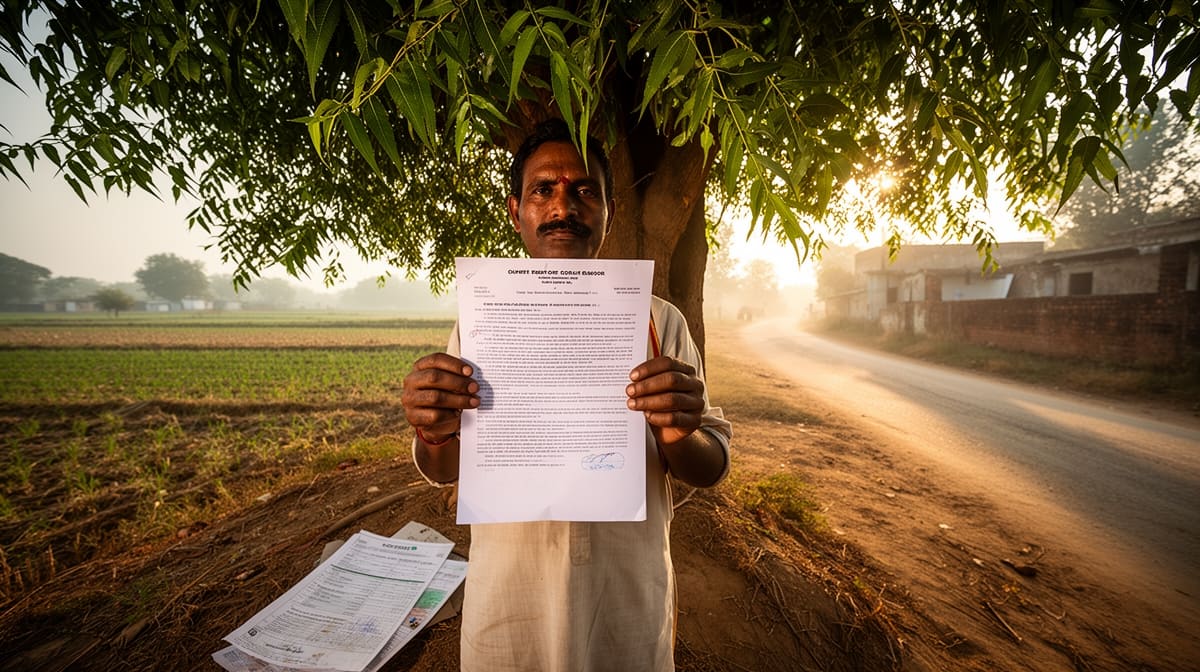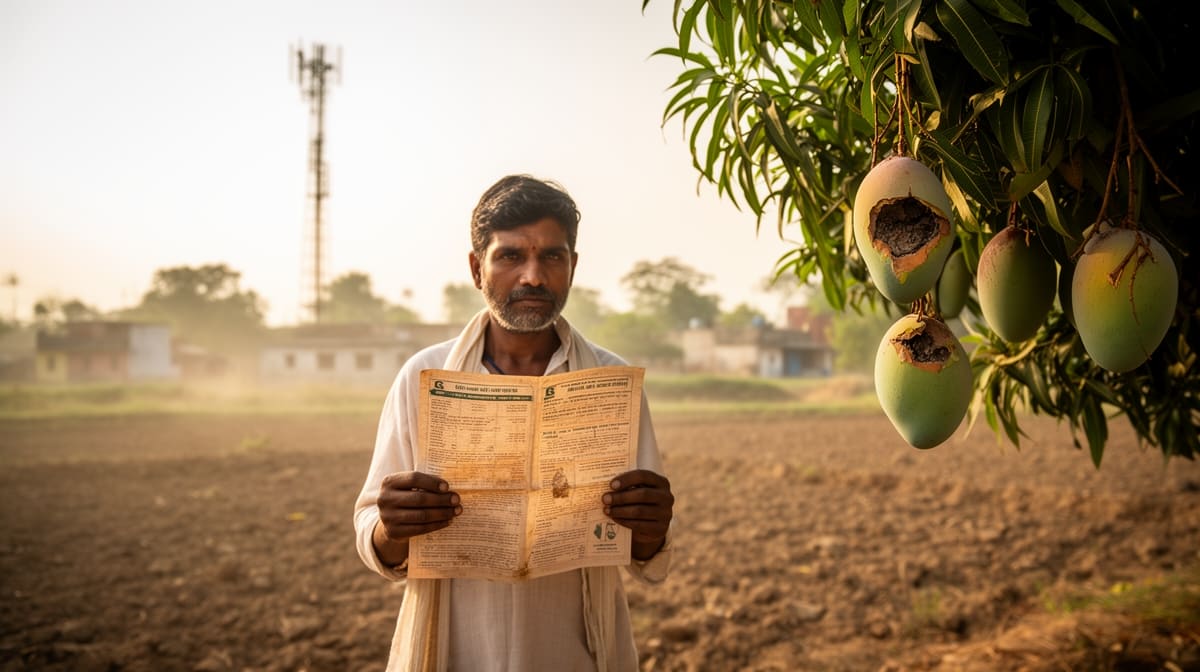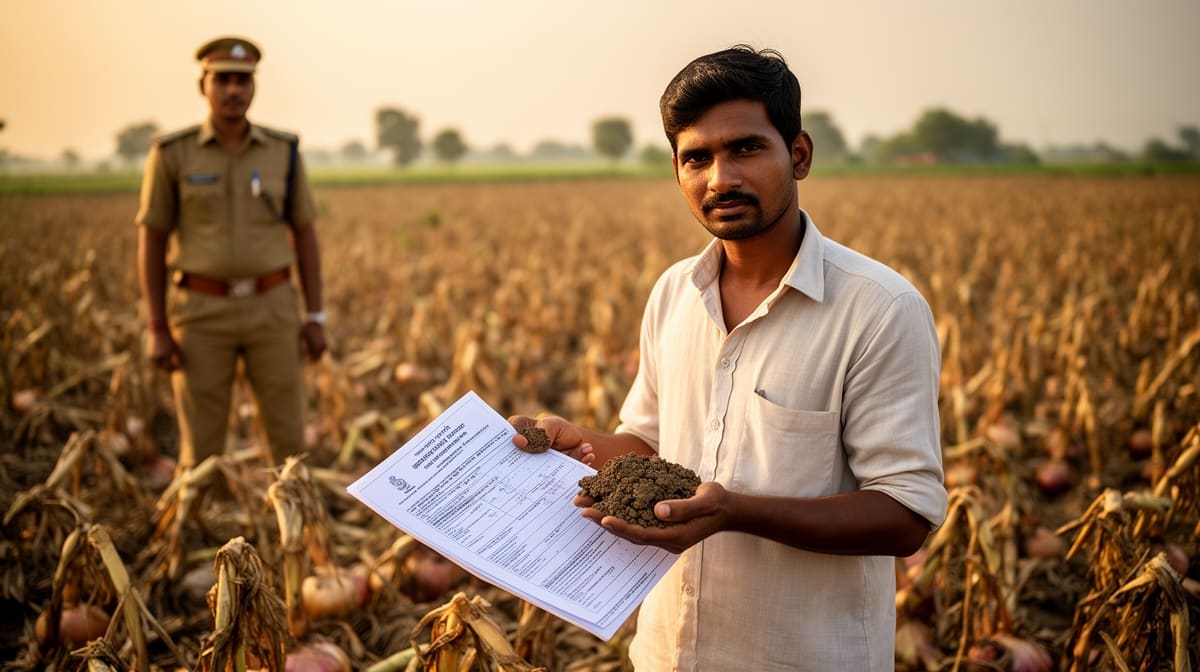
The Bombay High Court has affirmed that farmers cannot be penalized for technical lapses in procedural compliance when seeking redress for crop loss caused by defective seeds. The judgment reinforces the principle that in consumer disputes involving agricultural inputs, the burden lies squarely on manufacturers and dealers to disprove defectiveness with scientific evidence - not on illiterate farmers to meet bureaucratic formalities.
Background & Facts
The Dispute
The dispute arose from widespread crop failure among onion farmers in Osmanabad district, who reported that 90% of their crop developed bolting - a physiological defect rendering onions unfit for market - after sowing seeds purchased from the petitioners, Beejsheetal Research Pvt. Ltd. and its distributors. The farmers filed complaints with the District Seeds Grievance Committee, which conducted a panchnama and submitted a report attributing the failure to defective seeds. Despite this, the manufacturer and dealers refused compensation.
Procedural History
The case progressed through three tiers of consumer forums:
- 2010: District Consumer Disputes Redressal Forum, Osmanabad, granted compensation to farmers based on the Agricultural Officer’s report.
- 2012: Maharashtra State Consumer Redressal Commission reversed the order, holding that the grievance committee lacked proper composition under state circulars and that no expert scientific analysis was conducted.
- 2024: National Consumer Disputes Redressal Commission restored the District Forum’s order, finding that the farmers’ reliance on government agencies was reasonable and that the respondents failed to rebut the evidence.
Relief Sought
The petitioners (manufacturer and dealers) sought to set aside the NCDRC order, arguing that the report was procedurally invalid and that dealers cannot be held liable for manufacturing defects. The farmers sought affirmation of their right to compensation under the Consumer Protection Act.
The Legal Issue
The central question was whether a farmer’s claim for compensation due to defective seeds can be dismissed solely on the ground that the government inspection committee was not constituted in strict compliance with administrative circulars, in the absence of any scientific rebuttal from the manufacturer.
Arguments Presented
For the Appellant/Petitioner
The petitioners contended that the report by the District Agricultural Officer was inadmissible because it was not issued by a seven-member committee as mandated by Maharashtra’s 1992 and 1998 circulars. They argued that without laboratory analysis of seed samples, the claim lacked scientific basis. They further asserted that dealers, as mere distributors, cannot be held liable for manufacturing defects under the Consumer Protection Act, 2019, citing Hindustan Motors Ltd. v. N. Siva Kumar and Birbal v. State of Punjab.
For the Respondent/State
The farmers’ counsel argued that the petitioners failed to challenge the report before the District Forum or seek sample testing despite having access to seed records. They emphasized that farmers, many of whom are illiterate, rely entirely on government agricultural officers for guidance and cannot be expected to retain seed samples or initiate technical procedures. The NCDRC’s reliance on National Seeds Corporation v. M. Madhusudhan Reddy was upheld as directly applicable.
The Court's Analysis
The Court examined the burden of proof in consumer disputes involving agricultural inputs and found that the petitioners’ failure to act during the initial proceedings was fatal to their case. The Court noted that under Section 12(1)(a) of the Consumer Protection Act, 1986, a deficiency in service includes failure to provide goods free from defects. The Court emphasized that the doctrine of equitable relief must prevail over rigid procedural compliance when the complainant is a vulnerable party.
"Majority of the farmers in the country remain illiterate throughout their life because they do not have access to the system of education. They have no idea about the Seeds Act and the Rules framed thereunder... In the normal course, a farmer would use the entire quantity of seeds purchased by him for the purpose of sowing and by the time he discovers that the crop has failed because the seeds purchased by him were defective, nothing remains with him which could be tested in a laboratory."
The Court held that the failure to constitute a seven-member committee was a failure of the state machinery, not the farmers. The report, prepared in the presence of a Zilla Parishad representative and the petitioner’s agent, constituted the best available evidence. The Court further observed that Rule 13(3) of the Seeds Rules, 1989, imposes a statutory duty on sellers to retain seed samples for three years - a duty the petitioners breached by not producing any samples for testing.
Regarding dealer liability, the Court rejected the argument that dealers are immune from liability. It found that the dealers had acted as agents of the manufacturer throughout the proceedings and never raised a separate defense before the District Forum. The reliance on Hindustan Motors was distinguished as fact-specific, where the manufacturer had voluntarily refunded and ceased production. The Court held that vicarious liability applies where the dealer is an integral part of the supply chain and has not disassociated itself from the product’s quality.
The Verdict
The petitioners’ writ petitions were dismissed. The Court upheld the NCDRC’s order, affirming that compensation to farmers for crop loss due to defective seeds is valid even without laboratory testing, provided the government’s report is unchallenged and the seller fails to rebut it. The Court also held that dealers cannot escape liability by raising new defenses at the appellate stage.
What This Means For Similar Cases
Farmers’ Evidence Is Presumed Valid Unless Rebutted
- Practitioners must now treat government agricultural reports as prima facie evidence in seed-related consumer disputes.
- Manufacturers and dealers must proactively request seed testing at the District Forum stage - failure to do so will be deemed an admission of defect.
- Delayed objections to procedural irregularities in committee formation will not be entertained if the report is otherwise credible.
Dealers Cannot Hide Behind Corporate Structure
- Distributors acting as agents of manufacturers cannot disclaim liability by invoking the 2019 Act’s provisions retroactively.
- Any attempt to separate dealer liability from manufacturer liability must be raised at the earliest opportunity; silence constitutes acquiescence.
- The Hindustan Motors precedent does not create a blanket exemption for dealers in seed or agro-input cases.
Procedural Non-Compliance by State Agencies Cannot Harm Consumers
- When state agencies fail to follow internal circulars, the burden does not shift to the complainant.
- Courts will prioritize substantive justice over technical compliance in cases involving vulnerable rural litigants.
- Legal teams representing agro-industries must now assume that any crop failure claim will be treated as meritorious unless disproven with scientific data.