The Maharashtra State Consumer Commission has reaffirmed that insurers cannot mechanically reject genuine vehicle theft claims solely on the ground of delayed FIR or intimation, especially when the delay is explained by circumstances beyond the insured’s control. This ruling reinforces the consumer-centric ethos of the Consumer Protection Act and sets a clear precedent against technical repudiation.
Background & Facts
The Dispute
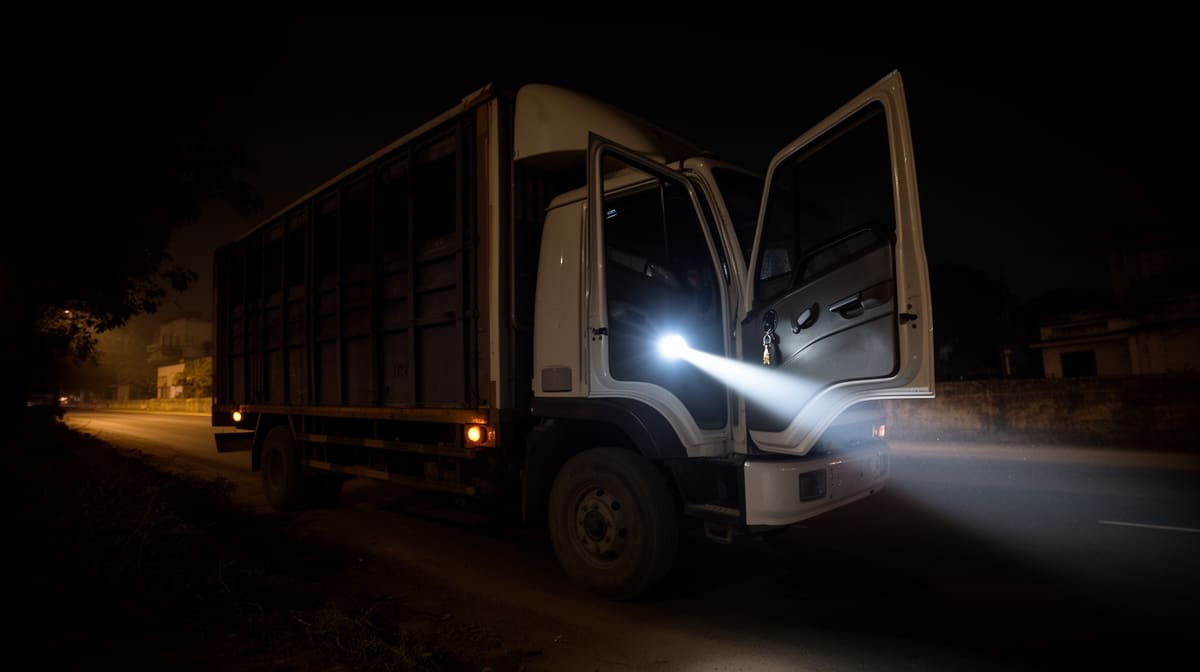
The respondent, Amrik Singh Santa Singh Multani, owned a Tata truck bearing registration number CG-04-JA-1117, insured under a comprehensive policy issued by the appellant, National Insurance Company Ltd., for the period 20.02.2011 to 19.02.2012. The Insured Declared Value was Rs. 8,50,000. On 23.03.2011, the truck was parked securely near a Gurudwara in Jari Patka, Nagpur, while the respondent traveled to his native place in Karnal. On the morning of 27.03.2011, his daughter discovered the vehicle missing. The respondent was immediately informed by telephone and, upon learning of the theft, directed his brother to report the incident to the police.
Key Facts
- The truck was parked in a secure location adjacent to a religious site and was locked.
- The respondent intended to return to Nagpur on 27.03.2011 but was informed of the theft on the same day.
- The respondent telephoned the insurance company on 27.03.2011 to report the theft.
- The respondent visited the police station on 27.03.2011, but the police advised him to wait a few days for possible recovery.
- The First Information Report (FIR) under Section 379 IPC was registered only on 01.04.2011.
- The respondent submitted a written intimation to the insurer on 01.04.2011, along with the FIR copy.
- The insurer appointed M/s. Profound Investigation Services to investigate the claim.
- The investigator visited the scene, interviewed neighbors, and collected statements.
- The respondent provided all original documents to the investigator.
- The insurer did not file the investigator’s report on record.
- No decision on the claim was communicated to the respondent for 31 months.
- The respondent filed a complaint before the District Consumer Forum on 15.06.2017.
Procedural History
- 20.02.2011: Insurance policy issued for the truck.
- 23.03.2011: Truck parked securely in Nagpur.
- 27.03.2011: Truck found missing; insured notified insurer by phone and visited police station.
- 01.04.2011: FIR registered under Section 379 IPC; written intimation sent to insurer.
- 01.04.2011 to 01.01.2014: Insurer took no action on claim.
- 15.06.2017: Complaint filed before District Consumer Forum, Nagpur (Complaint No. RBT/CC/13/810).
- 18.07.2018: District Forum ordered insurer to pay Rs. 8,50,000 with 9% interest from date of complaint, plus Rs. 10,000 each for mental agony and Rs. 3,000 as costs.
- 13.05.2026: First Appeal filed before State Consumer Commission (Appeal No. SC/CB2/27/A/364/2018).
The Parties' Positions
For the Appellant (National Insurance Company Ltd.)
- Argued that the six-day delay in filing FIR and ten-day delay in intimation to insurer were unexplained.
- Relied on Kanwarjit Singh v. ICICI Lombard to assert that delay creates suspicion and shifts heavy burden on insured.
- Claimed the respondent failed to supply original documents to the surveyor.
- Asserted that the vehicle was unattended and the insured failed to exercise reasonable care.
- Contended that the policy terms excluded claims arising from lack of due diligence.
For the Respondent (Amrik Singh Santa Singh Multani)
- Stated that police initially refused to register FIR and advised waiting.
- Provided written intimation immediately upon receipt of FIR.
- Co-operated fully with the insurer-appointed investigator.
- Submitted all original documents to the investigator.
- Argued that the insurer never repudiated the claim but merely delayed it for 31 months.
- Cited Om Prakash v. Reliance General Insurance and Shriram General Insurance v. Kuldeep to assert that delay alone cannot defeat a genuine claim.
- Emphasized that the insurer failed to communicate policy terms, rendering exclusion clauses unenforceable.
Relief Sought
The respondent sought payment of the insured value of Rs. 8,50,000, interest at 9% per annum from the date of complaint, compensation of Rs. 10,000 each for mental and physical suffering, and Rs. 3,000 as costs. The appellant sought quashing of the District Forum’s order.
The Legal Issue
Can an insurer repudiate a genuine vehicle theft claim solely on the ground of delay in filing FIR or intimating the insurer, when the delay is explained by police inaction and the insured has fully cooperated with the investigation?
Arguments Presented
For the Appellant
The appellant relied on Kanwarjit Singh v. ICICI Lombard to argue that delay in reporting theft, especially when faster communication channels were available, creates a cloud of suspicion. It contended that the insured failed to exercise reasonable care by leaving the vehicle unattended and did not provide original documents to the surveyor. The insurer claimed the claim was not decided due to incomplete documentation and that the District Forum erred in drawing favorable inferences without evidence.
For the Respondent
The respondent relied on Om Prakash v. Reliance General Insurance, Shriram General Insurance v. Kuldeep, and Bharat Watch Co. v. National Insurance Co. to argue that delay cannot be a mechanical ground for rejection. He emphasized that the police refused to register the FIR immediately and that he acted promptly upon receipt of the FIR. He submitted that the insurer-appointed investigator had verified the claim and that the insurer’s 31-month inaction constituted gross deficiency in service under the Consumer Protection Act.
The Court's Analysis
The Commission undertook a detailed review of the factual matrix and the legal principles governing insurance claims under the Consumer Protection Act. It noted that the insured had acted promptly upon discovering the theft, contacted the insurer on the same day, and submitted the FIR and documents as soon as they were available. The delay in FIR registration was not attributable to the insured but to police reluctance, a fact corroborated by the respondent’s testimony and consistent with common experience.
"It is common experience that in such cases, the police do not register a case immediately. In our opinion, the delay has been explained satisfactorily by the complainant and it would not be right to reject his claim completely on that ground alone."
The Commission rejected the appellant’s reliance on Kanwarjit Singh, distinguishing it on the ground that in that case, the insurer had explicitly repudiated the claim, whereas here, the insurer had taken no decision at all for over two years. The Court held that mere inaction for 31 months, without any communication or repudiation, amounted to gross deficiency in service.
The Commission further held that the insurer’s failure to produce the investigator’s report, despite having appointed the investigator, undermined its own defense. The burden to prove non-cooperation lay with the insurer, which it failed to discharge. The Court also relied on IRDA Circulars dated 20.09.2011 and 28.10.2016, which mandate insurers to consider the genuineness of claims over technicalities.
"The condition regarding the delay shall not be a shelter to repudiate the insurance claims which have been otherwise proved to be genuine."
The Court emphasized that the Consumer Protection Act is a beneficial legislation requiring liberal interpretation. Rejecting a claim on technical grounds, especially after prolonged inaction, erodes public confidence in the insurance sector.
The Verdict
The appeal was dismissed. The order of the District Consumer Forum dated 18.07.2018 was confirmed. The appellant was directed to pay the insured value of Rs. 8,50,000 within 30 days of the order, failing which interest at 9% per annum shall accrue from the date of filing of the complaint (15.06.2017) until actual payment. Additionally, the appellant shall pay Rs. 10,000 each as compensation for mental and physical suffering and Rs. 3,000 as costs. The Commission directed that a copy of the order be furnished to both parties free of cost.
What This Means For Similar Cases
Delay Alone Cannot Defeat a Genuine Claim
- Practitioners must argue that insurers cannot invoke delay clauses mechanically; the focus must be on the genuineness of the claim.
- Evidence of police reluctance or administrative delay in FIR registration must be documented and presented as a valid explanation.
- Insurers bear the burden to prove that the delay was unreasonable and prejudicial to their investigation.
Inaction by Insurer Constitutes Deficiency in Service
- A delay of more than 12 months without any decision or communication constitutes gross deficiency under the Consumer Protection Act.
- Insurers must issue timely repudiation letters with reasons; silence or inaction cannot be treated as implied acceptance or rejection.
- Claims should be adjudicated within 30 days of document submission as per IRDA guidelines.
Policy Terms Must Be Communicated to Be Enforceable
- Exclusion clauses are unenforceable if not communicated to the insured at the time of policy issuance.
- The policy document stamped and signed by the insurer, without enclosed terms, cannot be used to repudiate claims.
- Insurers must provide a copy of the full policy terms at the time of sale, as mandated by IRDA and upheld in Bharat Watch Co.