A significant clarification has emerged from the Delhi State Consumer Disputes Redressal Commission on the scope of the term 'consumer' under the Consumer Protection Act, 2019. The Commission affirmed that a company insuring a commercial vehicle for business purposes remains a consumer, and insurers cannot reject claims based on unsubstantiated suspicions of document forgery. This ruling reinforces the Act’s protective intent and sets a clear standard for claim adjudication in commercial insurance disputes.
Background & Facts
The Dispute
The dispute arose from the denial of an insurance claim by National Insurance Co. Ltd. (Appellant) to M/s Pridel Private Ltd. (formerly GCF Logistics Pvt. Ltd., Respondent) following the total loss of a commercial vehicle due to fire. The Respondent, a logistics company, held a comprehensive motor insurance policy for its Ashok Leyland truck bearing registration HR 55 M9411. After the vehicle caught fire on 15.03.2019, the Respondent submitted a claim for Rs. 7,61,209/- for repair costs, which the Appellant rejected on grounds of alleged document forgery and non-consumer status.
Key Facts
- The insured vehicle was registered to M/s Pridel Private Ltd., a company engaged in logistics and goods transportation
- Comprehensive insurance policy No. 460801311810000038 was in force from 04.04.2018 to 03.04.2019
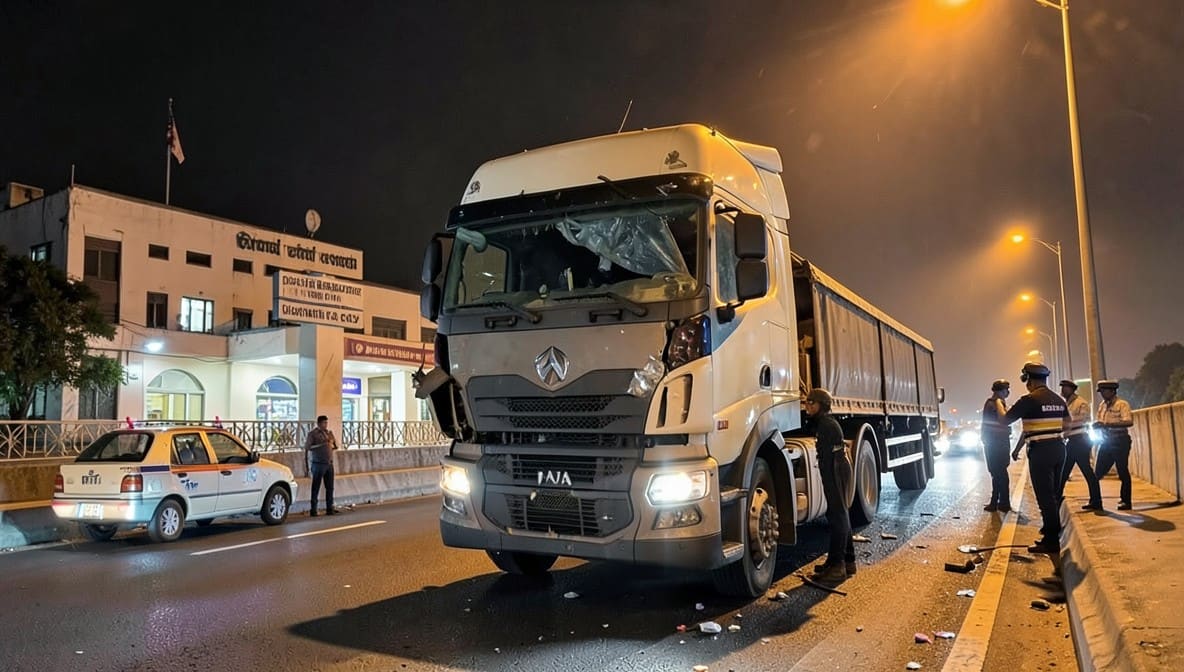
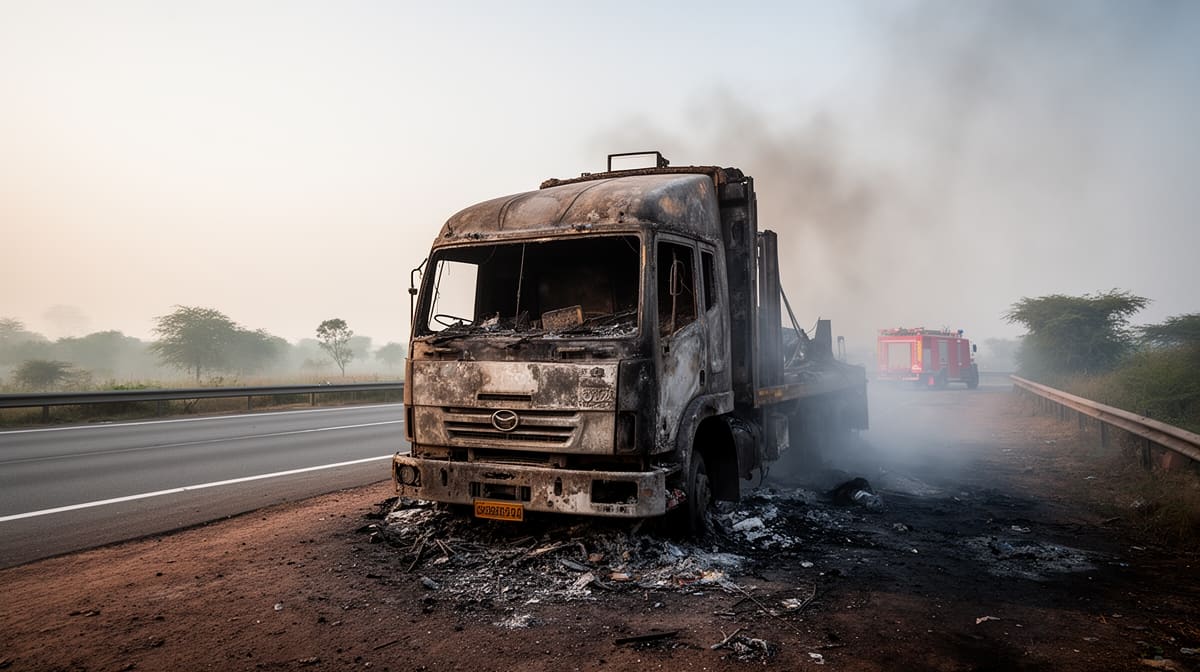
- On the night of 15.03.2019, the vehicle caught fire near Buxar while being driven from Moradabad to Loni
- Patrolling police alerted the fire brigade, but the vehicle was completely burnt
- The Respondent intimated the insurer on 19.03.2019 and submitted a claim form
- A surveyor, Mr. Saurabh Singhal, inspected the vehicle and submitted a report on 31.03.2019 confirming the incident
- The Respondent submitted repair estimates from M/s Sandeep Engineering Workshop, ICD Dadri, Greater Noida, for Rs. 7,61,209/-
- The Respondent provided seven cheque payments and four cash payments totaling Rs. 37,024/- to the workshop
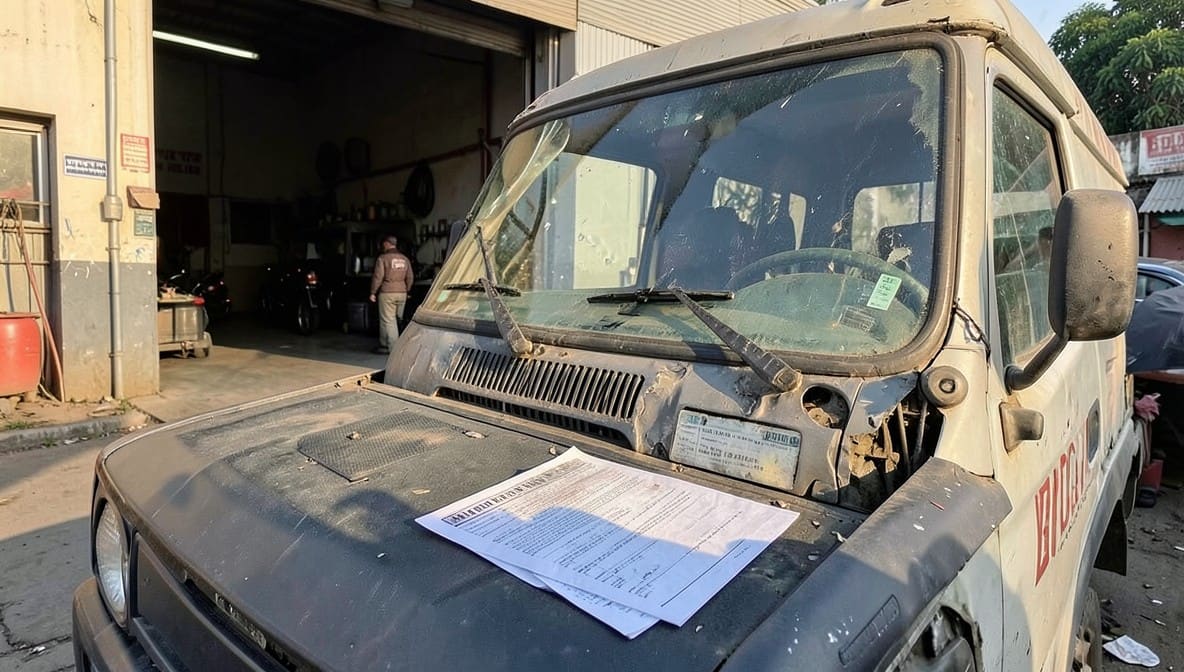
- The Appellant appointed an investigator who visited the workshop address on 13.07.2020 and reported no such workshop existed
- The investigator noted absence of GST number, invalid mobile number, and inconsistent signatures on documents
- The Appellant closed the claim as 'No Claim' via internal communication on 22.07.2020
- The Respondent wrote to the Appellant on 27.01.2021 seeking status and received a verbal assurance that the claim was 'under process'
- A legal notice dated 23.06.2022 demanding claim processing went unanswered
- The Respondent filed a complaint before the District Consumer Forum on 09.05.2025
Procedural History
- 15.03.2019: Fire incident occurred
- 19.03.2019: Claim intimation submitted to insurer
- 31.03.2019: Surveyor’s report submitted
- 13.07.2020: Investigator’s report submitted by insurer
- 22.07.2020: Claim closed by insurer as 'No Claim'
- 27.01.2021: Respondent’s written inquiry to insurer
- 23.06.2022: Legal notice sent by Respondent
- 09.05.2025: Complaint filed before District Consumer Disputes Redressal Commission
- 12.03.2025: District Commission ordered payment of Rs. 7,24,185/- with 7% interest and Rs. 20,000/- compensation
- 16.03.2026: First Appeal decided by Delhi State Commission
Relief Sought
The Respondent sought: (1) payment of Rs. 7,61,209/- for repair costs, (2) interest at 18% per annum, and (3) Rs. 50,000/- as litigation cost. The District Commission awarded Rs. 7,24,185/- (reduced from claimed amount), 7% interest, and Rs. 20,000/- as compensation for deficiency in service.
The Legal Issue
The central questions were: (1) whether a company insuring a commercial vehicle for business purposes qualifies as a 'consumer' under the Consumer Protection Act, 2019; and (2) whether an insurer may reject a claim based solely on an investigator’s uncorroborated report alleging document forgery.
Arguments Presented
For the Appellant
The Appellant contended that the Respondent was not a 'consumer' under Section 2(7) of the CPA 2019 because the vehicle was used for commercial purposes. It relied on the investigator’s report dated 13.07.2020, which found no workshop at the provided address, no GST registration, and inconsistent signatures on bills. It argued that the Respondent failed to produce the original repair estimate from the authorized dealership (Shiva Automobiles) and that the bills were fabricated. The Appellant cited Harsolia Motors and other precedents to argue that commercial users are excluded from consumer protection.
For the Respondent
The Respondent argued that the vehicle was insured to protect its livelihood, which falls within the definition of consumer under the Act. It submitted proof of payment via cheques and cash, the surveyor’s report confirming the fire, and the FIR. It emphasized that the insurer never verified the authenticity of documents with banks or tax authorities, and that mere suspicion cannot override documented evidence. It relied on National Insurance Co. Ltd. v. Harsolia Motors to establish that commercial users engaged in self-employment are consumers.
The Court's Analysis
The Commission first addressed the threshold issue of consumer status. It examined the definition of 'consumer' under Section 2(7) of the Consumer Protection Act, 2019, and the interpretation provided in M/S. Harsolia Motors v. National Insurance Co. Ltd. (I (2005) CPJ 27 (NC)). The Commission held that the Act’s purpose is to protect those who hire services for consideration, even if for commercial purposes, provided the service is used for livelihood. The Respondent’s use of the vehicle for logistics operations constituted self-employment, thereby bringing it within the ambit of consumer protection.
"Any person who is found to have hired services for consideration shall be deemed to be a consumer notwithstanding that the services were in connection with any goods or their user. Such services may be for any connected commercial activity..."
On the issue of claim rejection, the Commission observed that the Appellant’s reliance on the investigator’s report was insufficient. The report merely stated that the workshop could not be located at the time of visit, but offered no independent verification from municipal records, GST portal, or bank transaction trails. The Commission emphasized that suspicion, however plausible, cannot substitute for evidence. The Appellant had the means to verify cheque payments through bank records or confirm workshop existence through local authorities, yet chose not to.
The Court noted that the occurrence of fire was undisputed, supported by FIR and surveyor’s report. The burden of proving forgery lay with the insurer, which failed to discharge it. The District Commission’s reduction of the claim amount from Rs. 7,61,209/- to Rs. 7,24,185/- was accepted as reasonable, and the award of Rs. 20,000/- as compensation for deficiency in service was upheld.
The Verdict
The Appellant’s appeal was dismissed. The Delhi State Consumer Disputes Redressal Commission upheld the District Commission’s order dated 12.03.2025. The Appellant was directed to pay Rs. 7,24,185/- to the Respondent, with interest at 7% per annum from the date of claim denial (22.07.2020) until actual payment, and Rs. 20,000/- as compensation for deficiency in service. No costs were awarded. The order was to be complied with within 30 days of the judgment date.
What This Means For Similar Cases
Commercial Users Are Consumers Under CPA 2019
- Practitioners must now argue that any entity using insured goods for livelihood or business operations qualifies as a consumer
- Insurers cannot invoke the 'commercial purpose' exclusion as a blanket defense
- The key test is whether the service (insurance) was procured for consideration to support economic activity
Suspicion Alone Cannot Justify Claim Rejection
-
Insurers must conduct independent verification before rejecting claims on grounds of forgery
-
Investigator reports without corroboration from banks, tax authorities, or municipal records are insufficient
-
The burden of proving fraud lies squarely on the insurer
-
Failure to verify payment trails via bank records constitutes deficiency in service
-
Always request bank statements or GST verification before alleging forgery
-
Document all steps taken to verify claims internally to avoid liability for deficiency
-
Do not rely on unverified investigator reports as sole basis for claim denial