The Bombay High Court has reaffirmed that writ jurisdiction under Article 226 cannot be invoked to challenge the sufficiency of compensation after a land acquisition dispute has been resolved through a negotiated consent award and registered sale deed. The judgment underscores the limits of judicial review in factual disputes and the primacy of civil remedies for challenging contractual finality.
Background & Facts
The Dispute
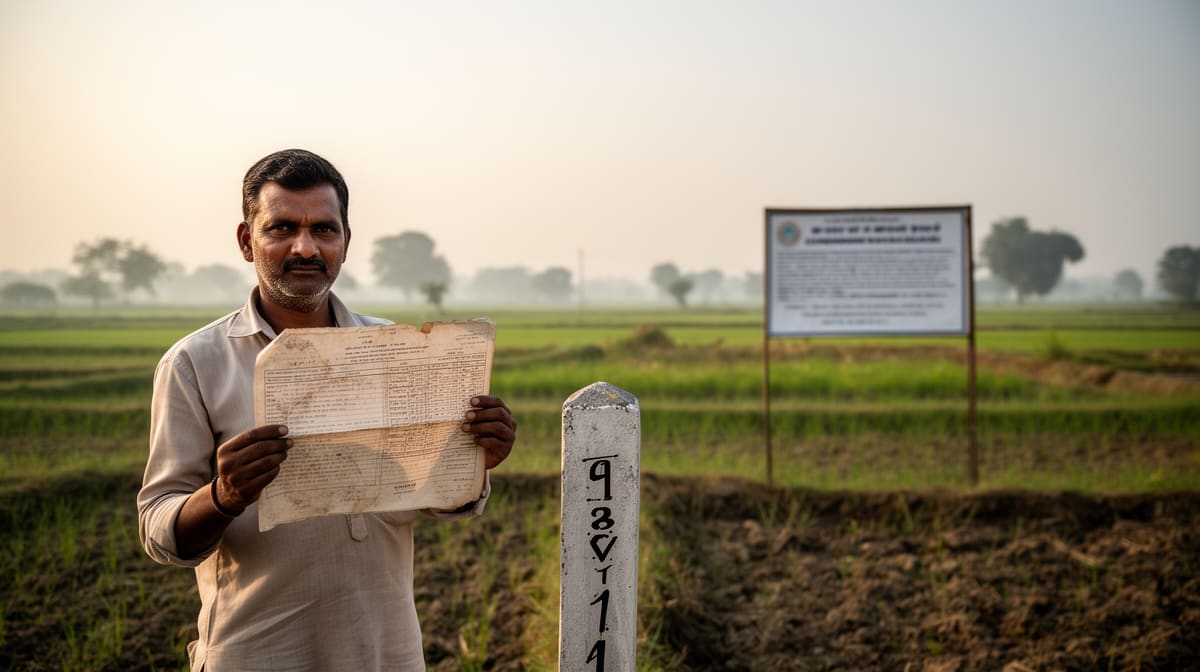
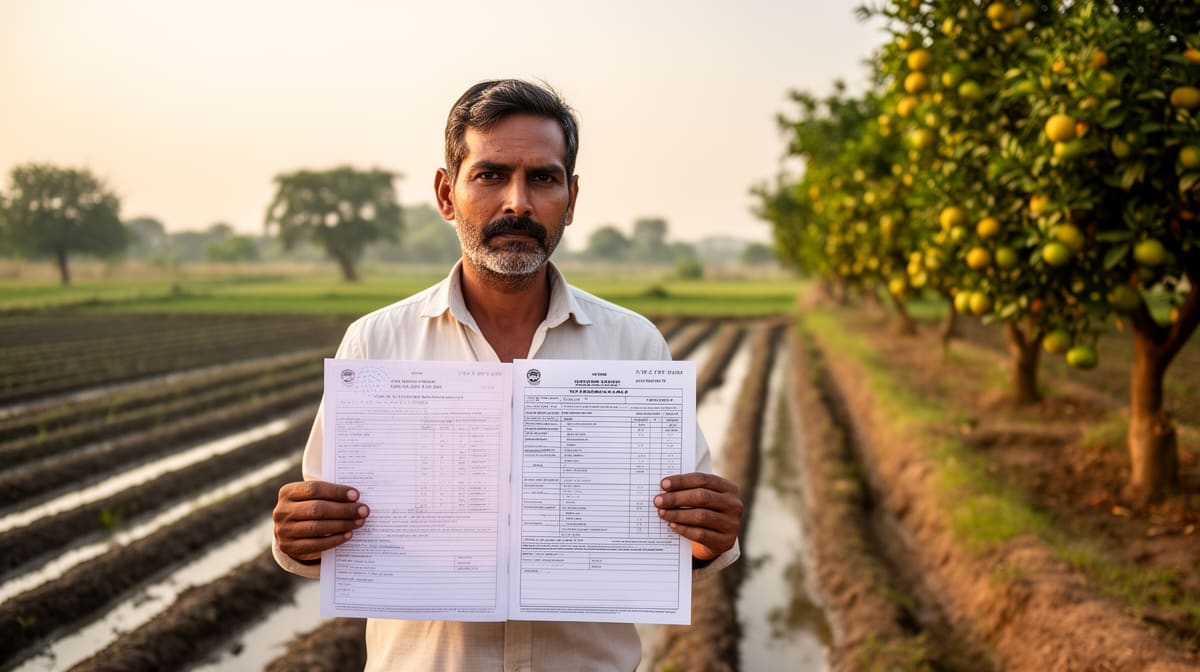
The petitioners, four siblings and cultivators from Kalgaon village in Parbhani, claimed ownership and cultivation rights over 3 hectares 41 roods of irrigated land (Bhagayat) adjacent to the Godavari River. They alleged that from 2010, water from the Digras High Level Barrage submerged their land, damaging trees, borewells, pipelines, and irrigation infrastructure. Despite repeated representations and multiple joint measurements between 2014 and 2019, authorities allegedly misclassified their land as Jirayat (non-irrigated), omitted valuation of 307 dead trees, and failed to compensate for irrigation assets.
Procedural History
- 2010 - 2018: Petitioners submitted multiple representations seeking fair compensation and classification of land as Bhagayat.
- 2018: Joint measurement recorded 188 living trees, 4 borewells, and one pipeline; valuation report dated 16.05.2019 valued trees at ₹1.31 crore.
- 2019: Affected area reduced from 1 hectare 94 roods to 1 hectare 17 roods without notice to petitioners.
- 2021: Authorities offered compensation of ₹2.89 crore under a consent award with 10% excess amount (others received 25%); petitioners executed a registered sale deed on 17.11.2021 under alleged coercion.
- 2023 - 2024: Two prior writ petitions filed; second resulted in direction to decide representation.
- 19.03.2025: District Collector rejected representation, refusing to reassess compensation or invalidate sale deed.
Relief Sought
The petitioners sought: (1) recalculation of compensation treating land as Bhagayat; (2) interest from 2010; (3) compensation for 307 dead trees, borewells, and pipelines; (4) statutory benefits from date of possession; and (5) declaration that the sale deed dated 17.11.2021 was invalid due to coercion.
The Legal Issue
The central question was whether a writ petition under Article 226 can be entertained to challenge the adequacy of compensation and invalidate a registered sale deed executed pursuant to a consent award, where the dispute hinges on contested facts such as coercion, land classification, and valuation of destroyed assets.
Arguments Presented
For the Petitioner
The petitioners argued that the consent award and sale deed were procured under duress, unequal bargaining power, and threats of forfeiting compensation for decades. They relied on Chindha Fakira Patil (2011) 10 SCC 787, Gayabai Digambar Puri (2022), and Union of India v. Tarsem Singh (2019) 9 SCC 304 to assert entitlement to interest from 2010 and fair valuation of all assets, including dead trees. They contended that reliance on satellite imagery contradicted on-site committee reports and that the impugned order ignored binding precedents and exhibited non-application of mind.
For the Respondent/State
The State countered that the petitioners voluntarily participated in a direct purchase process, accepted compensation, and executed a registered sale deed, thereby attaining contractual finality. They argued that allegations of coercion, fraud, and misclassification involve disputed questions of fact requiring oral evidence and cross-examination - matters beyond the scope of writ jurisdiction. The State emphasized the availability of an efficacious alternate remedy in civil court to challenge the validity of the sale deed and seek consequential reliefs.
The Court's Analysis
The Court examined the foundational principles governing writ jurisdiction under Article 226, emphasizing that it is not a substitute for a civil trial. The judgment noted that while the High Court possesses wide discretionary powers, it refrains from adjudicating disputes involving complex factual controversies, particularly where credibility of witnesses, technical assessments, and competing documentary evidence are involved.
"Resolution would require leading of evidence, including examination of the officers who allegedly conducted measurements and panchnamas, negotiated the settlement, issued communications, held meetings, and dealt with the Petitioners’ case, as also expert/technical evidence where valuation and agricultural impact are concerned."
The Court held that the petitioners’ claim of coercion and undue influence in executing the sale deed was not merely an allegation but a substantive challenge to the validity of a registered instrument. Under the Indian Registration Act, 1908, a registered sale deed carries a statutory presumption of authenticity and validity. To set it aside, the petitioners must prove vitiating factors - coercion, fraud, or undue influence - in a civil proceeding where evidence can be properly recorded.
The Court distinguished the cited precedents: Chindha Fakira Patil dealt with market value determination in compulsory acquisition; Gayabai Digambar Puri addressed commencement of interest; and Tarsem Singh concerned statutory exclusions under the National Highways Act. None of these cases permitted reopening of a concluded negotiated settlement in writ jurisdiction. The reliance on Directorate of Revenue Intelligence v. Raj Kumar Arora was deemed inapposite, as it pertained to NDPS law and prospective overruling, neither of which applied to contractual finality.
The Court further rejected the petitioners’ argument that dismissal of their civil suit for default justified writ intervention. It held that practical difficulties in pursuing civil remedies do not expand the scope of writ jurisdiction. The writ court cannot act as a fact-finding tribunal or grant declaratory reliefs that are quintessentially civil in nature.
The Verdict
The petitioners’ writ petition was dismissed. The Court held that a registered sale deed executed pursuant to a consent award creates contractual finality, and challenges to its validity or the adequacy of compensation must be pursued in a civil court. Writ jurisdiction under Article 226 cannot be invoked to re-litigate disputed factual issues or invalidate registered instruments.
What This Means For Similar Cases
Consent Awards Cannot Be Reopened in Writ Proceedings
- Practitioners must advise clients that accepting compensation under a consent award and executing a registered sale deed bars subsequent writ petitions challenging compensation adequacy.
- Any challenge to the validity of such a deed must be filed as a civil suit under Section 41 of the Specific Relief Act or Section 31 of the Indian Contract Act.
- Writ courts will not entertain claims of coercion or fraud unless supported by prima facie documentary evidence of duress.
Land Classification and Valuation Disputes Require Technical Evidence
- Disputes over land classification (Bhagayat vs. Jirayat), valuation of dead trees, or irrigation infrastructure must be substantiated with survey records, expert reports, and revenue records.
- Oral assertions or self-declared claims without official documentation will not suffice in any forum.
- Practitioners should file civil suits with applications for appointment of court commissioners or technical experts to assess agricultural damage.
Civil Remedy Is Exclusive for Contractual Challenges
- Dismissal of a civil suit for default does not convert a factual dispute into a writ-worthy issue.
- Petitioners must exhaust civil remedies before approaching writ courts for procedural irregularities in administrative orders.
- Writ petitions may still be maintainable if there is a clear violation of statutory procedure or violation of natural justice in the issuance of the consent award - not its amount.