The Madhya Pradesh High Court has reaffirmed the limited scope of writ jurisdiction under Article 226 when challenging compensation determinations made by statutory authorities pursuant to judicial directions. The judgment underscores that courts will not substitute their view for that of a fact-finding authority absent perversity or arbitrariness, reinforcing the principle that factual assessments in compensation matters are insulated from interference unless fundamentally flawed.
Background & Facts
The Dispute
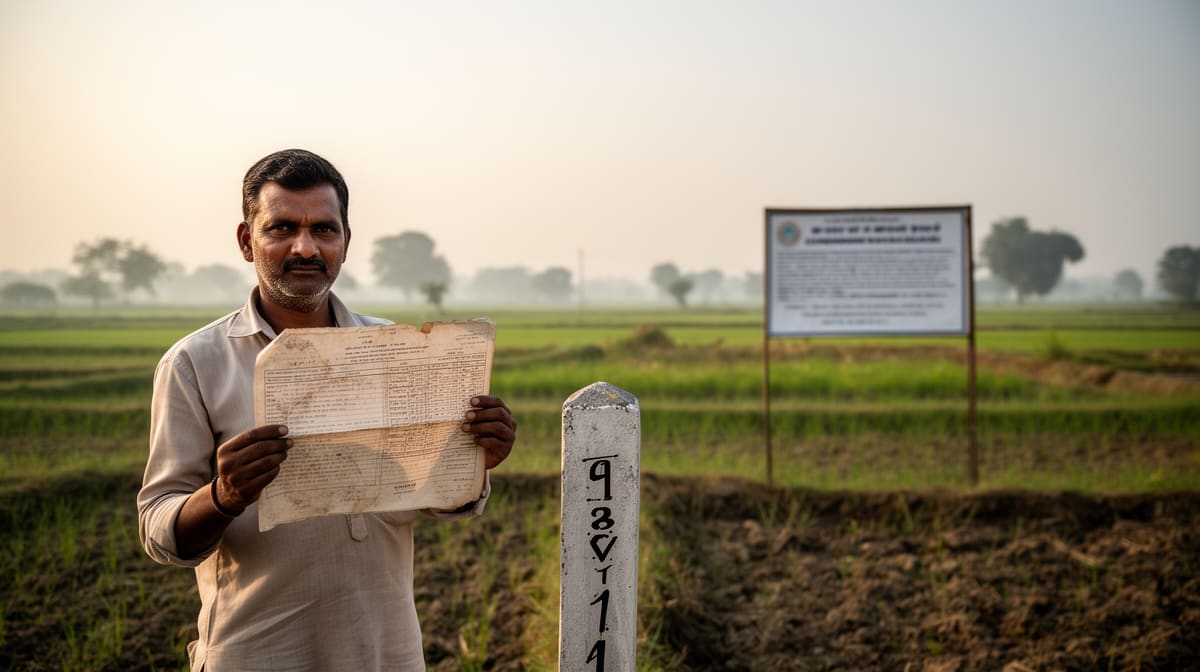
The petitioner, Municipal Corporation, sought to set aside a compensation assessment report dated 28.01.2021 (Annexure P/1) prepared in the matter of Suresh Singh Kushwah vs. Nagar Palika Nigam. The report was submitted in compliance with directions issued by this Court in earlier proceedings concerning the acquisition of the respondent’s land for a public purpose. The respondent, Suresh Singh Kushwah, claimed compensation for loss of property, business, mental agony, and interest, following the acquisition and utilization of his land.
Key Facts
- The land in question was acquired by the Municipal Corporation for a public purpose.
- The respondent filed a claim for compensation before the competent authority.
- The authority conducted proceedings, heard both parties, and considered documentary and oral evidence.
- The report dated 28.01.2021 assessed compensation after detailed evaluation of the material on record.
- The petitioner, though participating in the proceedings and submitting its own evidence, later challenged the quantum and heads of compensation.
- The petitioner raised objections regarding unauthorized construction on the land and alleged disregard of documentary evidence.
- The petitioner did not challenge the legality of acquisition itself, but only the compensation amount.
Procedural History
- Date of acquisition: Not explicitly stated, but land was taken over and utilized for public purpose prior to 2021.
- Prior judicial proceedings: This Court issued directions for determination of compensation by a competent authority.
- 28.01.2021: Competent authority submitted compensation report (Annexure P/1).
- 2021: Writ Petition No. 6949 of 2021 filed before the High Court of Madhya Pradesh at Gwalior.
- 26.03.2026: Judgment delivered by Hon’ble Justice Milind Ramesh Phadke.
The Parties' Positions
For the Petitioner (Municipal Corporation)
- Argued that the compensation report was erroneous and arbitrary.
- Contended that the authority ignored documentary evidence submitted by the Corporation.
- Asserted that unauthorized construction on the land should reduce or negate compensation.
- Claimed that heads such as loss of business, mental agony, and interest were not legally sustainable.
For the Respondent (Suresh Singh Kushwah)
- Maintained that the land was lawfully acquired for public purpose.
- Stated that the compensation report was prepared after full opportunity of hearing and proper appreciation of evidence.
- Argued that the petitioner’s participation in the proceedings estopped it from challenging the outcome.
Relief Sought
The petitioner sought:
- Setting aside of the compensation report dated 28.01.2021.
- Dismissal of the respondent’s compensation claim.
- Costs in its favor.
The Legal Issue
The central question was whether a writ petition under Article 226 of the Constitution can be maintained to challenge the quantum of compensation determined by a competent authority after following judicial directions and affording due opportunity of hearing, particularly when the challenge is based on reappreciation of evidence or differing views on factual matters.
Arguments Presented
For the Petitioner
The petitioner contended that the compensation report was legally unsustainable because:
- The authority allegedly ignored documentary evidence submitted by the Corporation.
- Unauthorized construction on the land should have reduced the compensation.
- Heads such as loss of business and mental agony were not recognized under law.
- The assessment was arbitrary and lacked basis. It relied on general principles of administrative law to argue that the report was flawed and required judicial correction.
For the Respondent
The respondent argued that:
- The compensation assessment was conducted pursuant to a specific direction of this Court.
- Both parties were heard, and all material was considered.
- The petitioner had actively participated in the proceedings and cannot now object to the outcome merely because it is unfavorable.
- The principle of approbation and reprobation bars the petitioner from challenging the report.
- The determination of compensation is a factual exercise, and writ jurisdiction is not a forum for reappreciation of evidence.
The Court's Analysis
The Court emphasized the well-established principle that writ jurisdiction under Article 226 is not an appellate forum. It cannot be invoked to reappreciate evidence, substitute the view of the fact-finding authority, or correct perceived errors in the quantum of compensation unless the decision is perverse, arbitrary, or devoid of any basis.
"The scope of interference under Article 226 of the Constitution of India in matters relating to determination of compensation is limited, particularly when such determination has been carried out pursuant to directions issued by a competent court and after affording due opportunity of hearing to the parties."
The Court noted that the authority had conducted a fair hearing, considered all material, and made a reasoned assessment. The petitioner’s objections regarding unauthorized construction were rejected on the ground that once land is acquired for public purpose, the legality of construction cannot be used to defeat compensation. The Court held:
"Even otherwise, the question as to the extent of authorized or unauthorized construction and the impact thereof on compensation is essentially a question of fact, which has been duly considered by the authority while passing the impugned report."
The Court further observed that the appreciation of evidence and its probative value lies exclusively with the fact-finding authority. Merely because a different view is possible does not render the decision illegal or warrant interference.
"Merely because a different view is possible on the basis of the same material, the same would not be a ground for interference under Article 226 of the Constitution."
The Court also invoked the doctrine of approbation and reprobation, noting that the petitioner had participated in the proceedings and submitted its own evidence. It cannot now be permitted to challenge the outcome merely because it is adverse to its interests.
The Court concluded that the compensation determination was neither arbitrary nor without basis, and therefore, no case for interference was made out.
The Verdict
The writ petition was dismissed. The Court held that the compensation report dated 28.01.2021 stands affirmed. No interference was ordered with the quantum of compensation, including the heads of loss of business, mental agony, or interest. No costs were awarded to either party.
What This Means For Similar Cases
Compensation Determinations Are Fact-Intensive and Insulated from Writ Interference
- Practitioners must recognize that writ petitions under Article 226 are not substitutes for appeals in compensation matters.
- Challenges based on reappreciation of evidence, differing interpretations of documents, or quantum disputes will be dismissed unless the finding is perverse or wholly unsupported.
- Parties must raise all objections during the compensation proceedings; post-decision objections are likely to be barred by the doctrine of approbation and reprobation.
Public Purpose Acquisition Overrides Construction Legality Concerns
- Once land is acquired for a public purpose, objections regarding unauthorized construction cannot be used to reduce or deny compensation.
- The legality of construction is a separate issue and cannot be conflated with the right to just compensation under constitutional principles.
- This reinforces the principle that property rights are protected even if the use of land was technically irregular.
Participation in Proceedings Creates Estoppel
- A party that actively participates in compensation proceedings and submits evidence cannot later challenge the outcome on grounds of bias or error.
- This principle applies equally to acquiring authorities and landowners.
- Legal strategy must focus on robust participation during the fact-finding stage, not post-decision litigation.