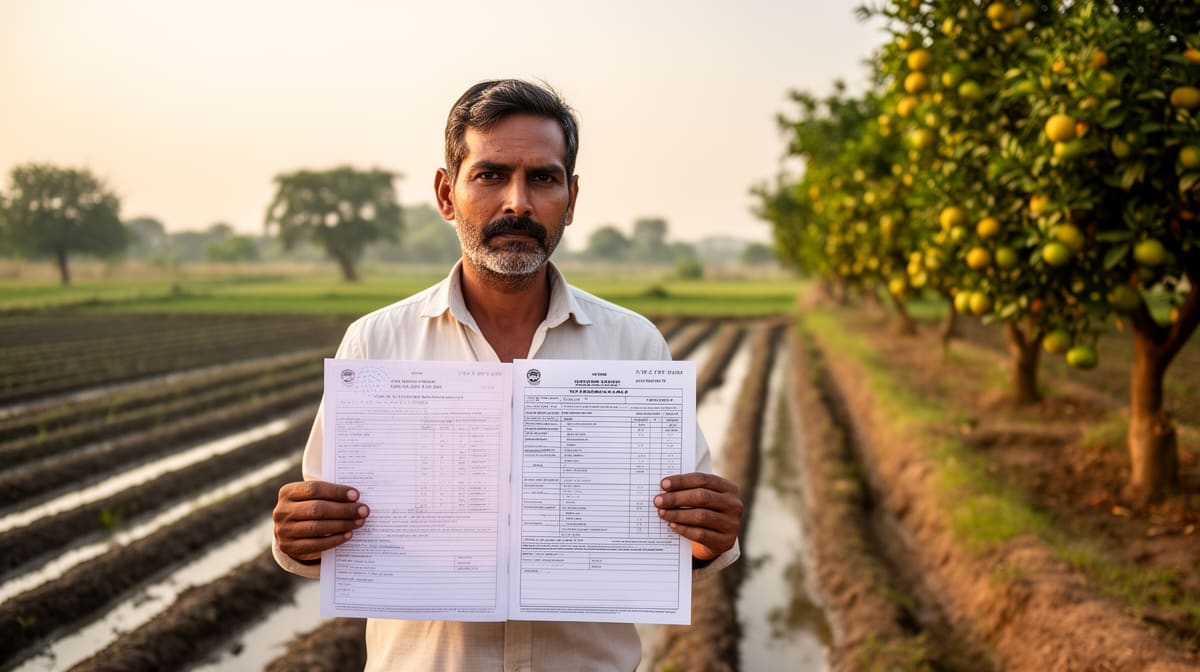
The Bombay High Court has clarified that the redetermination mechanism under Section 28-A of the Land Acquisition Act, 1894, is not confined to the monetary rate fixed in a foundational award. Claimants may seek enhanced compensation for both land classification and ancillary assets such as trees, wells, and structures, provided the evidence supports such claims.
Background & Facts
The Dispute
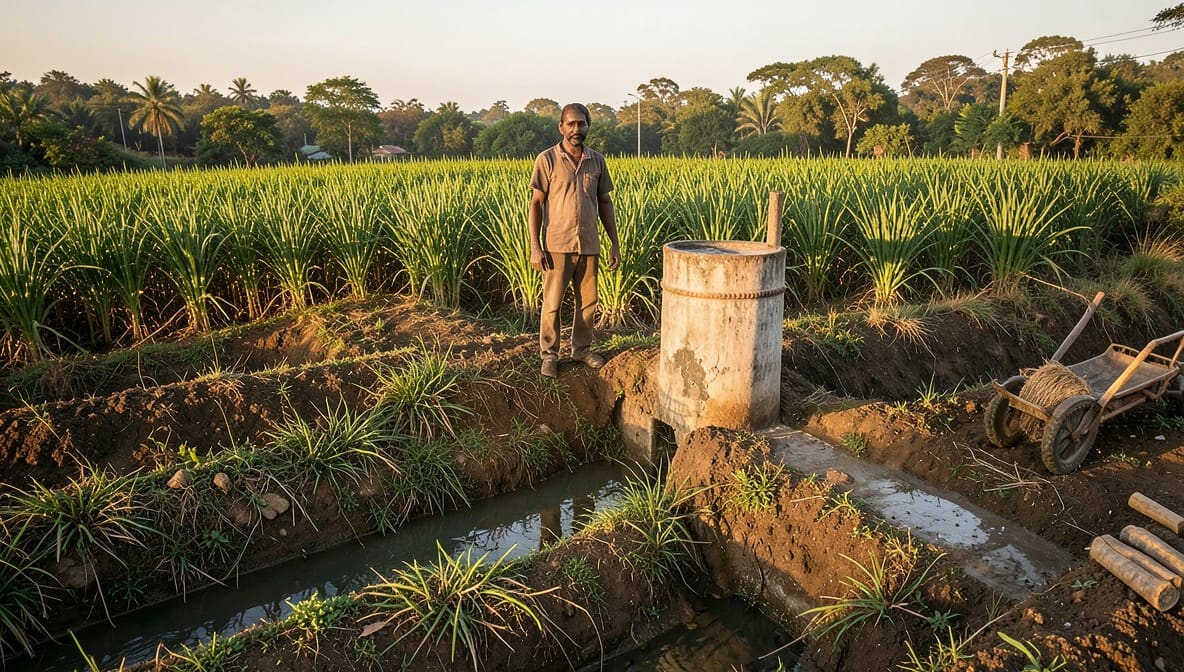
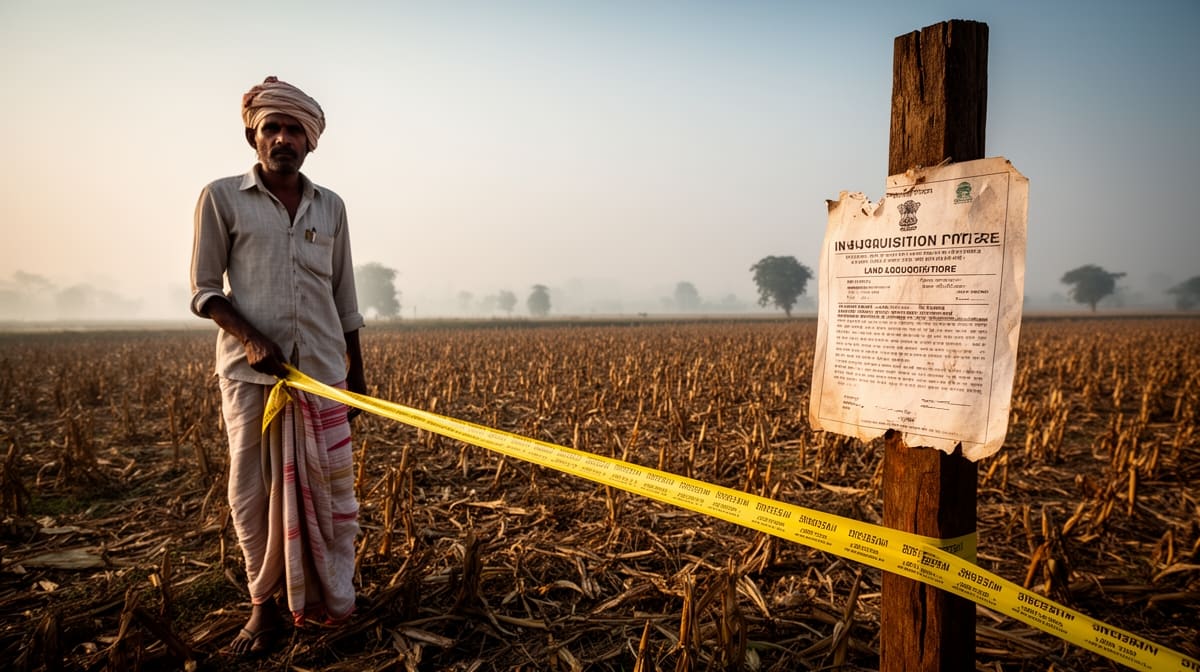
The appellants in these consolidated appeals challenged the compensation awarded under Section 28-A of the Land Acquisition Act, 1894, following the acquisition of their lands for public purposes in Vaijapur. The Special Land Acquisition Officer and the Reference Court had treated all acquired lands as dry land, awarding a rate of Rs. 370 per R, despite evidence suggesting some parcels were irrigated. No compensation was granted for trees, wells, structures, or pipelines existing on the land.
Procedural History
- 1986: Notification under Section 4 issued for land acquisition.
- 1990: Initial award passed by the Special Land Acquisition Officer at Rs. 370 per R for dry land; no compensation for trees, wells, or structures.
- 2015: Foundational Award in L.A.R. No. 10 of 2013 fixed compensation at Rs. 1,500 per R for dry land and Rs. 2,250 per R for seasonal irrigated land.
- 2018: Collector, applying Section 28-A, awarded appellants compensation within Rs. 1,414 - 1,715 per R, treating all land as dry and denying claims for trees, wells, and structures.
- 2024: Reference Court dismissed appeals, holding that Section 28-A limits redetermination to the rate of the Foundational Award.
Relief Sought
The appellants sought: (1) enhancement of compensation rates to reflect irrigated land classification (Rs. 3,000 per R), and (2) separate compensation for trees, wells, structures, and pipelines not accounted for in the Foundational Award.
The Legal Issue
The central question was whether a claimant invoking Section 28-A of the Land Acquisition Act is entitled to compensation exceeding the rate fixed in the Foundational Award, and whether ancillary assets such as trees and wells - unaddressed in that award - can be independently assessed for compensation.
Arguments Presented
For the Appellants
Counsel for the appellants relied on Union of India v. Pradeep Kumari (1995) 2 SCC 736 and Union of India v. Hansoli Devi (2002) 7 SCC 273 to argue that Section 28-A is a beneficent provision designed to eliminate inequality among similarly situated landowners. They contended that the word "redetermination" in Section 28-A(3) triggers the full application of Sections 18 to 28, which include Section 23’s comprehensive factors for compensation. The appellants submitted that the Reference Court erred in mechanically restricting its inquiry to the Foundational Award’s rate, ignoring tangible evidence of irrigated land and ancillary assets.
For the Respondents
The State contended that Section 28-A is a narrow mechanism to equalize compensation, not to re-litigate all aspects of valuation. Relying on V. Ramkrishnarao v. Singareni Colleries (2010) 10 SCC 650, the respondents argued that the purpose of Section 28-A is to bring claimants to parity with those who obtained higher awards under Section 18, not to permit unlimited enhancement. They asserted that allowing claims for trees or wells not part of the Foundational Award would defeat legislative intent and open the door to speculative claims.
The Court's Analysis
The Court undertook a detailed statutory interpretation grounded in the principles of beneficent legislation. It emphasized that Section 28-A was enacted to remove inequality faced by inarticulate and poor landowners who could not access the Section 18 reference mechanism. The Court rejected the notion that "redetermination" is confined to the monetary rate of the Foundational Award.
"The word compensation is referable to Section 23. The constituent factors of the compensation are enumerated in Section 23. One of vital components is market value of the land... The legislature has not imposed any restriction for conducting redetermination under Section 28-A."
The Court distinguished V. Ramkrishnarao as not directly addressing whether ancillary assets could be compensated under Section 28-A, noting that its observations on limitation were obiter. It affirmed the Kerala High Court’s view in K.V. Sarda that Section 28-A(3) permits the Reference Court to apply Sections 18 to 28 in full, including Section 23’s enumeration of compensable elements.
The Court held that the Foundational Award serves only as a benchmark for market value, not as a ceiling on all compensable heads. Where evidence - such as 7/12 extracts, witness testimony, and prior awards - demonstrates that land is irrigated or that structures and trees exist, the Reference Court must assess these independently. To deny such claims merely because they were absent from the Foundational Award would violate Article 300A and the spirit of equitable compensation.
The Verdict
The appellants succeeded on both grounds. The Court held that claimants under Section 28-A are entitled to compensation rates reflecting irrigated land classification, even if exceeding the Foundational Award, and may claim separate compensation for trees, wells, and structures not addressed in that award. The appeals were partly allowed and partly remanded for fresh adjudication.
What This Means For Similar Cases
Compensation Cannot Be Restricted to Foundational Award Rate
- Practitioners must now argue that Section 28-A permits redetermination of all compensable heads under Section 23, not merely the market value rate.
- Evidence of land classification (e.g., irrigation records, crop patterns) must be actively submitted and evaluated, even if absent from the Foundational Award.
- The Reference Court cannot dismiss claims for ancillary assets on the ground that they were not part of the original award.
Ancillary Assets Are Independently Assessable
- Trees, wells, structures, and pipelines are compensable under Section 23(1)(b) and (c), regardless of whether they were included in the Foundational Award.
- Claimants must document such assets through photographs, revenue records, or expert reports.
- The burden shifts to the acquiring authority to prove that such assets were non-existent or non-compensable under Section 23.
Beneficent Legislation Requires Liberal Interpretation
- Courts must interpret Section 28-A in favor of landowners, consistent with Pradeep Kumari and Hansoli Devi.
- Technical objections such as "lack of prior claim" or "no amendment to application" are invalid if the claimant has not previously waived rights under Section 18.
- Delay in discovering the Foundational Award does not bar a Section 28-A application if filed within three months of learning of a higher award.