The Madras High Court has reaffirmed that public roads and municipal property cannot be appropriated for religious installations, even in the form of statues placed beneath trees. This order establishes a clear procedural mandate for civic authorities to act decisively at the earliest stage of encroachment, preventing irreversible occupation of public space.
Background & Facts
The Dispute
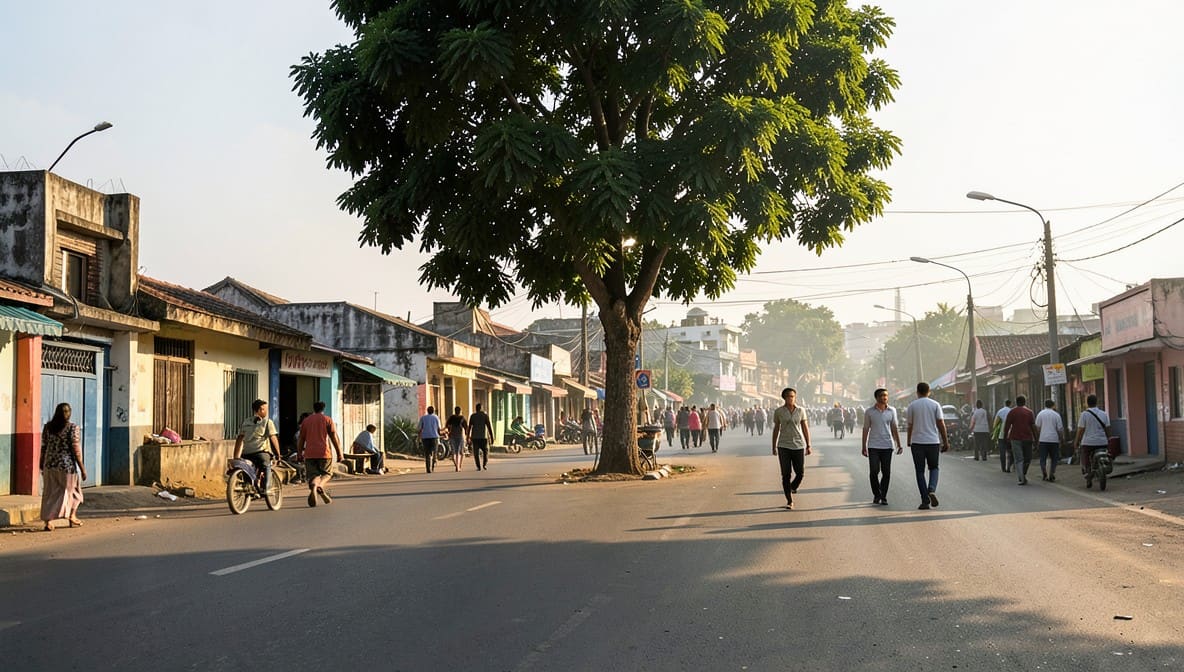
The petitioner, A. Palanisamy, filed a writ petition under Article 226 of the Constitution seeking removal of an encroachment on a public road in Thendral Nagar, 9th Street, Periyasemur, Villarasampatti Post, Erode District - 638 107. The encroachment consisted of a religious statue installed beneath a tree, which the petitioner alleged belonged to the Erode City Municipal Corporation.
Key Facts
- The petitioner submitted a representation dated 03.02.2026 to the respondents, detailing the encroachment and requesting removal.
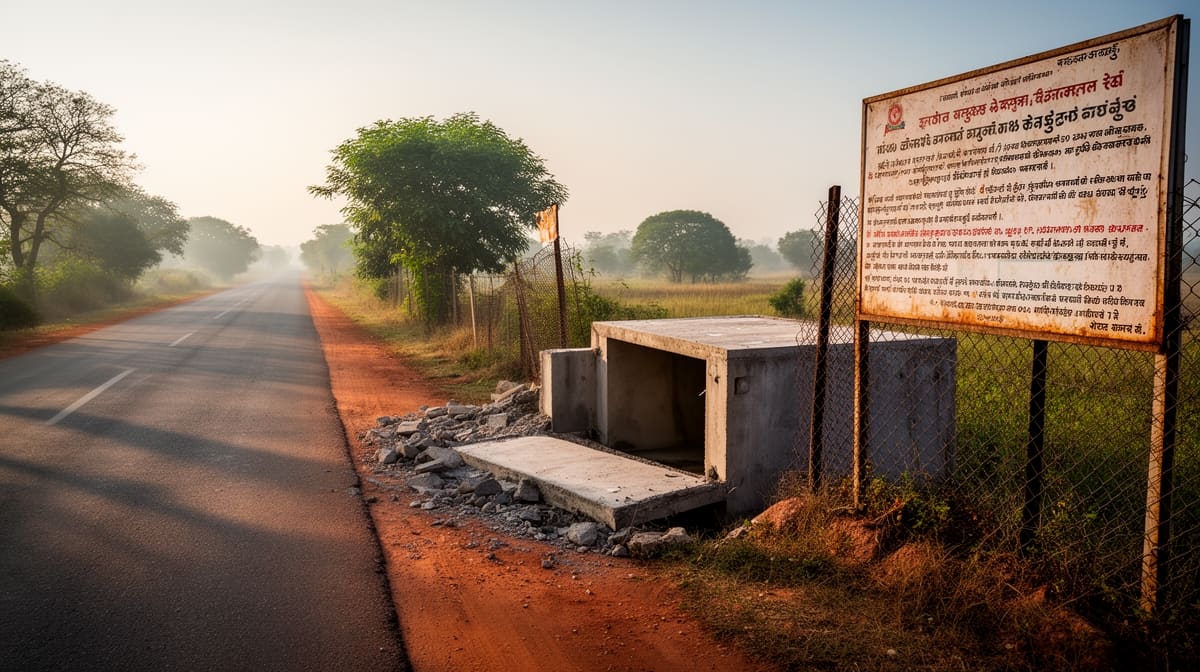
- Photographs filed with the petition showed a religious idol placed on a public road adjacent to a municipal tree.
- The statue was installed without any authorization from the Erode City Municipal Corporation or any competent authority.
- No prior notice or permission had been granted for the installation of the statue on public land.
- The petitioner contended that such encroachments often begin with small religious installations and escalate into permanent structures, making removal difficult later.
Procedural History
- 03.02.2026: Petitioner submitted formal representation to respondents 2 and 3 (Erode City Municipal Corporation and Assistant Commissioner) seeking removal of the encroachment.
- No response received from any respondent within a reasonable time.
- 11.03.2026: Writ Petition No. 11286 of 2026 filed before the Madras High Court.
- 24.03.2026: Hearing conducted before Justices S.M. Subramaniam and K. Surender.
The Parties' Positions
For the Petitioner:
- Argued that public roads are non-negotiable civic assets meant for free movement and public utility.
- Highlighted the slippery slope of allowing religious statues on roads, which often leads to permanent structures, obstruction of traffic, and erosion of public space.
- Cited the need for proactive enforcement by municipal authorities to prevent irreversible encroachments.
For the Respondents:
- No written submissions were filed.
- No appearance was made by respondents 1 and 4.
- Respondents 2 and 3 were represented by counsel, but did not contest the factual allegations regarding the encroachment.
Relief Sought
The petitioner sought a writ of mandamus directing respondents 2 and 3 to remove the encroachment and prevent future installations of religious statues on public roads.
The Legal Issue
The central question was whether municipal authorities have a duty to remove religious statues installed on public roads without authorization, and whether such encroachments must be addressed at the initial stage before they become entrenched.
Arguments Presented
For the Petitioner
The petitioner’s counsel argued that public roads are held in trust by municipal corporations for the benefit of all citizens. Installing religious statues on such land violates the principle of secular public space and obstructs the right to free movement. He relied on the doctrine of public trust and judicial precedents affirming that no individual or group can claim ownership over public property for religious purposes. He emphasized that delay in removal emboldens further encroachments and creates a precedent of impunity.
For the Respondent
The respondents did not contest the factual basis of the petition. No legal arguments were advanced to justify the presence of the statue on public land. The absence of opposition effectively conceded the illegality of the encroachment.
The Court's Analysis
The Court observed that the installation of religious statues on public roads, even if seemingly benign, constitutes a clear violation of municipal law and public property norms. The Court noted that such acts are often the first step in a pattern of incremental encroachment, where temporary installations evolve into permanent structures, fences, or shrines, ultimately depriving the public of essential infrastructure.
"The modus operandi of such encroachers normally begins with the installation of idols of God in public places, roads and thereafter, they slowly start constructing buildings. At that stage, it would be very difficult for the authorities to remove the encroachments."
The Court emphasized that municipal corporations, as custodians of public land, have a statutory and constitutional duty to prevent unauthorized use of public property. The failure to act at the initial stage amounts to dereliction of duty. The Court rejected any notion that religious sentiment could override the legal status of public roads as non-negotiable civic assets.
The Court further held that due process must be followed: notice must be issued to the encroacher, opportunity to be heard must be granted, and removal must be executed in accordance with the relevant municipal statutes and rules. However, such procedural safeguards do not justify inaction.
The Verdict
The writ petition was disposed of with directions. The 2nd and 3rd respondents - the Erode City Municipal Corporation and its Assistant Commissioner - are directed to conduct a field inspection and survey to identify all encroachments on public roads within twelve weeks from the date of receipt of a copy of this order. If any encroachments, including religious statues, are found, they shall issue notices under applicable municipal laws, afford an opportunity of hearing, and proceed with removal. There shall be no order as to costs.
What This Means For Similar Cases
Municipal Authorities Must Act Proactively on Encroachments
- Practitioners representing civic bodies must now treat even minor religious installations on public roads as actionable encroachments, not cultural expressions.
- Delay in removal, even for reasons of sensitivity, cannot be a defense against statutory duty.
- Municipal officers may be held accountable for inaction under Article 226 if they fail to act within a reasonable time.
Religious Installations on Public Land Are Not Protected
- No religious claim can override the legal status of public roads, footpaths, or municipal trees.
- Courts will not entertain arguments that such installations are "harmless" or "traditional" if they occupy public space without authorization.
- Any future petition seeking to retain such installations will face a high threshold of justification under constitutional secularism.
Inspection and Notice Must Be Documented
- Municipal authorities must maintain records of inspections, notices issued, and hearings conducted.
- Failure to document procedural compliance may render subsequent removal orders vulnerable to challenge.
- This judgment sets a precedent for systematic surveys of public land for unauthorized encroachments across Tamil Nadu.