A writ petition under Article 226 of the Constitution has been disposed of with clear directives to public authorities to investigate and remove illegal encroachments on public roads through a time-bound, procedurally fair process. The Madurai Bench of the Madras High Court has reinforced the state’s duty to protect public land and ensure administrative accountability when citizens raise formal grievances.
Background & Facts
The Dispute
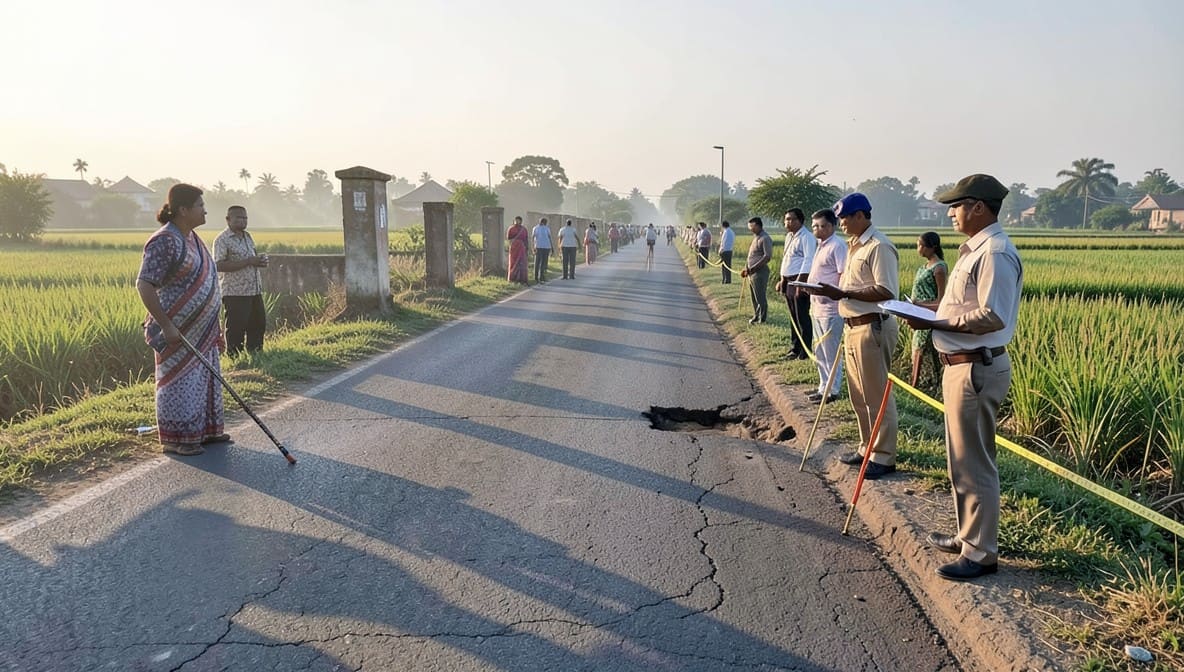
The petitioner, D. Kanagashuba, alleged that private individuals had illegally encroached upon a public street road located in Survey No. 788/4, Selvan Puthiyavanur, Sendhamangalam Village, Thiruchendur Taluk, Thoothukudi District. The petitioner submitted a formal representation to the District Collector and the Tahsildar on 05.01.2026, requesting removal of the encroachment. No action was taken in response, prompting the filing of this writ petition.
Key Facts
- The encroachment allegedly obstructs a public street road, a public easement essential for community access
- The petitioner is a private citizen with no proprietary interest in the land, acting in public interest
- The respondents 1 and 2 are the District Collector and Tahsildar, respectively, as the competent revenue authorities responsible for land administration and encroachment control
- Respondents 3 and 4 (Sabarish and M. Karthikkeyan) are the alleged private encroachers, but were not made parties to the proceedings
- No prior court order, survey report, or official notice had been issued prior to the filing of the writ petition
Procedural History
- 05.01.2026: Petitioner submitted written representation to respondents 1 and 2 seeking removal of encroachment
- No response received from the authorities within a reasonable time
- 15.03.2026: Writ Petition No. 8948 of 2026 filed under Article 226 of the Constitution
- 01.04.2026: Court admitted the petition for final disposal by consent of parties
- Notice to respondents 3 and 4 was dispensed with by the Court
Relief Sought
The petitioner sought a writ of mandamus directing respondents 1 and 2 to:
- Conduct an immediate survey of Survey No. 788/4
- Remove the illegal encroachment
- Do so within a stipulated time frame as determined by the Court
The Legal Issue
The central question was whether the High Court can issue a writ of mandamus compelling revenue authorities to investigate and remove encroachments on public land when no action has been taken on a citizen’s representation, and whether such a direction must include procedural safeguards.
Arguments Presented
For the Petitioner
The petitioner contended that the failure to act on the representation dated 05.01.2026 amounted to a violation of the state’s constitutional obligation under Article 21 to protect public property and ensure public access. Reliance was placed on the principle that public roads are held in trust for the community and any encroachment is illegal per se. The petitioner argued that mandamus is the appropriate remedy where a public duty is clearly defined and unperformed.
For the Respondent
The Additional Government Pleader, appearing for respondents 1 and 2, did not dispute the existence of the encroachment or the petitioner’s right to seek redress. Instead, he conceded that the representation had not been processed and undertook to take corrective action. He assured the Court that a survey would be conducted and due process followed.
The Court's Analysis
The Court observed that the petitioner’s grievance was not merely procedural but substantive: the public’s right to unobstructed access to a public road was being infringed upon, and the authorities had failed in their statutory duty under the Tamil Nadu Land Revenue Code and general principles of public land management. The Court emphasized that the state cannot remain passive when public property is encroached upon, especially after a formal representation has been made.
"The authorities cannot remain indifferent to representations concerning encroachment on public roads. The right of the public to use public streets is a fundamental aspect of public trust and cannot be subordinated to administrative inaction."
The Court noted that while mandamus lies to compel performance of a public duty, it must not substitute administrative discretion. Therefore, rather than ordering immediate removal, the Court directed a structured, time-bound process: first, a survey to ascertain facts; second, notice to all affected parties; third, an opportunity of personal hearing; and finally, action based on findings. This approach respects both the petitioner’s right to remedy and the respondents’ obligation to follow due process.
The Court also clarified that respondents 3 and 4, though alleged encroachers, were not necessary parties to the writ petition since the duty to act rested squarely on the revenue authorities. Their presence could be ensured through notice during the survey and hearing phase.
The Verdict
The writ petition is disposed of with the following directions:
- The District Collector and Tahsildar shall conduct a survey of Survey No. 788/4 within two weeks from the date of receipt of a copy of this order
- Notice shall be issued to the petitioner, respondents 3 and 4, and any other interested parties
- If encroachment is confirmed, a personal hearing shall be afforded to all parties before any action is taken
- Removal of encroachment, if found, shall be completed within three months from the conclusion of the survey
- There shall be no order as to costs
What This Means For Similar Cases
Administrative Inaction on Public Land Is Not Tolerated
- Practitioners may now cite this judgment to compel revenue authorities to act on representations regarding encroachments on public roads, village paths, or common areas
- A formal representation dated and submitted to the competent authority is sufficient trigger for mandamus relief
Due Process Must Precede Removal
- Authorities cannot summarily remove structures without notice and hearing, even if encroachment is apparent
- The two-week survey window and three-month removal deadline establish a clear, enforceable timeline for administrative compliance
Writ Petitions Are Effective for Public Property Protection
- This case confirms that writ jurisdiction under Article 226 is an appropriate remedy for citizens seeking enforcement of public rights, even without proprietary interest
- The Court’s refusal to make private encroachers parties does not weaken the remedy - the duty lies with the state to act