The Allahabad High Court has reaffirmed that no coercive action may be taken against a party while a stay application under the U.P. Revenue Code remains pending, reinforcing the binding precedent in Daya Shankar v. State of U.P. This ruling provides critical procedural protection to landowners and developers facing dispossession during appellate proceedings.
Background & Facts
The Dispute
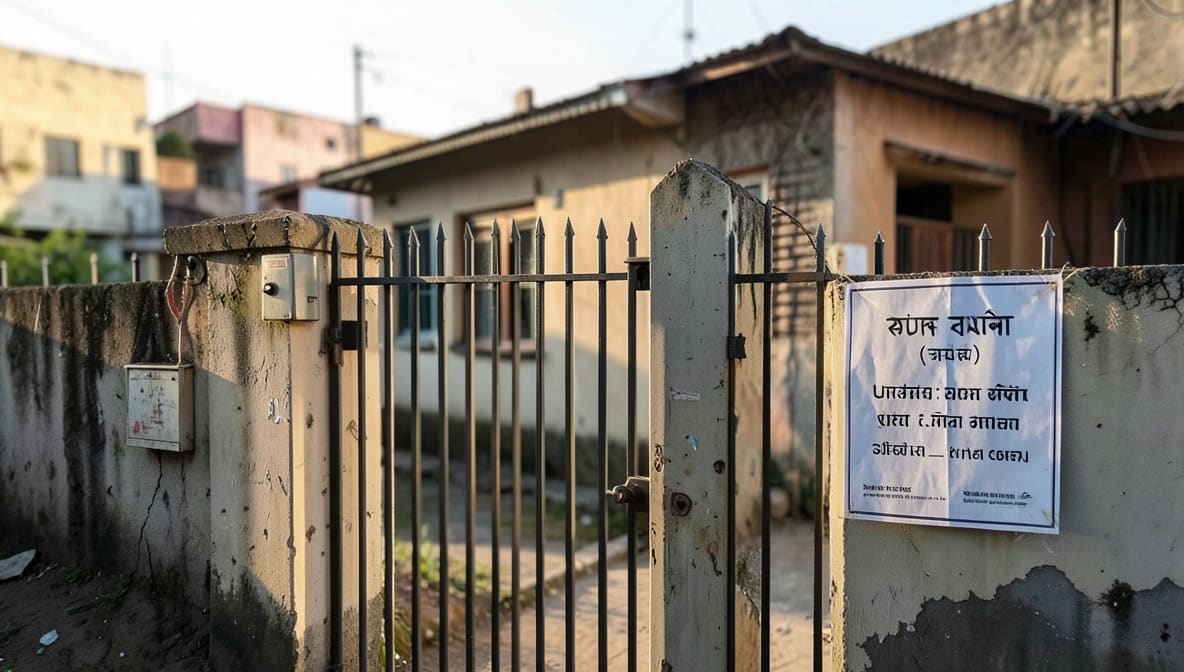
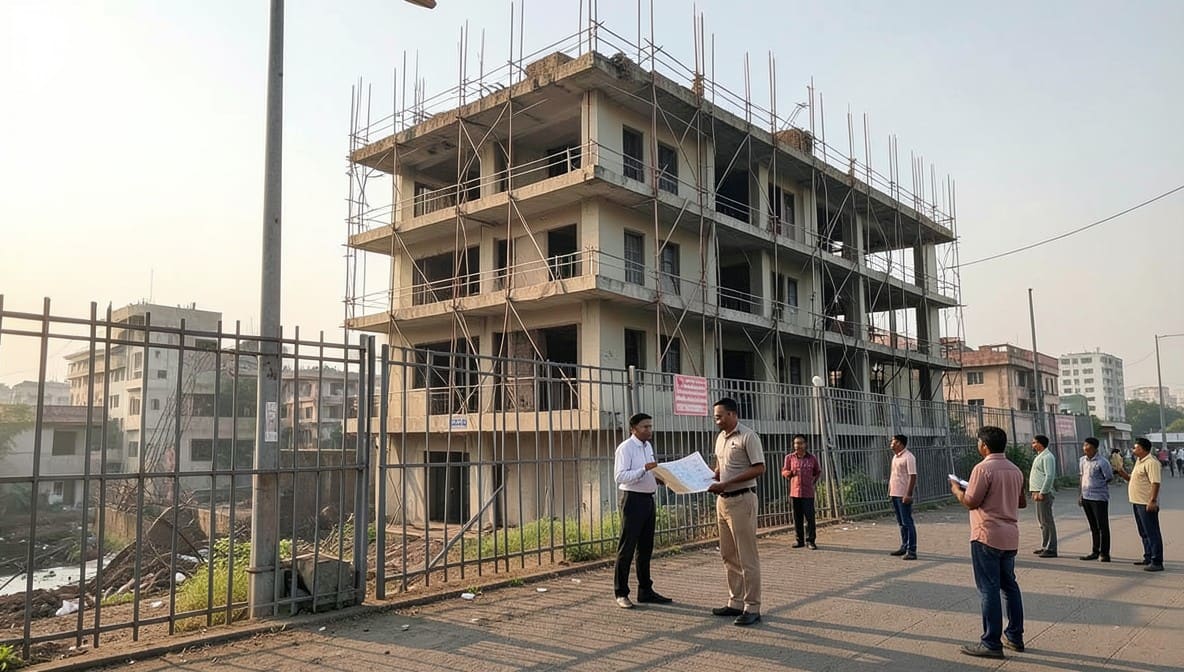
The petitioner, Nilansh Builders Pvt. Ltd., operates a resort and water park on land in Village Badaiya, Pargana Malihabad, Lucknow. On 22.05.2026, the Tehsildar of Malihabad issued an order (ANNEXURE-1) directing the petitioner to vacate the land and cease operations, alleging unauthorized use of revenue land. The petitioner challenged this order by filing an appeal under Section 67 of the U.P. Revenue Code, 2006, and simultaneously filed an application for interim stay of the impugned order.
Key Facts
- The impugned order dated 22.05.2026 was issued by the Tehsildar, Malihabad, under Section 66 of the U.P. Revenue Code, 2006
- The petitioner filed Appeal No. D202610460001574 before the Additional District Magistrate (F&R), Lucknow on 25.05.2026
- The application for interim stay was filed on the same date, 25.05.2026
- As of the date of the petition (18.06.2026), the stay application remained undecided
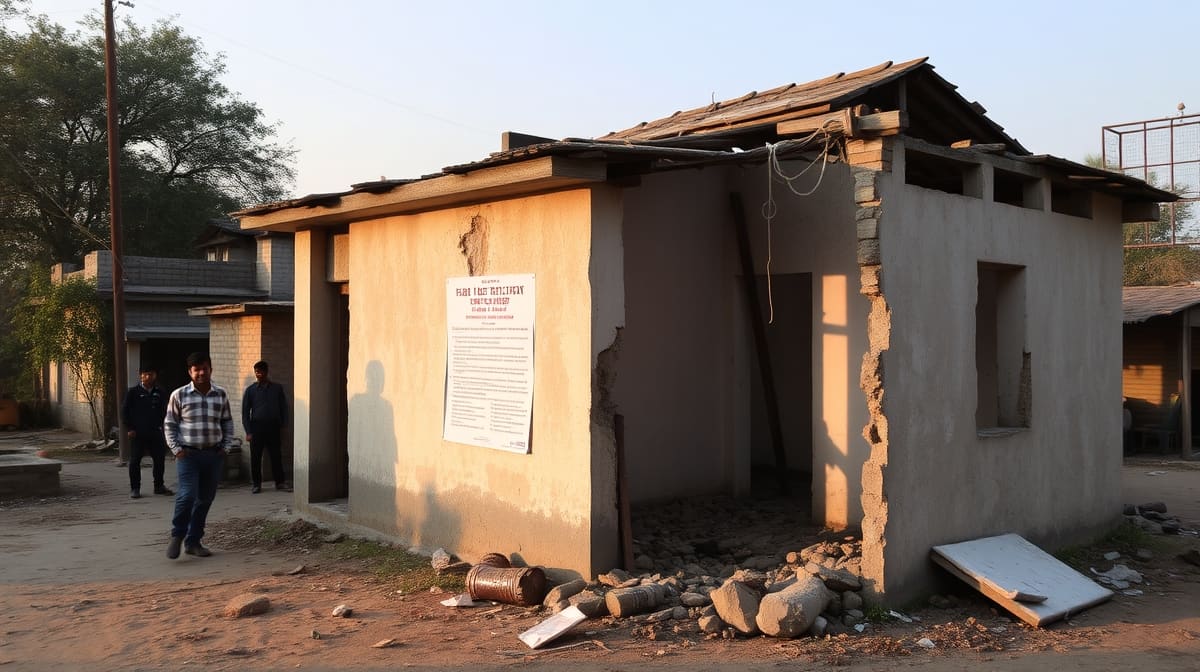
- The respondent Gram Panchayat and local authorities threatened immediate dispossession of the petitioner’s property
- No written order or reason was provided for the delay in deciding the stay application
Procedural History
- 22.05.2026: Tehsildar issues order directing dispossession and cessation of operations
- 25.05.2026: Petitioner files appeal under Section 67 of U.P. Revenue Code, 2006
- 25.05.2026: Petitioner files application for interim stay before ADM (F&R), Lucknow
- 18.06.2026: Petitioner files writ petition under Article 227 before the Allahabad High Court, Lucknow Bench, citing non-disposal of stay application and threat of coercive action
Relief Sought
The petitioner sought: (i) A direction to the Additional District Magistrate (F&R) to hear and dispose of the pending interim stay application within a stipulated time; and (ii) An order staying the execution of the Tehsildar’s order dated 22.05.2026 until the appeal is decided.
The Legal Issue
The central question was whether coercive action, including dispossession, may lawfully proceed against a party while a stay application under Section 67 of the U.P. Revenue Code, 2006 remains pending and undetermined by the appellate authority.
Arguments Presented
For the Petitioner
Sri Mayank Sinha argued that the filing of a timely appeal and a concurrent stay application triggers an automatic obligation on the appellate authority to decide the stay application within a reasonable time. He relied on Daya Shankar v. State of U.P. (2023) 6 ADJ 181, where the Court held that failure to decide a stay application within one month requires recorded reasons and that no coercive action may be taken during pendency. He emphasized that the threat of dispossession without a stay order violates principles of natural justice and procedural fairness.
For the Respondent
Sri Dilip Kumar Pandey, counsel for the Gram Panchayat, contended that the Tehsildar’s order was lawful and that the petitioner had no vested right to continue operations on revenue land. He argued that the delay in deciding the stay application was due to administrative backlog and did not constitute a legal bar to enforcement. He further submitted that the petitioner had not demonstrated irreparable harm warranting immediate stay.
The Court's Analysis
The Court examined the precedent in Daya Shankar v. State of U.P., which laid down a clear procedural safeguard for appellants under the U.P. Revenue Code. The Court noted that the petitioner had filed both the appeal and the stay application within the statutory period, thereby invoking the protection of the Daya Shankar ruling.
"16. If any stay application, recall application or any other miscellaneous application is filed during above mentioned proceedings, then same should be decided within a period of one month and if same is not decided within aforesaid time, then reason should be recorded. It is made clear that during the pendency of recall application or stay application, no coercive action be taken against the applicant."
The Court held that the failure of the Additional District Magistrate to decide the stay application within one month, without recording reasons, constituted a violation of the binding directive in Daya Shankar. The Court emphasized that the principle is not discretionary but mandatory, and its purpose is to prevent irreparable injury to the appellant’s property rights during the pendency of appellate remedies.
The Court rejected the respondent’s argument that administrative delay justifies enforcement, stating that such reasoning undermines the very purpose of appellate remedies under the Revenue Code. The Court further observed that the petitioner’s business operations, if forcibly terminated, would result in irreparable financial and reputational harm, which cannot be compensated by monetary relief at a later stage.
The Verdict
The petition was allowed. The Court directed the Additional District Magistrate (F&R), Lucknow, to decide the pending stay application within two weeks from the date of this order. The Court further directed that no coercive action, including dispossession, demolition, or cessation of operations, shall be taken against the petitioner until the stay application is decided. The Tehsildar’s order dated 22.05.2026 is stayed in its entirety during this period.
What This Means For Similar Cases
Coercive Action Is Prohibited During Pendency of Stay Applications
- Practitioners must cite Daya Shankar v. State of U.P. whenever an appellate authority delays deciding a stay application under the U.P. Revenue Code
- Any attempt at dispossession, sealing, or demolition during pendency is illegal and actionable under Article 227
- Courts will treat non-decision beyond one month as a procedural violation warranting immediate intervention
Procedural Compliance Is Non-Negotiable
- The requirement to record reasons for delay beyond one month is mandatory, not directory
- Administrative convenience cannot override statutory safeguards for appellants
- Petitioners should file applications under Article 227 immediately upon expiry of the one-month period without waiting for further delay
Stay Applications Are Not Merely Formal
- Filing a stay application triggers an automatic protective shield
- The burden shifts to the appellate authority to justify delay, not to the appellant to prove urgency
- Courts will not permit enforcement of impugned orders even if the underlying order appears prima facie valid