The Madhya Pradesh High Court at Gwalior has reaffirmed that coercive action against a property owner during the pendency of a statutory appeal under the M.P. Land Revenue Code violates the foundational principle of natural justice. The Court intervened to preserve the efficacy of the appellate process, directing the State to maintain status quo until final disposal of the appeal.
Background & Facts
The Dispute
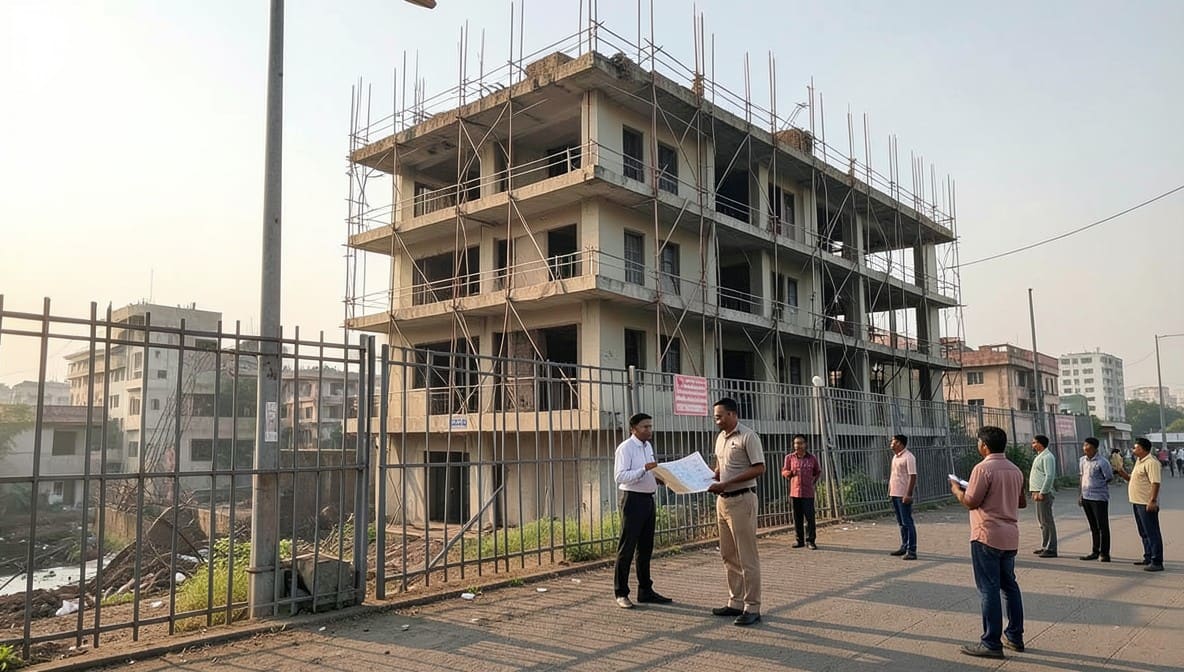
The petitioners, M/s Sapphire InfraTech Registered Partnership Firm, are the owners of a multi-storeyed building constructed between 2015 and 2016 on land in Gwalior. The State authorities, through the Tehsildar, Circle Mehra, issued an order dated 11.02.2026 (Annexure P/1) under Section 248 of the M.P. Land Revenue Code, declaring the petitioners as encroachers and directing eviction. The petitioners challenged this order through a statutory appeal before the Sub-Divisional Officer (Revenue), Jhansi Road, Gwalior, filed as Appeal No. 116/2025-26.
Key Facts
- The structure in question was constructed in 2015-16 on land claimed by the petitioners as privately held.
- A demarcation survey was conducted in 2011 by the revenue authority, which had previously favoured the petitioners’ claim.
- The 2026 eviction order was based on a fresh demarcation allegedly conducted without notice to the petitioners.
- The petitioners were not afforded any opportunity of hearing prior to the issuance of the order dated 11.02.2026.
- On 25.03.2026, the Sub-Divisional Officer (Revenue) dismissed the petitioners’ application for stay of the eviction order (Annexure P/2).
- The petitioners allege that the State is preparing to proceed with demolition of the structure during the pendency of the appeal.
Procedural History
- 2011: Revenue authority conducted demarcation favouring petitioners.
- 2015-2016: Petitioners constructed multi-storeyed building on the disputed land.
- 11.02.2026: Tehsildar issued eviction order under Section 248 of M.P. Land Revenue Code.
- 15.02.2026: Petitioners filed statutory appeal before Sub-Divisional Officer (Revenue), Appeal No. 116/2025-26.
- 25.03.2026: Appellate authority rejected petitioners’ application for stay of eviction order.
- 08.04.2026: Writ Petition No. 11763 of 2026 filed before the High Court of Madhya Pradesh at Gwalior.
The Parties' Positions
For the Petitioners: The eviction order was passed without hearing, violating principles of natural justice. The 2011 demarcation was ignored. The pending appeal raises substantial questions of fact and law. Immediate demolition would render the appeal meaningless.
For the Respondent/State: The petitioners were encroachers on government land. The stay application was rightly rejected on legal grounds. The petitioners had ample opportunity to present their case. No violation of natural justice occurred.
Relief Sought
The petitioners sought an interim direction to restrain the State from demolishing or taking any coercive action against the structure pending final disposal of the appeal before the Sub-Divisional Officer (Revenue).
The Legal Issue
The central question was whether the principle of natural justice requires the State to maintain status quo during the pendency of a statutory appeal under Section 248 of the M.P. Land Revenue Code, particularly where implementation of the impugned order would render the appeal otiose.
Arguments Presented
For the Petitioner
Learned Senior Counsel N.K. Gupta argued that the eviction order was passed ex parte, without affording the petitioners any opportunity of hearing, thereby violating audi alteram partem. The petitioners had raised substantial grounds in appeal, including the prior demarcation in 2011 and procedural irregularities in the fresh survey. The rejection of the stay application placed them at risk of irreversible loss. The Court must intervene to preserve the subject matter of the appeal, as held in State of U.P. v. Mohammad Noor and K.S. Puttaswamy v. Union of India.
For the Respondent
The State’s counsel, Shri Dharmendra Nayak, contended that the petitioners had been duly heard during the revenue proceedings and were found to be encroachers. The appellate authority had rightly rejected the stay application under Section 52 of the M.P. Land Revenue Code on merits. The petitioners’ remedy lay in the pending appeal, and the High Court should not interfere in the administrative process.
The Court's Analysis
The Court acknowledged that the petitioners had availed the statutory remedy of appeal, which was pending adjudication. It noted that the impugned order under Section 248 of the M.P. Land Revenue Code was a coercive order of eviction, capable of causing irreversible damage to property and investment. The Court emphasized that the very purpose of an appeal is to provide a meaningful redressal mechanism.
"If the order of eviction passed under Section 248 of the M.P. Land Revenue Code is allowed to be implemented that too during the pendency of the appeal, the petitioners would suffer irreparable loss and the appeal itself may be rendered otiose."
The Court rejected the State’s argument that the petitioners had been heard, finding no record of any hearing being conducted prior to the issuance of the eviction order. The Court further observed that the petitioners had raised a prima facie case on the merits of the appeal, including the prior demarcation in 2011, which had not been addressed. The Court held that the balance of convenience clearly favoured the petitioners, and the public interest lay in preserving the integrity of the appellate process.
The Verdict
The petition succeeded. The Court directed the State and all concerned authorities to maintain status quo with regard to the property in question until the final disposal of the appeal pending before the Sub-Divisional Officer (Revenue), Jhansi Road, Gwalior. The writ petition was disposed of with this direction.
What This Means For Similar Cases
Status Quo Is Presumed During Pending Appeals
- Practitioners must immediately seek interim stay in writ petitions when eviction or demolition orders are issued under revenue laws, especially where the appeal is pending.
- Courts are likely to grant status quo if the impugned order is coercive and the appeal raises substantial questions of fact or procedure.
Natural Justice Cannot Be Overridden by Administrative Expediency
- Failure to afford hearing before issuing eviction orders under Section 248 is a fatal flaw, regardless of the nature of land ownership.
- Revenue authorities must record reasons for rejecting prior surveys or evidence; ignoring them without explanation violates natural justice.
Appeal Is Not Meaningless Without Interim Relief
- The Court’s reasoning establishes that an appeal is rendered otiose if the subject matter is destroyed before adjudication.
- This principle applies equally to cases under RERA, RERA-related demolitions, and other statutory appeals where property rights are at stake.