The Madhya Pradesh High Court has reaffirmed that long-serving daily rated employees, despite initially irregular appointments, cannot be denied regularization solely on the ground of illegal inception if they have served for over a decade with the state’s acquiescence. This judgment clarifies the state’s duty to examine such cases in light of evolving Supreme Court jurisprudence, particularly Jaggo v. Union of India and Uma Devi.
Background & Facts
The Dispute
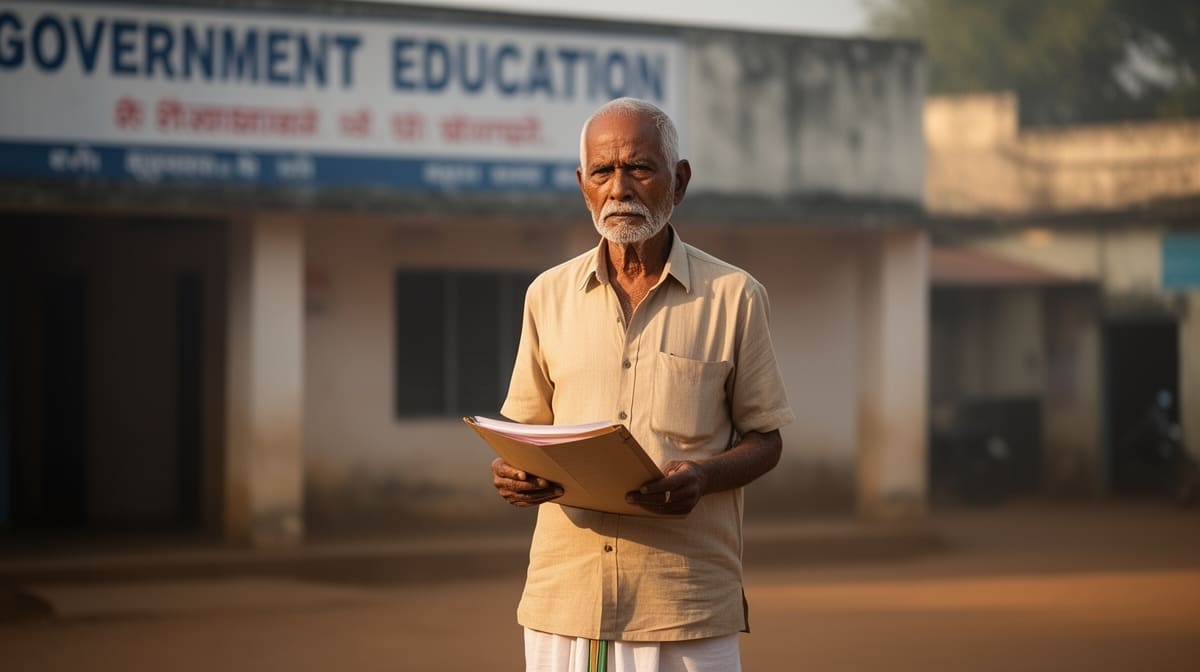
The petitioner, Prem Kumar Yadav, seeks regularization in government service after having worked as a daily rated employee for over two decades. His employment began without formal appointment or sanction, yet he continued in service without interruption. The state has not terminated his service despite being aware of the irregular nature of his initial engagement.
Key Facts
- The petitioner was engaged as a daily rated worker on an unspecified date, but has been continuously employed for more than 20 years.
- His employment was never regularized despite repeated representations.
- The state has permitted his continued service without initiating disciplinary or termination proceedings.
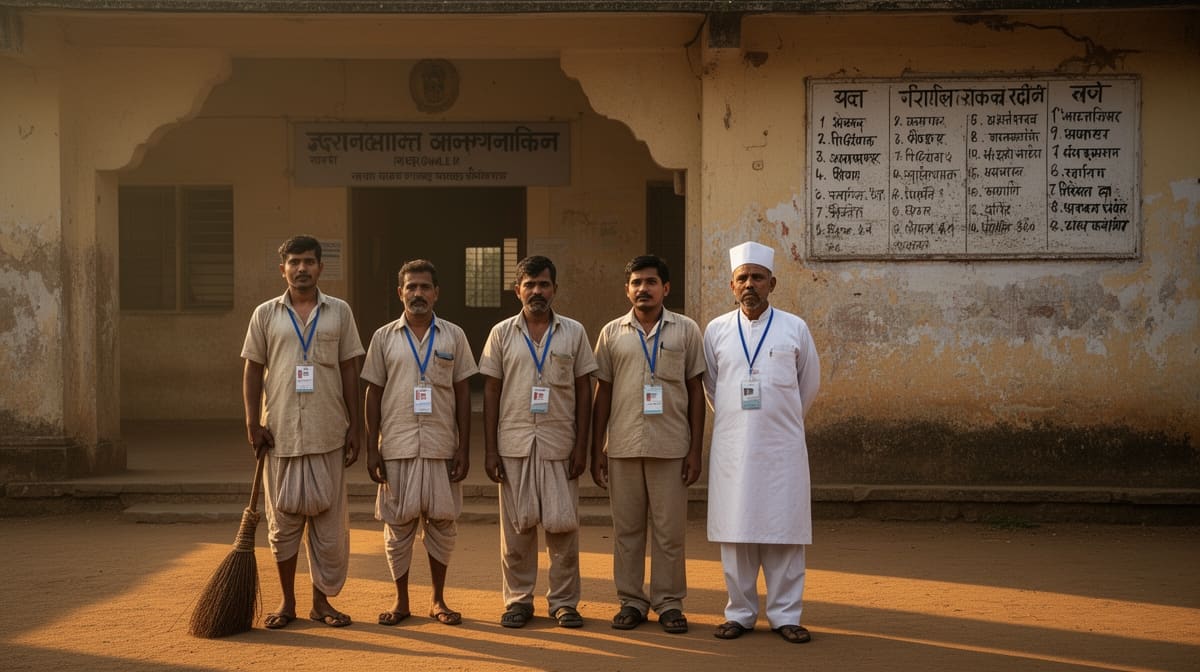
- The petitioner’s service spans multiple departments and roles, all without formal appointment letters or sanctioned posts.
- No formal order of termination or removal has ever been passed against him.
Procedural History
- The petitioner filed the present writ petition on an unspecified date in 2026 before the High Court of Madhya Pradesh at Gwalior.
- The petition was filed seeking regularization in service, relying on the Supreme Court’s judgment in Jaggo v. Union of India (2024 INSC 1034).
- The Court noted that a similar issue had been addressed in Ashok Kumar Bichail v. State of M.P. (Writ Petition No. 4705/2023), wherein detailed directions were issued.
- The Government Advocate conceded to the Court’s proposed course of action.
Relief Sought
The petitioner sought:
- Immediate regularization in service.
- Recognition of his entire period of service (over 20 years) for all service benefits including pension, increments, and seniority.
- A direction to the state to frame a policy for regularization of daily rated employees with over 10 years of service.
The Legal Issue
The central question was whether the state is obligated to consider regularization of daily rated employees who have served for more than 10 years, even if their initial appointment was illegal, in light of the Supreme Court’s rulings in Uma Devi and Jaggo.
Arguments Presented
For the Petitioner
The petitioner relied on Jaggo v. Union of India (2024 INSC 1034), which held that long-serving daily rated employees cannot be denied regularization merely because their initial appointment was irregular, especially when the state permitted continuous service for over a decade. He argued that the state’s inaction for over 20 years amounted to acquiescence, and denying regularization now would violate principles of equity and legitimate expectation.
For the Respondent/State
The Government Advocate did not oppose the petitioner’s prayer. He accepted the Court’s observation that the directions issued in Ashok Kumar Bichail should apply to the present case, acknowledging the state’s duty to reconsider such cases in light of Uma Devi and Jaggo.
The Court's Analysis
The Court examined the evolution of jurisprudence on regularization of daily rated employees. It noted that in Uma Devi v. State of Haryana (2006), the Supreme Court had held that regularisation cannot be claimed as a matter of right, but also cautioned against mechanical rejection of long-serving employees. The Court emphasized that where the state has permitted continuous service for over a decade without taking action to terminate, the doctrine of estoppel and legitimate expectation come into play.
"The said direction is given considering the fact that the authority knowing well that there are illegal appointments, permitted daily rated employees to continue in the department for more than 10 years without taking any action for termination or removal of their service from the department."
The Court further relied on Jaggo v. Union of India (2024), which reinforced that the passage of time, coupled with state acquiescence, creates a moral and legal obligation to consider regularization. The Court held that the state cannot benefit from its own neglect - permitting service for over two decades and then denying benefits on technical grounds of initial illegality.
The Court also noted that the state had already framed a policy based on Uma Devi, and the subsequent Jaggo judgment required a re-examination of such policies to ensure fairness. The Court concluded that the state’s failure to act for over two decades cannot now be used to deprive the petitioner of the benefit of regularization.
The Verdict
The writ petition was disposed of with directions that the order passed in Ashok Kumar Bichail v. State of M.P. (W.P. No. 4705/2023) shall apply mutatis mutandis. The Court directed the Chief Secretary of Madhya Pradesh to constitute a committee to examine the cases of all daily rated employees who have served for more than 10 years, including those whose initial appointments were deemed illegal, provided they have been permitted to continue in service for over a decade. The state must reconsider their cases in light of Uma Devi and Jaggo, and cannot reject regularization solely on the ground of initial illegality.
What This Means For Similar Cases
Regularization Cannot Be Denied Solely on Initial Illegality
- Practitioners representing long-serving daily rated employees must now argue that state acquiescence for over 10 years creates a legitimate expectation.
- The burden shifts to the state to justify why regularization should be denied despite prolonged service.
- Cases where employees were permitted to work for 15 - 20 years without termination are now prima facie eligible for reconsideration.
Policy Implementation Must Be Proactive, Not Reactive
- State departments must proactively identify and process cases of daily rated employees nearing the 10-year mark.
- Past decisions rejecting regularization on technical grounds must be revisited if the employee continued service without challenge.
- Departments must maintain records of service duration and reasons for non-regularization to avoid future litigation.
Jaggo v. Union of India Expands the Scope of Uma Devi
- Jaggo modifies Uma Devi by introducing a time-based fairness standard: 10+ years of service + state inaction = duty to consider.
- The judgment closes the loophole where states exploited initial illegality to deny benefits after decades of reliance.
- This precedent now applies uniformly across all central and state government departments employing daily rated workers.