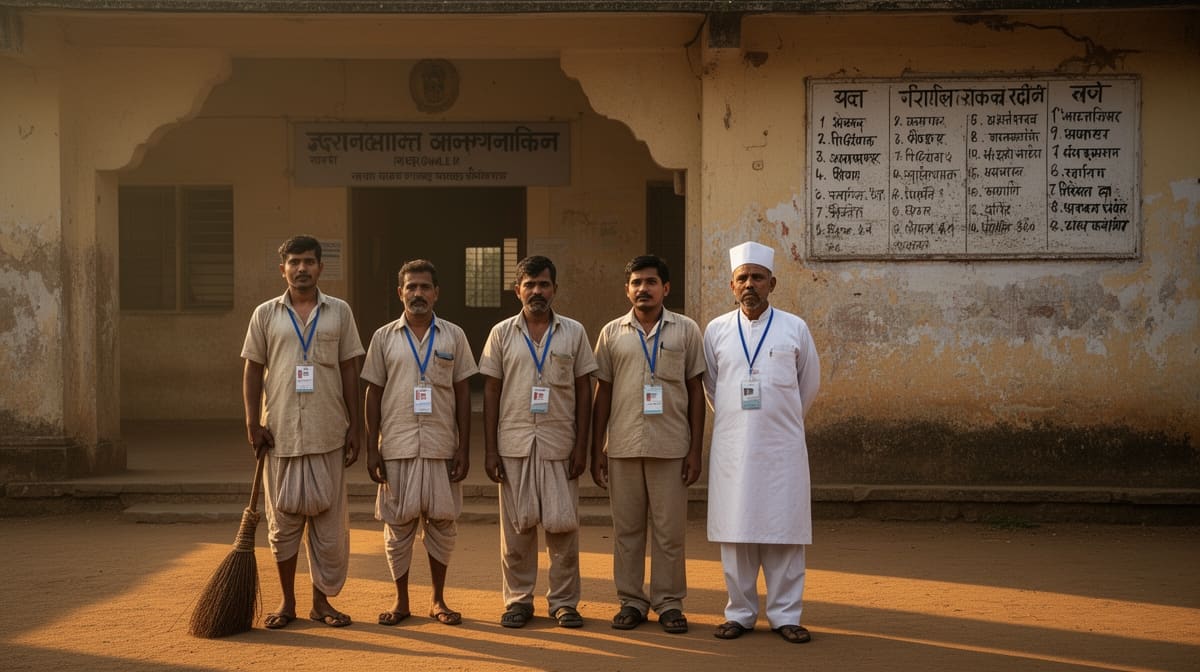
The Supreme Court has reaffirmed that prolonged, unbroken service in essential government functions, even if initially labeled casual, can justify regularization when similarly situated employees have been granted the same benefit. This judgment significantly narrows the rigid application of the Umadevi doctrine and establishes that procedural irregularities cannot override substantive equity for workers who have fulfilled indispensable roles for decades.
Background & Facts
The Dispute
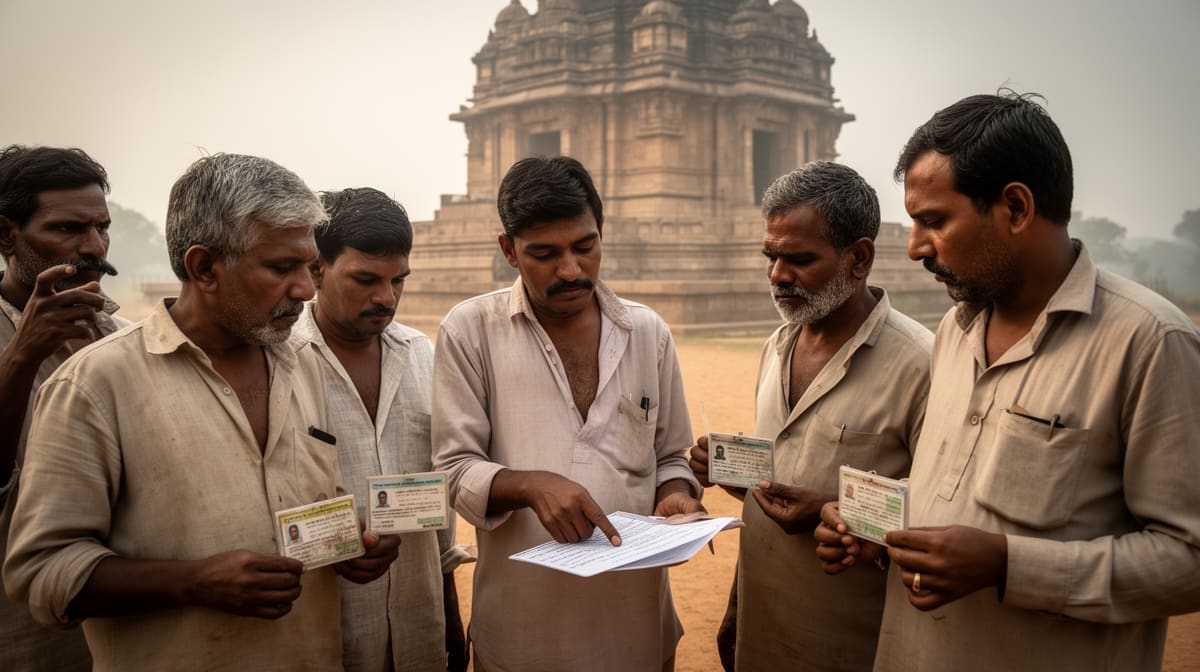
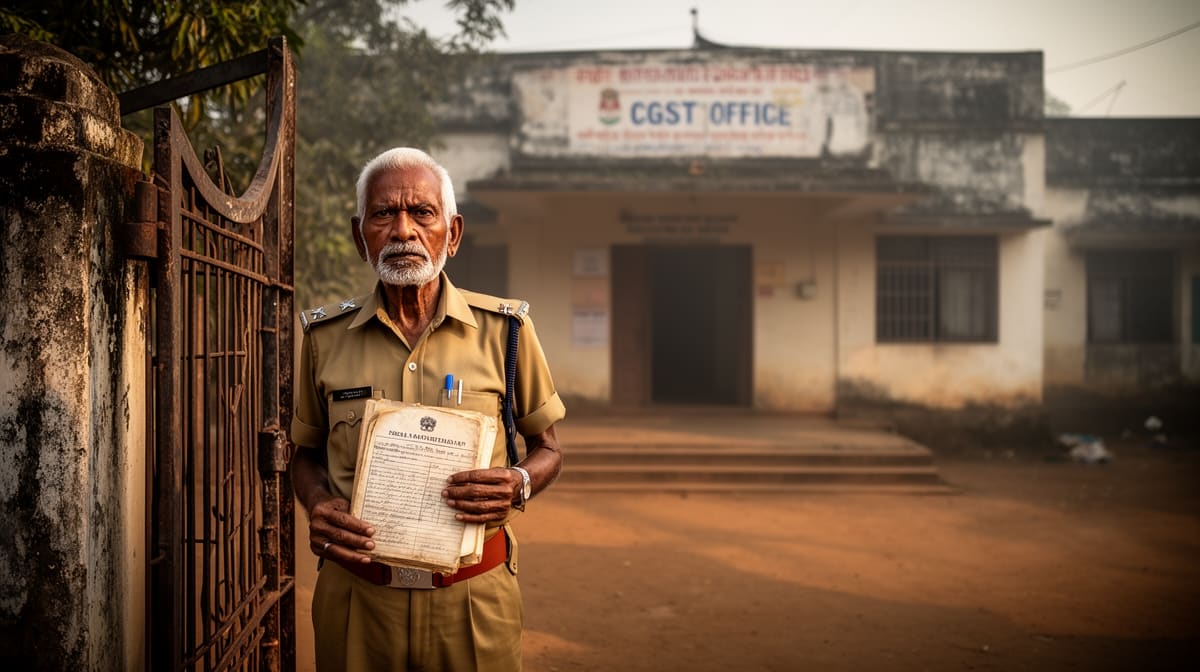
The appellants, five casual workers engaged as Sweepers and Cook in the Office of the Commissioner of Income Tax, Gwalior, claim to have served continuously for over a decade - starting as early as 1993 - through the Employment Exchange. Their services were never terminated, and they performed duties integral to daily office operations. Despite repeated representations, their demand for regularization was rejected on the ground that they did not meet the ten-year continuous service threshold as of 10.04.2006, as required under Secretary, State of Karnataka v. Umadevi.
Procedural History
The case progressed through three forums:
- 2012: Original Application No.719 filed before the Central Administrative Tribunal, Jabalpur
- 2015: Tribunal dismissed the application, relying on Umadevi (3)
- 2019: Madhya Pradesh High Court upheld the Tribunal’s decision
- 2019: Special Leave Petition filed in the Supreme Court
Relief Sought
The appellants sought regularization of their services with effect from 01.07.2006, along with consequential benefits such as pay parity, seniority, and pension rights, on the grounds that they were similarly situated to other casual workers in the same office who had already been regularized pursuant to Ravi Verma v. Union of India and Raman Kumar v. Union of India.
The Legal Issue
The central question was whether long-serving casual workers, whose duties were perennial and whose appointments were irregular but not illegal, could be denied regularization solely on the basis of failing to meet a rigid cutoff date under Umadevi, when similarly placed employees had already been regularized.
Arguments Presented
For the Petitioner
The appellants relied on Jaggo v. Union of India to argue that their appointments were irregular, not illegal, as they were selected through Employment Exchange and interviews. They emphasized that the nature of their work - sweeping, cooking, water supply - was perennial and fundamental to the functioning of the office. They cited Ravi Verma and Raman Kumar to demonstrate discriminatory treatment, as five other workers from the same list of daily-wage employees on 31.10.2005 had been regularized. They contended that outsourcing of their duties after their non-regularization proved the work was not temporary.
For the Respondent
The Union argued that the appellants did not satisfy the ten-year continuous service requirement as of 10.04.2006, as mandated by Umadevi. They asserted that no sanctioned posts existed in Gwalior at the relevant time and that regularization could not be ordered without vacancies. They maintained that Ravi Verma was distinguishable because it involved different factual matrices and that granting relief here would open floodgates to claims from other casual workers.
The Court's Analysis
The Court undertook a nuanced interpretation of Umadevi, distinguishing between illegal and irregular appointments. It held that Umadevi was never intended to deny regularization to employees who had served continuously for decades in sanctioned functions, even if their initial appointments lacked formalities.
"The judgment in Umadevi sought to prevent backdoor entries and illegal appointments that circumvent constitutional requirements. However, where appointments were not illegal but possibly ‘irregular,’ and where employees had served continuously against the backdrop of sanctioned functions for a considerable period, the need for a fair and humane resolution becomes paramount."
The Court emphasized that the nature of the work, not the label of employment, determines entitlement. The fact that the same duties were later outsourced to private agencies confirmed the perennial nature of the functions performed by the appellants. The Court further noted that the list of daily-wage workers as of 31.10.2005 included both the appellants and the Ravi Verma petitioners, making their positions indistinguishable.
It rejected the argument that regularization required a sanctioned post at the time of application, holding that substantive justice must prevail over procedural formalities when the State has benefited from continuous service. The Court also condemned the selective application of Umadevi to deny relief to deserving workers while granting it to others in identical circumstances, calling such discrimination violative of Article 14.
The Verdict
The appellants won. The Supreme Court held that long-serving casual workers performing perennial duties, who are similarly situated to already regularized employees, are entitled to regularization despite procedural irregularities. The Court directed their regularization with effect from 01.07.2006, with all consequential benefits, and ordered payment within three months.
What This Means For Similar Cases
Irregular But Not Illegal Appointments Qualify for Regularization
- Practitioners must now argue that procedural lapses (e.g., lack of formal notification, absence of direct recruitment) do not equate to illegal appointments under Umadevi
- Evidence of interviews, Employment Exchange sponsorship, and continuous service can establish an irregular but legitimate appointment
- The burden shifts to the State to prove mala fide or constitutional violation
Discrimination Against Similarly Situated Workers Is Unlawful
- If some casual workers in the same office/department have been regularized, others in identical circumstances cannot be excluded without rational basis
- Courts will now scrutinize selective regularization as a violation of equality under Article 14
- Maintain detailed comparative lists of workers, dates of service, and duties performed to establish similarity
Outsourcing Confirms Perennial Nature of Work
- When government departments outsource duties previously performed by casual workers, it undermines claims of temporariness
- This fact can be used to rebut the argument that the work was occasional or ad-hoc
- Document outsourcing policies and timelines to show replacement of workers, not elimination of functions