The Calcutta High Court at Port Blair has held that daily rated employees engaged through a regular selection process and rendering continuous service for over a decade in roles integral to judicial administration cannot be denied regularization consideration solely on the ground of non-sanctioned posts, directing authorities to decide their regularization prayers within twelve weeks and implement the 1988 Office Memorandum granting 1/30th pay plus dearness allowance at the minimum of the relevant pay scale pending such decision.
Background & Facts
The Dispute
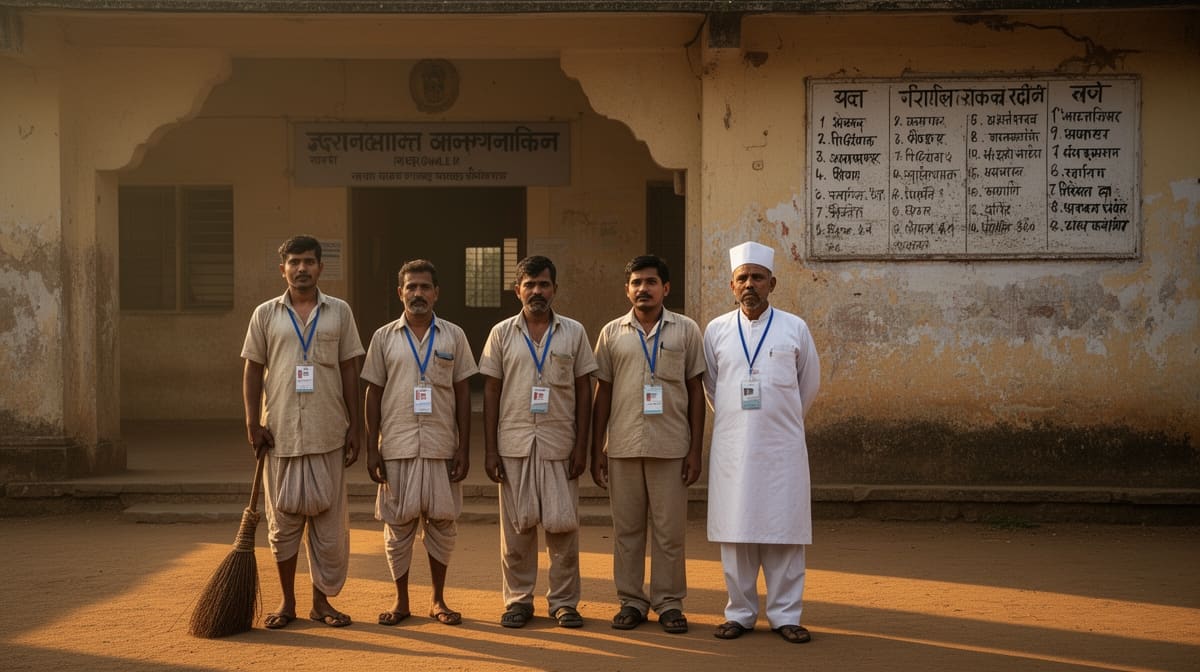
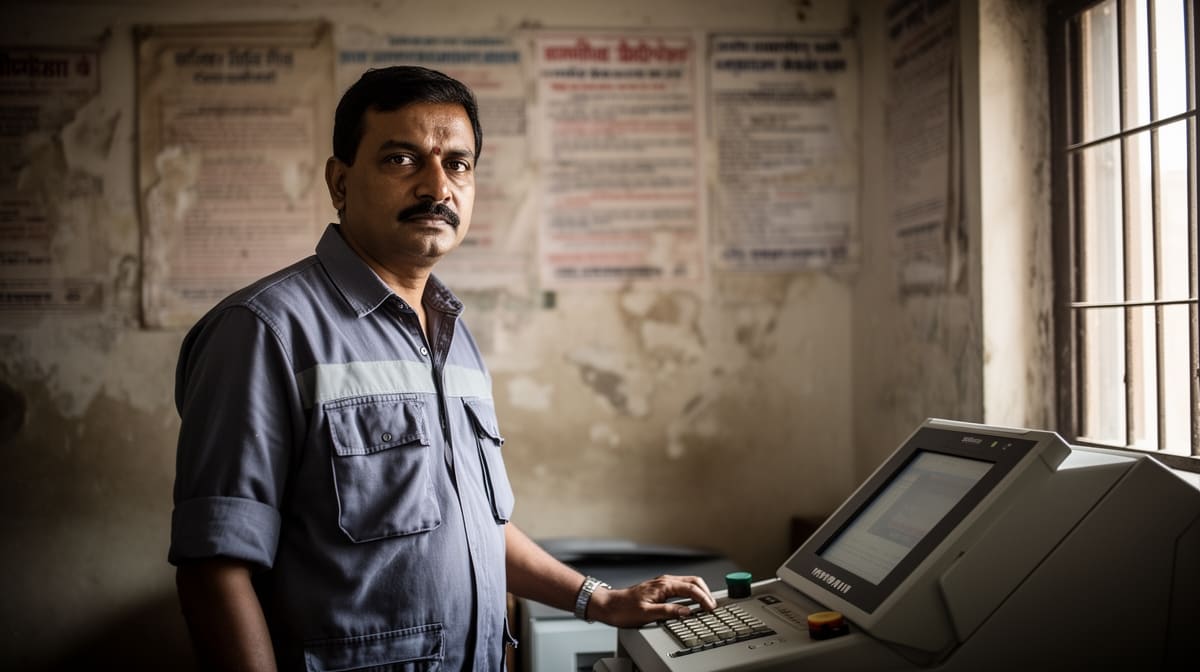
Two sets of petitioners - two daily rated Mazdoors appointed in November 2011 and three Data Entry Operators appointed in April 2012 and January 2013 - challenged the refusal of the Union of India and the District and Sessions Judge, Andaman and Nicobar Islands, to regularize their services despite more than ten years of continuous, satisfactory service in the office of the District and Sessions Judge, Port Blair. Both groups were appointed after a regular selection process involving interviews or trade tests, and their services were repeatedly renewed. They sought regularization from their initial date of appointment with all consequential benefits, alternatively claiming 1/30th of pay plus dearness allowance at the minimum of the relevant pay scale under the Office Memorandum dated 07 June 1988.
Key Facts
- The petitioners in WPA/484/2023 were sponsored by the employment exchange in 2011, appeared before a Selection Committee, and were appointed as Mazdoors on daily rated basis for three months by Office Order of the District and Sessions Judge, Andaman and Nicobar Islands, Port Blair in November 2011. The order stated they would not be entitled to claim regular appointment or continuation.
- The petitioners in WPA/485/2023 responded to a newspaper advertisement in January 2012, underwent a trade test for data entry speed and accuracy, and were appointed as Data Entry Operators on daily rated basis for three months in April 2012 and January 2013. Their appointment letters contained similar non-regularization clauses.
- Both sets of petitioners had their services extended from time to time and, by the time the writ petitions were filed, had completed over ten years of unblemished continuous service.
- The petitioners performed duties integral to the day-to-day functioning of the judicial office - one Mazdoor was assigned to the account section of the Civil Judge (Senior Division) and the district record room of the Judicial Magistrate First Class-II.
- The respondents admitted the petitioners' satisfactory performance and regular extensions but contended that the posts were not sanctioned, the engagements were stop-gap arrangements, and the appointment letter clauses estopped the petitioners from claiming regularization. They relied on Secretary, State of Karnataka v. Umadevi (2006) 4 SCC 1 to argue that regularization could not be claimed.
Procedural History
- 2023: WPA/484/2023 and WPA/485/2023 filed before the High Court at Calcutta (Circuit Bench at Port Blair).
- 2025: IA No. CAN/1/2025 filed in both matters.
- 27 August 2026: Matters heard and reserved for judgment.
- 3 September 2026: Judgment delivered and uploaded.
Relief Sought
The petitioners prayed for regularization of service from their initial date of appointment with all consequential benefits, or alternatively, payment of 1/30th of pay plus dearness allowance at the minimum of the relevant pay scale under the Office Memorandum dated 07 June 1988.
The Legal Issue
Whether daily rated employees appointed through a regular selection process and rendering continuous service for over ten years in posts essential to the functioning of a judicial office can be denied regularization on the ground that the posts are not sanctioned, and whether they are entitled to the benefits of the Office Memorandum dated 07 June 1988 pending regularization.
Arguments Presented
For the Petitioners
The petitioners contended that their appointments followed a regular selection process - interviews for Mazdoors and trade tests for Data Entry Operators - and their service was perennial and integral to the organization. They relied on a series of Supreme Court decisions: Jaggo v. Union of India (2024) SCC OnLine SC 3826, Vinod Kumar v. Union of India 2024 INSC 332, Union of India v. K. Velajagan (2025) SCC OnLine SC 837, Dharam Singh v. State of UP (2025) SCC OnLine SC 1735, Bhola Nath v. State of Jharkhand (2026) SCC OnLine SC 129, Mohammad Sagir v. Nagar Nigam Kanpur (2026) SCC OnLine SC 473, and Sukhendu Bhattacharjee v. State of Assam (2026) SCC OnLine SC 909. They argued that Umadevi could not be used as a shield to perpetuate exploitative engagement and that the Office Memorandum dated 07 June 1988 mandated 1/30th pay plus DA for daily wagers performing work of regular nature.
For the Respondents
The respondents argued that the petitioners were engaged as a stop-gap arrangement to handle increased workload in the absence of sanctioned posts. They contended that regular extension of service did not confer a right to regularization, and the petitioners were estopped from claiming regularization having accepted appointment letters containing explicit clauses that they were not entitled to regular appointment or continuation. They submitted that Umadevi barred regularization in the absence of sanctioned posts and prayed for dismissal of the writ petitions.
The Court's Analysis
The Court found that the petitioners were appointed after a regular selection process involving multiple candidates, with Data Entry Operators additionally required to pass a trade test. Although the posts were not sanctioned, the service rendered was "absolutely integral and essential for the day-to-day functioning of judicial work" and "no less compared to the regular employees; in fact, the petitioners are providing far more service."
The Court surveyed a line of recent Supreme Court authorities establishing that the nature of work performed, not the label assigned, determines employment status. In Jaggo, the Supreme Court held that government departments must lead by example in providing fair and stable employment and directed regularization. In Vinod Kumar, the Court ruled that continuous service performing duties indistinguishable from permanent posts, coupled with a selection process mirroring regular recruitment, constitutes a substantive departure from temporary engagement, and procedural formalities at the outset cannot perpetually deny accrued substantive rights.
In Velajagan, the Supreme Court reiterated that Umadevi cannot be used as a shield to justify exploitative engagement persisting for years without legitimate recruitment. Dharam Singh observed that long-term extraction of regular labour under temporary labels corrodes confidence in public administration and offends equal protection, directing regularization with creation of supernumerary posts and pay protection. Bhola Nath held that contractual stipulations purporting to bar regularization claims cannot override constitutional guarantees, and acceptance of contractual terms does not amount to waiver of fundamental rights. Mohammad Sagir raised a presumption that engagement for a substantial length of time indicates perennial work and existence of a vacant post. Sukhendu directed regularization even without sanctioned posts, holding that reliance on Umadevi for denying regularization is misplaced, and noted the Gauhati High Court's Full Bench view in Jitendra Kalita that regularization is an executive policy function.
The Court concluded that Umadevi requires authorities to consider regularization for employees with ten or more years of continuous service without judicial intervention, and to formulate a scheme for regularization in duly sanctioned posts. Since the petitioners work against non-sanctioned posts but the office cannot function without them, the authorities must decide on creation of posts for regularization. Meanwhile, non-implementation of the 1988 Office Memorandum constitutes a "double jeopardy" - denying both regularization and the mandated 1/30th pay benefit.
"Not considering the prayer of the petitioners seeking regularization allegedly on the ground of non availability of sanctioned posts and at the same time not granting benefits to the petitioners in accordance with the Office Memorandum dated 07th June, 1988 acts as a double jeopardy to the petitioners."
The Verdict
The petitioners succeeded. The Court directed the respondent authorities to consider the prayer for regularization from the initial date of appointment with all consequential benefits and pass a reasoned order within twelve weeks from communication of the judgment. Pending that decision, the respondents must implement the Office Memorandum dated 07 June 1988 and pay the petitioners 1/30th of pay plus dearness allowance at the minimum of the relevant pay scale, after ascertaining that the nature of work is the same as regular employees, within twelve weeks. The writ petitions and connected applications were disposed of with no order as to costs.
What This Means For Similar Cases
Nature of Work Determines Status, Not Labels
The judgment reinforces that the nature of duties performed - not the nomenclature of appointment or the absence of sanctioned posts - governs entitlement to regularization and fair wages. Practitioners should focus on demonstrating that the employee's work is indistinguishable from that of regular employees and is integral to the organization's core functioning.
Selection Process Mirrors Regular Recruitment
Where daily rated or contractual employees are selected through a process that mirrors regular recruitment (written tests, trade tests, interviews, merit-based selection), courts are increasingly treating this as a "substantive departure" from temporary engagement. This factor significantly strengthens the case for regularization.
Umadevi Is Not a Blanket Shield
The Supreme Court's recent decisions (Velajagan, Dharam Singh, Bhola Nath, Sukhendu) collectively establish that Umadevi cannot be mechanically invoked to justify prolonged ad-hocism. The State as a model employer must undertake legitimate recruitment or regularize long-serving employees; contractual clauses barring regularization claims do not override constitutional guarantees.
Double Jeopardy of Non-Regularization and Non-Payment of OM Benefits
Authorities cannot simultaneously deny regularization on the ground of non-sanctioned posts and refuse to implement the 1988 Office Memorandum (1/30th pay plus DA at minimum of relevant pay scale) for daily wagers performing regular work. This "double jeopardy" argument is now a potent tool for practitioners.
Actionable Takeaways
- File for regularization after 10+ years of continuous service with evidence of selection process and nature of duties.
- Plead alternative relief under the 1988 Office Memorandum for 1/30th pay plus DA pending regularization.
- Cite Jaggo, Vinod Kumar, Velajagan, Dharam Singh, Bhola Nath, Mohammad Sagir, and Sukhendu to counter Umadevi-based objections.
- Seek a time-bound direction (12 weeks) for the authority to pass a reasoned order on regularization and implement OM benefits.