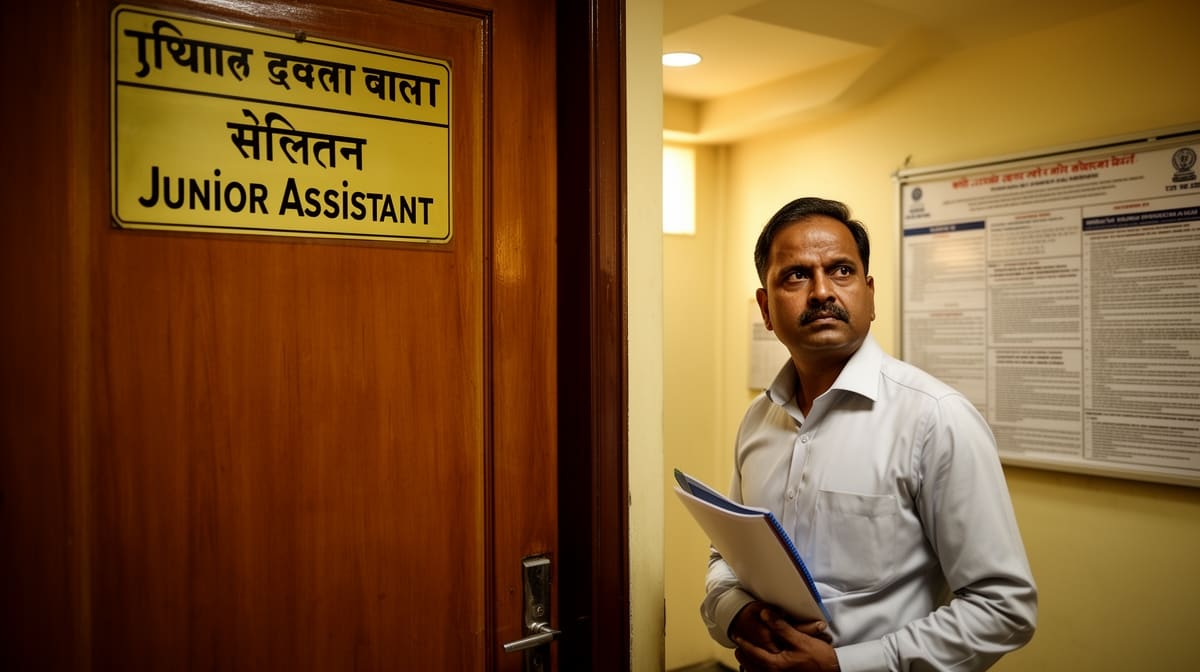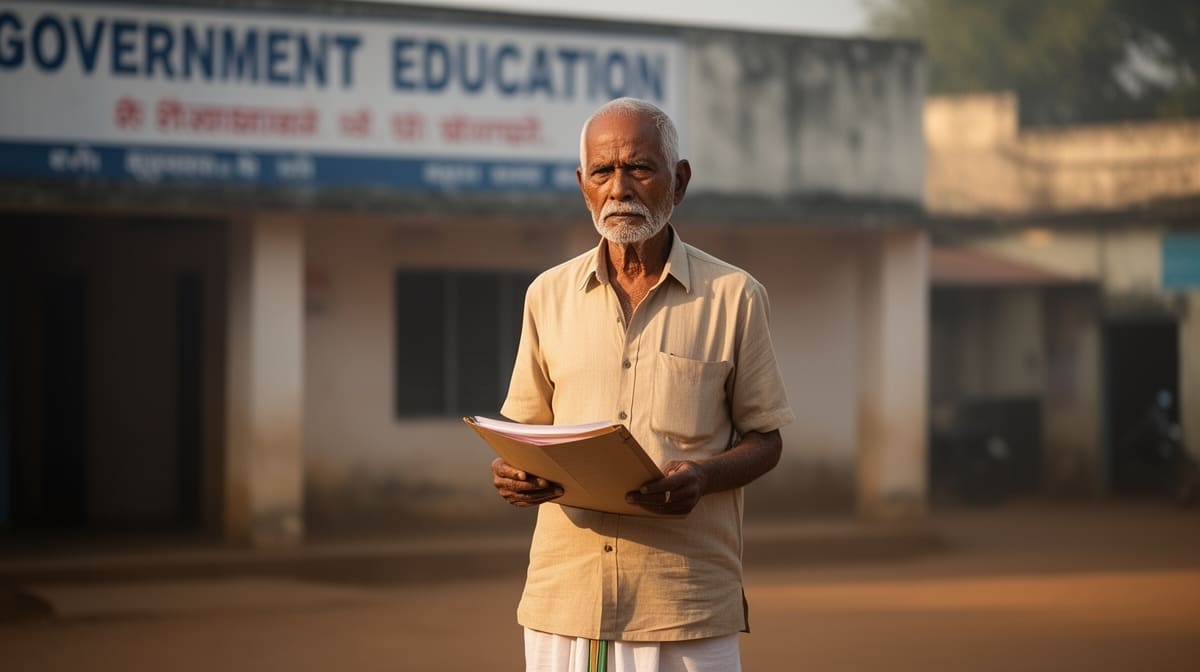
The Madhya Pradesh High Court has reaffirmed that denial of regularization in public employment cannot rest on stale or legally unsustainable grounds. By remanding the matter to the District Education Officer, the Court has reinforced that administrative decisions must align with evolving jurisprudence on fairness and non-arbitrariness in service matters.
Background & Facts
The Dispute
Ramnath Barman, a long-serving contractual employee in the education department of Madhya Pradesh, sought regularization of his service after over a decade of continuous employment. His request was rejected in an order dated 9 November 2015, which cited procedural irregularities and lack of sanctioned posts as grounds for denial.
Procedural History
- 2004: Petitioner appointed on contractual basis as a school helper
- 2015: Regularization application rejected by District Education Officer, Katni (Annexure P-5)
- 2016: Writ petition filed before the High Court of Madhya Pradesh at Jabalpur
- 2026: Hearing concluded with reference to Jaggo v. Union of India (2024 SCC OnLine SC 3826)
Relief Sought
The petitioner sought quashing of the 2015 rejection order and a direction to reconsider his regularization claim in light of the Supreme Court’s recent ruling in Jaggo v. Union of India, which clarified that prolonged service coupled with absence of adverse findings warrants regularization unless compelling reasons exist to the contrary.
The Legal Issue
The central question was whether the denial of regularization, based on reasons rendered obsolete by the Supreme Court’s decision in Jaggo v. Union of India, can stand without reconsideration in light of the evolving doctrine of reasonable classification and non-arbitrariness under Article 14.
Arguments Presented
For the Petitioner
The petitioner’s counsel relied on Jaggo v. Union of India, arguing that the Apex Court had held that prolonged service without adverse findings creates a legitimate expectation of regularization. The 2015 order, which relied on technicalities like non-sanctioned posts and procedural lapses, failed to account for the petitioner’s continuous service and the absence of any misconduct. The counsel contended that the order violated Article 14 and the principle of proportionality.
For the Respondent
The State conceded that the impugned order was based on grounds no longer tenable in light of Jaggo. The Panel Lawyer acknowledged that the Supreme Court had clarified that regularization cannot be denied merely on administrative convenience or technical grounds where the employee has served for a substantial period without fault. The State agreed that reconsideration was warranted but sought no specific direction on outcome.
The Court's Analysis
The Court examined the principle of legitimate expectation and the doctrine of non-arbitrariness under Article 14, as articulated in Jaggo v. Union of India. It noted that the Apex Court had unequivocally held that when a public servant has rendered long, continuous, and unblemished service, the burden shifts to the State to demonstrate compelling reasons for denial of regularization.
"The State cannot perpetuate a contractual arrangement indefinitely merely to avoid the obligations of permanent employment, especially when the employee has functioned in the same capacity for over a decade."
The Court emphasized that the 2015 order was not merely erroneous - it was rendered legally unsustainable by a subsequent authoritative pronouncement. The reasons cited in the order, such as lack of sanctioned posts, were held to be insufficient under the new jurisprudence. The Court further clarified that while it was not determining the petitioner’s entitlement, it was mandating a fresh, reasoned decision in conformity with the law as settled by the Supreme Court.
The Verdict
The petitioner succeeded. The Court set aside the 2015 rejection order and directed the District Education Officer to reconsider the regularization claim within 60 days, issuing a well-reasoned order. If found entitled, regularization must be granted within a further 30 days, without requiring the petitioner to return to court.
What This Means For Similar Cases
Regularization Cannot Be Denied On Technical Grounds Alone
- Practitioners must now challenge denials of regularization where service exceeds 10 years and no misconduct is recorded
- Administrative convenience, non-sanctioned posts, or procedural delays are no longer valid standalone grounds
- The burden shifts to the State to prove compelling reasons for denial, not to the employee to prove entitlement
Fresh Decision Required After Overruling Precedent
- Any administrative order based on legal principles later overruled by the Supreme Court must be reconsidered
- Courts will not uphold decisions rendered obsolete by subsequent authoritative rulings
- Practitioners should cite Jaggo in all pending regularization matters involving long-term contractual employees
No Prejudgment on Merits, But Procedural Fairness Is Mandatory
- Courts will not decide the outcome but will enforce the process
- The decision-maker must record reasons that engage with Jaggo’s principles, not merely restate old objections
- Failure to issue a speaking order within the stipulated time may invite contempt proceedings