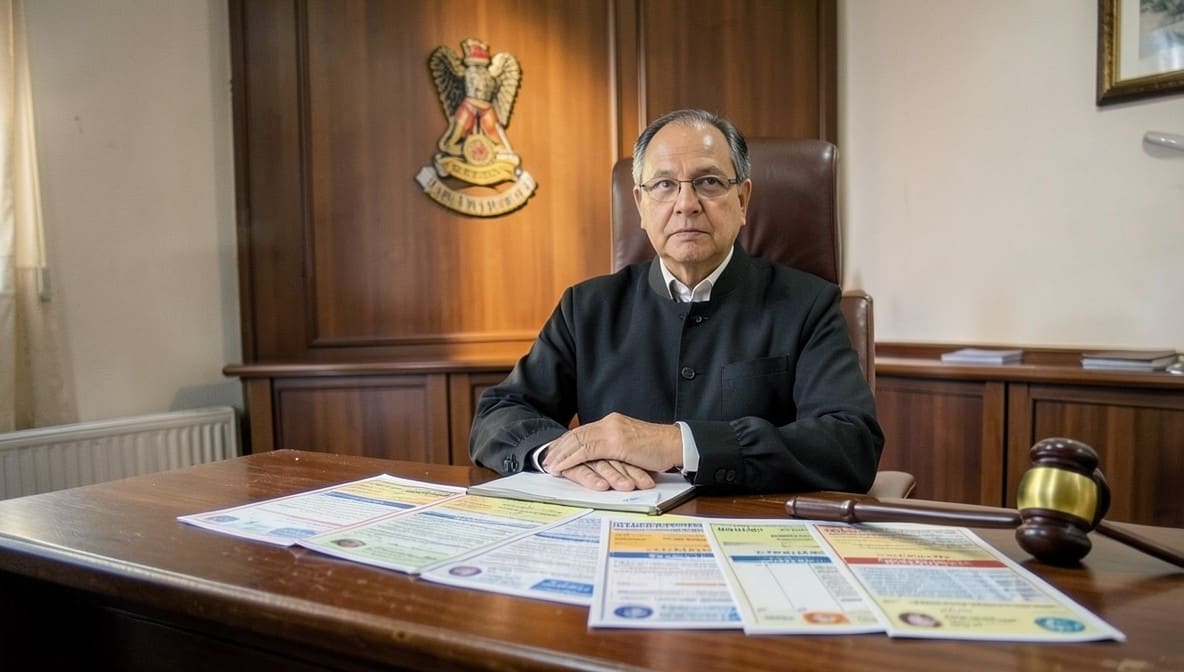
The Delhi High Court has dismissed a writ petition challenging multiple government tenders for sports and gym equipment, holding that delayed challenges by non-participating bidders cannot override the public interest in timely procurement. The judgment underscores the necessity of prompt judicial intervention in tender disputes and the limited scope of judicial review when procurement processes have advanced significantly.
Background & Facts
The Dispute
The Petitioners, M/s Utkarsh Enterprises & Others, are GeM-registered MSMEs engaged in the manufacture and supply of sports and outdoor gym equipment. They challenged seven tender processes initiated by the Directorate of Education, Government of NCT of Delhi, through the Government e-Marketplace (GeM) Portal. The tenders were for procurement of outdoor gym equipment and sports equipment for schools and sports centres under the Delhi government’s control. The Petitioners alleged that the tender conditions were exclusionary, arbitrary, and contrary to the GeM framework and government policies favouring Micro and Small Enterprises (MSEs).
Key Facts
- The Outdoor Gym Tender was published on 23.01.2026 with an estimated value of Rs. 1.5 crores.
- The Sports-Equipment Tenders (SET) were published on 22.12.2025 with an estimated cost of Rs. 6 crores.
- Bid security for SET was 2% of estimated cost, i.e., Rs. 12 lakhs.
- The Outdoor Gym Tender required an EMD of Rs. 15,00,000, a minimum annual turnover of Rs. 150 lakhs, and a past performance requirement of 80% of bid quantity.
- The SET required bidders to have a fully functional office in Delhi and a warehouse in Delhi/NCR for the last three years (Clause 2.17).
- Both tenders required physical submission of samples/mini samples/catalogue before the bid deadline.
- The Outdoor Gym Tender’s Additional Terms and Conditions (ATC) mandated a functional service centre in the Consignee State and service centres in at least five pin codes.
- The Petitioners filed objections during the pre-bid meeting held on 29.12.2025 and submitted representations on 15.01.2026 and 20.03.2026.
- The Petitioners did not participate in the SET tenders.
- Petitioner No. 1 participated in the Outdoor Gym Tender only.
- The SET had progressed to scheduled physical technical evaluation from 07.04.2026 to 11.04.2026.
- The Outdoor Gym Tender had reached the stage of financial evaluation by 02.04.2026.
- The Writ Petition was filed on 02.04.2026 and listed before the Court on 06.04.2026.
- One SET tender (Bid No. GEM/2025/B/6858594 dated 13-11-2025) had already been awarded by the time of filing.
Procedural History
- 22.12.2025: Sports-Equipment Tenders (SET) published on GeM Portal.
- 23.01.2026: Outdoor Gym Tender published on GeM Portal.
- 29.12.2025: Pre-bid meeting held; Petitioners raised objections.
- 15.01.2026: First formal representation submitted to Directorate of Education.
- 20.03.2026: Legal notice sent to Respondents.
- 01.04.2026: Meeting notice issued for physical evaluation of SET bids (07.04.2026 - 11.04.2026).
- 02.04.2026: Writ Petition filed under Article 226 of the Constitution.
- 06.04.2026: First listing before the Delhi High Court.
- 29.04.2026: Judgment pronounced.
The Parties' Positions
Petitioners’ Position: The tender conditions - particularly the Delhi office/warehouse requirement, mandatory physical sample submission, denial of MSE relaxations, and excessive turnover/experience thresholds - were exclusionary, arbitrary, and violated Article 14. They argued that these conditions effectively barred MSEs and outstation suppliers from participating, contrary to GeM’s ethos and government policy.
Respondents’ Position: The conditions were rational, tied to public safety, quality assurance, and operational continuity for equipment used by schoolchildren. The procurement process had advanced significantly, and non-participating entities lacked locus. The Office Memoranda cited by Petitioners were discretionary, not mandatory.
Relief Sought
The Petitioners sought:
- Quashing of all seven impugned tenders.
- Directions for fresh procurement with non-exclusionary conditions.
- Inclusion of MSE relaxations as mandated by government policy.
- Removal of the Delhi office and warehouse requirement.
- Modification of sample submission norms to align with GeM’s digital framework.
The Legal Issue
The central questions were: whether a non-participating bidder has locus to challenge tender conditions after the procurement process has substantially advanced, and whether the impugned conditions - particularly the Delhi office/warehouse requirement, physical sample submission, and denial of MSE relaxations - are so arbitrary or contrary to the GeM framework as to warrant judicial intervention under Article 226.
Arguments Presented
For the Appellant/Petitioner
The Petitioners relied on Vinishma Technologies Pvt. Ltd. v. State of Chhattisgarh to argue that geographical restrictions in tender conditions violate Article 14 by creating artificial barriers. They contended that the mandatory physical submission of samples contradicted the digital-first ethos of GeM and imposed disproportionate financial burdens on MSMEs. They cited Office Memoranda dated March 2016 and July 2016, which encouraged relaxation of turnover and experience criteria for MSEs and startups, to argue that the denial of such relaxations was arbitrary. They further relied on Gaurav Enterprises v. Municipal Corporation of Delhi to assert that facial challenges to tender conditions are maintainable even without participation, where the conditions themselves foreclose meaningful access.
For the Respondent/State
The Respondents argued that non-participation defeats locus, especially when the challenge is raised after the process has progressed to financial evaluation and physical demonstration stages. They relied on Gaurav Enterprises v. GTB Hospital & Anr. to contend that delayed challenges disrupt public interest and cannot be entertained. They justified the Delhi office and warehouse requirement as necessary for prompt servicing and safety of equipment used by children. They cited the Office Memorandum dated 20.09.2016, which permits deviation from MSE relaxations where public safety or critical operations are involved. They maintained that the ATCs were harmonious with the GeM framework and uniformly applied.
The Court's Analysis
The Court began by affirming the settled principle that courts do not substitute their commercial judgment for that of the procuring authority, unless the tender conditions are manifestly arbitrary, mala fide, discriminatory, or contrary to the governing legal framework. Judicial review in tender matters is confined to legality, not propriety.
The Court emphasized that delay and non-participation are critical factors. The Petitioners raised objections during the pre-bid meeting on 29.12.2025 and submitted representations in January and March 2026, yet filed the writ petition only on 02.04.2026 - over two months after the SET was published and after the procurement process had advanced to technical evaluation and financial scrutiny. The Court noted that a serious bidder would have approached the Court immediately upon noticing the objectionable conditions.
"If a Petitioner were a serious bidder, it would have approached the Court much earlier, and a delayed challenge to facial tender conditions may itself justify refusal of relief on delay and laches."
Regarding the Sports-Equipment Tenders (SET), the Court acknowledged that non-participation is not an absolute bar, particularly where the conditions themselves are alleged to be exclusionary. However, the burden on non-participating petitioners is heavier. The Petitioners failed to demonstrate that the Delhi office and warehouse requirement (Clause 2.17) was so irrational or discriminatory as to render participation impossible. The Court declined to adjudicate the validity of Clause 2.17, leaving it open for determination in an appropriate, timely case.
On the sample submission requirement, the Court distinguished between the SET and the Outdoor Gym Tender. The SET employed a two-stage evaluation: document-based scrutiny first, followed by physical evaluation only for qualified bidders. This structure was deemed reasonable for quality assurance. The Outdoor Gym Tender’s ATC, requiring physical samples and service centres, was found to be harmonious with the procurement’s safety and installation objectives, as supported by Arora Medi Lines Pvt. Ltd. v. Government of NCT of Delhi.
The Court also held that the denial of MSE relaxations was not per se illegal. The Office Memoranda cited by Petitioners used permissive language ("may") and did not create mandatory obligations. The Respondents’ justification - that the equipment was for schoolchildren and required reliability and servicing - provided a rational nexus.
The Court concluded that the cumulative effect of delay, non-participation, and the advanced stage of procurement outweighed any potential illegality in the tender conditions.
The Verdict
The Petitioners’ challenge failed on all counts. The Court dismissed the Writ Petition in its entirety. No relief was granted. The impugned tenders were allowed to proceed. The pending applications were closed. The Court explicitly left open the validity of Clause 2.17 and other contested conditions for adjudication in a future, timely case brought by a participating bidder.
What This Means For Similar Cases
Delay and Non-Participation Are Fatal to Writ Relief
- Practitioners must file challenges to tender conditions within days of publication, not after the process has advanced.
- Representations and legal notices alone do not cure delay; prompt judicial intervention is mandatory.
- Non-participating bidders face an uphill battle - courts will not entertain belated facial challenges without compelling evidence of exclusionary intent.
Physical Sample Requirements Are Not Per Se Illegal
- Physical submission of samples is permissible if tied to quality, safety, or installation needs.
- Two-stage evaluation (document first, then physical) is a valid and transparent method.
- Digital platforms like GeM do not prohibit physical verification where justified by the nature of goods.
MSE Relaxations Are Discretionary, Not Mandatory
- Government policy documents using "may" or "encourage" do not create enforceable rights.
- Procuring authorities may deny MSE relaxations where public safety, critical infrastructure, or operational continuity is involved.
- Practitioners must demonstrate actual discrimination or irrationality, not mere inconvenience, to challenge denial of MSE benefits.