Topic

Sub-Registrar

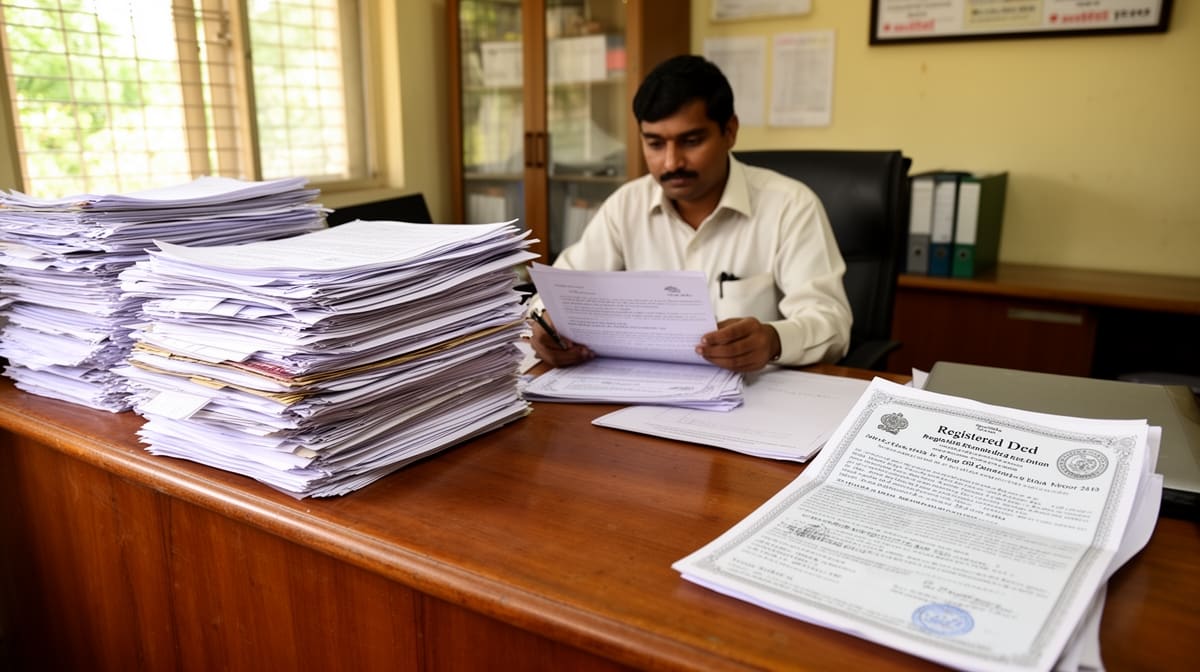
The Sub-Registrar under the Indian Registration Act, 1908, is the official responsible for registering documents like sale deeds, gift deeds, and partition deeds, ensuring legal validity and public record.

13 articlesLatest April 2026
Registration Act | Sub Registrar Cannot Refuse Registration Based on Title Disputes Absent Injunction or Court Order : Madras HC (Madurai Bench)
Case Law Analysis
|Madras High Court

Registration Act | Sub Registrar Cannot Refuse Registration Based on Title Disputes Absent Injunction or Court Order : Madras HC (Madurai Bench)

The Madras High Court ruled that registration under the Registration Act is merely a public notice mechanism and does not confer title. The Sub Registrar cannot refuse registration based on third-party title claims unless there is a court injunction or order restraining the transaction. This clarifies the limited scope of the Sub Registrar's authority in property disputes.

Registration Act | Photographic Evidence Alone Suffices for Identity Verification in Deed Registration : Madras HC
Case Law Analysis
|Madras High Court

Registration Act | Photographic Evidence Alone Suffices for Identity Verification in Deed Registration : Madras HC

Madras High Court rules that matching photographs in prior and current documents conclusively establish identity for deed registration, eliminating the need for additional ID proof. The ruling curtails administrative discretion to reject registration based on minor name discrepancies, reinforcing procedural efficiency in property transactions.

Registration Act | Non-Speaking Refusal of Settlement Deed Registration Violates Natural Justice : Madras HC
Case Law Analysis
|Madras High Court

Registration Act | Non-Speaking Refusal of Settlement Deed Registration Violates Natural Justice : Madras HC

Madras High Court quashes a sub-registrar's refusal to register a settlement deed without providing a reasoned order or hearing the parties, reinforcing that administrative authorities cannot adjudicate title disputes under the Registration Act. The ruling mandates compliance with natural justice principles, ensuring fair procedure in deed registration.

Contempt of Courts Act | Jurisdictional Transfer Does Not Invalidate Court Orders: Orissa HC Holds Sub-Registrar Liable for Non-Compliance
Case Law Analysis
|Orissa High Court

Contempt of Courts Act | Jurisdictional Transfer Does Not Invalidate Court Orders: Orissa HC Holds Sub-Registrar Liable for Non-Compliance

Orissa High Court rules that administrative reallocation of territorial jurisdiction does not absolve public officials from enforcing existing court orders. The Sub-Registrar was held in contempt for refusing to register a deed despite a prior judicial directive, reinforcing that jurisdictional continuity binds officials until formal transfer of records. This sets a precedent for strict compliance with court orders regardless of bureaucratic reshuffling.

Jurisdiction Retained After Territorial Transfer | Sub-Registrar Must Implement Court Orders Despite Administrative Reorganization : Orissa HC
Case Law Analysis
|Orissa High Court

Jurisdiction Retained After Territorial Transfer | Sub-Registrar Must Implement Court Orders Despite Administrative Reorganization : Orissa HC

The Orissa High Court has ruled that a Sub-Registrar cannot evade compliance with a court order to register a deed merely because the property's jurisdiction was later transferred to a new office. This affirms that judicial directives supersede administrative boundary changes, holding public officers accountable for enforcing court mandates regardless of territorial reorganization.

Principles of Natural Justice | Non-Speaking Refusal Orders Under Registration Act Violate Audi Alteram Partem : Madras HC
Case Law Analysis
|Madras High Court

Principles of Natural Justice | Non-Speaking Refusal Orders Under Registration Act Violate Audi Alteram Partem : Madras HC

The Madras High Court ruled that refusal orders for property registration must be reasoned and afford a hearing, failing which they violate natural justice principles. The court quashed a non-speaking refusal slip, directing fresh consideration with due opportunity for submissions, reinforcing the mandatory compliance with audi alteram partem in administrative actions.