The Madras High Court has reaffirmed that a sub-registrar cannot refuse to register a settlement deed without providing a reasoned order or hearing the parties. The judgment underscores the foundational principle that administrative decisions affecting property rights must comply with natural justice, regardless of the complexity of title disputes.
Background & Facts
The Dispute
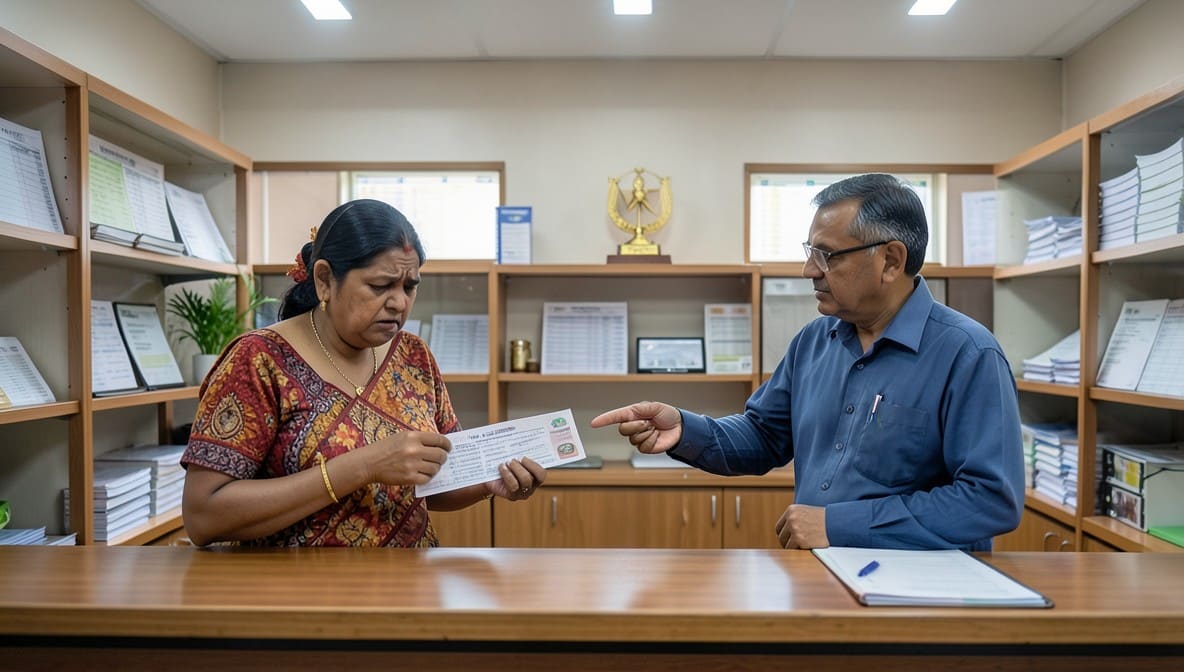
The petitioner, K. Maheswari, sought registration of a settlement deed dated 07.02.2026, executed in favour of her son, K. Prabhu, over a property measuring 1.00 acre in Survey No. 248/4A, Pudhur Village, Sankari Taluk, Salem District. The first respondent, the Sub Registrar, Magudanchavadi SRO, Sankagiri, refused registration on the ground that the same property had allegedly been dealt with by a third party. The refusal was communicated via a refusal check slip dated 07.02.2026.
Key Facts
- The settlement deed was executed on 07.02.2026 and submitted for registration on the same date.
- The petitioner claims absolute ownership of the property, tracing title through parent documents submitted to the Sub Registrar.
- The refusal check slip did not specify which third party’s claim was in conflict, nor did it reference any document, record, or legal provision supporting the refusal.
- No notice or opportunity to be heard was given to the petitioner prior to the refusal.
- The petitioner filed the writ petition on 01.04.2026, challenging the refusal as arbitrary and violative of statutory and constitutional norms.
Procedural History
- 07.02.2026: Refusal check slip issued by the first respondent without reasons or hearing.
- 01.04.2026: Writ Petition No. 12330 of 2026 filed before the Madras High Court.
- 01.04.2026: Court heard arguments and delivered judgment on the same day.
The Parties' Positions
Petitioner’s Position: The petitioner asserted that she is the absolute owner of the property and that the refusal was based on unsubstantiated allegations against unnamed third parties. She contended that the Sub Registrar exceeded his authority by adjudicating title disputes, a function reserved for civil courts. She further argued that the refusal check slip was non-speaking and violated the principles of natural justice.
Respondent’s Position: The first respondent did not file a written reply. The Special Government Pleader, Mr. U. Baranidharan, accepted notice on behalf of the first respondent but did not contest the petitioner’s core allegations regarding lack of hearing or reasoning. No adverse orders were passed against respondents 2 to 9, and notice to them was dispensed with.
Relief Sought
The petitioner sought quashing of the refusal check slip dated 07.02.2026 and a direction to the first respondent to register the settlement deed dated 07.02.2026.
The Legal Issue
The central question was whether a sub-registrar, in refusing to register a deed, is obligated to provide a speaking order and afford a hearing to the party seeking registration, particularly when the refusal is based on alleged third-party claims.
Arguments Presented
For the Petitioner
The petitioner relied on the settled principle that registration authorities under the Registration Act, 1908, are not adjudicatory bodies and cannot determine title disputes. She cited State of Tamil Nadu v. K. Srinivasan to argue that refusal must be based on clear statutory grounds, not speculative objections. She emphasized that the refusal check slip was devoid of any reasoning, failed to mention the nature of the third-party claim, and denied her the right to be heard - violating Article 14 and Article 21 of the Constitution.
For the Respondent
The Special Government Pleader did not advance any substantive legal argument in defence of the refusal. He accepted notice but offered no justification for the non-speaking order or the absence of hearing. The Court noted that the respondents 2 to 9 were not even served, indicating no active opposition to the petitioner’s claim.
The Court's Analysis
The Court observed that the refusal check slip dated 07.02.2026 was a non-speaking order that failed to address the petitioner’s contentions or the documents submitted. The Sub Registrar, acting as a statutory officer under the Registration Act, 1908, is empowered only to verify the formalities of the deed and to refuse registration on grounds explicitly provided under Section 32A or Section 33 of the Act. The Court held that the refusal on the basis of an unspecified third-party claim amounted to an unauthorized adjudication of title - a function beyond the Sub Registrar’s jurisdiction.
"Being a non-speaking order with regard to the petitioner’s contentions and the supporting documents produced by her and an order passed in violation of the principles of natural justice, since the petitioner was not afforded an opportunity of hearing by the first respondent, this Court is of the considered view that the impugned order has to be quashed."
The Court further clarified that the Sub Registrar’s role is ministerial, not judicial. Even if a third party raises an objection, the proper course is to record the objection and allow the parties to be heard before deciding whether the deed is registrable. The failure to do so rendered the order legally unsustainable.
The Court explicitly declined to express any opinion on the merits of the petitioner’s title claim, emphasizing that the issue before it was procedural compliance, not substantive ownership.
The Verdict
The writ petition was allowed. The impugned refusal check slip dated 07.02.2026 was quashed. The matter was remanded to the first respondent for fresh consideration. The petitioner must submit a written explanation with supporting documents within one week of receiving a copy of this order. The first respondent shall then hear respondents 2 to 9, consider the petitioner’s submission, and decide on registration within four weeks thereafter. If registration is refused, a speaking order must be passed, addressing all contentions and documents. No costs were awarded.
What This Means For Similar Cases
Registration Authorities Cannot Act as Adjudicators
- Practitioners must challenge any refusal of deed registration that relies on unverified third-party claims without a hearing.
- Sub Registrars must confine themselves to verifying execution, stamp duty, and statutory compliance - not resolving title disputes.
- Refusals based on vague allegations of prior dealings are legally invalid unless supported by documented objections and a fair hearing.
Speaking Orders Are Mandatory in Registration Disputes
- A refusal check slip without reasons is a nullity under administrative law.
- All decisions affecting property rights must be accompanied by a reasoned order citing relevant provisions and addressing submissions.
- Failure to issue a speaking order invites immediate writ jurisdiction under Article 226 of the Constitution.
Procedural Compliance Trumps Substantive Doubts
- Even if title is questionable, the remedy lies in a civil suit - not in summary refusal by a registration officer.
- The burden is on the objecting party to formally raise objections and produce evidence; the Sub Registrar cannot act on suspicion.
- Petitioners in similar cases should immediately seek quashing of non-speaking orders rather than pursuing lengthy civil litigation.