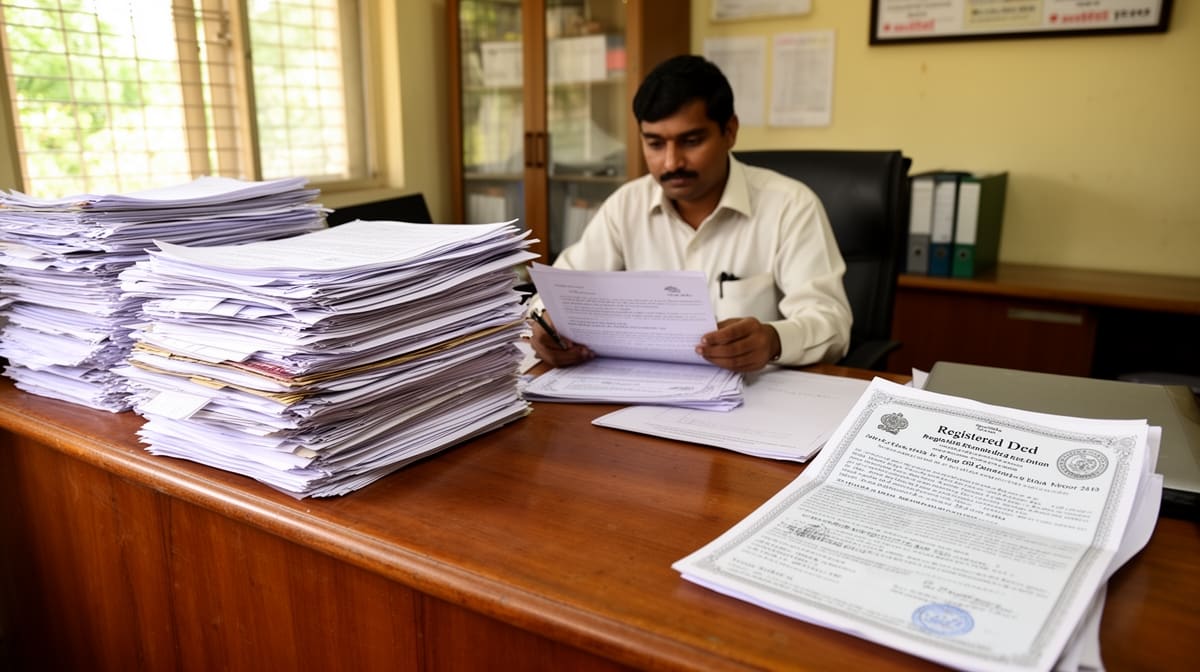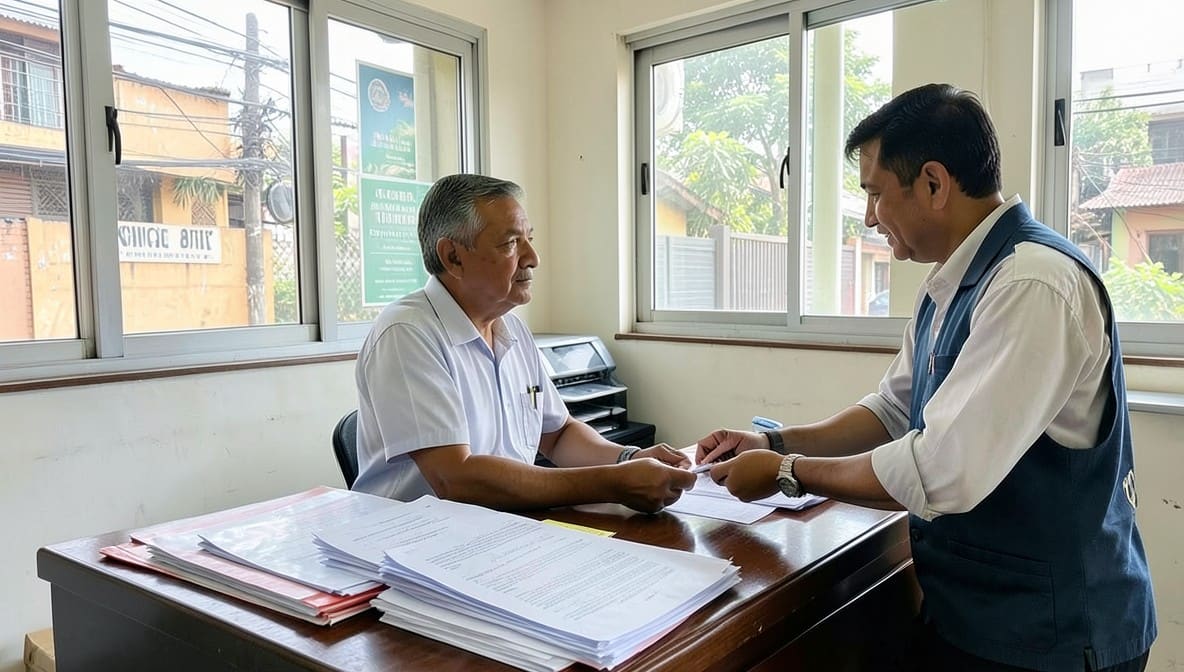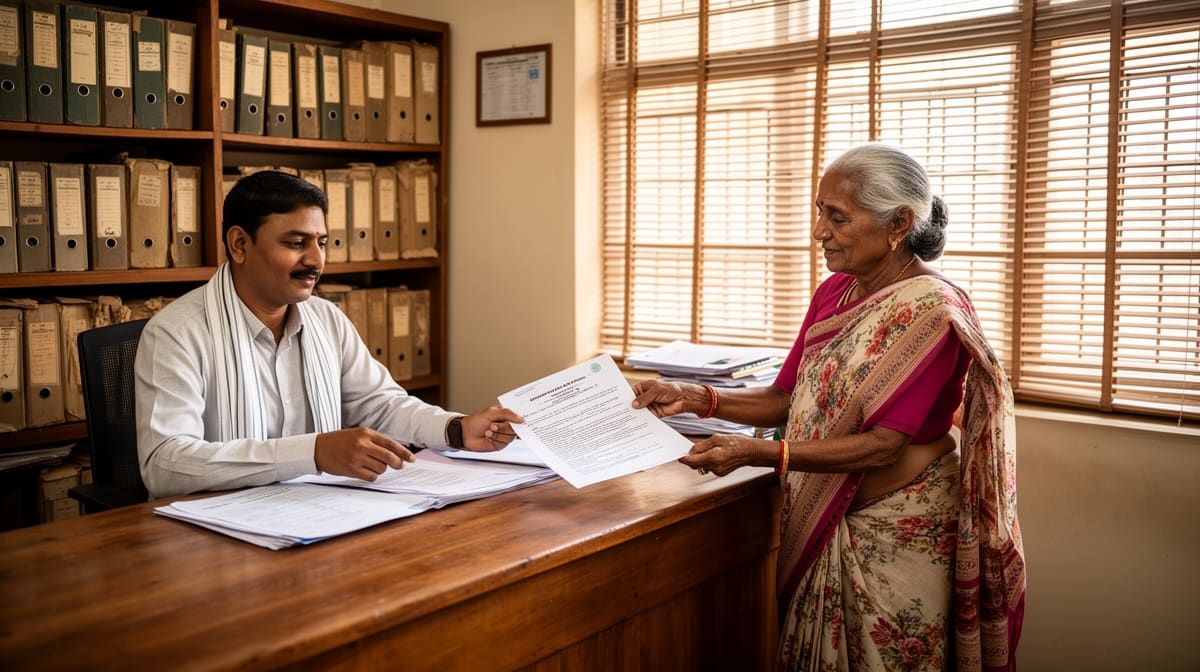
The Madras High Court has clarified that a sub-registrar cannot refuse to register a release deed merely because multiple parties are listed as joint pattadhars on the land record. The judgment reinforces procedural fairness in property registration and mandates that all interested parties be given notice before any adverse decision is taken.
Background & Facts
The Dispute
The petitioner, Govindammal, sought to register a release deed dated 25.11.2024, wherein she relinquished her 1/3rd share in ancestral property in favor of her two sons. The property originally belonged to her deceased husband, Pachappan, who had inherited it through an oral partition with his brother Vellaiyan. Vellaiyan’s share was sold via a registered sale deed in 1987, but the purchasers did not apply for separate patta, resulting in a joint patta being issued in the names of both heirs and their successors.
Procedural History
- The release deed was presented for registration at the Sub-Registrar’s Office, Kaveripattinam, on 25.11.2024.
- The sub-registrar issued a refusal check slip (TP/201889623/2024) citing the presence of ten names in the joint patta as grounds for refusal.
- No notice was issued to any of the joint pattadhars prior to refusal.
- The petitioner filed a writ petition under Article 226 of the Constitution challenging the refusal.
Relief Sought
The petitioner sought a writ of certiorari to quash the refusal slip and direct the sub-registrar to register the release deed, arguing that her right to release her share was unambiguous and legally valid.
The Legal Issue
The central question was whether a sub-registrar may refuse registration of a release deed solely on the ground that multiple persons are named in the joint patta, without first notifying all interested parties or examining the validity of the claimant’s title.
Arguments Presented
For the Petitioner
Counsel for the petitioner relied on the registered sale deed of 1987, which clearly demarcated the boundaries and established the division of shares. He argued that the petitioner’s 1/3rd share was clearly traceable to her husband’s inheritance and that the release deed was a legitimate exercise of her proprietary rights. He contended that the refusal was arbitrary and violated the principles of natural justice, as no notice was given to the petitioner or the intended beneficiaries.
For the Respondent
The Special Government Pleader accepted notice but defended the refusal on the basis that the joint patta listed ten names, making it unclear who held what interest. He submitted that the matter required re-examination after issuing notice to all pattadhars, but did not dispute the petitioner’s claim to a 1/3rd share.
The Court's Analysis
The Court examined the nature of the release deed and the legal effect of joint patta entries. It held that a joint patta does not automatically confer equal ownership on all named persons; it is merely a revenue record and not conclusive proof of title. The Court emphasized that the petitioner had produced a registered sale deed from 1987, which established the original partition and her husband’s share. The release deed, therefore, was not an attempt to create new rights but to transfer an existing, identifiable interest.
"The presence of multiple names in a joint patta cannot be a ground for refusal without first affording notice to all concerned parties and examining the documentary evidence of title."
The Court further noted that the sub-registrar’s role is ministerial in nature when the title is clear and the document is properly stamped and executed. Refusal on speculative grounds, without due process, amounts to an abuse of power. The Court rejected the notion that administrative convenience could override the right to property and procedural fairness.
The Verdict
The petitioner succeeded. The Madras High Court set aside the refusal check slip and directed the sub-registrar to re-examine the release deed after issuing notice to all joint pattadhars. If the title is established and other registration requirements are met, the deed must be registered. Otherwise, a speaking order of refusal must be issued within thirty days.
What This Means For Similar Cases
Notice to Joint Pattadhars Is Mandatory
- Practitioners must now ensure that any refusal by a sub-registrar based on joint patta complexity is preceded by formal notice to all named parties.
- A refusal without notice is voidable and subject to writ jurisdiction under Article 226.
- The burden shifts to the sub-registrar to prove that notice was issued and that objections were substantively considered.
Joint Patta Is Not Conclusive Proof of Title
- Revenue records like joint pattas are prima facie evidence only and cannot override registered deeds.
- Courts will look to sale deeds, inheritance documents, and partition agreements to determine actual ownership.
- Lawyers should always produce ancillary documents to establish title, even when patta entries appear ambiguous.
Ministerial Duty Trumps Administrative Hesitation
- Sub-registrars cannot use ambiguity in revenue records as a pretext to delay or deny registration.
- Where title is traceable through registered instruments, registration becomes a duty, not a discretion.
- A speaking order must be issued if refusal is maintained - vague or generic refusals will be struck down.