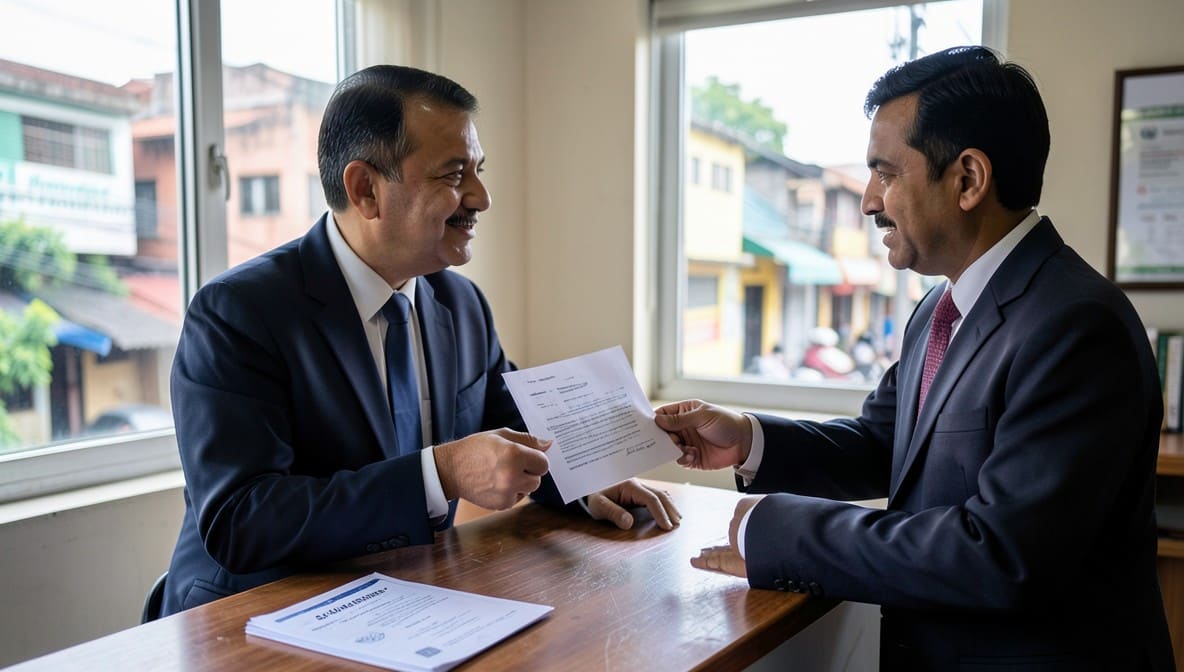
The Madras High Court has clarified that the mere pendency of a civil suit for partition does not authorize a Sub Registrar to refuse registration of a sale deed. This ruling reinforces the principle that registration is a formal record of transaction, not a determination of title, and must not be obstructed without a court-issued injunction.
Background & Facts
The Dispute
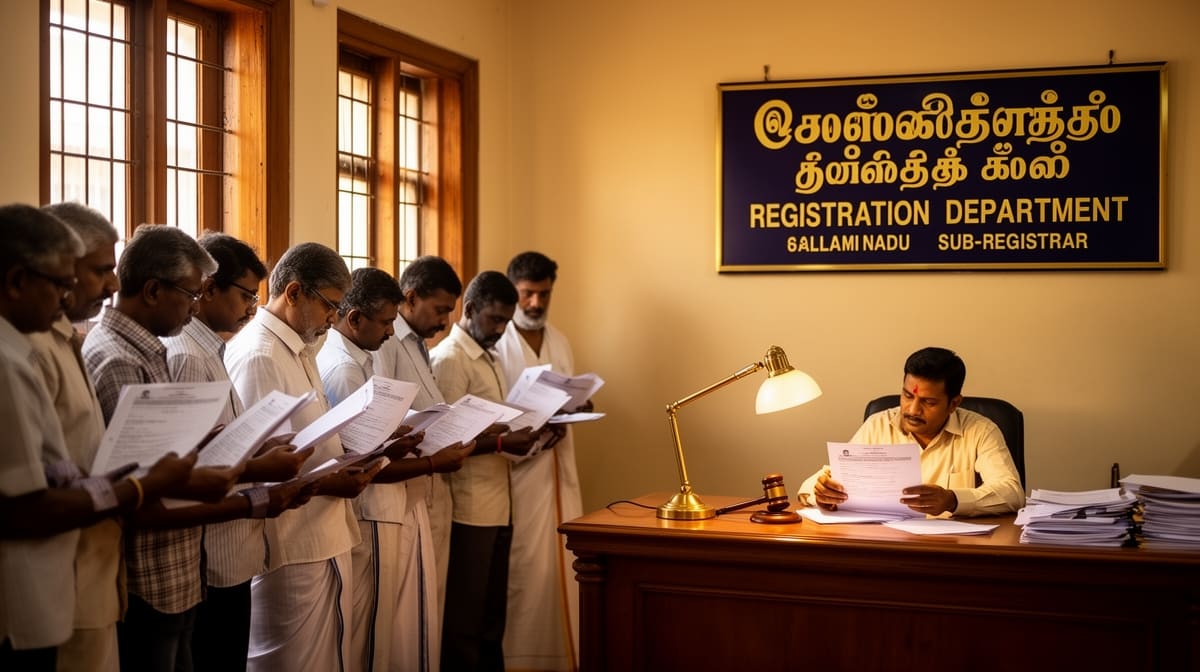
The petitioner sought registration of a sale deed dated 20.11.2025 over immovable property located in Theni District. The first respondent, the Sub Registrar, refused registration on 21.11.2025 by issuing a refusal check slip, citing the pendency of a partition suit - O.S.No.241 of 2022 - before the Subordinate Judge, Theni, involving the petitioner and respondents 2 and 3.
Key Facts
- The petitioner is the son of the deceased owner of the property
- Respondents 2 and 3 are the daughters of the deceased from his second marriage
- The petitioner claims sole ownership based on a family arrangement and execution of the sale deed on 20.11.2025
- Respondents 2 and 3 assert they are legal heirs entitled to a share in the property due to their status as children of the second wife
- The partition suit (O.S.No.241 of 2022) was filed in 2022 and remains pending without any interim order restraining alienation of the property
- No court order has been issued to prohibit the petitioner from dealing with the property
- The sale deed was executed in the presence of witnesses and duly stamped
Procedural History
- 20.11.2025: Sale deed executed by the petitioner
- 21.11.2025: Sub Registrar issued refusal check slip RFL/Theni/29/2025 citing pending partition suit
- 29.01.2026: Respondents 2 and 3 were impleaded as parties in the writ petition via order in W.M.P.(MD)No.29250 of 2025
- 07.04.2026: Writ Petition heard and decided by the Madras High Court
The Parties' Positions
Petitioner: Argued that no interim injunction exists in the partition suit, and the Sub Registrar has no authority to refuse registration on the basis of a pending civil dispute. Registration is a ministerial act and cannot be withheld without statutory or judicial grounds.
Respondents 2 and 3: Contended that as legal heirs, their rights over the property are subsisting, and any alienation by other heirs during the pendency of the partition suit is voidable. They asserted that registration would prejudice their claim.
Relief Sought
The petitioner sought quashing of the refusal check slip dated 21.11.2025 and a direction to the Sub Registrar to register the sale deed dated 20.11.2025 without delay.
The Legal Issue
Can a Sub Registrar refuse registration of a sale deed solely on the ground that a civil suit for partition is pending, in the absence of any court order restraining the transfer of the property?
Arguments Presented
For the Petitioner
The petitioner’s counsel relied on settled principles that registration under the Registration Act, 1908, is a formal, ministerial act. He cited S. R. Subramanian v. S. R. Srinivasan to argue that the Sub Registrar’s role is limited to verifying documents for compliance with statutory formalities, not adjudicating title disputes. He emphasized that without an injunction under Section 52 of the Transfer of Property Act, the Sub Registrar has no legal basis to refuse registration.
For the Respondent
The respondents’ counsel contended that the pendency of the partition suit creates a cloud on title, and registration of the sale deed would prejudice the rights of the legal heirs. They argued that the Sub Registrar, as a public officer, has a duty to prevent fraudulent or collusive transfers during litigation.
The Court's Analysis
The Court examined the statutory framework under the Registration Act, 1908, and the scope of the Sub Registrar’s powers. It held that the Sub Registrar is not a tribunal and cannot act as a judge of title. The Court emphasized that the mere existence of a pending civil suit, without any restraining order, does not create a legal impediment to registration.
"If the respondents 2 and 3 seek to prevent the petitioner or other parties from dealing with the property, it is always open to them to approach the Civil Court and obtain appropriate interim orders. In the absence of any such restraint order, the first respondent / Sub Registrar cannot refuse registration of a document merely on the ground of pendency of a civil suit."
The Court further clarified that registration serves only as public notice of the transaction and does not confer or extinguish title. The ultimate determination of ownership rests with the Civil Court adjudicating O.S.No.241 of 2022. The Court rejected the argument that registration would prejudice respondents’ rights, noting that any subsequent decree in the partition suit will override the registered document if found inconsistent.
The Verdict
The writ petition was allowed. The impugned refusal check slip dated 21.11.2025 is set aside. The petitioner is permitted to re-present the sale deed within two weeks from the date of receipt of the web copy of this order, without waiting for the certified copy. Upon re-presentation, if no other legal impediment exists, the Sub Registrar shall register the document. It is clarified that registration does not affect the title or rights of the parties, which shall be determined by the pending partition suit. The Subordinate Judge, Theni, is requested to expedite the trial in O.S.No.241 of 2022. No costs awarded.
What This Means For Similar Cases
Registration Is Not a Title Determination
- Practitioners may now confidently advise clients that registration of sale deeds cannot be blocked by Sub Registrars merely due to pending civil suits
- The burden lies on the party seeking restraint to obtain a court injunction under Section 52 of the Transfer of Property Act
- Sub Registrars must limit their refusal to grounds explicitly provided under Section 32 and 33 of the Registration Act, 1908
Civil Courts Must Act Promptly in Title Disputes
- The Court’s directive to expedite O.S.No.241 of 2022 signals judicial concern over prolonged litigation affecting property rights
- Lawyers should file applications under Order XVII Rule 1 of CPC to seek early hearing in partition suits where registration is delayed
- Delay in adjudication of title suits cannot be used to justify administrative obstruction of registration
No De Facto Injunction by Sub Registrar
- Sub Registrars who refuse registration on speculative grounds risk writ jurisdiction
- This judgment reinforces that administrative discretion cannot substitute judicial authority
- Any refusal must be accompanied by a specific statutory ground - not general apprehension of litigation