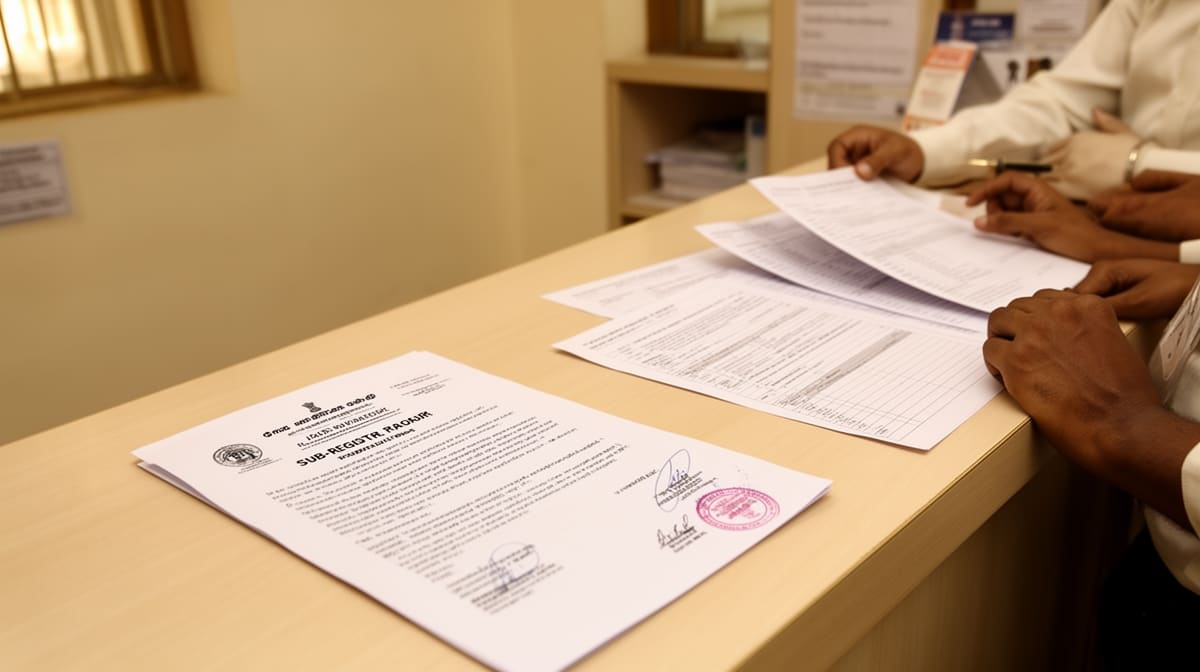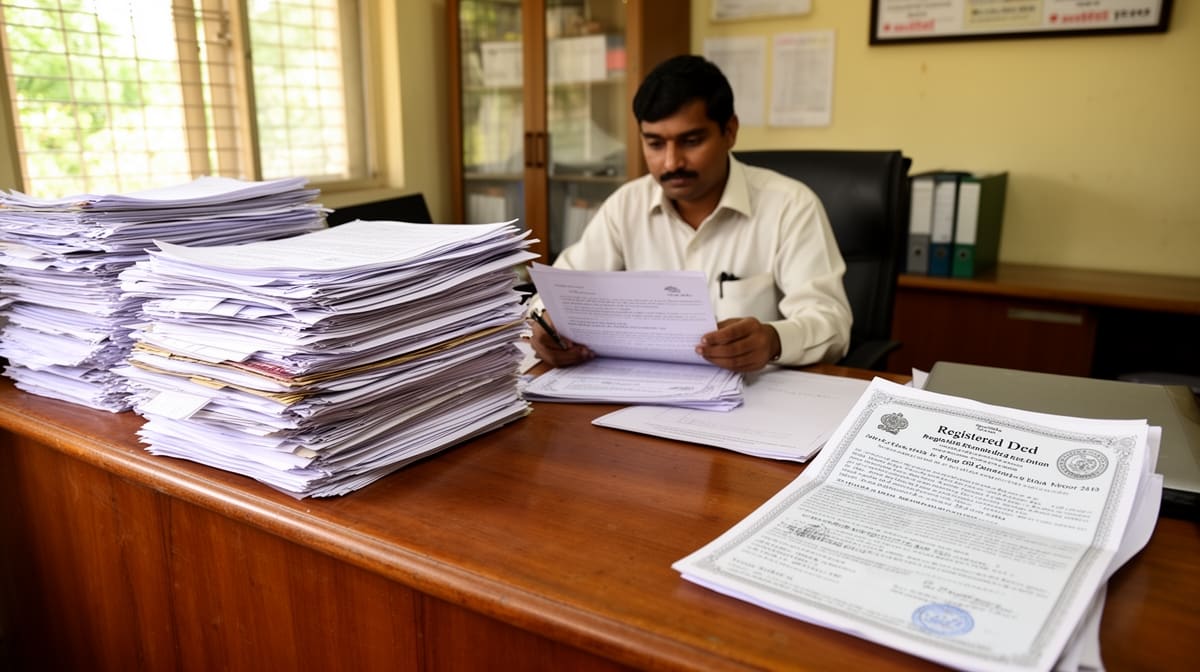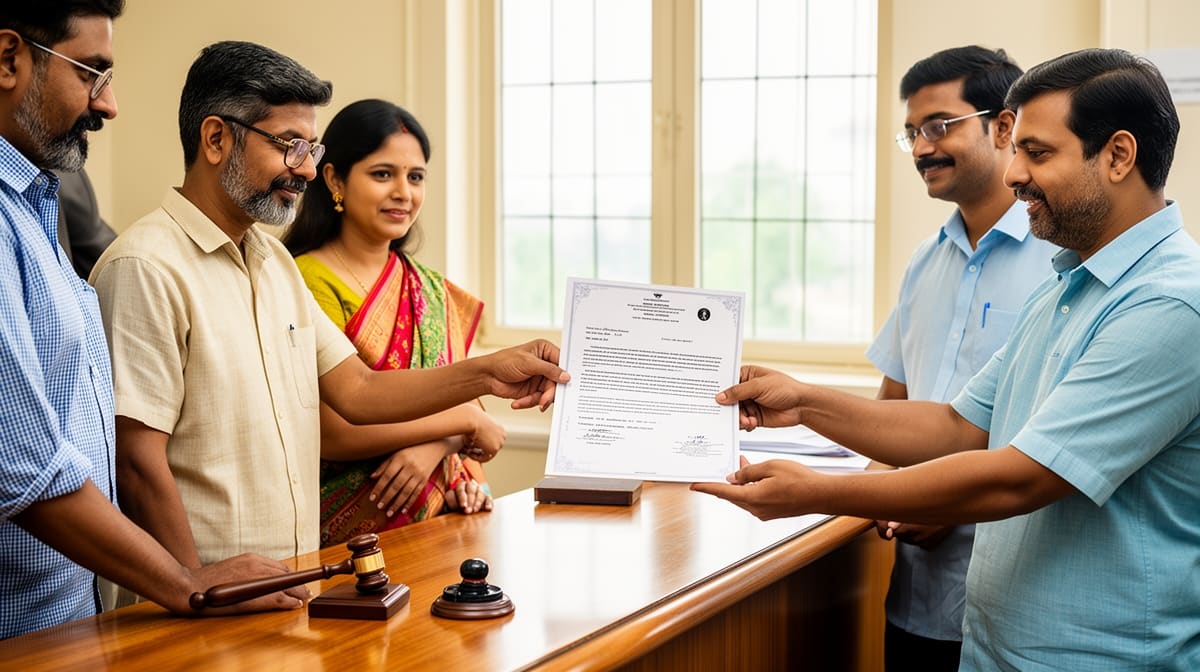
The Madras High Court has reaffirmed a foundational principle of property law: registration of a document is not a determination of title, but a procedural formality to provide public notice. In a decisive ruling, the Court quashed a Sub Registrar’s refusal to register a sale deed solely on the grounds of alleged prior transactions involving absent third parties, clarifying the limited scope of the Registrar’s authority.
Background & Facts
The Dispute
The petitioner, Sumithra, sought registration of a sale deed dated 16.09.2025, executed by Indhu in her favour, concerning a property originally transferred by Janakiammal to Legina and Paraagu under a 1994 document. The Sub Registrar, First Respondent, issued a refusal check slip on the same date, citing that the property had previously been subject to a settlement deed executed by Vishak in favour of his wife Indhu (Document No. 1007 of 2024), and that prior interests held by Legina and Paraagu rendered the present transaction defective.
Key Facts
- The sale deed presented for registration was dated 16.09.2025
- The property was originally transferred by Janakiammal to Legina and Paraagu under a document dated 1994
- Vishak executed a settlement deed in favour of Indhu on 2024 (Document No. 1007 of 2024)
- Indhu, as the transferee under the settlement deed, executed the sale deed in favour of the petitioner on 16.09.2025
- The Sub Registrar refused registration on the ground that the property had been "already dealt with" in favour of third parties
- No evidence of title defects, encumbrances, or court orders were produced by the Sub Registrar
Procedural History
- 16.09.2025: Petitioner presented sale deed for registration; refused by Sub Registrar via check slip
- 26.09.2025: Court suo motu impleaded Legina and Paraagu as respondents 2 and 3
- 26.09.2025 onwards: Notice issued to respondents 2 and 3
- Notice returned unserved
- Substituted service ordered
- Publication effected and proof filed on 19.01.2026
- Names of respondents 2 and 3 published in cause list
- Respondents 2 and 3 failed to appear or file any response
- 07.04.2026: Writ petition heard and decided by Madras High Court, Madurai Bench
Relief Sought
The petitioner sought quashing of the refusal check slip dated 16.09.2025 and a direction to the Sub Registrar to register the sale deed within a stipulated time.
The Legal Issue
The central question was whether a Sub Registrar, under the Registration Act, 1908, is empowered to refuse registration of a document on the ground of alleged prior title disputes involving third parties who have not appeared or contested the transaction.
Arguments Presented
For the Petitioner
The petitioner contended that the Sub Registrar’s role is purely ministerial and confined to verifying the document’s compliance with procedural requirements under the Registration Act, 1908. The Registrar has no jurisdiction to adjudicate title disputes, which are civil matters to be resolved by civil courts. The absence of any appearance or objection from Legina and Paraagu, despite due notice and publication, rendered the refusal arbitrary and beyond statutory authority.
For the Respondent
The first respondent, through the Government Advocate, did not contest the petitioner’s arguments on merits. No counter-affidavit or legal submission was filed to justify the refusal on grounds of title.
The Court's Analysis
The Court examined the statutory framework under the Registration Act, 1908, and reiterated the settled legal position that registration is not a title-conveying instrument but a mechanism for public notice. The Court observed that the Sub Registrar’s function is limited to examining whether the document is properly stamped, signed, and presented in accordance with the Act. Any inquiry into the validity of title or prior claims falls outside the Registrar’s competence.
"Registration does not confer title, but is only a form of public notice regarding the transaction entered into by the parties."
The Court emphasized that when third parties with alleged interests in the property are impleaded and given full opportunity to appear, their failure to do so cannot be used as a basis to deny registration. The refusal slip, which relied entirely on unproven allegations of prior transactions, was therefore legally unsustainable. The Court noted that the Sub Registrar had no evidence of a court injunction, pending litigation, or statutory prohibition affecting the document’s registrability.
The Court further held that allowing such refusals would effectively convert the Sub Registrar into a quasi-judicial authority on title matters - a role neither conferred by statute nor consistent with the separation of powers.
The Verdict
The writ petition was allowed. The impugned refusal check slip dated 16.09.2025 is set aside. The petitioner is directed to re-present the sale deed within two weeks from the date of receipt of a copy of this order. Upon re-presentation, if the document is otherwise in order, the Sub Registrar shall register it in accordance with law. No costs are awarded. The connected miscellaneous petition is closed.
What This Means For Similar Cases
Registration Authority Cannot Act as Title Adjudicator
- Practitioners must challenge refusals based on title disputes by invoking Article 226, as Sub Registrars lack jurisdiction to decide ownership
- Any refusal citing "prior dealings" without a court order or registered encumbrance is legally invalid
- The burden shifts to the Registrar to prove statutory grounds for refusal under Section 32 or 33 of the Registration Act, not speculative claims
Absence of Third Parties Validates Registration
- When third parties with alleged interests are served and fail to appear, their silence cannot justify refusal
- Substituted service and publication constitute due process; non-appearance waives the right to contest
- Petitioners may rely on this judgment to compel registration where title objections are raised but unchallenged
Procedural Compliance Trumps Substantive Allegations
- Documents must be evaluated on compliance with the Registration Act, not on unproven title claims
- Sub Registrars must record only procedural defects (e.g., stamping, signature, description) in refusal slips
- Civil remedies for title disputes remain available to affected parties, but not as grounds for registration refusal