Topic

Right to Education

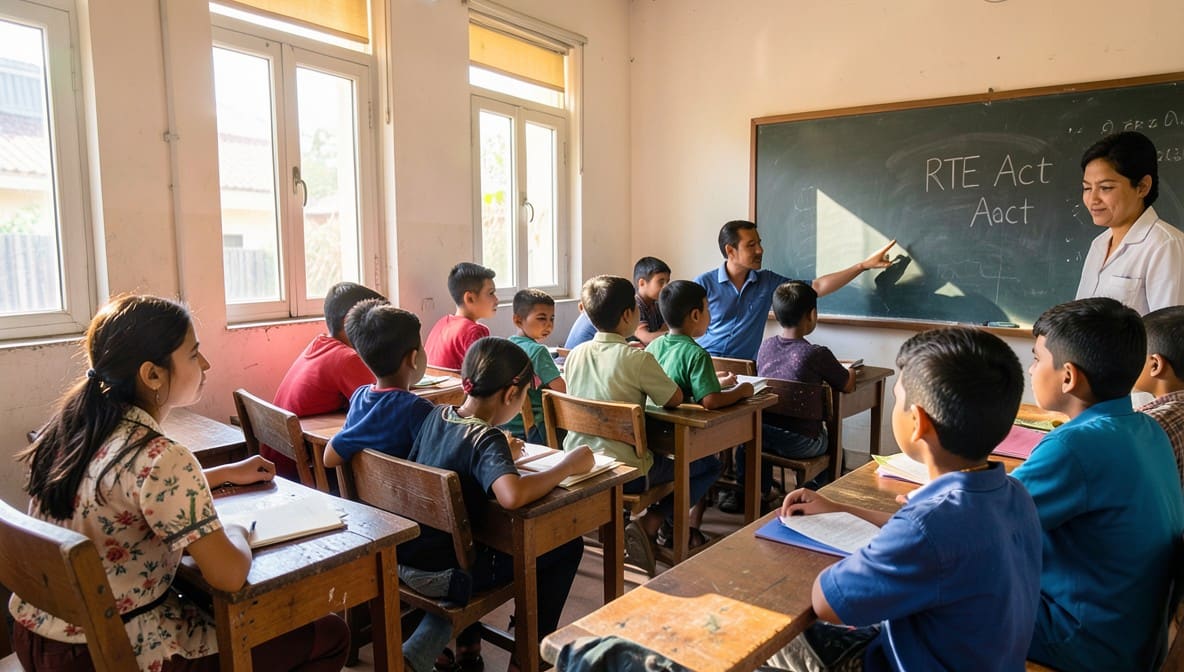
The Right to Education in India, guaranteed under Article 21A of the Constitution and the Right of Children to Free and Compulsory Education Act, 2009, ensures access to elementary education and protects students from arbitrary denial of admission, recognition, or hostel facilities.

38 articlesLatest 2 weeks ago
RTE Act S. 12(1)(c) | Distance Norms Not Rigid Where Division Bench Ordered Removal for Unaided Schools & Academic Loss Looms : Bombay HC
Case Law Analysis
|Bombay High Court

RTE Act S. 12(1)(c) | Distance Norms Not Rigid Where Division Bench Ordered Removal for Unaided Schools & Academic Loss Looms : Bombay HC

The court quashed cancellation of a Scheduled Caste child's RTE admission, holding distance norms cannot be rigidly enforced where a Division Bench ordered their removal for unaided schools and compliance would cost the child an academic year. The ruling affirms procedural barriers cannot override substantive educational access for disadvantaged groups.


Article 21 & Right to Education | MBBS Student Cannot Be Denied Exam Appearance Due to Fee Arrears : AP HC
Case Law Analysis
|Andhra Pradesh High Court

Article 21 & Right to Education | MBBS Student Cannot Be Denied Exam Appearance Due to Fee Arrears : AP HC

Andhra Pradesh High Court reinforces that denying a student the right to appear for exams due to tuition fee arrears violates Articles 14 and 21 of the Constitution. The court directed the university to permit the student to take supplementary exams while mandating fee payment within three months, balancing institutional interests with fundamental rights.

RTE Act Section 12(1)(c) | Proof of Residence Must Be Substantive, Not Technical: Bombay HC
Case Law Analysis
|Bombay High Court

RTE Act Section 12(1)(c) | Proof of Residence Must Be Substantive, Not Technical: Bombay HC

The Bombay High Court has ruled that under the RTE Act, mere address discrepancies or digital mapping errors cannot invalidate a child’s admission claim - proof of residence must be substantive, grounded in actual habitation and documented evidence. This sets a critical precedent for low-income families navigating bureaucratic hurdles in school admissions, reinforcing that procedural technicalities must not override the fundamental right to education.

Article 226 | Mandamus Issued for School Upgradation Approval After Statutory Delay Violates Right to Education : AP HC
Case Law Analysis
|Andhra Pradesh High Court

Article 226 | Mandamus Issued for School Upgradation Approval After Statutory Delay Violates Right to Education : AP HC

Andhra Pradesh High Court holds that administrative inaction on school upgradation proposals, despite compliance with statutory requirements, warrants judicial intervention under Article 226. The ruling reinforces that delays violating the Right to Education (Article 21-A) and procedural fairness justify a writ of mandamus directing immediate approval.

RTE Act | Unregistered Leave & License Agreement Suffices as Residence Proof for SC/ST Admission : Bombay HC
Case Law Analysis
|Bombay High Court

RTE Act | Unregistered Leave & License Agreement Suffices as Residence Proof for SC/ST Admission : Bombay HC

The Bombay High Court has ruled that a registered leave-and-license agreement is not mandatory to prove residence under the Right to Education Act; an unregistered agreement, coupled with long-term occupancy and supporting documents, satisfies the 1-km radius requirement for Scheduled Caste admissions. This clarifies a critical barrier for low-income families and reinforces substantive rights over procedural formalities in access to education.

RTE Act Section 12(1) | Registration of Leave-and-License Agreement Cannot Be Imposed as Condition for Neighbourhood Admission : Bombay HC
Case Law Analysis
|Bombay High Court

RTE Act Section 12(1) | Registration of Leave-and-License Agreement Cannot Be Imposed as Condition for Neighbourhood Admission : Bombay HC

The Bombay HC has ruled that demanding registered leave-and-license agreements for school admissions under the RTE Act violates the fundamental right to education under Article 21A. This sets a critical precedent that administrative hurdles tied to residential documentation cannot override statutory and constitutional guarantees for neighbourhood children aged 6-14, especially in tenanted housing.

Right to Education Under Article 21 | SARFAESI Enforcement Paused to Allow School Exams : Allahabad HC
Case Law Analysis
|Allahabad High Court

Right to Education Under Article 21 | SARFAESI Enforcement Paused to Allow School Exams : Allahabad HC

The Allahabad High Court has ruled that pending SARFAESI proceedings cannot disrupt school examinations when children's right to education is at stake. This sets a critical precedent that fundamental rights override asset recovery processes in educational settings, protecting over a hundred students and their teachers from abrupt institutional disruption.

Article 21 & Right to Education | Anticipatory Bail Denied But Arrest Stayed Until B.Tech Exams to Protect Academic Future : Andhra Pradesh HC
Case Law Analysis
|Andhra Pradesh High Court

Article 21 & Right to Education | Anticipatory Bail Denied But Arrest Stayed Until B.Tech Exams to Protect Academic Future : Andhra Pradesh HC

The Andhra Pradesh High Court denied anticipatory bail in a fatal assault case but imposed a temporary stay on arrest to allow the accused to complete his B.Tech final semester exams. This balances criminal accountability with the constitutional right to education, establishing that academic emergencies can justify non-custodial conditions even in serious non-bailable offences.

RTE Act | Students Over 14 May Enter Class 9 Without RTE Benefits If School Offers Re-examination Under CBSE Guidelines : Karnataka HC
Case Law Analysis
|Karnataka High Court

RTE Act | Students Over 14 May Enter Class 9 Without RTE Benefits If School Offers Re-examination Under CBSE Guidelines : Karnataka HC

The Karnataka High Court ruled that children above the RTE Act’s age limit of 14 can be admitted to Class 9 if they do not claim RTE entitlements, provided the school offers a re-examination opportunity under CBSE norms. This creates a critical pathway for older students to access formal education without triggering statutory obligations, balancing administrative flexibility with the right to education.

Provisional ST Certificate for Sainik School Admission | Interim Relief Mandated Despite Pending Appeal: Andhra Pradesh HC
Case Law Analysis
|Andhra Pradesh High Court

Provisional ST Certificate for Sainik School Admission | Interim Relief Mandated Despite Pending Appeal: Andhra Pradesh HC

The Andhra Pradesh High Court has ruled that authorities must issue a provisional Scheduled Tribe certificate to a minor seeking Sainik School admission, even if the certificate's validity is under appeal, as the right to education cannot be delayed by procedural stays. This sets a critical precedent for equitable access to competitive educational opportunities for marginalized communities pending final adjudication, with repayment of differential fees conditional on appeal success.

Right to Academic Progression | Andhra Pradesh HC Mandates Hall Ticket Issuance for B.Ed Students Despite Pending APSCHE Ratification : AP HC
Case Law Analysis
|Andhra Pradesh High Court

Right to Academic Progression | Andhra Pradesh HC Mandates Hall Ticket Issuance for B.Ed Students Despite Pending APSCHE Ratification : AP HC

Andhra Pradesh High Court affirms that administrative delays in ratification by APSCHE cannot suspend students' right to appear for exams. The court directed immediate issuance of hall tickets for six B.Ed students, including three admitted under management quota replacements, ensuring academic rights prevail over procedural bottlenecks.