The Andhra Pradesh High Court has affirmed that the pendency of appeals challenging the cancellation of Scheduled Tribe community certificates cannot justify denying interim relief to a minor student seeking admission to a Sainik School. In a pragmatic application of constitutional rights and procedural fairness, the Court directed the issuance of a provisional certificate, balancing administrative scrutiny with the child’s right to education and equal opportunity.
Background & Facts
The Dispute
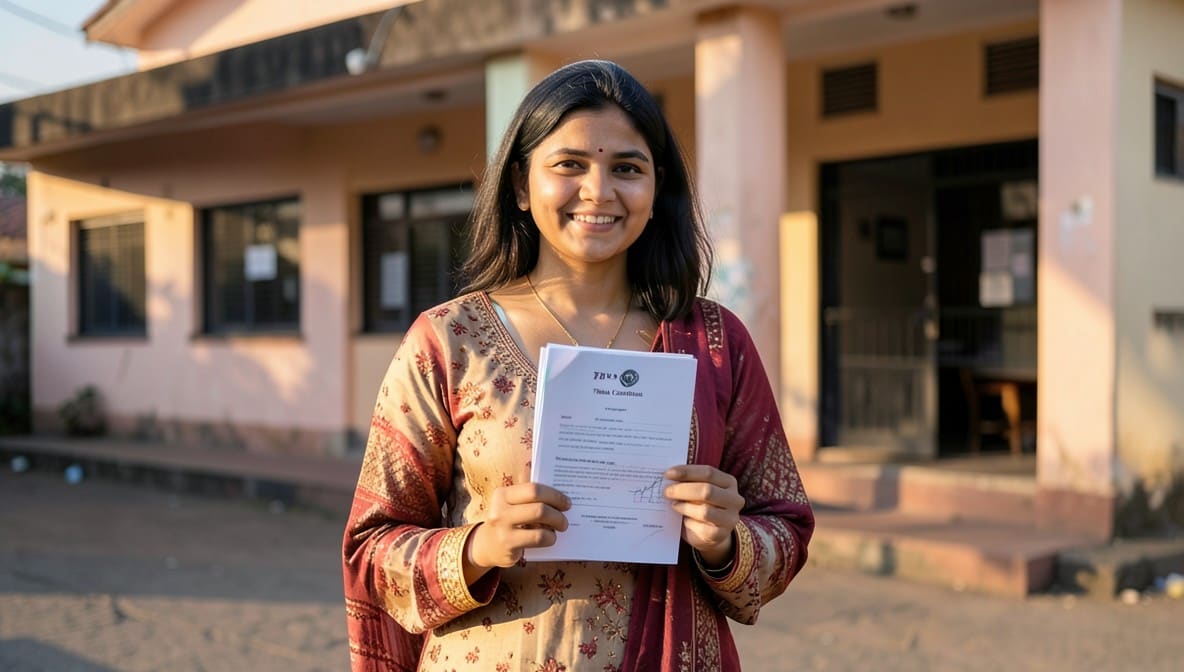
The petitioner, Palledi Sahithi, a minor aged 11 years, is a student of Class V in a government school in Kuridi Village, Dumbriguda Mandal, Alluri Seetharamaraju District. She is the daughter of Palledi Raju, who holds a valid Community Certificate identifying him as belonging to the Kondakapu Scheduled Tribe (ST) community. The petitioner’s school records consistently reflect her ST status under the Kondakapu community. She successfully cleared the All India Sainik Schools Entrance Examination 2026 and was called for counselling for admission to Class VI at Sainik School, Korukonda.
Key Facts
- The petitioner was born on 19.06.2014.
- Her father, Palledi Raju, was issued a Community Certificate for the Kondakapu ST community.
- School records from her current institution list her community as Kondakapu ST.
- The Kondakapu community’s ST status was challenged by the Director, Tribal Cultural Research and Training Institute (TCR&TI), Hyderabad, which submitted a report recommending cancellation of all such certificates.
- Based on this report, the District Collector cancelled the Kondakapu ST community certificates.
- Appeals against the cancellation were filed under Section 7 of the Andhra Pradesh (Scheduled Castes, Scheduled Tribes, and Backward Classes) Regulation of Issue of Community Certificates Act, 1993.
- On 18.01.2022, the Appellate Authority (State Government) issued an interim order staying the cancellation of Kondakapu ST certificates pending final disposal of the appeals.
- Despite this stay, the respondent authorities refused to issue a provisional certificate to the petitioner for submission to the Sainik School.
Procedural History
- 06.02.2026: This Court delivered judgment in W.P.No.42618 of 2022, directing issuance of provisional ST certificates to similarly situated petitioners pending appeal.
- March 2026: Petitioner’s father applied to the Tahsildar (Respondent No.4) and Revenue Divisional Officer (Respondent No.3) for a provisional community certificate.
- April 2026: Application remained unaddressed.
- 08.04.2026: Writ Petition No.9331 of 2026 filed under Article 226 of the Constitution.
- 08.04.2026: Hearing conducted and order passed on the same day.
The Parties' Positions
Petitioner: Argued that the interim stay on cancellation of Kondakapu certificates by the State Government renders the refusal to issue a provisional certificate arbitrary and violative of Articles 14, 15, 21, and 342 of the Constitution. Relied on the precedent set in W.P.No.42618 of 2022. Offered to repay any differential fees if the appeals ultimately result in cancellation.
Respondents: Contended that issuing a provisional certificate would legitimize a potentially fraudulent claim, given the TCR&TI’s findings. Argued that the State’s interim stay does not equate to validation of the community status and that provisional certificates could undermine the integrity of the ST certification process.
Relief Sought
The petitioner sought a writ of mandamus directing the State and revenue authorities (Respondents 1 to 4) to issue a provisional Kondakapu ST community certificate immediately, to enable her participation in the Sainik School counselling commencing from 06.04.2026.
The Legal Issue
The central question was whether the interim stay on cancellation of community certificates under Section 7 of the Andhra Pradesh (Scheduled Castes, Scheduled Tribes, and Backward Classes) Regulation of Issue of Community Certificates Act, 1993, obliges the authorities to issue a provisional certificate to a student seeking admission to a Sainik School, pending final adjudication of the appeals.
Arguments Presented
For the Petitioner
Counsel relied on the Court’s own judgment in W.P.No.42618 of 2022, dated 06.02.2026, which held that where an interim stay is in force, denying a provisional certificate to a child seeking admission to a central institution like a Sainik School violates the right to education under Article 21 and the principle of equality under Article 14. It was submitted that the petitioner has no alternative remedy and that the delay in final adjudication could permanently deprive her of an educational opportunity. The petitioner offered to undertake liability for repayment of any differential fees if the appeals are ultimately allowed.
For the Respondent
The Assistant Government Pleader argued that the TCR&TI’s report, which found no historical or anthropological basis for recognizing Kondakapu as a Scheduled Tribe, rendered the issuance of any provisional certificate legally and morally untenable. It was contended that even an interim stay does not validate the underlying claim and that granting provisional certificates could encourage misuse and dilute the purpose of reservation policy.
The Court's Analysis
The Court examined the nature of the interim order passed by the Appellate Authority on 18.01.2022, which explicitly stayed the cancellation of Kondakapu ST certificates. The Court observed that such an order is not a mere procedural pause but a substantive recognition that the cancellation may be unsustainable and that irreparable harm may occur to individuals pending final decision.
"The interim stay operates as a judicial recognition that the cancellation order is not final and that the status quo must be preserved until the appeals are decided. To deny a child the opportunity to participate in admission counselling on the ground that the certificate is under challenge, when the State itself has stayed the cancellation, is to penalize the innocent for the pendency of litigation."
The Court distinguished between the validity of the certificate and the procedural right to interim relief. It emphasized that the petitioner’s claim is not based on a new or unverified assertion but on a certificate previously issued and recognized by the State, and that her school records corroborate her community identity. The Court further noted that the Sainik School admission process is time-bound and that the counselling commenced on 06.04.2026 - a deadline that had already passed at the time of filing.
The Court also considered the petitioner’s willingness to repay any differential fees if the appeals are decided against the Kondakapu community. This demonstrated good faith and mitigated concerns about financial loss to the institution. The Court held that the balance of convenience clearly favoured the petitioner, and that the public interest in ensuring access to education for children from marginalized communities outweighed speculative concerns about administrative integrity.
The Verdict
The writ petition was disposed of with the following directions: (i) The Respondent Authorities are directed to issue a provisional Community Certificate to the petitioner in accordance with Rule 19 of the Andhra Pradesh (Scheduled Castes, Scheduled Tribes, and Backward Classes) Regulation of Issue of Community Certificates Act, 1993, within eight weeks of receipt of a copy of this order; (ii) The provisional certificate shall be valid only until the final disposal of the appeals under Section 7 of the Act; (iii) In the event the appeals are dismissed and the Kondakapu ST certificates are cancelled, the natural guardian of the petitioner shall pay the differential fee as directed by the Sainik School authorities; (iv) There shall be no order as to costs. All pending miscellaneous petitions are closed.
What This Means For Similar Cases
Provisional Certificates Are a Right, Not a Privilege
- Practitioners representing ST/SC students facing admission deadlines must now assert that an interim stay on certificate cancellation creates a legal obligation to issue provisional certificates.
- Denial of such certificates during pendency of appeals constitutes a violation of Article 21 (right to education) and Article 14 (equality).
- Courts will treat educational access as a non-negotiable right, especially when the State has already stayed the cancellation.
Good Faith Undertakings Mitigate Risk of Abuse
- Offering to repay differential fees or tuition costs if the final order reverses the certificate status significantly strengthens the petitioner’s position.
- Such undertakings demonstrate compliance with the principle of ubi jus ibi remedium and reduce judicial reluctance to grant interim relief.
- This precedent can be cited in similar cases involving NEET, JEE, or other national entrance examinations where community status is a criterion.
Administrative Inaction Is Not a Valid Ground for Denial
- The Court’s directive to issue the certificate within eight weeks establishes a clear timeline for administrative compliance.
- Delay by revenue officials, even in contentious cases, cannot be used to deprive children of educational opportunities.
- This judgment reinforces that procedural delays by the State cannot override constitutional rights.