Topic

Revenue Law

Revenue law in India governs land records, mutations, tax assessments, and the powers of revenue authorities under state-specific land revenue codes. This page provides latest judgments, case analyses, and updates from Indian high courts on disputes involving land mutations, procedural fairness.

39 articlesLatest 3 hours ago
Revenue Authorities Lack Jurisdiction to Adjudicate Succession Disputes | Patta Cancellation Order Quashed : Madras HC
Case Law Analysis
|Madras High Court

Revenue Authorities Lack Jurisdiction to Adjudicate Succession Disputes | Patta Cancellation Order Quashed : Madras HC

The Madras High Court ruled that revenue authorities cannot cancel patta based on succession claims and must refer such disputes to civil court, quashing the cancellation order. The decision protects patta holders from administrative overreach and clarifies that only civil courts can decide title disputes over government-assigned land.

Void Orders Under Maharashtra Land Revenue Code | No Limitation Period for Challenging Jurisdictional Nullity : Bombay HC
Case Law Analysis
|Bombay High Court

Void Orders Under Maharashtra Land Revenue Code | No Limitation Period for Challenging Jurisdictional Nullity : Bombay HC

Bombay High Court rules that orders passed without jurisdiction or against deceased persons are void ab initio and can be challenged at any time, regardless of delay. The judgment reinforces that condonation of delay does not apply to jurisdictional nullities, impacting land revenue disputes and tribal rights cases under the Maharashtra Land Revenue Code.

Jurisdictional Nullity & Liberal Condonation | Bombay HC Upholds 34-Year Delay in Land Revenue Appeal to Prevent Illegality
Case Law Analysis
|Bombay High Court

Jurisdictional Nullity & Liberal Condonation | Bombay HC Upholds 34-Year Delay in Land Revenue Appeal to Prevent Illegality

Bombay High Court rules that void orders-passed without jurisdiction or against deceased persons-warrant liberal condonation of delay, even if inordinate (34 years), to prevent perpetuation of illegality. The judgment underscores that jurisdictional nullity overrides procedural timelines in revenue disputes under the Maharashtra Land Revenue Code.

Natural Drainage Rights | Revenue Authority Must Conduct Enquiry Before Upholding Obstruction Claims: Karnataka HC
Case Law Analysis
|Karnataka High Court

Natural Drainage Rights | Revenue Authority Must Conduct Enquiry Before Upholding Obstruction Claims: Karnataka HC

Karnataka High Court mandates that revenue authorities must conduct a formal enquiry into alleged obstructions of natural watercourses, ensuring affected landowners receive due process. The ruling reinforces that private disputes over drainage rights cannot be dismissed without factual verification, protecting agricultural land from arbitrary damage.

Sections 7 and 9, Mamlatdar's Courts Act | Non-Compliant Pleadings Must Be Remanded for Amendment, Not Dismissed : Bombay HC
Case Law Analysis
|Bombay High Court

Sections 7 and 9, Mamlatdar's Courts Act | Non-Compliant Pleadings Must Be Remanded for Amendment, Not Dismissed : Bombay HC

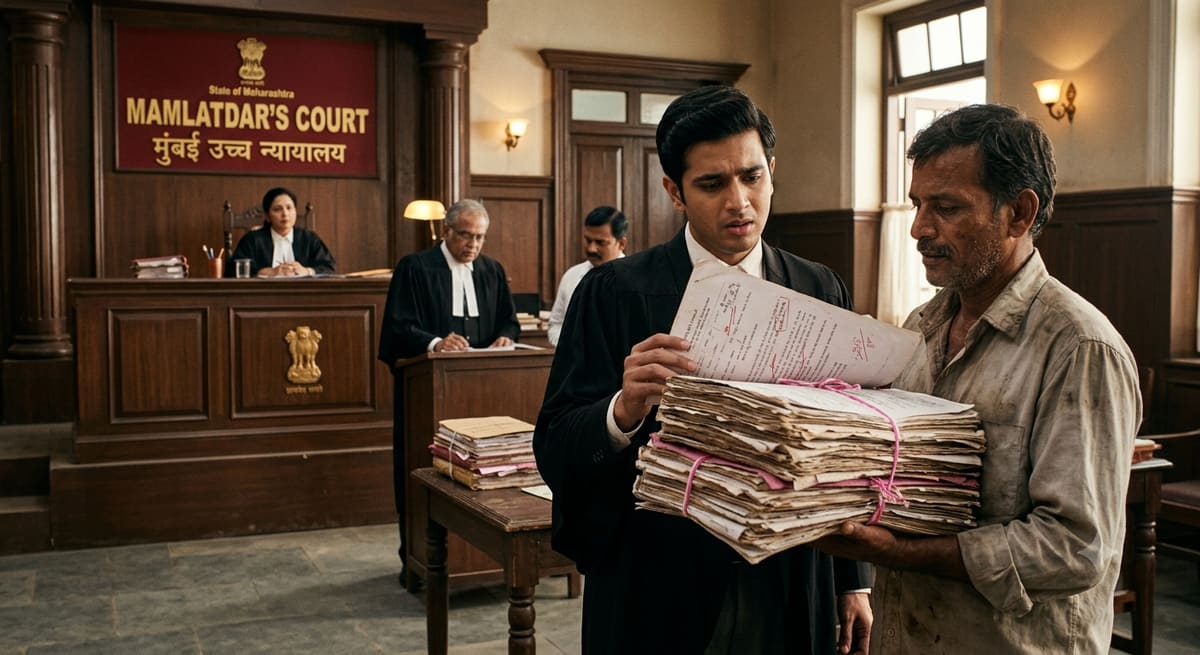
The Bombay High Court has ruled that defects in pleadings under Sections 7 and 9 of the Mamlatdar's Courts Act, such as lack of verification or missing cause of action date, do not warrant outright dismissal. Instead, authorities must allow amendment and remand for fresh adjudication, preserving access to summary revenue remedies while upholding procedural fairness for litigants in property and land disputes.

Section 67 U.P. Revenue Code, 2006 | Interim Relief Mandatory During Appeal Against Ejectment to Prevent Irreversible Dispossession : Allahabad HC
Case Law Analysis
|Allahabad High Court

Section 67 U.P. Revenue Code, 2006 | Interim Relief Mandatory During Appeal Against Ejectment to Prevent Irreversible Dispossession : Allahabad HC

The Allahabad High Court has ruled that appellate courts must grant interim protection against coercive ejectment orders under Section 67 of the U.P. Revenue Code, 2006, to prevent irreversible loss of property and income during pendency of appeal. This sets a binding standard for revenue authorities across Uttar Pradesh, ensuring procedural fairness in land and tenancy disputes.

Section 31A Bombay Prevention of Fragmentation Act | Finality of Consolidation Scheme Cannot Be Reopened for Substantive Errors: Bombay HC
Case Law Analysis
|Bombay High Court

Section 31A Bombay Prevention of Fragmentation Act | Finality of Consolidation Scheme Cannot Be Reopened for Substantive Errors: Bombay HC

Bombay High Court holds that Section 31A of the Bombay Prevention of Fragmentation and Consolidation of Holdings Act, 1947, is confined to correcting clerical errors and does not empower authorities to reopen consolidation schemes for substantive mistakes. The ruling reinforces the finality of revenue records post-consolidation, impacting landowners and revenue authorities in property disputes.

Retrospective Effect of Government Orders | Kerala HC Rules 25% Stamp Duty Deposit Condition Not Applicable to Pre-2020 Appeals : Kerala HC
Case Law Analysis
|Kerala High Court

Retrospective Effect of Government Orders | Kerala HC Rules 25% Stamp Duty Deposit Condition Not Applicable to Pre-2020 Appeals : Kerala HC

Kerala High Court holds that a 2020 Government Order mandating a 25% stamp duty deposit for appeals cannot be applied retrospectively to orders passed in 2018. The ruling reinforces the principle that procedural conditions affecting the right to appeal cannot be imposed retroactively, impacting litigants challenging pre-2020 stamp duty demands.

U.P. Revenue Code Section 30 | Status Quo Mandated & 3-Month Deadline Imposed for Unregistered Property Disputes: Allahabad HC
Case Law Analysis
|Allahabad High Court

U.P. Revenue Code Section 30 | Status Quo Mandated & 3-Month Deadline Imposed for Unregistered Property Disputes: Allahabad HC

The Allahabad High Court has ordered that pending revenue disputes under Section 30 of the U.P. Revenue Code, even if unregistered for over a year, must be decided within three months and that parties must maintain status quo on the disputed property. This prevents unauthorized alienation and protects claimants from procedural neglect by revenue authorities, reinforcing judicial oversight in land rights cases.

Audi Alteram Partem | Expungement of Revenue Records Without Hearing Legal Heirs Violates U.P. Land Revenue Act, 1901 : Allahabad HC
|Allahabad High Court

Audi Alteram Partem | Expungement of Revenue Records Without Hearing Legal Heirs Violates U.P. Land Revenue Act, 1901 : Allahabad HC

The Allahabad High Court has ruled that expunging names from revenue records without providing legal heirs a hearing is a fundamental violation of natural justice under Section 33/39 of the U.P. Land Revenue Act, 1901. This sets a binding precedent for revenue authorities across Uttar Pradesh, requiring mandatory notice and opportunity to be heard before altering land rights, safeguarding inheritance claims from arbitrary administrative action.

Revisional Jurisdiction | Revenue Minister Cannot Set Aside Land Sale Orders Based on Private Contractual Breach : Bombay HC
Case Law Analysis
|Bombay High Court

Revisional Jurisdiction | Revenue Minister Cannot Set Aside Land Sale Orders Based on Private Contractual Breach : Bombay HC

The Bombay High Court struck down the Revenue Minister's order that overturned the cancellation of a land sale permission, ruling that private contractual payment terms cannot override statutory restrictions under the Maharashtra Land Revenue Code. This reinforces that revisional powers under revenue law are strictly bounded by statutory intent, not private agreements - a critical check on administrative overreach in land transactions involving inam and Occupant Class II lands.