The Bombay High Court has clarified that procedural non-compliance in applications filed before Mamlatdars under the Mamlatdar's Courts Act, 1906, does not warrant outright dismissal but requires remand for curative amendment. This ruling reinforces the principle that substantive justice must prevail over technicalities in summary revenue proceedings, particularly where the underlying dispute concerns public access to roads.
Background & Facts
The Dispute
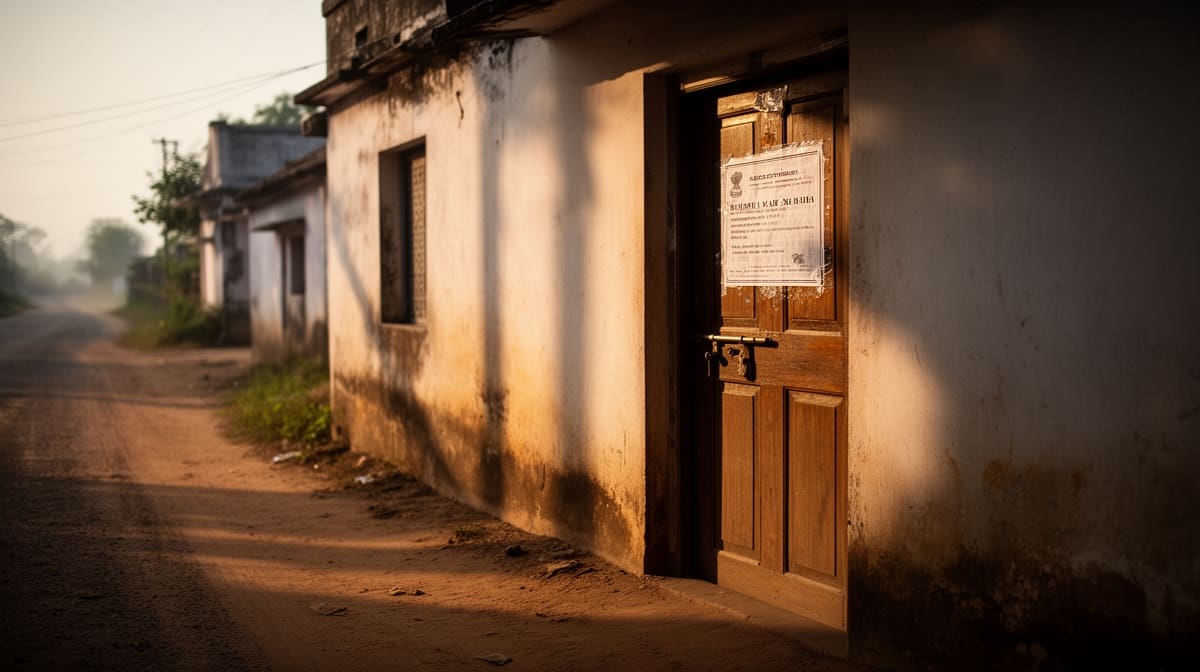
The dispute arose over an alleged obstruction of a public road by the petitioner, Ratna Gajarkar Savarkar, in the village of Kakadshivni, District Washim. The respondent No. 5, the original applicant, filed an application before the Tahsildar acting as Mamlatdar seeking removal of the obstruction. The Mamlatdar passed an order on 18.07.2025 directing the petitioner to remove the encroachment. The petitioner filed a revision before the Sub-Divisional Officer, who upheld the Mamlatdar’s order on 30.09.2025. Aggrieved, the petitioner filed the present writ petition challenging both orders.
Key Facts
The application filed by respondent No. 5 before the Mamlatdar was not verified as required under Section 7 of the Mamlatdar’s Courts Act, 1906
The application did not specify the date on which the cause of action arose, contrary to Section 5(3) which mandates filing within six months of the cause of action
The cause of action, as alleged, was the obstruction of a public road, but no specific date of such obstruction was stated in the application
The application was not accompanied by any affidavit or verification as mandated by Section 9 of the Act
The petitioner raised objections before both the Mamlatdar and the Sub-Divisional Officer regarding these defects, but both authorities proceeded on the merits
Procedural History
15.04.2024: Application filed by respondent No. 5 before the Mamlatdar (Revenue Case No. MCA-5/Kakadshivni/45/2024-25)
18.07.2025: Mamlatdar passed order directing removal of obstruction
25.08.2025: Petitioner filed revision application before Sub-Divisional Officer under Section 23(2) of the Act
30.09.2025: Sub-Divisional Officer dismissed the revision and confirmed the Mamlatdar’s order
15.12.2025: Writ Petition No. 6293/2025 filed before the Bombay High Court, Nagpur Bench
01.07.2026: Hearing concluded and judgment delivered
The Parties' Positions
For the Petitioner
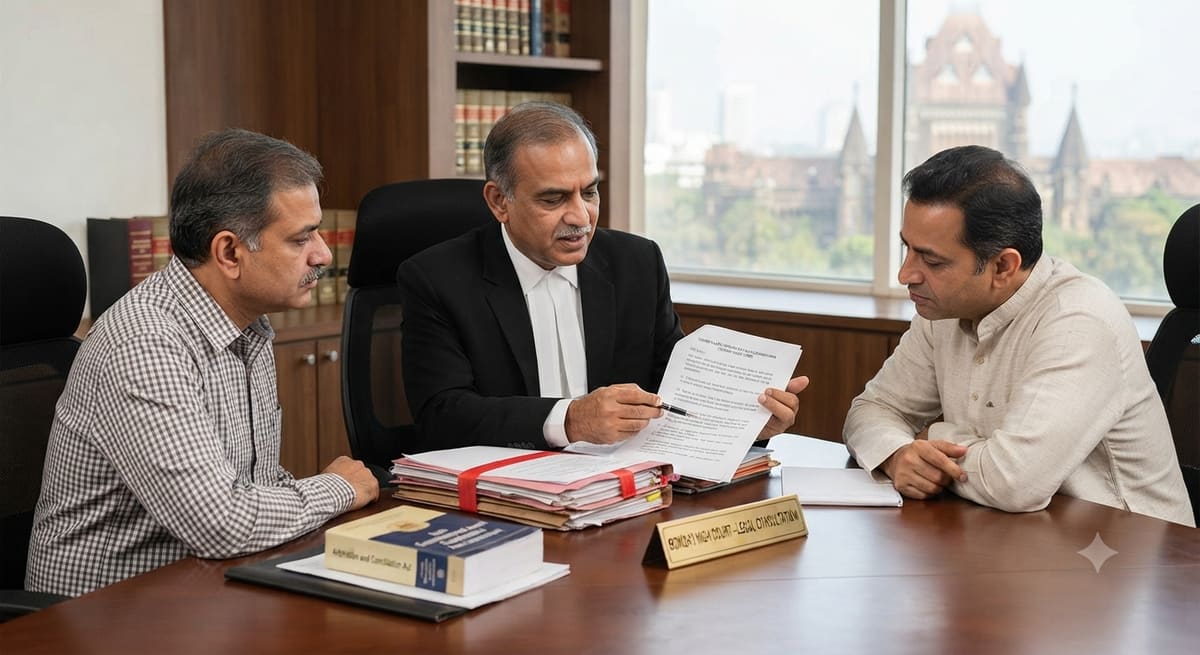
The petitioner contended that the application before the Mamlatdar was fundamentally defective: it lacked verification under Section 7 and omitted the date of cause of action, rendering it non-compliant with Sections 7 and 9 of the Act. Reliance was placed on Vishnu v. Collector, Ahmednagar (2017(1) Mh.L.J. 811) and Gaurakshan Sansthan v. State of Maharashtra (2019(6) Mh.L.J. 473), which held that proceedings before a Mamlatdar commence only through a compliant plaint.
For the Respondent No. 5
The original applicant argued that the Mamlatdar’s enquiry is summary in nature and that technical defects should not defeat substantive claims. He contended that the obstruction was visible and ongoing, and that the omission of the cause of action date was a mere formality.
Relief Sought
The petitioner sought quashing of the orders dated 18.07.2025 and 30.09.2025, and a direction that the matter be dismissed for non-compliance with statutory pleading requirements.
The Legal Issue
The central question was whether an application before a Mamlatdar under the Mamlatdar’s Courts Act, 1906, that fails to comply with mandatory requirements under Sections 7 and 9 - specifically, lack of verification and omission of the date of cause of action - renders the entire proceeding void, or whether such defects can be cured by remand.
Arguments Presented
For the Petitioner
The petitioner’s counsel argued that Sections 7 and 9 are mandatory, not directory. The absence of verification and the failure to state the date of cause of action deprive the Mamlatdar of jurisdiction to proceed. Citing Vishnu v. Collector, Ahmednagar and Gaurakshan Sansthan v. State of Maharashtra, he emphasized that a non-compliant application cannot be the basis for any order. He further contended that allowing such applications to proceed on merits would encourage procedural laxity and undermine statutory safeguards.
For the Respondent
The respondent No. 5’s counsel argued that the Mamlatdar’s jurisdiction is equitable and summary. He submitted that the nature of the dispute - public road obstruction - demands expeditious resolution, and that technical defects should not be allowed to defeat justice. He relied on the principle that courts should not allow procedural technicalities to override substantive rights, especially in revenue matters involving public access.
The Court's Analysis
The Court acknowledged that the application before the Mamlatdar was defective: it lacked verification under Section 7 and did not specify the date of cause of action, violating Section 5(3). The Court affirmed that Vishnu v. Collector, Ahmednagar and Gaurakshan Sansthan v. State of Maharashtra establish that proceedings before a Mamlatdar commence only through a plaint compliant with Sections 7 and 9. The Court observed:
"The absence of verification and the failure to state the date of cause of action are not mere irregularities; they are jurisdictional defects that render the application non-compliant with the Act."
However, the Court declined to dismiss the matter outright. It noted that the underlying dispute concerned a public road, and that the petitioner had been given full opportunity to contest the claim. The Court emphasized that the defects were curable and that dismissal would result in multiplicity of proceedings. The Court held:
"While the impugned orders are unsustainable, the interests of justice require that the matter be remanded for fresh adjudication with an opportunity to cure the defects."
The Court further directed that the Mamlatdar must decide the matter expeditiously, recognizing the public interest in resolving road obstruction disputes without undue delay.
The Verdict
The writ petition was partly allowed. The orders dated 18.07.2025 and 30.09.2025 were quashed and set aside. The matter was remanded to the Tahsildar/Mamlatdar, Karanja Lad, for fresh adjudication. Respondent No. 5 was granted leave to amend the application to cure defects in verification and to specify the date of cause of action. The petitioner was entitled to make consequential amendments. The parties were directed to appear before the Mamlatdar on 28.07.2026, with no separate notice to be issued. The Mamlatdar was requested to decide the matter preferably before 30.09.2026. Parties were directed to bear their own costs.
What This Means For Similar Cases
Procedural Defects Are Curable, Not Fatal
Practitioners must now treat non-compliance with Sections 7 and 9 of the Mamlatdar’s Courts Act as curable defects, not jurisdictional bars
Applications lacking verification or cause of action dates should be challenged on procedural grounds, but outright dismissal is no longer the default remedy
Courts will prefer remand with leave to amend, especially where the underlying dispute involves public interest or land use
Summary Proceedings Require Procedural Rigor
The characterization of Mamlatdar proceedings as "summary" does not excuse compliance with mandatory statutory requirements
Even in expedited forums, verification and specification of cause of action are non-negotiable
Advocates must ensure applications are fully compliant before filing, as failure to do so may delay resolution despite the summary nature of the forum
Judicial Restraint in Revenue Matters
Courts will not interfere with substantive findings of Mamlatdars unless procedural defects are incurable
The judgment reinforces that appellate courts should not substitute their view on merits when the lower forum has not been given a fair opportunity to adjudicate properly
This approach reduces litigation burden and promotes finality through procedural correction rather than restart