The Karnataka High Court has directed the jurisdictional Tahsildar to conduct a detailed enquiry into allegations of illegal obstruction of a natural rainwater drainage channel passing through agricultural lands. The judgment underscores the obligation of revenue authorities to verify such disputes, even when they arise between private landowners, and to ensure compliance with natural watercourse rights under revenue laws.
Background & Facts
The Dispute
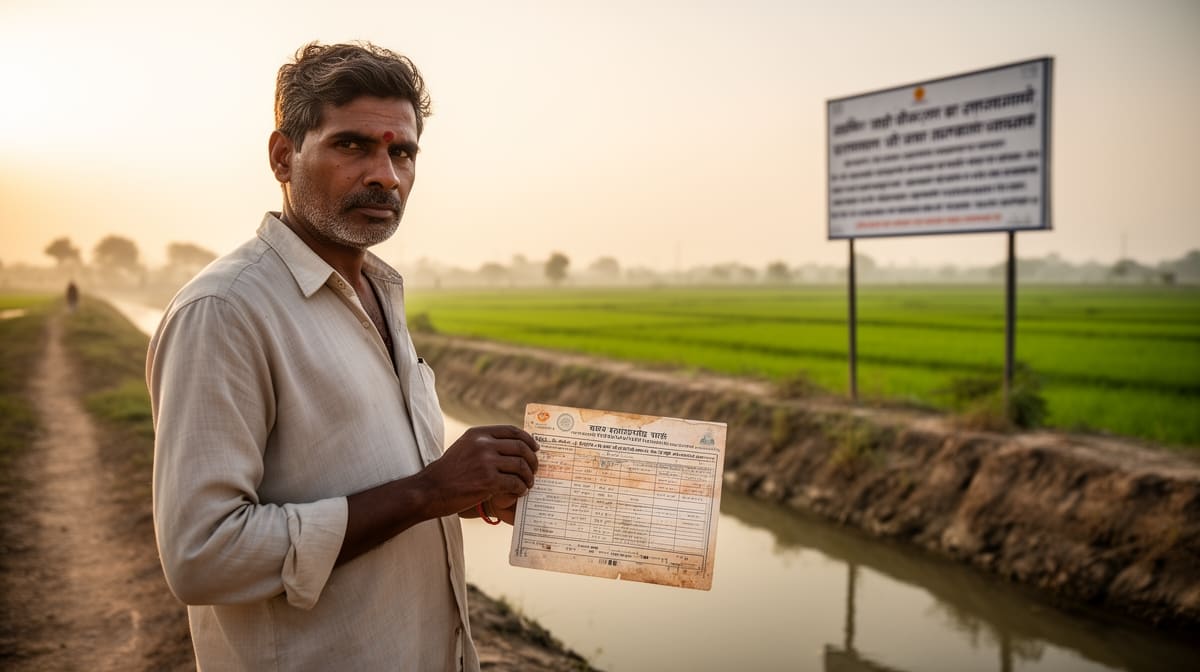
The petitioner, Mallappa s/o Ramappa Rayanaykar, a 45-year-old agriculturist from Antur village, Gadag district, filed a writ petition under Articles 226 and 227 of the Constitution of India seeking a mandamus to direct respondents to consider his representation dated 11.04.2026. The representation alleged that the owner of an adjoining land had illegally obstructed a natural rainwater drainage channel by constructing an earthen bund, diverting its flow onto the petitioner’s agricultural land. This diversion reportedly caused substantial damage to standing crops and recurring financial losses.
Key Facts
- A natural rainwater drainage channel passes through adjoining agricultural lands
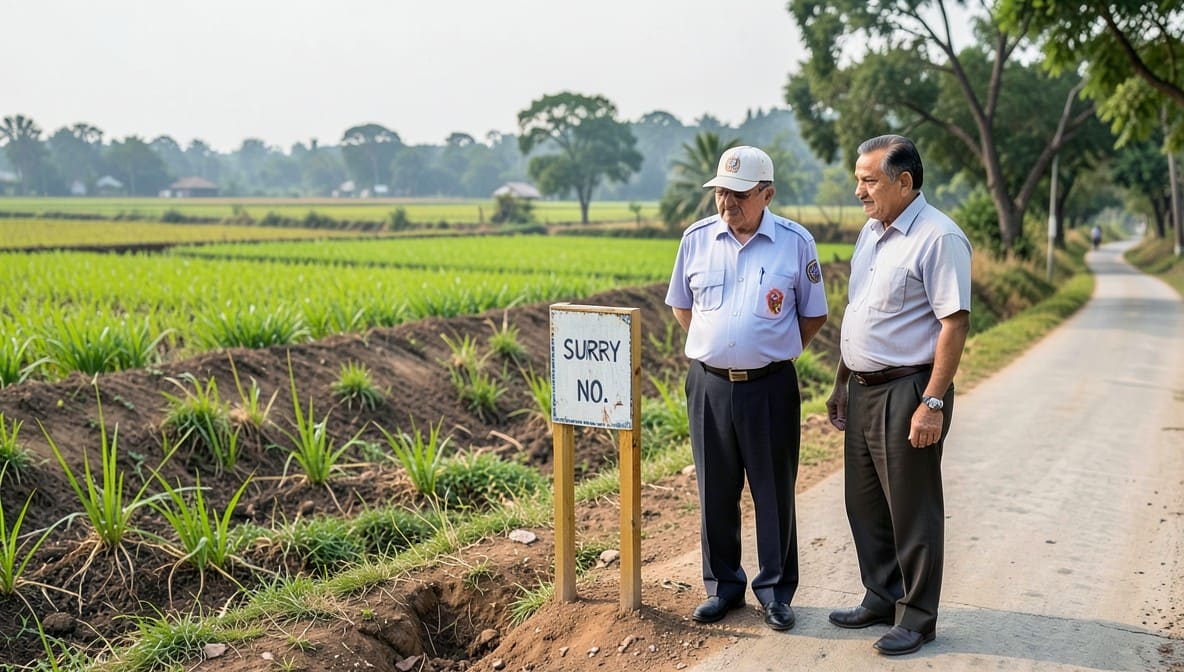
- The adjoining landowner allegedly constructed an earthen bund, obstructing and diverting the channel’s natural course
- The petitioner claims the diversion has damaged his crops and caused recurring losses
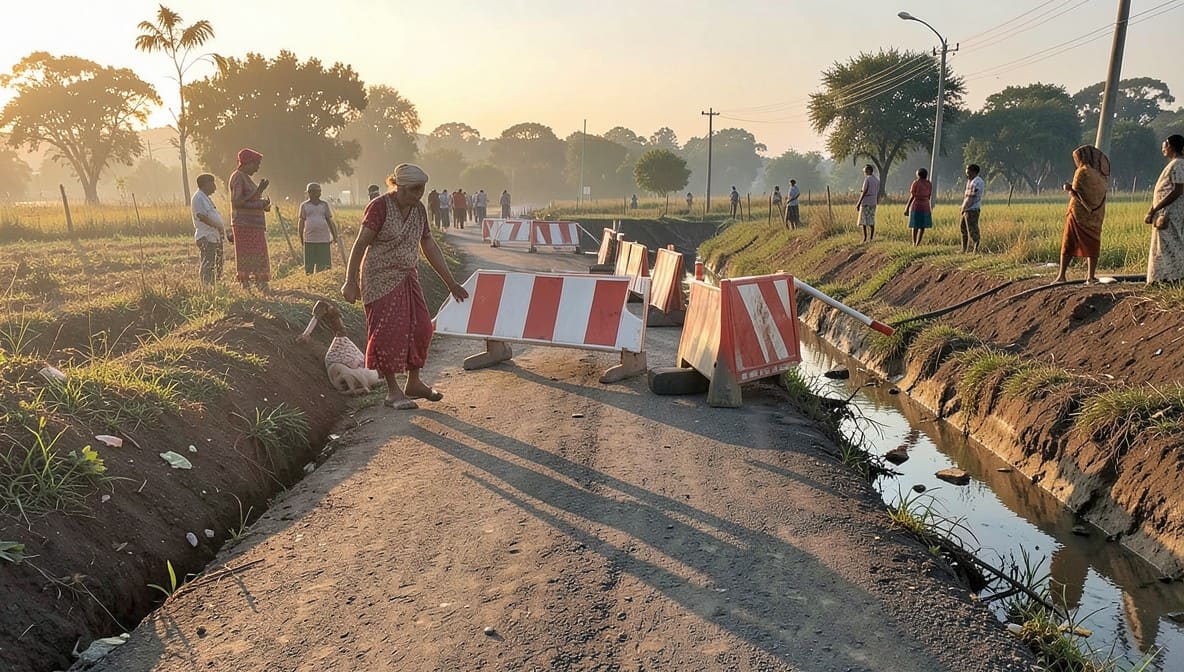
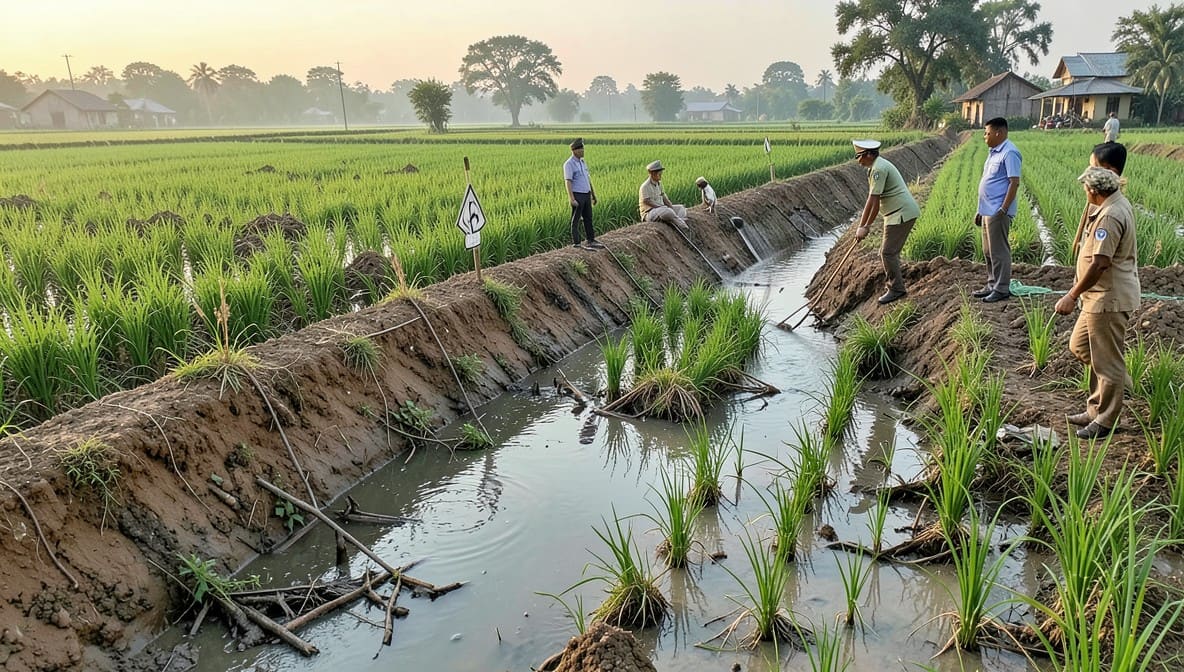
- Photographs submitted by the petitioner prima facie indicate the existence of the channel and its obstruction
- The petitioner filed a representation dated 11.04.2026 seeking intervention from revenue authorities
Procedural History
- Writ Petition No. 104570 of 2026 (GM-RES) filed before the Karnataka High Court, Dharwad Bench
- Hearing date: 01.07.2026
- Respondents represented by:
- Respondent Nos. 1, 2, and 4: Sri. Sharad V. Magadum, Additional Government Advocate
- Respondent No. 3: Sri. L.T. Mantagani, Advocate
Relief Sought
The petitioner sought a writ of mandamus directing Respondent Nos. 1 to 4 to:
- Consider and dispose of his representation dated 11.04.2026 in accordance with law
- Take necessary steps to restore the natural flow of the rainwater channel
The Legal Issue
The central question was whether revenue authorities, particularly the Tahsildar, are obligated to intervene in disputes involving obstruction of natural watercourses, even when the dispute arises between private landowners. Additionally, the Court had to determine the scope of the Tahsildar’s jurisdiction and the procedural safeguards required for such enquiries.
Arguments Presented
For the Petitioner
The petitioner’s counsel argued that:
- The obstruction of the natural rainwater channel constitutes a violation of revenue laws governing watercourses
- The photographs submitted prima facie establish the existence of the channel and its illegal obstruction
- Revenue authorities have a statutory duty to prevent encroachments or obstructions on natural drainage systems, regardless of private disputes
For the Respondents
The standing counsel for Respondent No. 3 contended that:
- The dispute is essentially a civil matter between private landowners
- Respondent No. 3 (Panchayat Development Officer) lacks jurisdiction to intervene in such disputes
- No direction could be issued against Respondent No. 3 in the present proceedings
The Court's Analysis
The Court examined the rival submissions and the material on record, particularly the photographs submitted by the petitioner. It observed that the photographs prima facie disclosed the existence of a natural rainwater channel and its obstruction by an earthen bund. The Court emphasized that if such obstruction has indeed diverted the natural flow of rainwater, the matter warrants verification by the competent revenue authorities.
The Court relied on the principle that natural watercourses are subject to regulatory oversight by revenue authorities to prevent encroachments or obstructions that could harm public or private interests. While acknowledging that the dispute arose between private landowners, the Court held that the Tahsildar’s jurisdiction is not ousted merely because the matter involves private parties. The Court underscored the importance of due process, directing the Tahsildar to:
- Issue notice to all adjoining landowners likely to be affected
- Conduct a spot inspection after due notice
- Secure a report from subordinate revenue officials
- Afford an opportunity of hearing to all stakeholders
- Pass a reasoned and speaking order strictly in accordance with law
"If such obstruction has in fact resulted in diversion of the natural flow of rainwater, the matter certainly warrants verification by the competent revenue authorities."
The Court further clarified that while the dispute may have civil dimensions, the revenue authorities cannot abdicate their responsibility to verify allegations of illegal obstruction of natural watercourses, especially when prima facie evidence exists.
The Verdict
The Court disposed of the writ petition with the following directions:
- The jurisdictional Tahsildar shall consider and dispose of the petitioner’s representation dated 11.04.2026 in light of the Court’s observations
- The Tahsildar shall conduct a spot inspection, issue notices to all affected landowners, secure a report from subordinate revenue officials, and afford a hearing to all stakeholders
- The Tahsildar shall pass a reasoned and speaking order on the representation
- The entire exercise shall be completed within eight weeks from the date of receipt of a certified copy of the order
What This Means For Similar Cases
Revenue Authorities Cannot Shirk Jurisdiction Over Natural Watercourse Disputes
- Revenue authorities, particularly Tahsildars, must intervene in disputes involving obstruction of natural watercourses, even when the dispute arises between private landowners
- The mere fact that the dispute involves private parties does not oust the jurisdiction of revenue authorities under revenue laws
- Practitioners should emphasize prima facie evidence (e.g., photographs, site inspections) to establish the existence of a natural watercourse and its obstruction
Due Process Is Mandatory in Revenue Enquiries
- The Court has laid down a procedural framework for revenue authorities to follow in such disputes:
- Notice to all affected landowners: Ensures transparency and prevents arbitrary action
- Spot inspection: Provides firsthand verification of the alleged obstruction
- Report from subordinate officials: Ensures technical and factual accuracy
- Opportunity of hearing: Upholds principles of natural justice
- Reasoned and speaking order: Ensures accountability and facilitates appellate review
- Failure to adhere to this framework may render the Tahsildar’s order vulnerable to challenge
Civil Disputes May Still Warrant Revenue Intervention
- While disputes between private landowners may have civil dimensions, revenue authorities cannot ignore allegations of illegal obstruction of natural watercourses
- The judgment reinforces that revenue laws take precedence over private disputes when public or environmental interests are at stake
- Practitioners should argue that revenue authorities have a statutory duty to prevent encroachments or obstructions on natural drainage systems, regardless of the nature of the dispute