Topic

Procedural Law

Procedural law in India governs the formal rules and processes that courts follow during litigation, including filing, service, hearings, and procedural compliance under statutes like the CrPC, CPC, and Arbitration Act.

38 articlesLatest 2 weeks ago
Section 38(2)(a) CPA 2019 | 15-Day Extension for Written Statement Not Automatic; Requires Particularised Sufficient Cause : Delhi SCDRC
Case Law Analysis

Section 38(2)(a) CPA 2019 | 15-Day Extension for Written Statement Not Automatic; Requires Particularised Sufficient Cause : Delhi SCDRC

The Commission ruled that internal administrative delays and summer vacations do not constitute sufficient cause for condonation of delay in filing a written statement. The 15-day extension under Section 38(2)(a) is discretionary, requiring specific, substantiated justification, not a routine entitlement. This raises the bar for opposite parties seeking late filing in consumer disputes.

Burden of Proving Indian Citizenship Lies on Alleged Foreigner; Notice Defects Not Fatal | Ex-Parte Opinion Upheld : Gauhati HC
Case Law Analysis
|Gauhati High Court

Burden of Proving Indian Citizenship Lies on Alleged Foreigner; Notice Defects Not Fatal | Ex-Parte Opinion Upheld : Gauhati HC

The Gauhati High Court affirmed that an individual labelled a foreigner must demonstrate Indian citizenship, and that irregularities in service of notice do not invalidate a Foreigners Tribunal’s ex-parte finding. This places the evidential burden on the accused and upholds procedural validity for similar citizenship disputes.

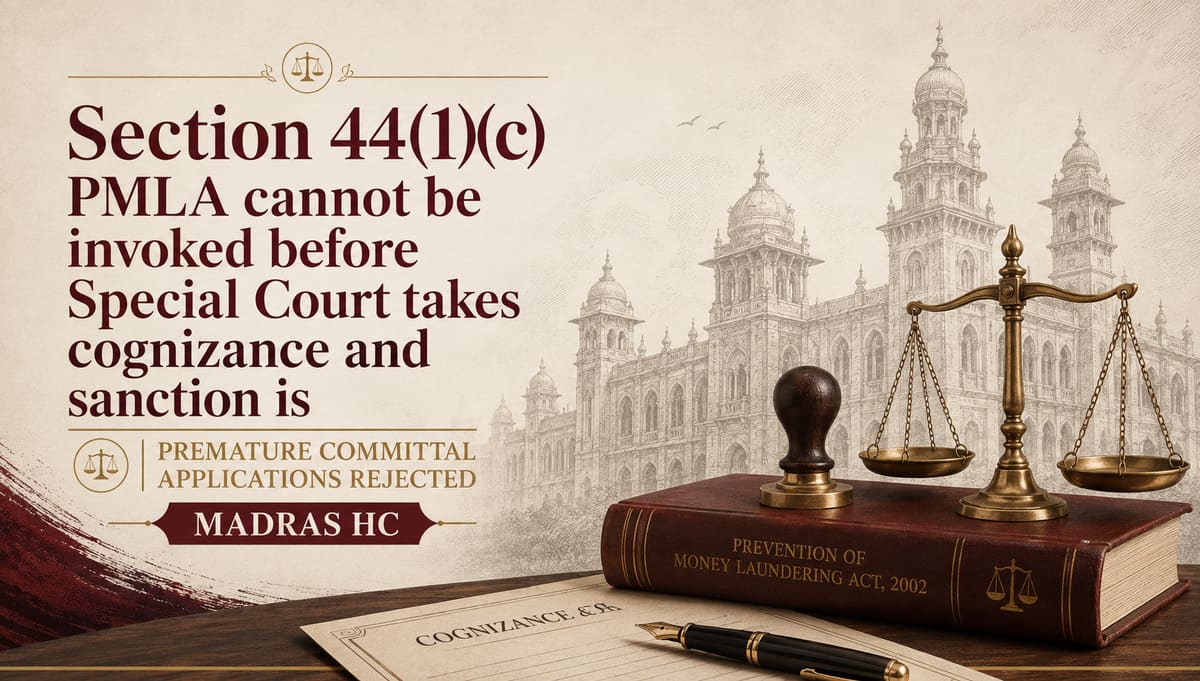
Section 44(1)(c) PMLA cannot be invoked before Special Court takes cognizance and sanction is produced | Premature committal applications rejected : Madras HC
Case Law Analysis
|Madras High Court

Section 44(1)(c) PMLA cannot be invoked before Special Court takes cognizance and sanction is produced | Premature committal applications rejected : Madras HC

The Madras High Court ruled that a Directorate of Enforcement committal petition under Section 44(1)(c) of the PMLA is invalid if filed before the Special Court has taken cognizance and the requisite sanction is produced. This bars premature transfers of DA cases to Special Courts, affecting enforcement agencies and the accused.

Prospective Accused No Right to Contest CrPC 156(3) Investigation Direction; Handwriting Expert Opinion Requires Corroboration for Conviction | CrPC & Evidence Act : HP HC
Case Law Analysis
|Himachal Pradesh High Court

Prospective Accused No Right to Contest CrPC 156(3) Investigation Direction; Handwriting Expert Opinion Requires Corroboration for Conviction | CrPC & Evidence Act : HP HC

The Himachal Pradesh High Court ruled that a person who may become an accused cannot question a direction under CrPC 156(3) to investigate, and that a handwriting expert’s report must be supported by additional evidence before it can underpin a conviction. This limits challenges to investigative orders and raises the evidentiary threshold for expert testimony, affecting future forgery and fraud prosecutions.

Order VIII Rule 1 CPC | 120-Day Deadline for Plaintiff's Written Statement to Counter-Claim Applies Under Commercial Courts Act, 2015 : SC
Case Law Analysis
|Supreme Court of India

Order VIII Rule 1 CPC | 120-Day Deadline for Plaintiff's Written Statement to Counter-Claim Applies Under Commercial Courts Act, 2015 : SC

The Supreme Court has ruled that the mandatory 120-day limit for filing a written statement under Order VIII Rule 1 CPC extends to plaintiffs responding to a defendant's counter-claim in commercial suits governed by the Commercial Courts Act, 2015. This clarifies a critical procedural gap, ensuring equal time constraints apply to both parties and reinforcing procedural fairness in commercial litigation.

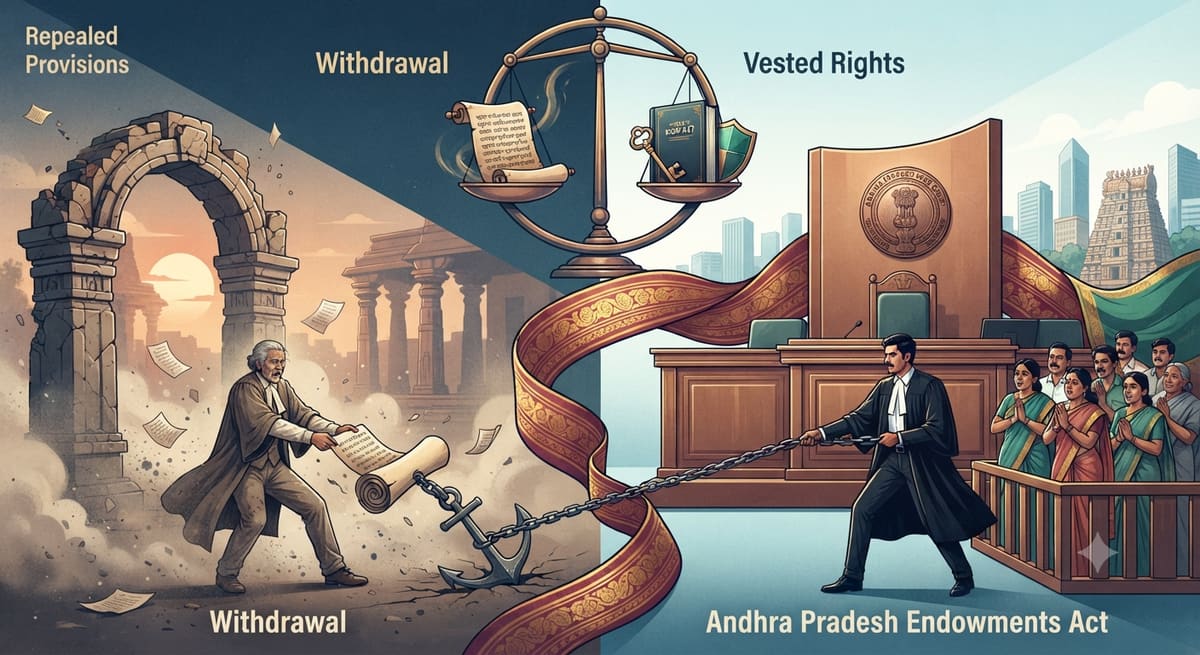
Section 83(2) Andhra Pradesh Endowments Act | Withdrawal of Proceedings Under Repealed Provisions Impermissible Without Vested Rights Impact : AP HC
Case Law Analysis
|Andhra Pradesh High Court

Section 83(2) Andhra Pradesh Endowments Act | Withdrawal of Proceedings Under Repealed Provisions Impermissible Without Vested Rights Impact : AP HC

The Andhra Pradesh High Court ruled that proceedings cannot be withdrawn under repealed provisions of the Andhra Pradesh Endowments Act merely to invoke amended provisions, unless no vested rights are affected. The Court also affirmed the authority of a Founder Family Member to issue eviction notices for exempted institutions, reinforcing statutory compliance in religious endowment disputes.

Section 156(3) CrPC | Procedural Non-Compliance Not Jurisdictional Error: Himachal Pradesh HC Restores FIR Registration Order
Case Law Analysis
|Himachal Pradesh High Court

Section 156(3) CrPC | Procedural Non-Compliance Not Jurisdictional Error: Himachal Pradesh HC Restores FIR Registration Order

Himachal Pradesh High Court clarifies that failure to comply with Section 154(1) and (3) CrPC before filing a Section 156(3) application is a procedural lapse, not a jurisdictional flaw. The ruling reinstates a Magistrate’s order directing FIR registration, emphasizing that technical irregularities cannot vitiate substantive justice for complainants.

Section 151 CPC | Failure to Amend Cause Title After Impleadment Is Ministerial, Not Fatal: Karnataka HC (Dharwad)
Case Law Analysis
|Karnataka High Court

Section 151 CPC | Failure to Amend Cause Title After Impleadment Is Ministerial, Not Fatal: Karnataka HC (Dharwad)

The Karnataka High Court has ruled that omitting a consequential amendment to the cause title after impleadment is a mere ministerial oversight, not a ground to dismiss a Section 151 application. This clarifies that procedural technicalities cannot override substantive justice in property disputes, empowering litigants to correct clerical errors without risking dismissal of their claims.

Order VIII Rule 1 CPC | Judicial Discretion Allows Written Statement Beyond 120 Days on Payment of Costs : Karnataka HC
Case Law Analysis
|Karnataka High Court

Order VIII Rule 1 CPC | Judicial Discretion Allows Written Statement Beyond 120 Days on Payment of Costs : Karnataka HC

Karnataka High Court reaffirms that courts retain discretion to permit filing of written statements beyond the 120-day limit under Order VIII Rule 1 CPC, subject to payment of costs. The ruling underscores that procedural timelines are not absolute and can be relaxed in the interest of justice, provided the delay is adequately compensated.

Section 372 CrPC Proviso | Victim’s Right to Appeal Acquittal in Cheating Cases Extends Beyond NI Act : MP HC
Case Law Analysis
|Madhya Pradesh High Court

Section 372 CrPC Proviso | Victim’s Right to Appeal Acquittal in Cheating Cases Extends Beyond NI Act : MP HC

Madhya Pradesh High Court affirms that victims in Section 420 IPC cases, not just NI Act offences, can appeal acquittals under the proviso to Section 372 CrPC without requiring special leave under Section 378(4). This ruling broadens victim rights in criminal appeals, ensuring complainants in cheating cases have independent appellate recourse.