The Himachal Pradesh High Court has reaffirmed that procedural rules under the Code of Civil Procedure must serve justice, not obstruct it. In a significant ruling, the Court set aside a trial court’s dismissal of an application to produce a critical site plan after an 11-year delay, emphasizing that technical non-compliance cannot override substantive fairness when no prejudice is established.
Background & Facts
The Dispute
The petitioners, plaintiffs in Civil Suit No. 154 of 2014, sought a permanent prohibitory and mandatory injunction against the defendant, Madan Gopal alias Madan Lal, to restrain him from obstructing and constructing on a shared gair mumkin gali (non-private alley) measuring 06-72 sq. mtrs. in Khasra No. 2810, located at Up Sampa, Paonta Sahib. The plaintiffs claimed this gali was their sole ingress and egress to their property in Khasra No. 2811. They alleged that in July 2014, the defendant began interfering by opening a window towards the gali and, by October 2014, had completely blocked it by erecting a wall, thereby denying them access.
Key Facts
- The suit was filed on 24.11.2014.
- The plaintiffs’ title to the property derives from a sale deed relating to one-third share in Khewat Khatauni No. 223/458, Kitte 14, measuring 214-60 sq. mtrs.
- The sale deed and attached site plan did not mention the gali as a right of way.
- The defendant contested the suit, denying the existence of any joint passage and asserting that the plaintiffs had no legal right to the gali.
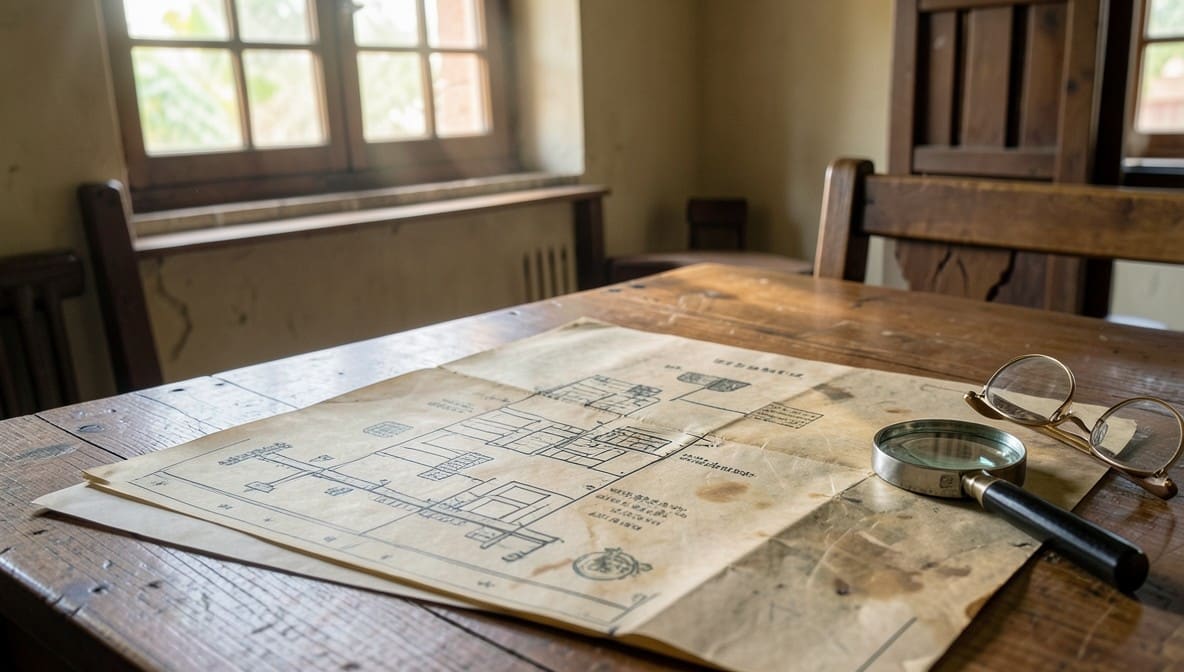
- The plaintiffs filed an application under Order VII Rule 14 CPC on 20.08.2025, seeking to produce a site plan depicting the location and dimensions of the gali, which they claimed was only discovered during preparation for evidence.
- The defendant opposed the application, arguing that the plaintiffs had failed to file any list of documents at the time of filing the plaint and had delayed for over eleven years without explaining due diligence.
- The trial court dismissed the application on 18.11.2025, citing delay, lack of explanation for non-production, and the fact that the plaintiffs had previously filed and lost an application under Order XXVI Rule 9 CPC for appointment of a Local Commissioner on 04.06.2025.
- One plaintiff had already been examined as PW-1 on 20.08.2025, the same day the application was filed.
Procedural History
- 24.11.2014: Civil Suit No. 154 of 2014 filed by plaintiffs seeking injunction and demolition of wall.
- 20.08.2025: Plaintiffs filed application under Order VII Rule 14 CPC seeking permission to produce site plan.
- 18.11.2025: Trial Court dismissed application, citing delay and lack of due diligence.
- 28.03.2026: Writ petition under Article 227 filed before Himachal Pradesh High Court.
- 30.04.2026: Judgment delivered by the High Court.
The Parties' Positions
- Plaintiffs: Argued the site plan was material, newly discovered, and its production would not prejudice the defendant, who would retain full rights to cross-examine and rebut.
- Defendant: Contended the application was an abuse of process, filed after eleven years without justification, and that the plaintiffs had ample opportunity to produce the document earlier.
Relief Sought
The petitioners sought quashing of the trial court’s order dated 18.11.2025 and direction to allow the application under Order VII Rule 14 CPC to produce the site plan, with costs.
The Legal Issue
The central question was whether the delay of over eleven years in seeking to produce a material document under Order VII Rule 14 CPC, without an explicit plea of due diligence, warrants automatic rejection, or whether the court retains discretion to permit such production if no prejudice is shown to the opposite party.
Arguments Presented
For the Petitioner
Ms. Shristi Negi, Advocate for the petitioners, argued that Order VII Rule 14 CPC does not mandate a pleading of due diligence. The rule only requires the court’s leave for late production, and the plaintiffs had sought such leave by explaining that the document came to light during evidence preparation. She relied on State of Punjab v. Shamlal Murari and Sambhaji v. Gangabai to assert that procedural law must not become a tyrant. She emphasized that the document was material to the core issue of access and that the defendant would have full opportunity to cross-examine and rebut, negating any claim of prejudice.
For the Respondent
Mr. Ashok K. Tyagi, Advocate for the respondent, contended that the application was an abuse of process. He highlighted that the suit had been pending since 2014, the plaintiffs had failed to file a list of documents under Order VII Rule 14 at the outset, and had not moved the application even after the dismissal of their earlier application under Order XXVI Rule 9 CPC. He argued that the silence on due diligence was fatal and that allowing the document at this stage would amount to re-opening evidence and prejudice the defendant’s right to a fair trial.
The Court's Analysis
The Court undertook a comprehensive review of the jurisprudence on procedural law, beginning with the foundational principle articulated in State of Punjab v. Shamlal Murari: "Processual law is not to be a tyrant but a servant, not an obstruction but an aid to justice." The Court reiterated that procedural rules are handmaids of justice, not its mistresses, and that rigid adherence to form must not defeat substance.
The Court observed that Order VII Rule 14 CPC permits the production of documents not filed with the plaint only with the court’s leave. Crucially, the rule does not require the plaintiff to plead or prove due diligence. The defendant’s insistence on such a pleading was unsupported by statutory language.
"The only condition, which has been imposed, by the Legislature, is that if the document is not produced at the initial stage, that may be taken on record with the permission of the Court."
The Court noted that the trial court’s order was silent on how the defendant would suffer prejudice if the site plan were admitted. The mere fact that the document was produced late does not equate to prejudice. The defendant retains the right to cross-examine witnesses, challenge authenticity, and lead rebuttal evidence.
The Court further distinguished between the admissibility of evidence and its relevance. The trial court erred in conflating the two. The relevance and weight of the site plan would be determined at the final hearing, not at the stage of admission.
The Court also rejected the argument that the plaintiffs’ failure to utilize the earlier opportunity under Order XXVI Rule 9 CPC barred them from seeking relief under Order VII Rule 14 CPC. Different rules serve different purposes, and the dismissal of one application does not estop a party from seeking relief under another.
The Court concluded that the trial court’s dismissal was based on a hyper-technical approach, inconsistent with the spirit of the Code of Civil Procedure as interpreted by the Supreme Court in Sambhaji v. Gangabai and Salem Advocate Bar Association v. Union of India. The Court emphasized that justice must not be buried under procedural formalities.
The Verdict
The petition succeeded. The High Court set aside the trial court’s order dated 18.11.2025 and allowed the application under Order VII Rule 14 CPC. The site plan is ordered to be taken on record, subject to a cost of ₹5,000/- to be paid by the plaintiffs. The parties are directed to appear before the trial court on 18.05.2026 at 10:00 a.m. for continuation of proceedings. All pending miscellaneous applications stand disposed of.
What This Means For Similar Cases
Delay Alone Is Not Fatal Under Order VII Rule 14 CPC
- Practitioners may now file late applications under Order VII Rule 14 CPC even after years of delay, provided they seek court permission and demonstrate the document’s materiality.
- No pleading of due diligence is mandatory under the rule; courts cannot impose this as a precondition.
- The burden shifts to the opposing party to demonstrate actual prejudice, not mere inconvenience.
Courts Must Avoid Hyper-Technical Dismissals
- Judges must distinguish between procedural lapses that prejudice trial fairness and those that are merely technical.
- Where the opposing party retains full rights to cross-examine and rebut, admission of late documents should be the norm, not the exception.
- The dismissal of one procedural application (e.g., under Order XXVI Rule 9) does not preclude relief under another (e.g., Order VII Rule 14).
Cost as a Balancing Mechanism
- Courts may impose costs to deter negligence without denying access to justice.
- The ₹5,000 cost imposed here sets a precedent for using costs as a proportionate remedy for procedural delay, preserving substantive rights.
Procedural Law as a Servant, Not a Master
- This judgment reinforces that the Code of Civil Procedure is designed to facilitate justice, not to trap litigants.
- Lawyers should argue for liberal interpretation of procedural rules in cases involving material evidence, citing Sambhaji and Shamlal Murari as binding authority.
- The judgment is particularly relevant in property disputes where documentary evidence (e.g., site plans, survey maps) is critical to establishing rights of way or boundaries.