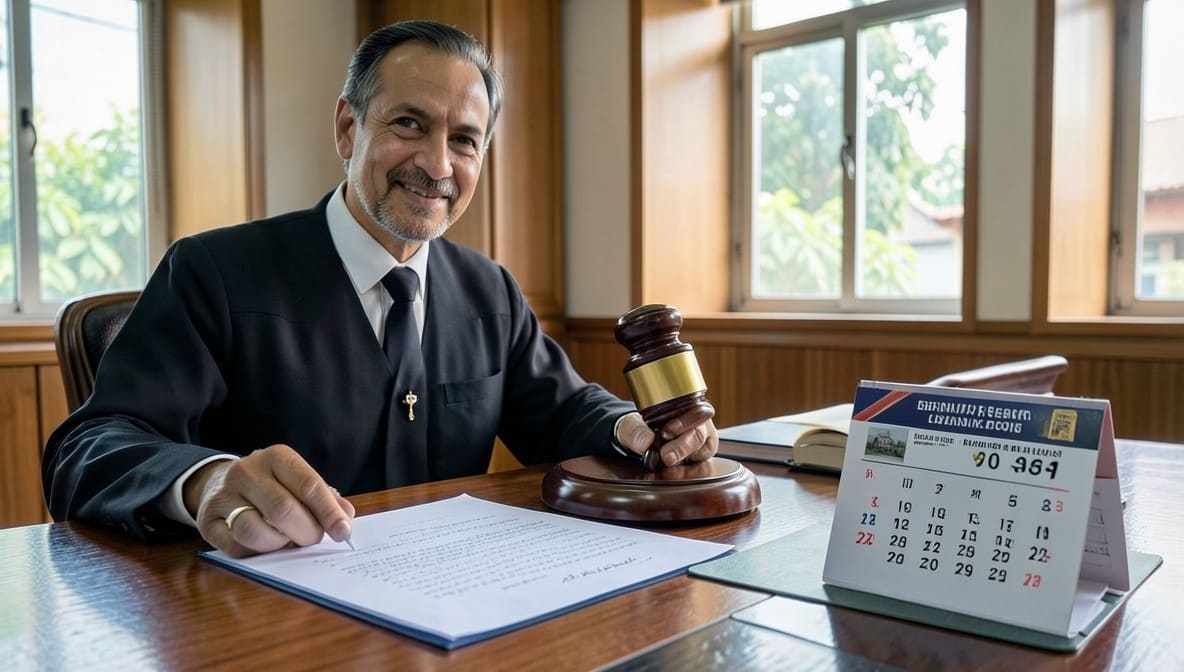
The Karnataka High Court, Kalaburagi Bench, has reaffirmed the judiciary's discretion to permit the filing of a written statement beyond the 120-day limit prescribed under Order VIII Rule 1 of the Code of Civil Procedure (CPC), despite the 2024 amendment. The Court set aside an impugned order rejecting the defendants' application to file a written statement, directing the trial court to accept it subject to payment of costs, while noting a stay on the amended provision's operation by a coordinate bench.
Background & Facts
The Dispute
The petitioners, Mohammad Muneeruddin and Mallikarjun, are defendants (Nos. 6 and 7) in O.S. No. 214/2025 pending before the I Additional Senior Civil Judge at Kalaburagi. The suit was filed by the respondents, led by Smt. Sunita, seeking unspecified relief. The petitioners sought permission to file their written statement, which the trial court rejected by order dated 27.01.2026, prompting the present writ petition under Article 227 of the Constitution of India.
Key Facts
- The petitioners are defendants in a civil suit (O.S. No. 214/2025) before the Senior Civil Judge, Kalaburagi
- They filed I.A. No. V under Section 151 of the CPC seeking permission to file their written statement
- The trial court rejected the application on 27.01.2026
- The petitioners challenged this order via writ petition (WP No. 200933/2026)
Procedural History
- 2025: Suit (O.S. No. 214/2025) filed by the respondents before the Senior Civil Judge, Kalaburagi
- 27.01.2026: Trial court rejected the petitioners' application (I.A. No. V) to file a written statement
- 2026: Petitioners filed WP No. 200933/2026 before the Karnataka High Court, Kalaburagi Bench
- 03.06.2026: High Court passed the present order
Relief Sought
The petitioners sought:
- Quashing of the trial court's order dated 27.01.2026 rejecting their application to file a written statement
- Permission to file their written statement in O.S. No. 214/2025
- Any other relief deemed just and appropriate
The Legal Issue
The central question was whether the court could exercise its discretion to permit the filing of a written statement beyond the 120-day limit prescribed under Order VIII Rule 1 CPC, as amended by Act 8 of 2024, effective from 05.06.2025, particularly in light of a stay on the amendment's operation by a coordinate bench of the High Court.
Arguments Presented
For the Petitioners
The petitioners contended that:
- The trial court erred in rejecting their application to file a written statement
- The 120-day limit under Order VIII Rule 1 CPC should not be applied rigidly, especially given the stay on the amendment's operation by a coordinate bench
- They were entitled to an opportunity to contest the suit on merits
For the Respondent
The respondent (plaintiff) submitted, on instructions, that:
- They had no objection to the impugned order being set aside and the petition being allowed
- They consented to the petitioners being permitted to file their written statement, subject to imposition of exemplary costs
The Court's Analysis
The Court adopted a justice-oriented approach, emphasizing the need to provide the petitioners an opportunity to contest the suit on merits. The key observations were:
-
Judicial Discretion: The Court held that despite the amendment to Order VIII Rule 1 CPC, which prescribes a maximum limit of 120 days (90 + 30 days) for filing a written statement, the judiciary retains discretion to permit filing beyond this period, particularly in light of the stay on the amendment's operation by a coordinate bench of the High Court (W.P. No. 8884/2023, dated 23.03.2026).
-
Balancing Interests: The Court balanced the interests of justice with procedural compliance, noting that rigid adherence to the 120-day limit would deprive the petitioners of their right to defend the suit on merits.
"In view of the aforesaid submission made on instruction by the learned counsel appearing on behalf of respondent No.1-plaintiff, I deem it just and appropriate to adopt a justice oriented approach and in order to provide an opportunity to the petitioners to file their written statement and contest the suit on merits, I am of the considered opinion that the impugned order dated 27.01.2026 passed in O.S.No.214/2025 deserves to be set aside and I.A.No.V filed by the petitioners deserves to be allowed."
- Costs as Deterrent: The Court imposed exemplary costs of Rs. 10,000 on the petitioners, payable to the respondent-plaintiff, to deter frivolous delays while ensuring substantive justice.
The Verdict
The Court allowed the writ petition and passed the following directions:
- The impugned order dated 27.01.2026 passed by the I Additional Senior Civil Judge, Kalaburagi, was set aside
- The petitioners were permitted to file their written statement in O.S. No. 214/2025
- The permission was subject to payment of costs of Rs. 10,000 to the respondent-plaintiff before the trial court
- The trial court was directed to receive the written statement and proceed with the matter
What This Means For Similar Cases
Judicial Discretion Prevails Over Rigid Timelines
- Courts retain the inherent power to permit procedural relaxations, such as filing a written statement beyond the prescribed limit, where justice demands
- The stay on the amended Order VIII Rule 1 CPC by a coordinate bench reinforces this discretion, preventing automatic rejection of delayed filings
Costs as a Tool for Balancing Justice
- Exemplary costs can be imposed to deter unnecessary delays while ensuring substantive rights are not denied
- Practitioners should argue for proportional costs where delays are justified by genuine hardship or procedural complexities
Coordinate Bench Orders Have Persuasive Value
- Orders like the stay in W.P. No. 8884/2023 can influence subsequent rulings, even if not binding
- Lawyers should cite coordinate bench orders to strengthen arguments for procedural flexibility