Topic

motor accident claim

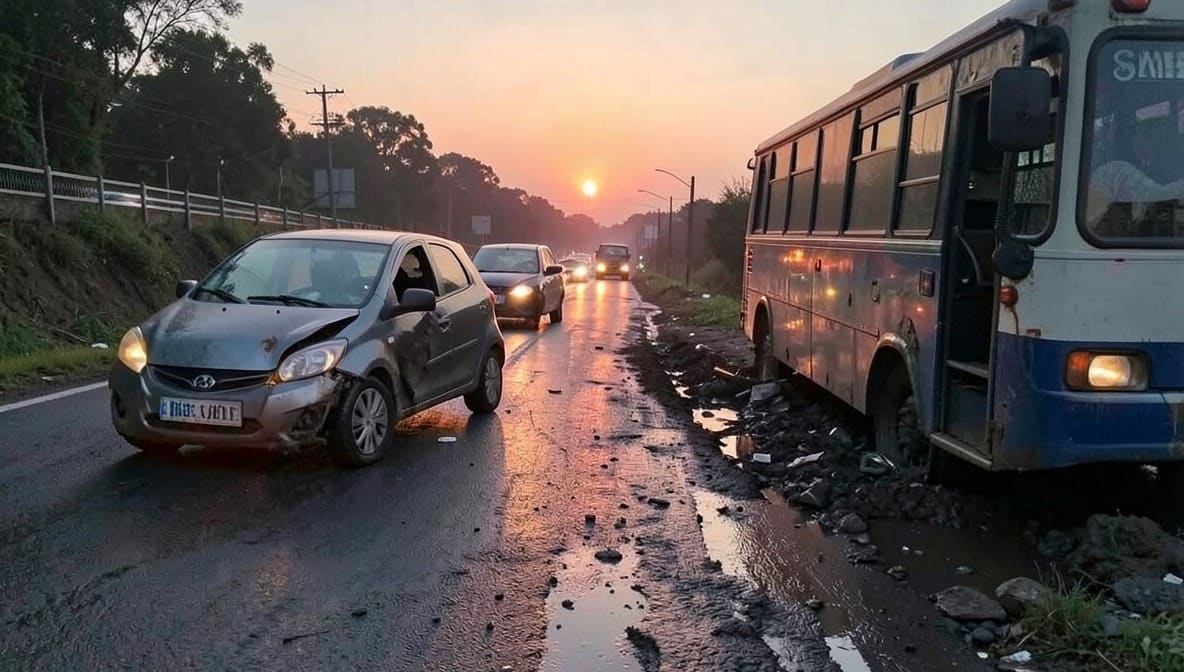
Motor accident claims in India involve compensation claims under the Motor Vehicles Act, 1988, for injuries or death resulting from road accidents, with liability often determined by police reports, insurance policies, and procedural compliance.

24 articlesLatest August 2026
FIR & charge-sheet are prima facie evidence of negligence; criminal acquittal does not bar civil compensation in motor accident claims | Motor Vehicles Act : SC
Case Law Analysis
|Supreme Court of India

FIR & charge-sheet are prima facie evidence of negligence; criminal acquittal does not bar civil compensation in motor accident claims | Motor Vehicles Act : SC

The Supreme Court ruled that an FIR and the accompanying charge-sheet suffice as prima facie proof of negligence in motor accident cases, and that a criminal acquittal does not extinguish the right to claim civil damages. This expands claimants’ ability to recover full compensation despite a not-guilty verdict.

Loss of Career Prospects Due to Injury | 20% Disability Justifies Rs.2.5 Lakh Compensation Under MV Act: Bombay HC
Case Law Analysis
|Bombay High Court

Loss of Career Prospects Due to Injury | 20% Disability Justifies Rs.2.5 Lakh Compensation Under MV Act: Bombay HC

The Bombay High Court has ruled that a student denied medical admission due to a 20% disability from a motor accident is entitled to Rs.2.5 lakh in compensation for lost career prospects, affirming that future earning potential must be valued independently of medical costs. This sets a critical precedent for claimants in accident cases where injuries derail professional aspirations, especially in highly competitive fields like medicine.

Charge Sheet or Guilty Plea in Criminal Case Does Not Shift Burden of Proof in Motor Accident Claims | Karnataka HC
Case Law Analysis
|Karnataka High Court

Charge Sheet or Guilty Plea in Criminal Case Does Not Shift Burden of Proof in Motor Accident Claims | Karnataka HC

The Karnataka High Court holds that a criminal charge sheet or guilty plea cannot substitute independent proof of accident and vehicle involvement in motor accident claims. Claimants must still establish negligence and causation through credible evidence, and insurers retain the right to rebut presumptions using medical and forensic records - reinforcing that civil liability requires separate, affirmative proof.

Section 163A MV Act | Pillion Rider Entitled to No-Fault Compensation Without Impleading Third-Party Driver : Karnataka HC
Case Law Analysis
|Karnataka High Court

Section 163A MV Act | Pillion Rider Entitled to No-Fault Compensation Without Impleading Third-Party Driver : Karnataka HC

A pillion rider injured in a two-motorcycle collision can claim no-fault compensation under Section 163A of the Motor Vehicles Act without naming or impleading the driver of the other vehicle. The Karnataka HC affirms this right, upholding a Rs. 92,000 award with 7.5% interest from the date of accident, reinforcing that liability under Section 163A is statutory and independent of fault attribution to third parties.

Motor Accident Claim | Medical Expert Testimony Mandatory to Establish Causation Between Injury and Subsequent Death : Tripura HC
Case Law Analysis
|Tripura High Court

Motor Accident Claim | Medical Expert Testimony Mandatory to Establish Causation Between Injury and Subsequent Death : Tripura HC

The Tripura High Court has ruled that linking a death to accident-related injuries-such as gangrene progressing to cancer-requires conclusive medical expert testimony. Without it, compensation awards based on speculative causation are unsustainable, setting a new benchmark for evidentiary rigor in personal injury claims involving delayed or complex medical outcomes.

Motor Vehicles Act | Composite Negligence Requires Direct Evidence Against Driver: Rajasthan HC Sets Strict Proof Standard
Case Law Analysis
|Rajasthan High Court

Motor Vehicles Act | Composite Negligence Requires Direct Evidence Against Driver: Rajasthan HC Sets Strict Proof Standard

Rajasthan High Court dismisses motor accident claim petition, ruling that composite negligence cannot be inferred without direct evidence against the scooter driver. The judgment underscores the need for eyewitness testimony, timely FIR, and investigation reports to establish liability, impacting insurer liability and personal injury claims under the Motor Vehicles Act.

Section 149 MV Act | Insurer Entitled to Recover Compensation from Insured for Policy Breach Due to Overloaded Agricultural Tractor : Punjab & Haryana HC
Case Law Analysis
|Punjab and Haryana High Court

Section 149 MV Act | Insurer Entitled to Recover Compensation from Insured for Policy Breach Due to Overloaded Agricultural Tractor : Punjab & Haryana HC

Punjab & Haryana HC upholds insurer's right to recover compensation paid to third-party victims where the insured breached policy terms by attaching two overloaded trolleys to an agricultural tractor. The ruling reinforces that policy violations nullify insurer liability, shifting financial burden back to the insured.

Natural Justice in Motor Insurance | Delayed FIR or Fake License Allegations Cannot Bar Claims Without Inquiry : Calcutta HC
|Calcutta High Court

Natural Justice in Motor Insurance | Delayed FIR or Fake License Allegations Cannot Bar Claims Without Inquiry : Calcutta HC

Calcutta High Court rules that insurers cannot reject motor accident claims solely based on delayed FIR filing or unverified allegations of fake licenses. The court mandates a prior inquiry and hearing for the vehicle owner before denying compensation, enhancing the award to Rs. 14 lakh with 6% interest. This reinforces procedural fairness in third-party liability claims under the Motor Vehicles Act.