The Tripura High Court has clarified that in motor accident claims involving death, a direct causal link between the accident-induced injury and subsequent fatal condition cannot be presumed. Absent expert medical testimony, any award based on speculative medical causation is legally unsustainable.
Background & Facts
The Dispute
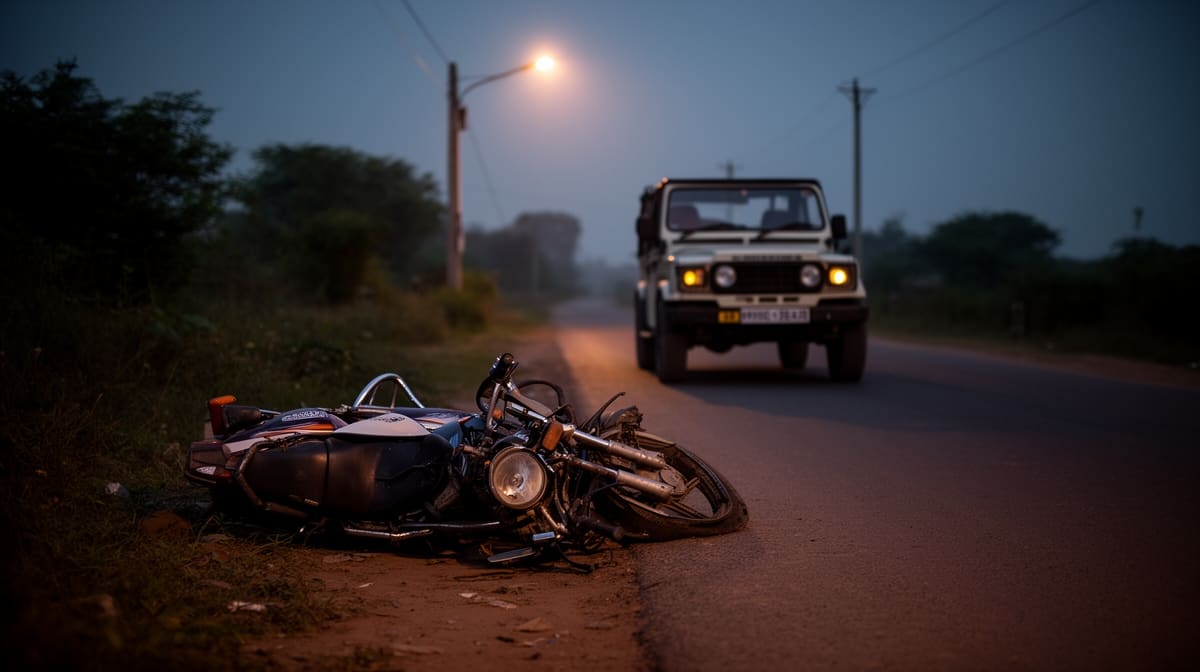
The dispute arose from a motor accident on 01.01.2015 involving an auto rickshaw bearing registration number TR-01D-3800, owned by Respondent No. 5, Sri Samir Ranjan Das, and insured by the Appellant, New India Assurance Company Ltd. The accident caused injuries to Santi Bhusan Roy, who was the original claimant. During the pendency of the claim petition, Santi Bhusan Roy died on an unspecified date, and his legal representatives - Smti Dipali Roy, Sri Debasish Roy, Sri Uttam Roy, and Smti Shyamali Shil - were substituted as respondents.
Key Facts
- The deceased sustained injuries to his right leg in the accident on 01.01.2015.
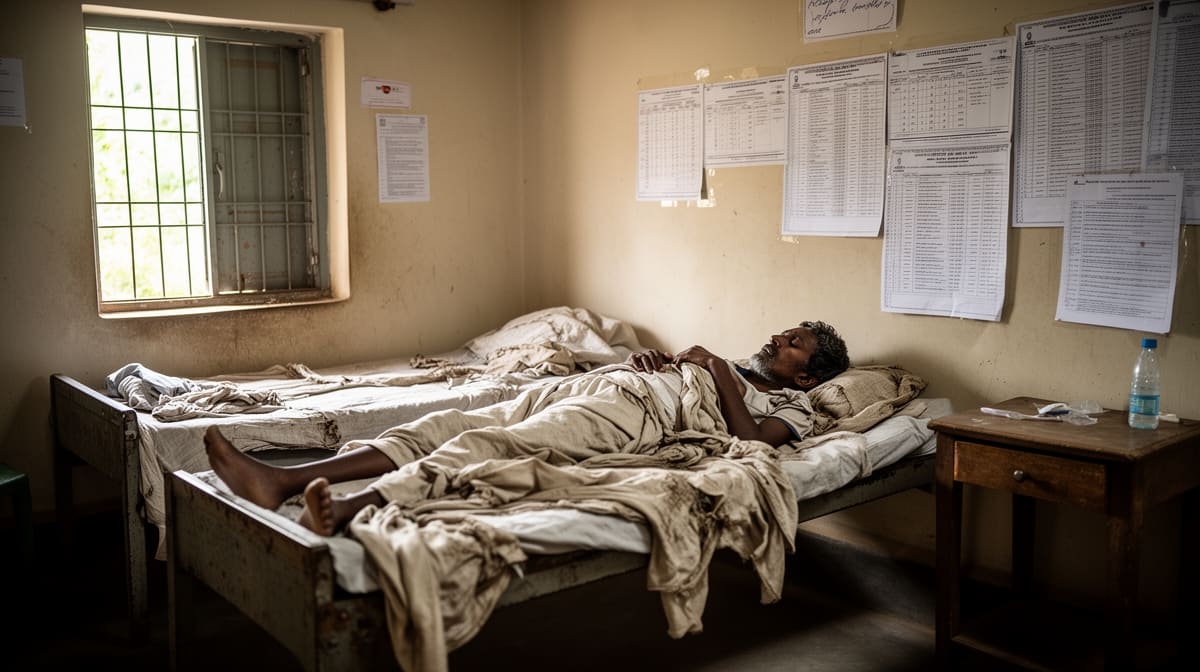
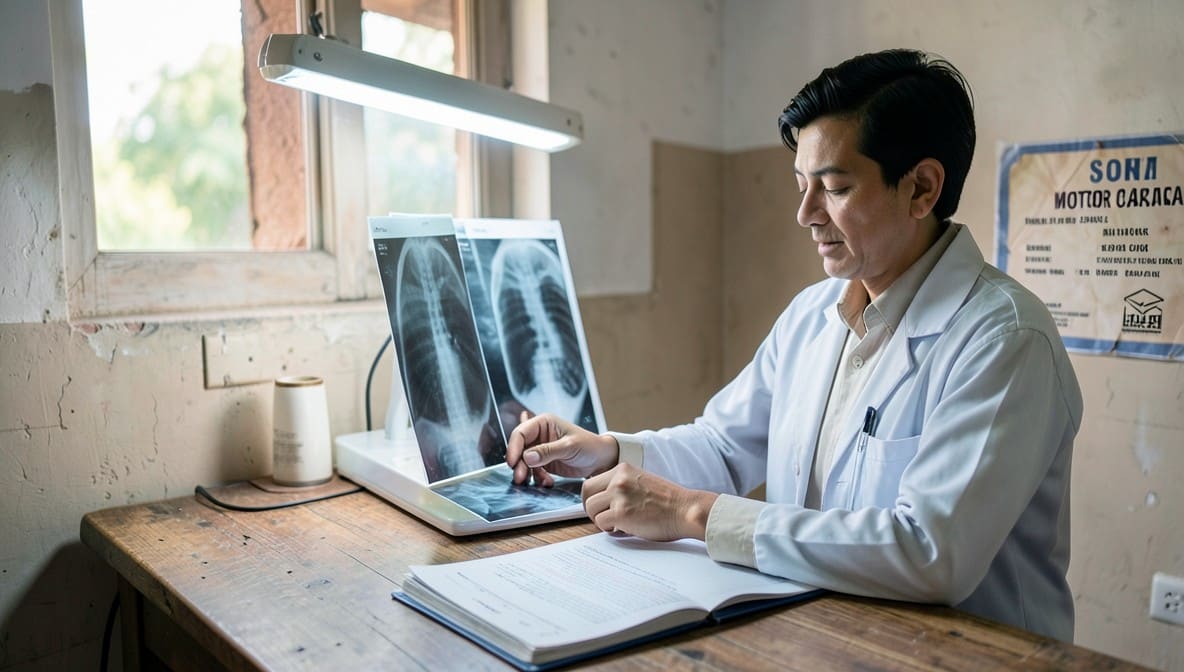
- He was treated at AGMC and GBP Hospital, Agartala, where an X-ray (Exhibit 3) dated 11.03.2015 revealed osteoarthritis of the right knee joint and a comminuted intertrochanteric fracture of the right femur.
- Subsequent OPD records (Exhibit 4(i) dated 15.04.2015 and Exhibit 4(iv) dated 20.06.2015) indicated diagnosis of 'plasmacytoma' and 'plasmacytoma sacrum' - a rare form of blood cancer.
- The deceased was referred to the Agartala Regional Cancer Hospital for treatment.
- He died subsequently, and a death certificate (Exhibit 7) was produced.
- No post-mortem report was conducted.
- No medical officer or expert witness was examined by either party to establish the connection between the accident, the development of gangrene, and the eventual cancer.
Procedural History
- 01.01.2015: Motor accident occurred.
- 2015: Original claim petition (TS(MAC) 250 of 2015) filed before Motor Accident Claim Tribunal No. 2, West Tripura.
- 05.10.2023: Tribunal awarded compensation, holding that the deceased’s death was caused by complications arising from the accident injuries, including gangrene leading to cancer.
- 16.05.2026: Appeal filed by New India Assurance Company Ltd. before the Tripura High Court.
The Parties' Positions
Appellant (Insurer): Contended that the Tribunal erred in attributing death to the accident without any medical expert testimony or post-mortem report. The link between the fracture and plasmacytoma was speculative and unsupported.
Respondents (Claimants): Argued that the medical documents (Exhibits 4(i) and 4(iv)) established a chain of causation from the accident to gangrene to cancer. They also submitted that inadequate compensation was awarded for loss of dependency and income.
Relief Sought
The claimants sought compensation for loss of dependency, loss of income, medical expenses, and funeral costs. The Tribunal awarded compensation based on the assumption of causal connection. The insurer sought setting aside of the award. The claimants, in their cross-submissions, sought enhancement of the award.
The Legal Issue
The central question was whether causation between a motor accident injury and subsequent death due to cancer can be established solely through OPD records and a death certificate, without examination of any medical expert witness.
Arguments Presented
For the Appellant
Mr. Gitangshu Sekhar Das and Mr. Kushal Deb argued that the Tribunal’s conclusion was based on conjecture. Plasmacytoma is a hematological malignancy with no established medical link to traumatic fractures or gangrene. The absence of a post-mortem report and expert testimony rendered the causal connection legally unproven. Reliance on non-expert medical documents without corroboration violated the principles of evidence under the Indian Evidence Act.
For the Respondent
Mr. Tapas Datta Majumder and Mr. B. Kaipeng submitted that the OPD records, referral to a cancer hospital, and the temporal proximity between injury and death were sufficient to infer causation. They argued that requiring expert testimony in every claim would impose an unreasonable burden on claimants, especially in rural areas. They also contended that the Tribunal’s award was conservative and should be enhanced.
The Court's Analysis
The Court observed that while the claimants produced documentary evidence of treatment, none of the documents were authored or certified by a qualified medical practitioner who could testify to the etiology of the disease. The X-ray report (Exhibit 3) indicated a fracture, but did not link it to the later diagnosis of plasmacytoma. The OPD tickets (Exhibits 4(i) and 4(iv)) merely recorded diagnoses made by attending physicians, without any opinion on causation.
"Without examining any medical officer on that point, it would not be proper to give any specific observation either by learned Tribunal or by this Court as to whether the said cancer was related to the accidental injuries received by the deceased or not."
The Court emphasized that medical causation in tort claims, particularly where death is alleged to result from an accident, requires expert testimony. The burden of proving causation lies with the claimant, and circumstantial evidence alone, without expert validation, is insufficient. The Tribunal erred in drawing a medical conclusion without the aid of a qualified witness.
The Court further noted that while the claimants may have a legitimate grievance, the legal standard for establishing causation in compensation claims cannot be diluted. The absence of a post-mortem report, though not mandatory, significantly weakens the evidentiary foundation when death is alleged to be accident-related.
The Verdict
The appeal was dismissed, but the Tribunal’s award dated 05.10.2023 was set aside. The case was remanded to the Motor Accident Claim Tribunal No. 2, West Tripura, for fresh adjudication. The claimants must furnish the names and addresses of medical professionals who treated the deceased, and the Tribunal shall summon them to testify. The insurer may adduce rebuttal evidence. The Tribunal is directed to complete the fresh inquiry within four months of receipt of the record. The parties are directed to appear before the Tribunal on 26.05.2026.
What This Means For Similar Cases
Medical Causation Requires Expert Testimony
- Practitioners must ensure that in claims involving death following injury, a qualified medical expert is examined to establish a direct, scientifically valid link between the accident and the fatal condition.
- OPD records, hospital referrals, and death certificates alone are insufficient to prove causation.
No Presumption of Causation in Cancer-Related Claims
- Courts will not presume that trauma or gangrene causes hematological malignancies like plasmacytoma without expert evidence.
- Claimants must proactively secure medical opinions linking the accident to the disease progression.
Procedural Rigor in Tribunal Proceedings
- Tribunals must not rely on speculative medical inferences.
- Parties must be given opportunity to examine or cross-examine treating doctors.
- Failure to produce medical witnesses may result in dismissal of the claim or remand.
Timely Disposal Mandated
- Tribunals must dispose of remanded cases within stipulated timelines (here, four months) to prevent undue delay in justice delivery, especially in long-pending cases like this one from 2015.
Burden of Proof Remains on Claimants
- The burden to prove causation does not shift to the insurer merely because the claimant is a victim.
- Claimants must meet the evidentiary threshold with credible, expert-backed medical evidence.