Topic

Indian Contract Act

The Indian Contract Act, 1872 governs the formation, enforcement, and breach of contracts in India, including guarantees, specific performance, and void agreements.

22 articlesLatest 6 days ago
Temporary Occupation of Substitute Flat Under Written Protest Not Waiver of Refund Right for Booked Flat | Housing Deficiency : WB SCDRC
Case Law Analysis

Temporary Occupation of Substitute Flat Under Written Protest Not Waiver of Refund Right for Booked Flat | Housing Deficiency : WB SCDRC

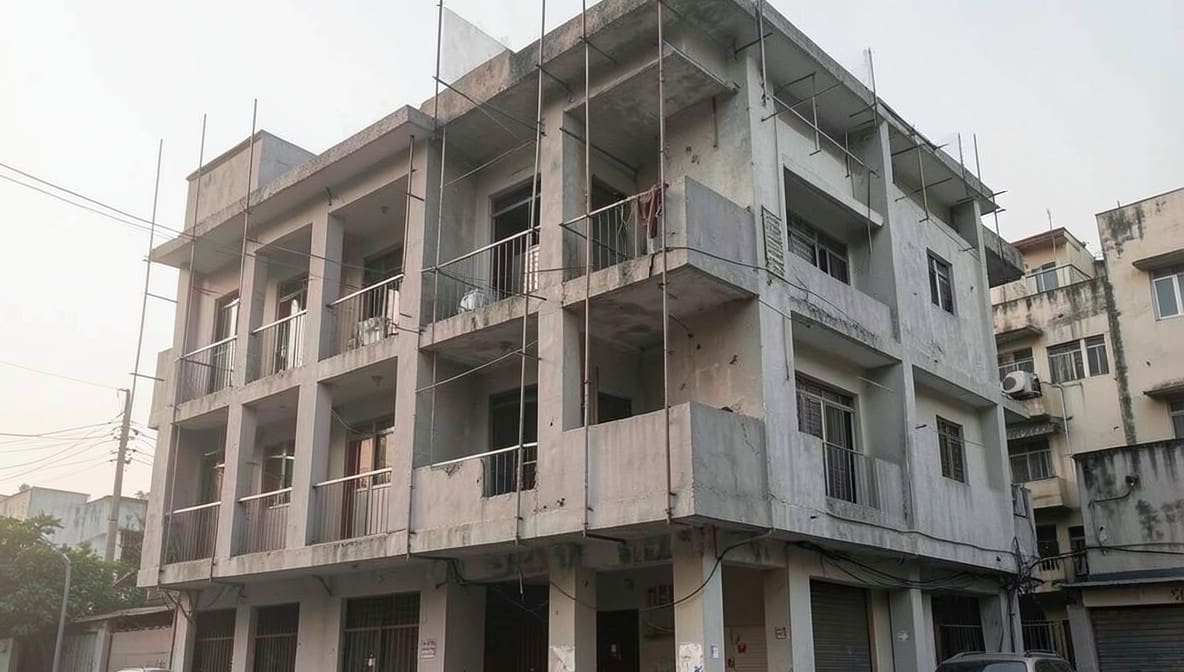
The Commission held that a homebuyer's temporary occupation of a substitute flat with express written objection does not constitute acceptance of permanent substitution, preserving the right to refund of the full booking amount (Rs. 53.43 lakh) for the undelivered flat. It awarded staggered interest at 9% pre-occupation and 7% during occupation, plus Rs. 1 lakh costs, payable within 90 days. The ruling protects buyers who occupy alternative units under protest while asserting their original contractual rights.


Condition Precedent | Vendor's Failure to Transfer Shares & Reconstitute Board Relieves Purchaser of Payment Obligation; Refund Upheld Under Section 65 Contract Act : Calcutta HC
Case Law Analysis
|Calcutta High Court

Condition Precedent | Vendor's Failure to Transfer Shares & Reconstitute Board Relieves Purchaser of Payment Obligation; Refund Upheld Under Section 65 Contract Act : Calcutta HC

The Division Bench held that the vendor's obligation to transfer 51% shares and reconstitute the board was a condition precedent, so its non-performance discharged the purchaser's payment duty. The purchaser's SMS communication avoiding the contract was lawful, and the vendor's Rs. 5.51 crore damages claim failed for want of proof. The purchaser's Rs. 1 crore advance was refunded under Section 65 of the Contract Act.

Section 34, Arbitration Act - Award can be set aside only for patent illegality or public-policy breach | Real-estate refund dispute : Delhi HC
Case Law Analysis
|Delhi High Court

Section 34, Arbitration Act - Award can be set aside only for patent illegality or public-policy breach | Real-estate refund dispute : Delhi HC

The Delhi High Court affirmed that Section 34 of the Arbitration and Conciliation Act permits setting aside an award only on patent illegality or public-policy grounds. Consequently, the appellant’s force-majeure claim and interest-rate dispute were dismissed, narrowing set-aside avenues for parties in commercial and real-estate arbitrations.

Arbitration Clause Survives Supplementary Agreement Unless Original Contract Expressly Extinguished : Bombay HC
Case Law Analysis
|Bombay High Court

Arbitration Clause Survives Supplementary Agreement Unless Original Contract Expressly Extinguished : Bombay HC

Bombay High Court rules that an arbitration clause in a redevelopment agreement remains enforceable despite subsequent supplementary agreements, unless the original contract is explicitly substituted. The judgment reinforces the survival of arbitration clauses under the Indian Contract Act and Arbitration and Conciliation Act 1996, impacting cooperative housing societies and developers in contract disputes.

Section 133 Indian Contract Act | Novation or Variance Without Guarantor Consent Discharges Personal Guarantee : NCLAT
Case Law Analysis
|National Company Law Appellate Tribunal

Section 133 Indian Contract Act | Novation or Variance Without Guarantor Consent Discharges Personal Guarantee : NCLAT

NCLAT holds that any renewal, novation, or variance of credit facilities without the personal guarantor's consent automatically discharges their liability under Section 133 of the Indian Contract Act. This ruling reinforces the protection of guarantors under the IBC and sets a precedent for creditors to secure explicit consent for modifications.

Burden of Proof on Dominant Party in Fiduciary Relationships | Fraudulent Sale Deeds Must Be Proven Fair: AP HC Cancels Deeds Obtained Through Undue Influence
Case Law Analysis
|Andhra Pradesh High Court

Burden of Proof on Dominant Party in Fiduciary Relationships | Fraudulent Sale Deeds Must Be Proven Fair: AP HC Cancels Deeds Obtained Through Undue Influence

The Andhra Pradesh High Court ruled that dominant parties in fiduciary relationships bear the burden of proving fairness in property transactions, especially when fraud or undue influence is alleged. The court upheld the cancellation of sale deeds obtained through coercion, reinforcing protections for illiterate and dependent individuals under property law.

Condition Precedent Under Section 52 & 54 ICA | Payment Liability Triggers Only Upon Property Handover in Functional Condition : Allahabad HC
Case Law Analysis
|Allahabad High Court

Condition Precedent Under Section 52 & 54 ICA | Payment Liability Triggers Only Upon Property Handover in Functional Condition : Allahabad HC

Allahabad High Court rules that payment obligations under a contract arise solely after fulfillment of a condition precedent-here, the handover of property in a functional state. The judgment reinforces that reciprocal promises under Sections 52 and 54 of the Indian Contract Act are enforceable only upon compliance with agreed prerequisites, impacting contract execution and dispute resolution.

Section 16 Indian Contract Act | Place of Payment Defaults to Creditor’s Residence in Absence of Agreement: HP HC Clarifies Jurisdiction for Loan Recovery
Case Law Analysis
|Himachal Pradesh High Court

Section 16 Indian Contract Act | Place of Payment Defaults to Creditor’s Residence in Absence of Agreement: HP HC Clarifies Jurisdiction for Loan Recovery

In the absence of a specified repayment location, the HP High Court ruled that the debtor must pay at the creditor’s residence, making Shimla the proper jurisdiction for recovery. This clarifies a critical default rule under Section 16 of the Indian Contract Act, impacting lenders and borrowers nationwide where loan agreements lack payment terms.

Verbal Agreement Enforceable Under Indian Contract Act | Silence After Notice Constitutes Conduct Supporting Specific Performance : Bombay HC
Case Law Analysis
|Bombay High Court

Verbal Agreement Enforceable Under Indian Contract Act | Silence After Notice Constitutes Conduct Supporting Specific Performance : Bombay HC

Bombay High Court rules that a verbal property sale agreement can be specifically enforced if the defendant's silence after a legal notice constitutes conduct under Section 9 of the Indian Contract Act. The judgment underscores that preponderance of probabilities can validate verbal contracts in real estate disputes, impacting property buyers and sellers relying on informal agreements.

Agreement of Sale as Loan Security Not Enforceable as Contract to Sell | Specific Performance Denied, Money Decree with Interest Mandated : Andhra Pradesh HC
Case Law Analysis
|Andhra Pradesh High Court

Agreement of Sale as Loan Security Not Enforceable as Contract to Sell | Specific Performance Denied, Money Decree with Interest Mandated : Andhra Pradesh HC

The Andhra Pradesh High Court has ruled that an agreement of sale executed solely as security for a loan creates a creditor-debtor relationship, not a binding contract for transfer of property. Specific performance is unavailable; the rightful remedy is a money decree with pre-decree interest at 12% and post-decree interest at 6%, clarifying a critical boundary in property finance transactions affecting lenders and borrowers alike.

Void Contract for Stamp Duty Evasion | Payments Recoverable to Prevent Unjust Enrichment; Assignment Valid, Fabricated Receipts Require Proof : Madras HC
Case Law Analysis
|Madras High Court

Void Contract for Stamp Duty Evasion | Payments Recoverable to Prevent Unjust Enrichment; Assignment Valid, Fabricated Receipts Require Proof : Madras HC

The Madras High Court ruled that while dual sale agreements designed to evade stamp duty are void, payments made under them are recoverable to prevent unjust enrichment. It affirmed the validity of contract assignments and emphasized that claims based on fabricated receipts demand concrete, verifiable evidence - not mere assertions.