The Allahabad High Court has clarified the legal principle governing reciprocal promises under the Indian Contract Act, 1872, holding that payment liability under a contract commences only upon fulfillment of a condition precedent - in this case, the handing over of possession of a marriage hall in a functional condition. The judgment underscores the importance of Section 52 and Section 54 of the Act in determining the sequence of performance and the consequences of non-compliance with precedent obligations.
Background & Facts
The Dispute
The petitioner, a bidder for a marriage hall owned by Zila Panchayat, Jhansi (respondent no. 3), entered into an agreement dated 05.12.2013 for a tenure of 10 years. The agreement stipulated that the petitioner would pay Rs. 25,12,500 in installments, with amounts increasing every three years. However, the petitioner was not handed over possession of the marriage hall despite repeated requests, leading to prolonged litigation.
Key Facts
- 24.10.2013: Auction notice published for the marriage hall.
- 23.11.2013: Petitioner called upon to deposit stamp duty of Rs. 28,12,500.
- 05.12.2013: Agreement executed for 10 years at Rs. 25,12,500.
- 28.05.2015: Writ Petition (C No. 31841/2015) disposed of, directing Zila Panchayat to finalize the matter.
- 24.08.2015: Contempt Application (Civil No. 5114/2015) disposed of, granting three weeks for compliance.
- 23.10.2022: Petitioner learns through a newspaper article about the impending cancellation of the agreement.
- 14.11.2022: Impugned letter cancels Resolution No. 8 and directs the petitioner to collect deposited amounts.
- 15.02.2023: High Court stays the letter dated 14.11.2022 and prohibits third-party rights.
- 06.03.2023: Petitioner asked to submit an enhanced offer.
- 15.03.2023: Petitioner agrees to pay 20% enhanced amount.
- 03.04.2023: Respondent no. 3 agrees to hand over possession subject to the enhanced amount.
- 12.04.2023: Petitioner informs respondent no. 3 of the marriage hall’s dilapidated condition and requests repairs.
- 21.08.2023 & 27.08.2023: Work orders issued for repairs (Rs. 3,08,700 for kitchen; Rs. 13,46,185 for four flats).
- September 2025: Repairs completed; marriage hall brought to functional condition.
- 03.09.2025: Petitioner requests handover of possession.
- 27.11.2025: Respondent no. 3 claims possession was handed over on 03.04.2023.
- 29.11.2025: Petitioner denies taking possession, citing ongoing repairs.
- 28.01.2026: Petitioner deposits Rs. 5,16,000 and takes possession under protest.
Procedural History
- Writ C No. 31841/2015: Filed for non-handover of possession; disposed of on 28.05.2015.
- Contempt Application (Civil) No. 5114/2015: Filed for non-compliance; disposed of on 24.08.2015.
- Contempt Application (Civil) No. 5031/2020: Dismissed as barred by time.
- Writ C No. 39695/2022: Present petition challenging the letter dated 14.11.2022.
Relief Sought
The petitioner sought:
- Quashing of the impugned letter dated 14.11.2022.
- Direction to respondent no. 3 to hand over possession of the marriage hall in functional condition.
- Liability for payment to commence only from the date of actual handover of possession.
The Legal Issue
The central question was whether the petitioner’s payment liability under the agreement commenced from the date of alleged handover (03.04.2023) or from the date the marriage hall was rendered functional (September 2025) and actually taken over (January 2026), given that the agreement stipulated handover of possession as a condition precedent for payment.
Arguments Presented
For the Petitioner
- The petitioner contended that possession was never effectively handed over on 03.04.2023 due to the marriage hall’s dilapidated condition.
- The marriage hall was not functional until repairs were completed in September 2025, and the petitioner took possession only in January 2026.
- Under Section 52 and Section 54 of the Indian Contract Act, payment liability could not arise until the condition precedent (handover of functional possession) was fulfilled.
- The petitioner relied on the agreement’s terms, which explicitly linked the commencement of the tenure to the date of handover.
For the Respondents
- The respondents argued that possession was handed over on 03.04.2023 pursuant to the letter dated 03.04.2023, and the petitioner did not object at the time.
- The petitioner’s delay in taking possession (until January 2026) was his own fault, and he should be liable for payments from April 2023.
- The respondents claimed that the repairs were carried out at the petitioner’s request, implying his acceptance of possession.
The Court's Analysis
The Court examined the agreement dated 05.12.2013, which explicitly stated that the tenure would commence "from the date of hand over of the charge of the marriage hall." The Court observed:
"Hence, the perusal of the agreement itself reveals that the agreement was to commence from the date of hand over of the charge of the marriage hall to the petitioner."
The Court analyzed Section 52 and Section 54 of the Indian Contract Act, 1872, which govern reciprocal promises and the sequence of performance:
- Section 52 mandates that reciprocal promises be performed in the order expressly fixed by the contract or, in its absence, in the order required by the nature of the transaction.
- Section 54 stipulates that if the promisor of the precedent obligation fails to perform it, they cannot claim performance of the reciprocal promise and must compensate the other party for losses arising from non-performance.
The Court held that handover of possession in a functional condition was a condition precedent for the petitioner’s payment liability. Key observations included:
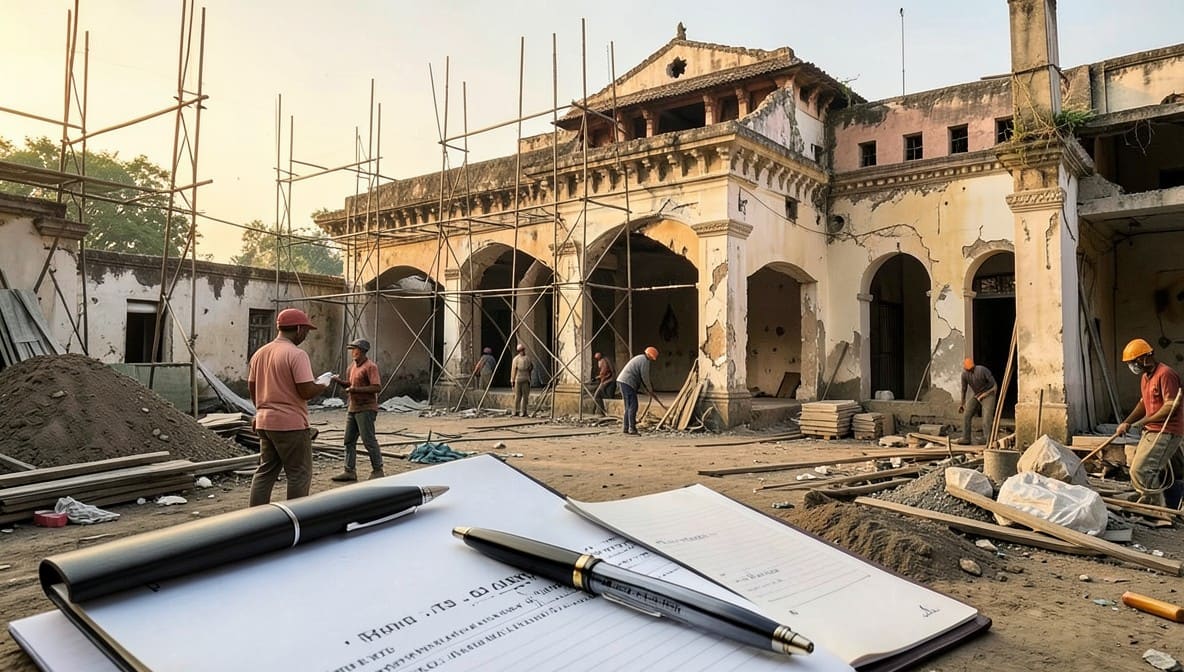
- The respondents admitted that the marriage hall was in a dilapidated condition in April 2023 and that repairs were carried out between August 2023 and September 2025.
- The petitioner could not have operated the marriage hall while repairs were ongoing, and thus no payment liability could arise during this period.
- The respondents failed to prove that possession was actually handed over on 03.04.2023, as no material evidence was placed on record.
- The petitioner’s letter dated 12.04.2023 requesting repairs reaffirmed that he had not taken possession in April 2023.
The Court concluded that the tenure of the agreement and the payment liability could only commence from the date the marriage hall was rendered functional and actually taken over by the petitioner. However, the Court noted that while the marriage hall was functional by September 2025, the petitioner delayed taking possession until January 2026, which was his own fault. Thus, the Court held that the tenure and payment liability would commence from September 2025.
The Verdict
The writ petition was disposed of with the following directions:
- The impugned letter dated 14.11.2022 was rendered irrelevant as the petitioner had already taken possession.
- The respondents were permitted to charge the petitioner at an enhanced rate of 20% over the original agreement amount.
- The tenure of the agreement (10 years) and the payment liability were held to commence from September 2025.
- No costs were awarded.
What This Means For Similar Cases
Condition Precedent Must Be Fulfilled Before Payment Liability Arises
- Contractual obligations are not enforceable unless the condition precedent is satisfied. In this case, handover of functional possession was the trigger for payment liability.
- Practitioners must scrutinize agreement terms to identify precedent conditions and ensure compliance before demanding performance.
Burden of Proof Lies on the Party Alleging Performance
- The respondents failed to prove that possession was handed over on 03.04.2023, as no documentary evidence was produced.
- Parties alleging fulfillment of a condition precedent must substantiate their claims with contemporaneous records (e.g., handover memos, acknowledgment receipts).
Delay in Taking Possession May Shift Liability Period
- While the petitioner was not liable for payments during the repair period, his delay in taking possession (from September 2025 to January 2026) resulted in the liability period commencing from September 2025.
- Parties must act promptly upon fulfillment of conditions to avoid unintended liability shifts.