The Delhi High Court dismissed Omaxe Ltd.’s appeal under Section 37 of the Arbitration and Conciliation Act, 1996, reaffirming that a domestic arbitral award can be set aside only on the narrow grounds of patent illegality or public policy, and rejecting the appellant’s reliance on contractual provisions of the Indian Contract Act.
Background & Facts
The Dispute
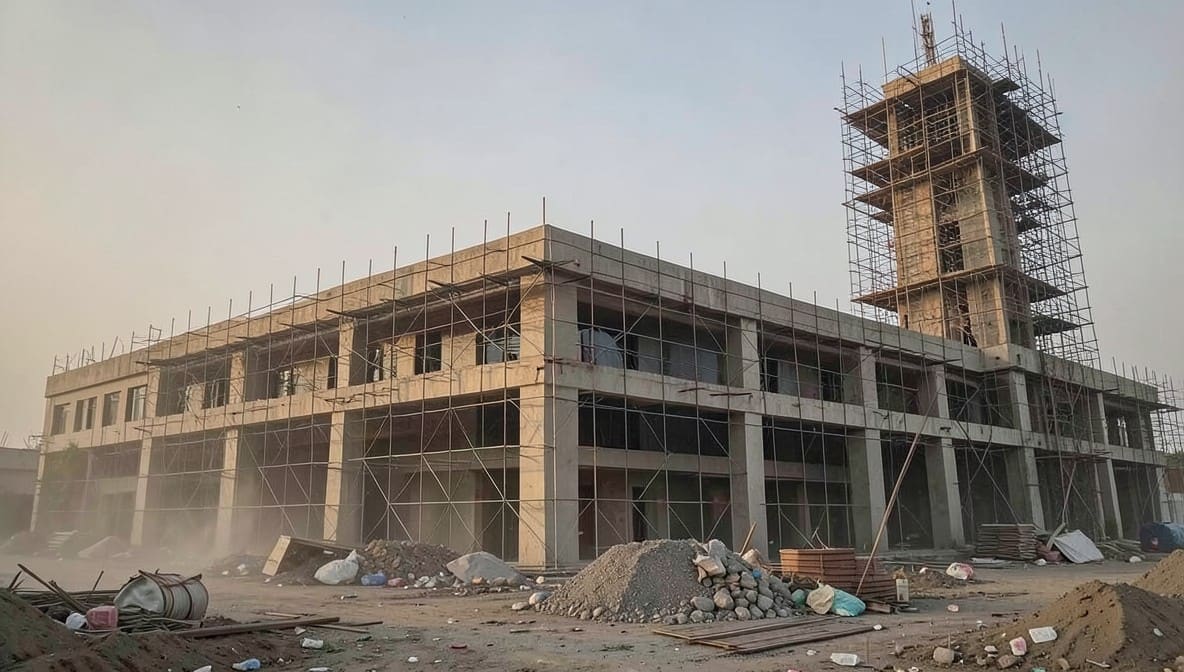
The dispute stems from an Allotment Agreement dated 02.05.2008 for Commercial Unit No. 26 in the under-construction Omaxe Novelty Mall, Amritsar. The respondents, two co-allottees, terminated the agreement by legal notice dated 18.04.2013 and sought a refund of the sale consideration with interest. The parties were referred to arbitration.
Key Facts
- 02.05.2008: Allotment Agreement and Addendum executed between Omaxe Ltd. (appellant) and the five co-allottees, including Respondents No. 1 and 2 (each holding 16.665%).
- 10.02.2007 - 26.11.2007: Respondents paid Rs 10,05,13,952 (95% of basic price) for Unit 26.
- 29.11.2007 - 30.04.2010: Appellant paid assured monthly returns of Rs 9,84,199 (9% on the paid amount).
- Clause 26(a) of the Allotment Agreement stipulated a 36-month construction period ending 01.05.2011.
- 01.05.2011: Construction deadline passed; project remained incomplete.
- 18.04.2013: Respondents issued legal notice terminating the agreement and invoking arbitration.
- ASI objections: ASI raised concerns about the site being within the Maharaja Ranjit Singh Summer Palace area; construction beyond 15 m was halted.
- 22.02.2012: ASI granted permission to construct up to 24 m.
- 08.07.2015: Completion Certificate issued for Unit 26.
- 29.01.2016: Completion Certificate cancelled; stay order dated 17.02.2016 by Punjab & Haryana High Court.
- 31.07.2019: Completion Certificate restored.
- 17.09.2018: Supreme Court appointed Justice B.S. Chauhan (Retd.) as Sole Arbitrator.
- 20.03.2020: Arbitral Tribunal awarded refund of Rs 3,35,04,650 principal plus pendente lite interest of Rs 4,16,94,674, total Rs 7,51,99,324, future interest at 12% and costs of Rs 25 lakhs to the respondents.
- 19.07.2023: Single Judge of the Delhi High Court dismissed the appellant’s Section 34 petition, upholding the award.
- 14.08.2026: Present judgment delivered, dismissing the appeal.
- 13.05.2025: Supreme Court order in Criminal Appeal No. 2567-2568/2025 (referred to by appellant).
- Execution petition OMP(ENF.) (COMM) 65/2021 filed by respondents to enforce the award.
Procedural History
- 02.05.2008: Allotment Agreement and Addendum executed.
- 18.04.2013: Respondents’ termination notice; arbitration invoked.
- 17.09.2018: Supreme Court appointed Sole Arbitrator.
- 20.03.2020: Arbitral Award passed.
- 19.07.2023: Single Judge dismissed appellant’s Section 34 petition.
- 14.08.2026: Appeal under Section 37 filed; judgment delivered.
- 13.05.2025: Supreme Court order cited by appellant (irrelevant to award).
- Execution petition OMP(ENF.) 65/2021 pending.
Parties' Positions
- Appellant (Omaxe Ltd.): Argues that the award is illegal because the Allotment Agreement contemplated delay, that the ASI-induced stoppage is force majeure, that interest should be 6% (contractual) or 9% (Addendum), and that its counter-claims are time-barred.
- Respondents (Joginder Singh Nijjar & Anr.): Contend that the appellant breached statutory requirements, failed to obtain ASI NOC, discontinued assured returns, and therefore termination and refund are justified. They rely on the arbitral award and seek execution.
Relief Sought
- Appellant: Set aside the arbitral award, modify interest rate, restore counter-claims, and stay execution.
- Respondents: Enforcement of the award, payment of the awarded sum with interest, and costs.
The Legal Issue
What is the correct scope of judicial interference under Section 34 of the Arbitration and Conciliation Act, 1996 in a domestic arbitral award that deals with contractual breach, force-majeure claims, interest rate determination, and limitation, and can provisions of Section 55 and Section 56 of the Indian Contract Act, 1872 be invoked as grounds to set aside the award?
Arguments Presented
For the Appellant
- The appellant relied on Bangalore Development Authority v. Syndicate Bank and IREO Grace Realtech Pvt. Ltd. v. Abhishek Khanna to argue that the contract expressly provided for delay compensation and that the ASI-induced stoppage constituted force majeure under Section 56, Indian Contract Act.
- It contended that the arbitral tribunal erred in awarding interest at 14% and 12% when the contract stipulated 6% (or 9% under the Addendum).
- It maintained that its counter-claims were within the three-year limitation because the cause of action arose only after the respondents’ refusal to take possession on 29.06.2016.
- The appellant cited the Supreme Court order dated 13.05.2025 to argue that execution of the award should be stayed.
For the Respondent
- The respondents argued that the arbitral tribunal correctly found the appellant in breach of statutory obligations (failure to obtain ASI NOC) and that the ASI stoppage could not be treated as force majeure because the appellant proceeded without the required clearance.
- They emphasized that the appellant unilaterally discontinued assured returns on 01.05.2010, thereby forfeiting any reliance on Section 55.
- They pointed to Ssangyong Engineering and Construction Co. Ltd. v. NHAI to show that only patent illegality or public policy grounds can overturn an award under Section 34(2A).
- They highlighted the arbitral award’s detailed interest calculation, noting that the contract allowed interest up to 24% and that 14% was within that range.
The Court's Analysis
The Court began by noting that the amendment to the Arbitration Act in 2015 narrowed the grounds for judicial interference with a domestic award. A mere error of law does not satisfy the patent illegality test under Section 34(2A), nor does it automatically invoke the public policy ground under Section 34(2)(b)(ii).
"A mere allegation of erroneous application or contravention of substantive law does not furnish a valid ground for interference unless such illegality goes to the root of the matter and falls within the limited ambit of ‘patent illegality’…"
The Court examined the appellant’s reliance on Section 55 (right to claim performance when the other party has not performed) and found it inapplicable because the appellant itself had ceased payment of the assured returns on 01.05.2010, thereby breaching its reciprocal promise. The Court invoked Section 54 to underline that a party failing to perform cannot demand performance from the other.
Regarding the force-majeure claim, the Court held that the ASI objections pre-existed the Allotment Agreement and that the appellant proceeded with construction without the mandatory NOC, rendering the claim untenable. The tribunal’s factual finding that the stoppage was attributable to the appellant’s own default was upheld.
On the interest rate, the Court observed that the contract permitted interest rates ranging from 18% to 24% for overdue dues, and the arbitral tribunal’s award of 14% fell within this permissible band. The contractual clause fixing 6% interest on refund was a specific provision, but the tribunal correctly applied the higher rate for the period of delay and pendente-lite interest, as justified by the evidence of the appellant’s conduct.
The limitation argument was also rejected. The tribunal correctly treated the respondents’ claim as timely because arbitration was invoked within three years of the termination notice, and the appellant’s counter-claims were barred as no valid dispute was raised before the limitation period expired.
Finally, the Court addressed the appellant’s attempt to rely on the Supreme Court order of 13.05.2025. It clarified that the order pertained only to Respondent 1 in a criminal matter and did not stay the civil award. Consequently, the appellant was directed to deposit the awarded amount forthwith.
The Verdict
The appeal is dismissed. The arbitral award dated 20.03.2020 stands affirmed. The appellant must deposit the awarded sum of Rs 7,51,99,324 with the executing court within one week, together with up-to-date interest. Costs of Rs 2,00,000 each are awarded to the respondents, payable within two weeks. The execution of the award proceeds without stay.
What This Means For Similar Cases
Limited Grounds to Set Aside Awards
- Judicial review of domestic arbitral awards is confined to patent illegality and public policy; errors of interpretation or contract-law disputes are not sufficient.
- Practitioners must frame any challenge under Section 34 on these narrow grounds, citing clear precedent such as Ssangyong Engineering.
Force Majeure Must Be Evidently Proven
- Parties cannot rely on external regulatory objections that pre-date the contract as force majeure.
- Evidence must show that the impediment was beyond the party’s control and that statutory compliance was attempted in good faith.
Interest Rate Determination
- Arbitration clauses permitting a range of interest rates give tribunals discretion; the awarded rate must fall within that contractual band.
- Courts will uphold higher rates if the contract allows for punitive or delayed-payment interest.
Strict Compliance with Execution Orders
- Once an award is affirmed, the losing party must comply with execution orders promptly; any reliance on unrelated criminal orders will be rejected.
- Failure to deposit the award can attract additional costs and contempt proceedings.