The Andhra Pradesh High Court recently delivered a significant judgment in Y. Bhaskara Rao v. K. Gangamma, addressing the validity of sale deeds allegedly obtained through fraud and undue influence. The Court emphasized the burden of proof on a dominant party in a fiduciary relationship to establish the fairness and genuineness of transactions, particularly when the other party is vulnerable. This ruling reinforces the protection afforded to illiterate and dependent individuals under property law and the Indian Evidence Act.
Background & Facts
The Dispute
The case involves two interconnected suits:
-
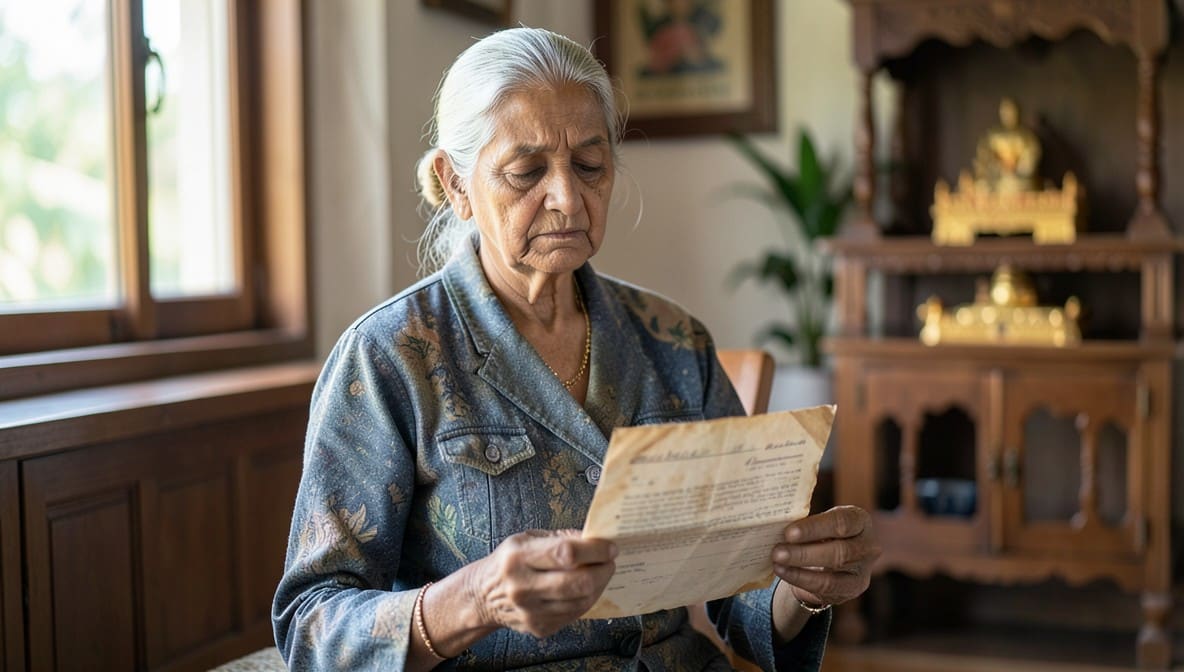
O.S. No. 11 of 1994: Filed by Kolusu Gangamma (the plaintiff), an illiterate widow, seeking cancellation of two registered sale deeds dated 02.01.1991 (Ex.B-1) and 16.02.1991 (Ex.B-2) executed in favor of Yadavareddi Siva Venkata Krishna Rao (defendant No. 2). The plaintiff alleged that defendant No. 1 (father of defendant No. 2) fraudulently induced her to execute these deeds by misrepresenting their contents and taking advantage of her vulnerability.
-
O.S. No. 145 of 1993: Filed by defendant No. 2 (Y. Siva Venkata Krishna Rao) against Kolusu Gangamma, seeking permanent injunction to restrain her from interfering with his possession of the properties covered under Ex.B-1 and Ex.B-2.
Key Facts
- The plaintiff, Kolusu Gangamma, lost her husband about 30 years prior to the litigation and was an illiterate woman with no male family members to assist her.
- Defendant No. 1, Yadavareddi Bhaskara Rao, projected himself as her well-wisher and assisted her in legal and financial matters, gaining her trust.
- On 29.12.1990, the plaintiff executed Ex.B-1 (sale deed for Ac.0.60 cents) in favor of defendant No. 2, allegedly for Rs. 30,000, under the pretext of selling Ac.0.04 cents for his residential purposes.
- On 16.02.1991, defendant No. 1 again took the plaintiff to the Sub-Registrar’s office, alleging a mistake in the survey number of Ex.B-1, and induced her to execute Ex.B-2 (sale deed for Ac.1.57¾ cents) for Rs. 70,987.50.
- The plaintiff later discovered the fraud when her relative, Kommu Kanaka Chintaiah, obtained certified copies of the sale deeds from the Sub-Registrar’s office.
- The plaintiff contended that no consideration was paid under either deed, possession was never delivered, and the title deeds remained with her in the KDCC Bank as security for a loan.
Procedural History
- 15.03.1991: Plaintiff availed a loan of Rs. 10,000 from KDCC Bank, depositing title deeds as security.
- 1991-1994: Plaintiff continued in possession of the properties, as evidenced by revenue records (Ex.A-31 to Ex.A-43).
- 1992: Defendant No. 2 filed O.S. No. 128 of 1992 (later renumbered as O.S. No. 145 of 1993) for permanent injunction.
- 1994: Plaintiff filed O.S. No. 47 of 1991 (later renumbered as O.S. No. 11 of 1994) for cancellation of sale deeds.
- 05.10.1998: Trial Court partly decreed O.S. No. 11 of 1994 (cancelling Ex.B-1 and Ex.B-2) but dismissed O.S. No. 145 of 1993.
- 1999: Defendants filed A.S. No. 238 of 1999 against the decree in O.S. No. 11 of 1994.
- 2006: Plaintiff in O.S. No. 145 of 1993 filed Tr.A.S. No. 310 of 2006 against its dismissal.
- 15.06.2026: High Court delivered the common judgment dismissing both appeals.
The Parties' Positions
For the Plaintiff (Kolusu Gangamma):
- Alleged that defendant No. 1 exploited her illiteracy, partial deafness, and trust to fraudulently obtain Ex.B-1 and Ex.B-2.
- Contended that no consideration was paid, possession was never delivered, and title deeds were not handed over.
- Relied on circumstantial evidence, including revenue records showing her continued possession and the absence of defendant No. 2’s name in official records.
For the Defendants (Y. Bhaskara Rao and Others):
- Argued that the sale deeds were valid, supported by consideration, and executed with full knowledge of the plaintiff.
- Contended that the plaintiff sold the properties for medical expenses (Ex.B-1) and to purchase land elsewhere (Ex.B-2).
- Relied on the testimony of the scribe (D.W.2) and an attestor (D.W.3) to prove execution and payment of consideration.
- Argued that the plaintiff’s delay in challenging the deeds and her continued possession weakened her case.
The Legal Issue
The central legal questions were:
- Whether Ex.B-1 and Ex.B-2 were executed under fraudulent circumstances, as alleged by the plaintiff?
- Whether the plaintiff was entitled to cancellation of these sale deeds under Section 16 of the Indian Contract Act, 1872 (undue influence) and Section 114(g) of the Indian Evidence Act, 1872 (adverse inference)?
- Whether defendant No. 2 (plaintiff in O.S. No. 145 of 1993) was entitled to permanent injunction over the properties?
Arguments Presented
For the Appellants (Defendants)
- Relied on the presumption of validity of registered sale deeds under Section 54 of the Transfer of Property Act, 1882.
- Cited Hemalatha v. Tukaram (2025) to argue that the burden of proving fraud lies on the challenger.
- Contended that the plaintiff failed to plead specific particulars of fraud, as required under Order 6 Rule 4 of the Code of Civil Procedure, 1908.
- Argued that non-payment of consideration alone does not invalidate a sale deed.
- Relied on Anil Rishi v. Gurbaksh Singh (2006) to argue that the burden of proof initially lies on the plaintiff to establish fraud.
For the Respondent (Plaintiff)
- Argued that defendant No. 1 was in a position to dominate the plaintiff’s will, creating a fiduciary relationship under Section 16 of the Indian Contract Act.
- Contended that the plaintiff discharged her initial burden by proving suspicious circumstances, shifting the burden to the defendants to prove fairness.
- Relied on Krishna Mohan Kul v. Pratima Maity (2003) to argue that the dominant party must prove the absence of fraud.
- Emphasized the adverse inference under Section 114(g) of the Indian Evidence Act due to defendant No. 2’s non-examination.
- Cited Vidhyadhar v. Manikrao (1999) to argue that non-examination of a material witness (defendant No. 2) warrants an adverse inference.
The Court's Analysis
The Court conducted a detailed analysis of the evidence and legal principles:
-
Dominant Position and Undue Influence:
- The Court noted that defendant No. 1 admitted to assisting the plaintiff for 30 years, creating a fiduciary relationship.
- Under Section 16 of the Indian Contract Act, the burden shifted to defendant No. 1 to prove the absence of undue influence.
- The Court relied on Krishna Mohan Kul v. Pratima Maity and Mst. Sethani v. Bhana to hold that the dominant party must prove fairness and bona fides.
-
Fraud and Misrepresentation:
- The plaintiff’s evidence showed that she was induced to execute Ex.B-1 and Ex.B-2 under false pretenses.
- The recitals in the deeds (medical expenses for cancer in Ex.B-1 and purchase of land elsewhere in Ex.B-2) were contradicted by the plaintiff’s evidence that she was treated for cancer in 1979 (not 1990) and never purchased alternative land.
- The Court held that the defendants failed to prove payment of consideration or delivery of possession.
-
Adverse Inference for Non-Examination:
- Defendant No. 2, the alleged vendee, did not enter the witness box despite serious allegations of fraud.
- The Court applied Section 114(g) of the Indian Evidence Act and relied on Vidhyadhar v. Manikrao to draw an adverse inference against the defendants.
-
Validity of Registered Sale Deeds:
- While registered deeds carry a presumption of validity (Hemalatha v. Tukaram), the Court held that this presumption is rebuttable where fraud is alleged.
- The Court distinguished the present case from precedents like Ayanikkal Achunni v. Bhanumathi, where the plaintiff failed to prove fraud.
-
Possession and Title Deeds:
- Revenue records (Ex.A-31 to Ex.A-43) showed the plaintiff’s continued possession until 1994.
- The defendants relied on land revenue receipts (Ex.B-3 to Ex.B-5), but the Court held these were insufficient to prove delivery of possession.
- The plaintiff’s title deeds remained with KDCC Bank as security for a loan, contradicting the recitals in Ex.B-1 and Ex.B-2.
The Verdict
The High Court dismissed both appeals:
- A.S. No. 238 of 1999: The decree cancelling Ex.B-1 and Ex.B-2 was upheld. The Court confirmed that the sale deeds were obtained through fraud and undue influence, and no consideration or possession was delivered.
- Tr.A.S. No. 310 of 2006: The dismissal of O.S. No. 145 of 1993 (permanent injunction suit) was upheld. The Court held that defendant No. 2 failed to establish his title to the properties.
Each party was directed to bear their own costs. The Court emphasized that the trial court’s common judgment dated 05.10.1998 was sustainable under law.
What This Means For Similar Cases
Burden of Proof Shifts to the Dominant Party
- In fiduciary relationships, the burden of proving fairness and bona fides lies on the dominant party, especially when the other party is vulnerable (illiterate, aged, or dependent).
- Practitioners should cite Krishna Mohan Kul v. Pratima Maity and Mst. Sethani v. Bhana to argue that the dominant party must discharge this burden.
Adverse Inference for Non-Examination of Material Witness
- If a party expected to depose on material facts (e.g., the vendee in a fraud case) abstains from entering the witness box, courts may draw an adverse inference under Section 114(g) of the Indian Evidence Act.
- This principle, established in Vidhyadhar v. Manikrao, is particularly strong where fraud is alleged, and the non-examined party is the primary beneficiary of the transaction.
Registered Deeds Are Rebuttably Valid
- While registered sale deeds carry a presumption of validity (Hemalatha v. Tukaram), this presumption is rebuttable where fraud, undue influence, or lack of consideration is alleged.
- Courts will scrutinize transactions involving vulnerable parties, even if the deeds are registered. Evidence such as revenue records, bank documents, and witness testimony can rebut the presumption.
Specific Pleadings Required for Fraud
- Under Order 6 Rule 4 of the CPC, allegations of fraud must be pleaded with specific particulars (dates, items, and manner of fraud).
- Vague pleas will not suffice, as held in Ladli Prasad Jaiswal v. Karnal Distillery Co. Ltd.
Possession Must Be Proved, Not Assumed
- Mere recitals in sale deeds regarding delivery of possession are insufficient. The vendee must prove actual possession, especially when the vendor disputes it.
- Revenue records and witness testimony (e.g., neighboring landholders) are critical to establishing possession.
Protection for Vulnerable Parties
- Courts are particularly protective of illiterate, aged, or dependent parties. Transactions involving such individuals will be closely scrutinized for fairness.
- Precedents like Mst. Kharduja Kuer v. Jang Bahadur Rai (pardanashin ladies) and Parasanath Rai v. Tileshra Kuar (illiterate parties) extend similar protections to other vulnerable groups.