The Delhi High Court clarified that a sum expressly labelled as earnest money in a sale agreement is forfeitable upon the purchaser's default, while subsequent part-payments without a specific forfeiture clause must be returned. The judgment refines the application of Section 74 of the Indian Contract Act to contractual penalties versus genuine earnest money.
Background & Facts
The Dispute
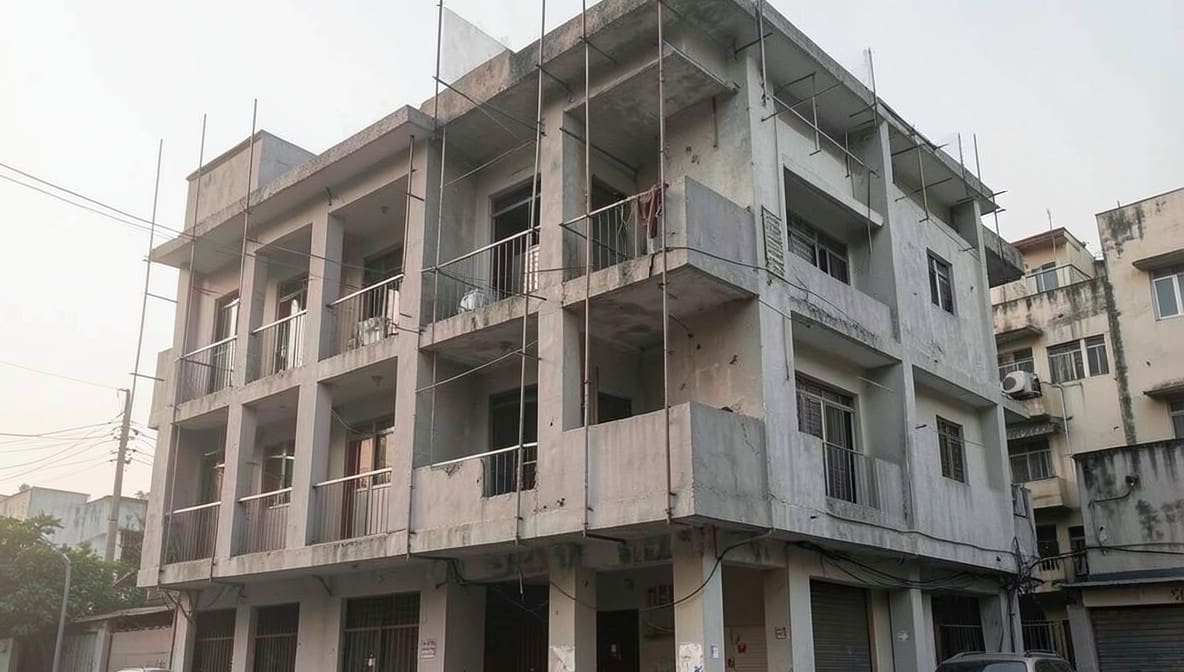
The appellant, Chandra Kanta Matta, owned a second-floor unit at 930, Mukherjee Nagar, Delhi (approximately 160 sq yds, without roof rights). An Agreement to Sell dated 24 April 2012 was executed with the respondent, Lily Khanna, for a total consideration of ₹1,56,00,000. The agreement stipulated that ₹12,50,000 was to be paid as “Bayana/Earnest Money” at execution and that, under Clause 7, such earnest money would be forfeited if the purchaser defaulted.
Key Facts
- 24 Apr 2012 - Respondent paid ₹12,50,000 as earnest money; receipt dated the same day.
- 31 May 2012 - Respondent paid an additional ₹5,00,000 as part-payment toward the balance sale consideration.
- The balance of ₹1,43,50,000 was to be paid on or before end of July 2012.
- Respondent failed to pay the balance; appellant served a legal notice on 05 Sep 2012 invoking Clause 7 and forfeiting the entire ₹12,50,000.
- Respondent replied on 11 Sep 2012, claiming the purchase depended on a separate transaction with Mrs. Renu Kalra, which she alleged the appellant knew about.
- Civil Suit No. 146/2012 was filed by the respondent seeking ₹18,50,000 plus 18 % interest, alleging illegal forfeiture of earnest money and part-payment.
- The trial court partially decreed in favour of the respondent, holding only ₹2,50,000 as earnest money and directing the appellant to refund ₹15,00,000 with interest @6 % from 03 Oct 2012 and a default interest @12 % if not paid within two months.
- The appellant appealed the trial court’s decision under Section 96 CPC (Regular First Appeal) - RFA 85/2014.
Procedural History
- 24 Apr 2012 - Agreement to Sell executed.
- 05 Sep 2012 - Legal notice invoking forfeiture.
- 11 Sep 2012 - Respondent’s reply disputing forfeiture.
- Date not specified - Civil Suit No. 146/2012 filed.
- 27 Nov 2013 - Trial Court judgment and decree.
- 07 Jul 2026 - Appeal reserved.
- 24 Aug 2026 - Appeal pronounced (present judgment).
Parties' Positions
- Appellant argued that the ₹12,50,000 was unequivocally earnest money under the agreement and that Clause 7 authorised its forfeiture. The appellant also contended that the ₹5,00,000 part-payment was not covered by the forfeiture clause and therefore should be returned.
- Respondent maintained that only ₹2,50,000 constituted earnest money; the remaining ₹10,00,000 of the ₹12,50,000 was merely advance sale consideration linked to the alleged transaction with Mrs. Renu Kalra, and thus could not be forfeited.
Relief Sought
- Appellant sought confirmation that the entire ₹12,50,000 was earnest money and could be forfeited, and that the ₹5,00,000 part-payment be returned with interest.
- Respondent sought reversal of the forfeiture, a refund of ₹15,00,000, and interest as awarded by the trial court.
The Legal Issue
The central questions were: (1) Whether the sum of ₹12,50,000 paid at the time of execution of the Agreement to Sell qualifies as earnest money that can be forfeited under Clause 7 upon the purchaser’s default; and (2) Whether the subsequent ₹5,00,000 part-payment, not described as earnest money, can also be forfeited absent an explicit contractual provision. A subsidiary issue concerned the applicability of Section 74 of the Indian Contract Act, 1872 to the forfeiture.
Arguments Presented
For the Appellant
- Relied on Shree Hanuman Cotton Mills v. Tata Air Craft Ltd. and subsequent Supreme Court pronouncements (Satish Batra, K.R. Suresh) that earnest money is identified by (i) payment at contract formation, (ii) intention as security, (iii) part of purchase price, and (iv) forfeiture on purchaser’s default.
- Emphasised the explicit wording of Clause 7 and the receipt describing ₹12,50,000 as “Bayana/Earnest Money”.
- Asserted that Section 74 applies only to penal stipulations; genuine earnest money forfeiture is a contractual consequence, not a penalty.
For the Respondent
- Cited Kailash Nath Associates v. DDA and Fateh Chand v. Balkishan Das to argue that forfeiture of any amount must be justified by proof of loss; without loss, forfeiture amounts to a penalty invoking Section 74.
- Contended that the agreement’s silence on the character of the ₹10,00,000 portion meant it was advance consideration, not earnest money, and therefore could not be forfeited.
- Relied on the alleged dependency on the transaction with Mrs. Renu Kalra to argue that the entire sum should be treated as part-payment.
The Court's Analysis
The Court first reiterated the well-settled principles governing earnest money, quoting the Shree Hanuman Cotton Mills test:
"(1) It must be given at the moment at which the contract is concluded. (2) It represents a guarantee that the contract will be fulfilled… (3) It is part of the purchase price… (4) It is forfeited when the transaction falls through by reason of the default… (5) Unless there is anything to the contrary in the terms of the contract, on default committed by the buyer, the seller is entitled to forfeit the earnest."
Applying the test, the Court found that the ₹12,50,000 was paid contemporaneously with the agreement, was labelled as earnest money, formed part of the purchase price, and Clause 7 expressly provided for its forfeiture on the purchaser’s default. The surrounding circumstances - no contemporaneous amendment, no evidence of a separate understanding with Mrs. Renu Kalra, and the respondent’s own acknowledgment of the amount as earnest money - reinforced this conclusion.
Conversely, the ₹5,00,000 paid on 31 May 2012 was not described as earnest money, nor did the agreement contain any clause permitting its forfeiture. The Court therefore held that this amount could not be retained and must be refunded.
Regarding Section 74, the Court clarified that the provision applies to penal stipulations. Since the forfeiture of genuine earnest money is a contractual security mechanism rather than a penalty, Section 74 does not limit the appellant’s right to retain the ₹12,50,000. However, for the ₹5,00,000 part-payment, which is not earnest money, Section 74 would require proof of loss before any forfeiture could be justified - a proof the respondent failed to produce.
The Court also addressed the trial court’s erroneous bifurcation of the ₹12,50,000 into ₹2,50,000 earnest money and ₹10,00,000 advance consideration, finding no documentary or evidentiary basis for such a split.
The Verdict
The appeal is allowed in part. The Court sets aside the trial court’s order directing the appellant to refund ₹15,00,000. It holds that:
- The ₹12,50,000 paid on 24 Apr 2012 constitutes earnest money and is lawfully forfeited under Clause 7.
- The ₹5,00,000 paid on 31 May 2012 does not constitute earnest money and must be refunded to the respondent.
- Interest @6 % per annum from 03 Oct 2012 (date of suit institution) accrues on the refundable ₹5,00,000; the trial court’s default interest @12 % remains applicable if the appellant defaults on payment.
- No costs are awarded.
What This Means For Similar Cases
Earnest Money Must Be Treated as per Contractual Terms
- When a contract expressly labels a sum as earnest money and includes a forfeiture clause, courts will enforce forfeiture on purchaser default, irrespective of the amount’s size.
- Practitioners should ensure that the nature of any upfront payment is unambiguously recorded in the agreement to avoid later disputes.
Forfeiture of Part Payments Requires Explicit Stipulation
- Payments described merely as “part-payment” or “advance” without a specific forfeiture provision cannot be retained on default.
- Drafting advice: include a clear clause if the parties intend any part-payment to be subject to forfeiture.
Section 74 ICA Applies Only to Penalty Clauses
- Courts will not invoke Section 74 to limit forfeiture of genuine earnest money; the provision is reserved for penal stipulations where loss is not proven.
- Lawyers must differentiate between a security-based forfeiture clause and a penalty clause when advising clients on contractual risk.
Practical takeaways:
- Draft sale agreements with a precise definition of “earnest money” and a reciprocal forfeiture clause.
- If part-payments are to be forfeitable, expressly incorporate that term.
- Anticipate that Section 74 will only curtail forfeiture where the clause is penal in nature and no loss is demonstrated.