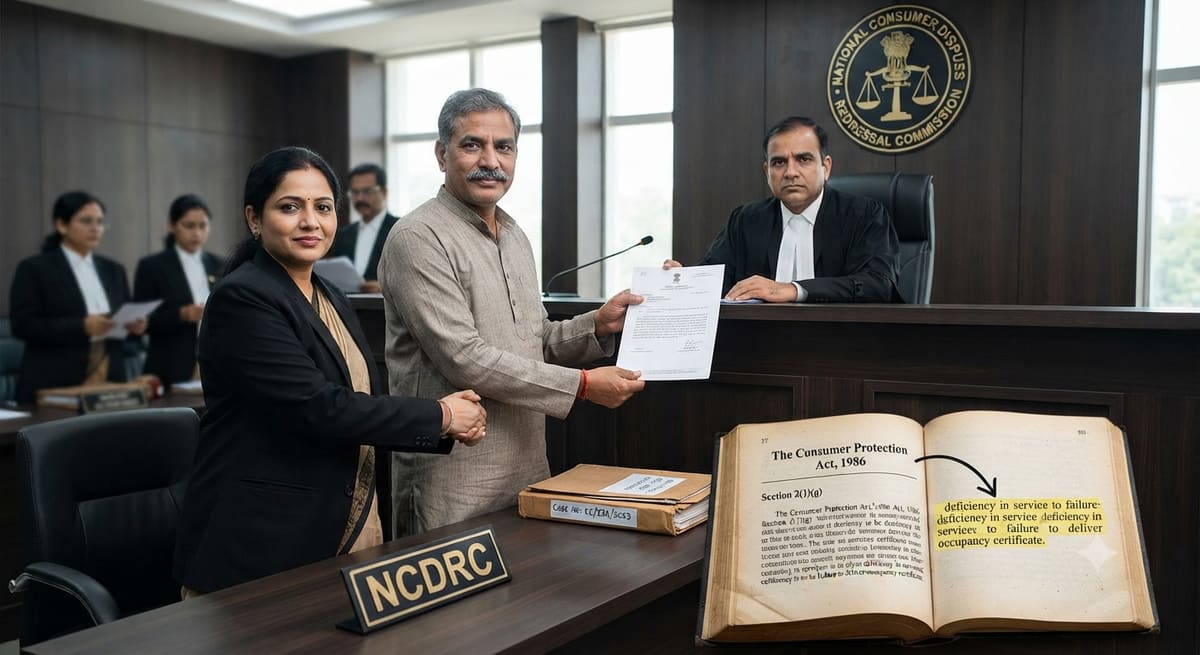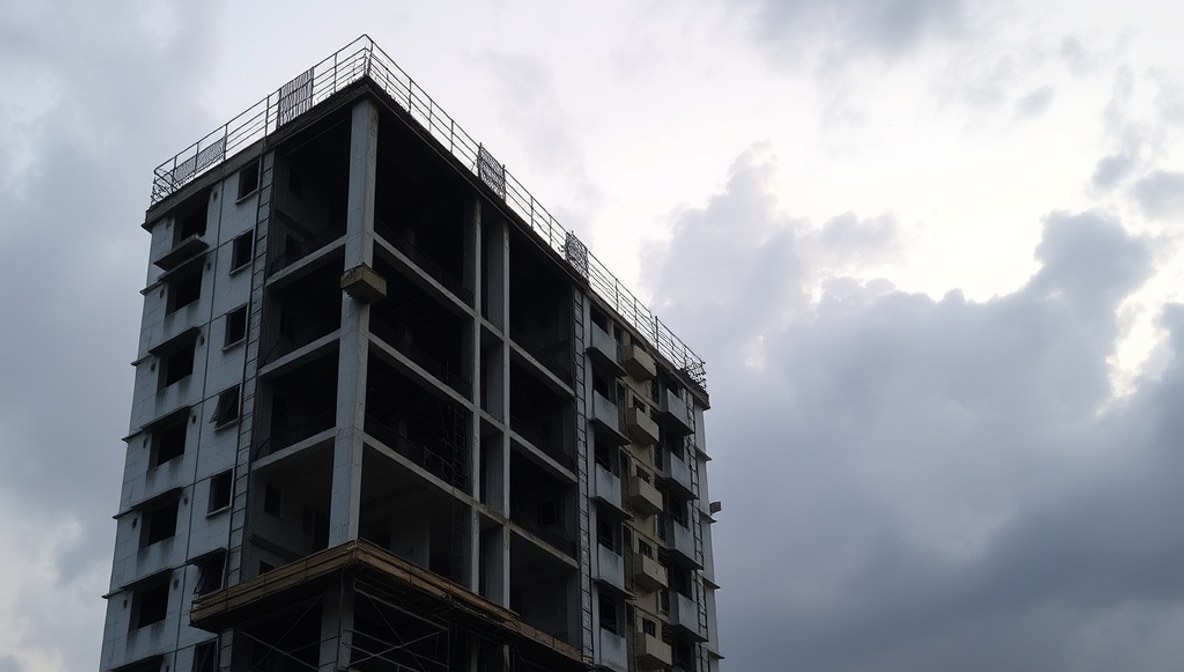
The West Bengal State Consumer Disputes Redressal Commission has ruled that a homebuyer's temporary occupation of a substitute flat, coupled with express written objection to its permanent acceptance, does not constitute waiver of the right to seek refund for the developer's failure to deliver the originally booked accommodation. The Commission awarded refund of Rs. 53,43,000 with simple interest at 9% per annum from the date of full payment until commencement of occupation, and 7% thereafter during continued occupation, plus litigation costs of Rs. 1,00,000, directing compliance within ninety days.
Background & Facts
The Dispute
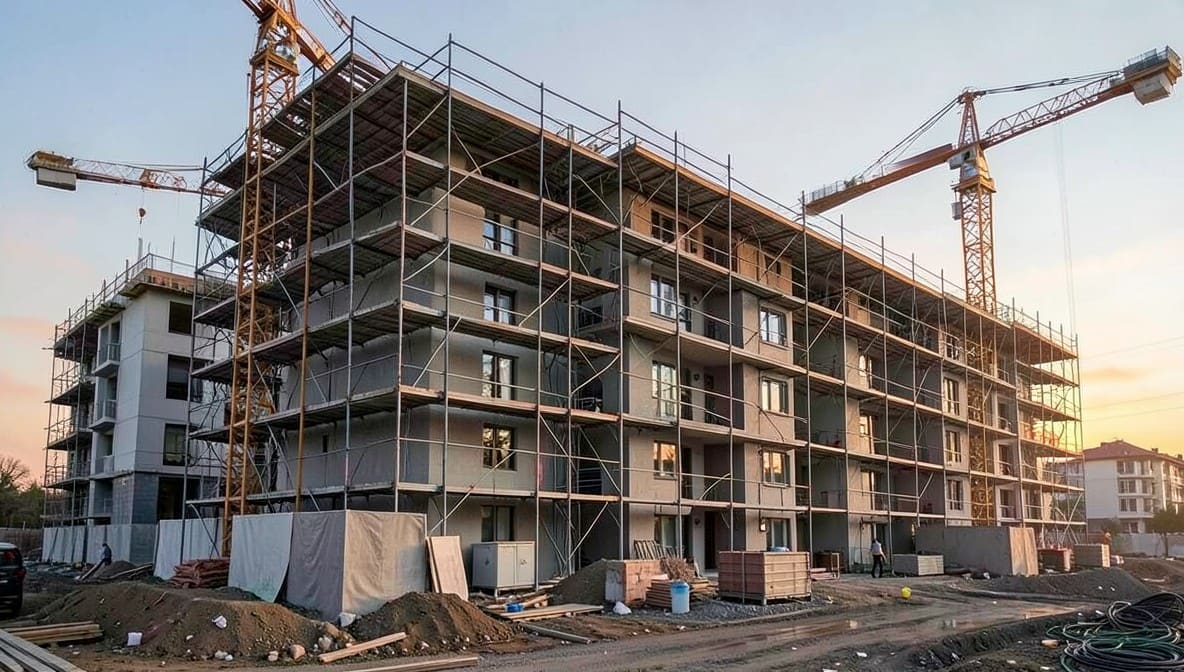
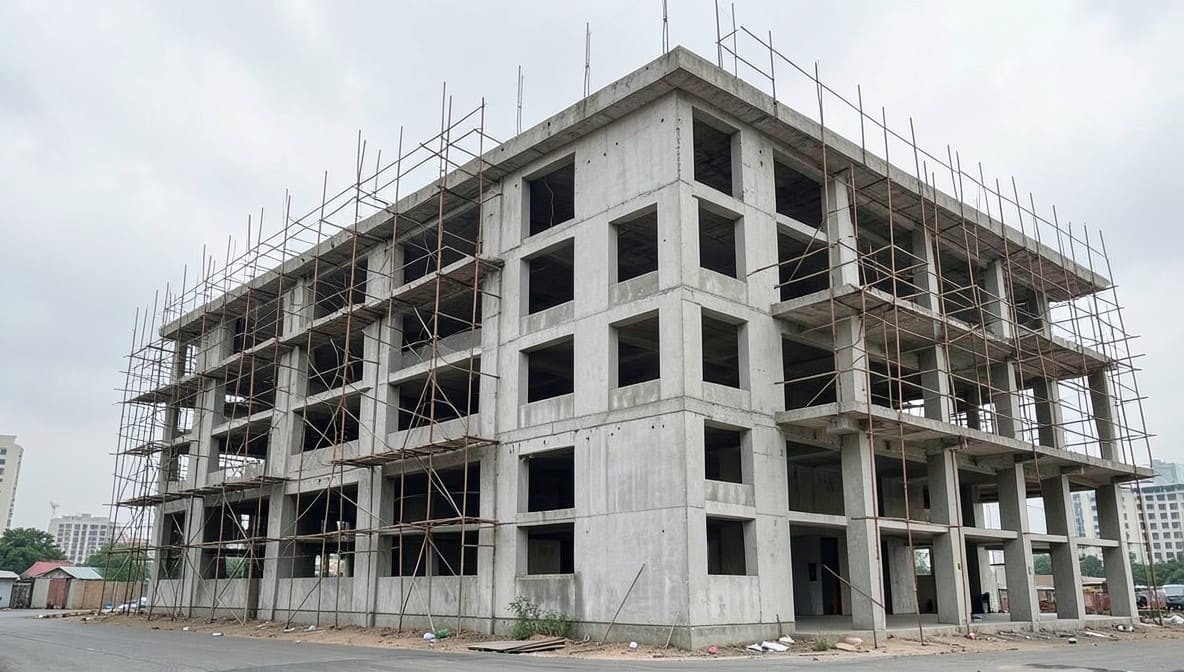
The complainant, Sri Dhruba Sen, booked a south-facing flat on the fourth or fifth floor of a proposed building at 57, S.N. Banerjee Road, Kolkata, from M/s. Limra Construction (Opposite Party No. 1) under an agreement dated 23rd May 2014. The agreed consideration was Rs. 53,43,000 for accommodation measuring approximately 780 square feet (600 sq. ft. plus 30% loading as super built-up area). The developer failed to construct the promised fourth and fifth floors, attributing non-performance to inability to obtain necessary sanction.
Key Facts
- 23.05.2014: Booking agreement executed for south-facing flat on 4th/5th floor at Rs. 53,43,000
- 23.05.2014 to 22.05.2016: Complainant paid entire consideration in instalments; final instalment of Rs. 3,43,000 paid on 22.05.2016
- 22.05.2016: Developer issued letter offering temporary accommodation in a north-facing third-floor flat (approx. 640 sq. ft. carpet, 832 sq. ft. super built-up), assuring delivery of originally booked flat upon completion of upper floors, or permanent transfer of third-floor flat upon payment of additional Rs. 3,56,200
- 22.05.2016: Complainant endorsed the letter in handwriting, accepting temporary occupation while expressly objecting to north-facing orientation and declining permanent ownership of the substitute flat
- 10.07.2016: Complainant took possession of third-floor flat (developer asserted May 2016; Commission accepted complainant's date)
- 20.02.2018: Complainant sent objection by registered post after ~21 months of waiting
- 02.04.2018: Further communication requesting delivery of booked flat
- 18.05.2018: Consumer complaint instituted under Section 17 of Consumer Protection Act, 1986
Procedural History
- 18.05.2018: Complaint No. SC/19/CC/354/2018 filed before State Consumer Disputes Redressal Commission, West Bengal
- 12.10.2018: Proceedings directed to continue ex parte against Opposite Party Nos. 3 to 9 (landowners)
- 2024: IA/431/2024 filed seeking protection against transfer/creation of third-party interests in occupied flat
- 09.07.2024: Interim restraint on Opposite Party Nos. 1 and 2 from creating third-party interests until 27.08.2024
- 10.09.2026: Final hearing; Opposite Party Nos. 1 and 2 absent; matter heard on complainant's submissions and record
- 29.10.2026: Judgment pronounced
The Parties' Positions
Complainant: Temporary occupation never amounted to acceptance of permanent substitution; seeks delivery of contracted accommodation or refund of Rs. 53,43,000 with 18% interest, Rs. 20,00,000 compensation for harassment, and Rs. 1,00,000 litigation expenses.
Opposite Party Nos. 1 & 2: Complaint vexatious, discloses no cause of action, outside jurisdiction; complainant's use of "willingly" in endorsement, payment of final instalment, and occupation of larger flat establish acceptance of proposal; earlier offers of refund and alternative flat declined.
Relief Sought
Refund of Rs. 53,43,000 with 18% per annum interest from 22.05.2016, compensation of Rs. 20,00,000, litigation costs of Rs. 1,00,000, and/or delivery of originally booked flat.
The Legal Issue
The central questions were: (1) whether the Commission has pecuniary and territorial jurisdiction and the complaint is within limitation; (2) whether the complainant's temporary occupation and endorsement constituted acceptance of permanent substitution of the third-floor flat; (3) whether failure to deliver the contracted accommodation constitutes deficiency in service; (4) whether refund or specific performance is the appropriate remedy; and (5) what interest rate, compensation, and costs should be awarded.
Arguments Presented
For the Complainant
Counsel argued that the developer's letter of 22.05.2016 acknowledged non-delivery of the booked accommodation and proposed only temporary occupation. The complainant's handwritten endorsement expressly objected to the north-facing orientation and stated he did not agree to accept the flat permanently. Under Section 7 of the Indian Contract Act, 1872, acceptance must be absolute and unqualified; the qualified response negated any concluded agreement for substitution. Payment of the final instalment discharged the original obligation and satisfied the condition for temporary occupation, not permanent transfer. Continued occupation without the contracted flat being delivered cannot imply waiver. The developer's inability to obtain sanction does not justify indefinite retention of consideration.
For the Opposite Party Nos. 1 and 2
Counsel contended the complaint was barred by limitation, outside pecuniary jurisdiction, and vexatious. The complainant's endorsement used the word "willingly," payment of the outstanding instalment, and occupation of a larger flat demonstrated acceptance of the developer's proposal. The complainant suppressed material facts and declined earlier offers of refund and alternative accommodation. The developer expressed willingness to refund by selling the occupied flat, and the complainant's non-cooperation regarding cleaning the flat undermined his claim.
The Court's Analysis
The Commission first addressed jurisdiction. Under Section 17(1)(a)(i) of the Consumer Protection Act, 1986, its original pecuniary jurisdiction covered complaints where value of goods/services and compensation claimed exceeded Rs. 20 lakh but did not exceed Rs. 1 crore. Relying on Neena Aneja v. Jai Prakash Associates Ltd. (Civil Appeal Nos. 3766 - 3767 of 2020, decided 16.03.2021), the Commission held the 2019 Act does not displace the forum of a properly instituted complaint. Valuation included claimed interest: from 22.05.2016 to 18.05.2018 (726 days) at 18% simple interest on Rs. 53,43,000 yielded ~Rs. 19,12,940. Together with consideration (Rs. 53,43,000) and compensation (Rs. 20,00,000), the aggregate ~Rs. 92,55,940 fell within jurisdiction. Territorial jurisdiction was established as the property and construction obligations were in West Bengal.
On limitation, the developer's 22.05.2016 letter acknowledged non-delivery and proposed temporary arrangement. The complaint filed on 18.05.2018 was within two years of that acknowledgment, rendering it unnecessary to treat subsequent notices as restarting limitation.
The core issue - whether temporary occupation constituted permanent substitution - was resolved by reading the developer's letter and complainant's endorsement together. The Commission held:
"The word 'willingly' cannot be isolated from the express qualifications accompanying it. The complainant accepted temporary occupation while specifically declining permanent ownership of the offered flat. His objection concerned both its orientation and its departure from the original agreement."
Section 7 of the Indian Contract Act, 1872 requires absolute and unqualified acceptance; Section 62 contemplates agreed substitution. The written response established agreement only to temporary occupation. Payment of the final instalment was sought by the developer as the outstanding amount towards the original accommodation and could not be converted into acceptance of a permanent arrangement expressly rejected in writing. Continued occupation did not establish waiver where the developer retained the entire consideration and no subsequent agreement or payment of additional Rs. 3,56,200 was proved.
On deficiency in service, the Commission found receipt of full consideration and non-construction of promised floors admitted. Inability to secure sanction did not permit indefinite retention of money without delivering contracted accommodation or making effective refund. Temporary accommodation mitigated immediate residential difficulty but did not discharge the original obligation. Earlier offers of refund or alternative accommodation were unproven as completed settlements. The developer's willingness to refund only after selling the flat was insufficient; repayment cannot depend on identifying another purchaser.
Citing Experion Developers Pvt. Ltd. v. Sushma Ashok Shiroor (Civil Appeal Nos. 6044 and 7149 of 2019, decided 07.04.2022), the Commission recognised its power to grant refund with appropriate compensation for failure to deliver agreed accommodation. Specific performance was inappropriate as sanction for upper floors was unobtained and a further direction would expose the complainant to indefinite waiting.
Interest was calibrated: 9% per annum from 22.05.2016 (date of full payment) to 09.07.2016 (pre-occupation), and 7% per annum from 10.07.2016 during occupation, recognising both deprivation of purchase money and residential benefit received. If vacant possession surrendered earlier, interest would revert to 9% on unpaid principal. No separate lump-sum compensation of Rs. 20,00,000 was justified; litigation costs of Rs. 1,00,000 were awarded.
Liability was imposed jointly and severally on Opposite Party No. 1 (developer firm) and Opposite Party No. 2 (partner, liable under Section 25 of the Indian Partnership Act, 1932). No personal monetary liability was imposed on landowners (OP Nos. 3 - 9) as materials did not prove receipt of consideration or undertaking rendering them jointly liable.
The Verdict
The complaint was allowed in part against Opposite Party Nos. 1 and 2. They shall jointly and severally refund Rs. 53,43,000 with simple interest at 9% per annum from 22.05.2016 to 09.07.2016 and 7% per annum from 10.07.2016 until payment (reverting to 9% if possession surrendered earlier), plus Rs. 1,00,000 litigation costs. Compliance directed within ninety days from 29.10.2026. Payment and simultaneous surrender of vacant possession through written exchange acknowledgment; complainant not required to surrender before payment secured. Opposite Party Nos. 1 and 2 restrained from creating third-party interests in the third-floor flat until completion. No conveyance of third-floor flat directed. Prayer for delivery of unconstructed flat and remaining monetary claims refused. IA/431/2024 disposed of.
What This Means For Similar Cases
Temporary Occupation Is Not Waiver of Contractual Rights
A homebuyer's acceptance of temporary alternative accommodation - even with use of the word "willingly" - does not constitute acceptance of permanent substitution where the buyer expressly objects in writing to the substitute unit's specifications (orientation, floor, deviation from original agreement). Practitioners should advise clients to document objections contemporaneously on developer communications. The Commission's reliance on Sections 7 and 62 of the Indian Contract Act, 1872 reinforces that qualified acceptance negates novation.
Staggered Interest Rates Reflect Equitable Balancing
The Commission's bifurcated interest structure - higher rate (9%) during pre-occupation deprivation, lower rate (7%) during occupation - provides a template for calculating compensatory interest where the buyer derives residential benefit from temporary accommodation. This adjusts for the "benefit of accommodation" without requiring notional rent deductions. Lawyers should plead specific possession dates and argue for interest segmentation based on actual occupation periods.
Developer's Inability to Obtain Sanction Does Not Extinguish Refund Obligation
The judgment clarifies that a developer's failure to secure municipal sanction for promised floors does not justify indefinite retention of the buyer's money. While consumer fora cannot direct construction contrary to municipal law or compel sanction, they can and will order refund with interest. The developer's proposal to refund only after selling the occupied flat was rejected as impermissible conditional repayment. This strengthens buyers' position in stalled projects where approvals fail.
Landowners Not Automatically Liable Absent Proof of Receipt or Undertaking
The ex parte status of landowners (OP Nos. 3 - 9) did not establish independent monetary liability. The Commission required proof of receipt of consideration or an undertaking rendering them jointly liable. This limits vicarious liability in joint development arrangements and underscores the need for buyers to secure direct contractual commitments from landowners.