Topic

Electricity Law

Electricity law in India governs the regulation of power supply, connections, disconnections, and liability of electricity boards under the Electricity Act, 2003 and state-specific rules.

11 articlesLatest September 2026
Sec 56(2) Elec Act 2003 - Supplementary demand after short-billing not barred by limitation | Short-billing : HC Punjab & Haryana
Case Law Analysis
|Punjab and Haryana High Court

Sec 56(2) Elec Act 2003 - Supplementary demand after short-billing not barred by limitation | Short-billing : HC Punjab & Haryana

By holding that the limitation clock starts when the original electricity bill is issued, the Punjab & Haryana High Court ruled that a later supplementary demand arising from short-billing remains enforceable despite the two-year bar in Sec 56(2). This protects utilities from indefinite liability and informs consumers that corrected arrears can be billed even years after the initial invoice.

Clause 6.10(a) of Jharkhand Electricity Supply Code bars auction purchasers from liability for pre-existing electricity arrears | Auction Purchaser Liability : Jharkhand HC
Case Law Analysis
|Jharkhand High Court

Clause 6.10(a) of Jharkhand Electricity Supply Code bars auction purchasers from liability for pre-existing electricity arrears | Auction Purchaser Liability : Jharkhand HC

The Jharkhand High Court ruled that under Clause 6.10(a) of the 2015 Electricity Supply Code, entities acquiring power connections through auction are not responsible for any electricity dues incurred before the auction date. Consequently, two demand notices were set aside and the petitioner was ordered a full refund in five instalments. This protection applies to all current and future auction-based electricity consumers in Jharkhand.

Electricity Rebate Scheme | Clubbing LT Installations for HT Conversion Requires Uniform Consumer Registration: Karnataka HC
Case Law Analysis
|Karnataka High Court

Electricity Rebate Scheme | Clubbing LT Installations for HT Conversion Requires Uniform Consumer Registration: Karnataka HC

The Karnataka High Court has ruled that to qualify for electricity rebates under LT-to-HT conversion schemes, all linked low-tension installations must be registered under a single consumer’s name. This clarifies a critical compliance requirement for industrial users seeking fiscal incentives, preventing fragmented claims and reinforcing administrative accountability in utility subsidy regimes.

No Retrospective Recovery of Electricity Subsidy Without Statutory Authority | CGRF Jurisdiction Upheld Against MSEDCL : Bombay HC
Case Law Analysis
|Bombay High Court

No Retrospective Recovery of Electricity Subsidy Without Statutory Authority | CGRF Jurisdiction Upheld Against MSEDCL : Bombay HC

The Bombay HC has ruled that MSEDCL cannot claw back previously paid VM subsidies through retrospective debit adjustments without explicit legal authorization, reinforcing that Consumer Grievance Redressal Forums have the authority to nullify such unlawful billing practices. This sets a critical precedent for industrial and CETP consumers nationwide, ensuring subsidy benefits cannot be arbitrarily revoked after the fact.

Limitation for Appeals Begins at Receipt of Order, Not Issue Date | Electricity Assessment Dispute : Punjab & Haryana HC
Case Law Analysis
|Punjab and Haryana High Court

Limitation for Appeals Begins at Receipt of Order, Not Issue Date | Electricity Assessment Dispute : Punjab & Haryana HC

The Punjab & Haryana High Court ruled that the limitation period to file an appeal against an electricity assessment order starts from the date the appellant actually receives the order, not the date it was issued. This protects litigants from technical dismissals due to postal delays and reinforces procedural fairness in public utility disputes.

Strict Liability Applies to Electricity Boards for Unfenced Transformers Near Schools | Child Electrocution Case : Allahabad HC
Case Law Analysis
|Allahabad High Court

Strict Liability Applies to Electricity Boards for Unfenced Transformers Near Schools | Child Electrocution Case : Allahabad HC

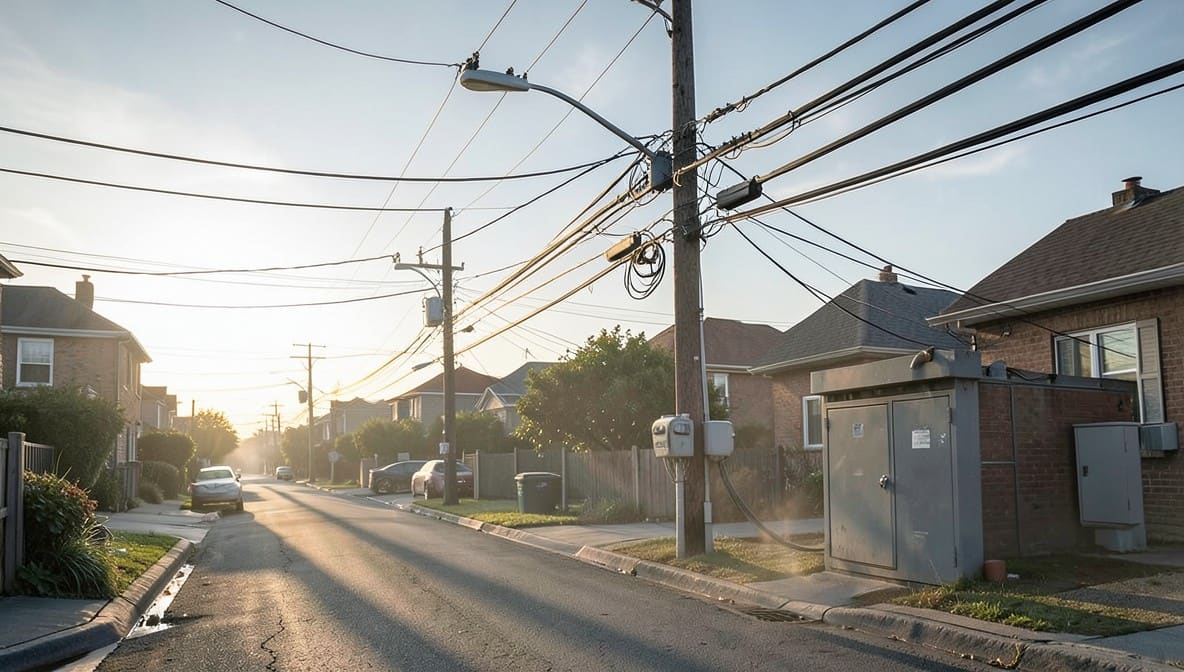
The Allahabad High Court ruled that electricity boards are strictly liable for electrocution injuries caused by unfenced transformers near schools, regardless of negligence. The ruling eliminates the burden of proving fault and recognizes children’s age as negating contributory negligence, setting a vital safety standard for public infrastructure near educational institutions.

Co-Ownership Rights Override TNEB Administrative Rules on Service Connection Name Inclusion : Madras HC
Case Law Analysis
|Madras High Court

Co-Ownership Rights Override TNEB Administrative Rules on Service Connection Name Inclusion : Madras HC

Madras High Court rules that adjudicated co-ownership rights in a shared electricity service connection prevail over Tamil Nadu Electricity Board's administrative restrictions on name inclusion or changeover switch access. The judgment reinforces civil rights protection over bureaucratic procedures, impacting property and electricity law disputes involving co-sharers.

Electricity Disconnection Without Notice Violates Natural Justice; Theft Allegations Require Documentary Proof : Punjab & Haryana HC
Case Law Analysis
|Punjab and Haryana High Court

Electricity Disconnection Without Notice Violates Natural Justice; Theft Allegations Require Documentary Proof : Punjab & Haryana HC

Punjab & Haryana High Court rules that electricity disconnection without prior notice is illegal, violating principles of natural justice. The court further holds that allegations of electricity theft must be backed by documentary evidence-uncorroborated testimony or retaliatory timing alone cannot sustain the utility's claim. Consumers facing arbitrary disconnections can now challenge such actions on grounds of procedural fairness and evidentiary insufficiency.